My eczema does not look like the textbook pictures. It is a small, persistent patch on the inside of one wrist, two faint patches at the bend of my elbows that flare up in winter, and a stretch of dry-feeling skin on my eyelids that comes and goes with the seasons. For years I assumed it was just sensitive skin. It was not. It was mild atopic dermatitis, and once I stopped treating it like a moisturizer-shopping problem and started treating it as the chronic inflammatory condition it actually is, the patches that had cycled in and out for a decade calmed down and mostly stayed calm.
This is what I wish someone had told me at twenty-five about adult eczema — what it actually is, why it flares, and the treatments that have real evidence behind them.
What Is Atopic Dermatitis?
Atopic dermatitis is the medical name for what most people call eczema. It is a chronic, relapsing inflammatory skin condition affecting roughly 2-3% of adults in the United States, often persisting from childhood but sometimes appearing for the first time in adulthood. The clinical signature is itchy, inflamed, often dry-feeling skin in classic locations: the bends of the elbows, behind the knees, the wrists, the eyelids, the neck, and the tops of the hands.
In milder forms, eczema looks like patches of dryness or faint pink that itch without obvious flaking. In more severe forms it produces oozing, crusting, and lichenification — the leathery thickening that comes from years of repeated scratching. The condition runs alongside other "atopic" conditions including asthma, allergic rhinitis, and food allergies, all of which share an underlying tendency toward immune over-reactivity (PMID 24290431).
Why It Happens
Two things are going on at the same time in eczema-prone skin. First, the skin barrier is structurally compromised — most people with atopic dermatitis carry mutations in the filaggrin gene that affect the production of natural moisturizing factor, the molecules that hold water in the upper layers of the skin. Second, the immune system in the skin runs hot — Th2-skewed cytokine signaling drives the inflammation that produces the itch and the visible rash (PMID 33205485).
Trigger inventory is highly individual but the recurring offenders include: dust mites, pet dander, certain foods (egg, milk, peanut, soy, wheat in some children — less consistent in adults), seasonal allergens, harsh soaps, fragrances, wool fabric, sweat, hot water, low humidity, stress, and sleep deprivation. The list is long but each individual person usually has two or three reliable triggers and a longer list of "sometimes" triggers.

Treatments That Work
The 2024 American Academy of Dermatology guidelines and the European 2020 ETFAD/EADV position paper outline the same evidence-based hierarchy.
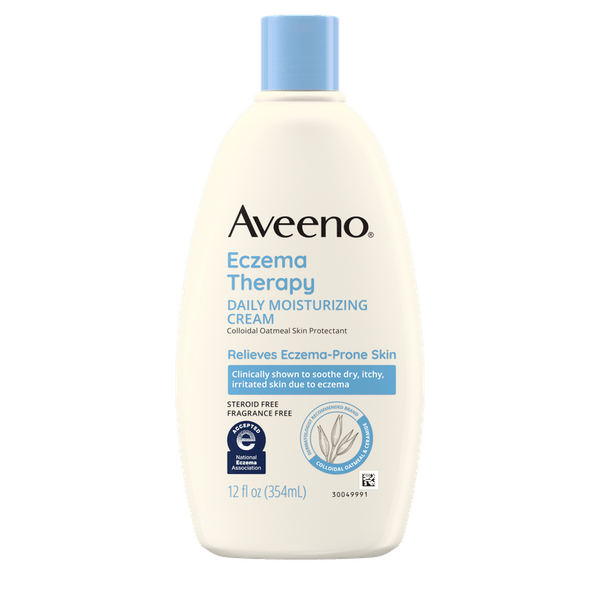
Generous moisturizer use, twice daily and after every shower or bath, is the foundation that everything else builds on. Look for thick creams or ointments rather than lotions. Ceramide-rich formulas (CeraVe, La Roche-Posay Lipikar AP+M, Eucerin Eczema Relief), colloidal-oatmeal formulas (Aveeno Eczema Therapy), and plain petrolatum or Vanicream all have solid track records. Studies consistently show twice-daily moisturizer use alone reduces flare frequency in mild eczema and reduces the need for topical steroids in moderate cases. The single most under-used "treatment" for eczema in my experience is just using more moisturizer, more often.
Topical corticosteroids are the first-line anti-inflammatory treatment for active flares. Hydrocortisone 1% is over-the-counter and useful for mild flares on the body. For face, eyelids, and intimate areas, you generally want a low-potency steroid prescribed by a clinician (often hydrocortisone 2.5% or desonide 0.05%). For thicker skin and more stubborn flares, mid-to-high potency options like triamcinolone 0.1% or fluocinolone are appropriate. Used short-term during flares (1-2 weeks), topical steroids are safe and effective. The fear of steroids that drives some patients to undertreat their eczema almost always causes more harm than supervised steroid use.
Topical calcineurin inhibitors (tacrolimus 0.03-0.1% ointment, pimecrolimus 1% cream) are non-steroidal anti-inflammatory topicals appropriate for sensitive areas — face, eyelids, neck, intimate skin — and for long-term maintenance. They do not cause skin thinning the way steroids can, which makes them useful for the chronic patches that need indefinite management.
Bathing practices. Lukewarm baths or showers under five minutes, gentle non-foaming cleanser only on areas that need it, pat dry, and apply moisturizer within three minutes — the so-called "soak and seal" technique. For some patients with frequent infected flares, dilute bleach baths twice weekly are useful (one-quarter cup of regular household bleach in a full standard tub).
Dupilumab and oral JAK inhibitors are systemic options for moderate-to-severe atopic dermatitis that has not responded to topicals. Dupilumab (Dupixent) was a meaningful breakthrough in eczema treatment when approved and has held up in long-term safety data (PMID 37943240). These are clinic-managed treatments — the right next step for severe disease, not a starting point.
Common Mistakes
Lotions rather than creams or ointments. Lotions feel pleasant but contain too little oil and too much water for serious eczema. Creams and ointments hold a moisture barrier longer.
Hot showers. They feel good on itch in the moment and degrade the barrier within minutes. Lukewarm only.
Trying every "natural" remedy in sequence. Coconut oil, manuka honey, oat baths, colloidal silver — many are harmless, none are reliable substitutes for evidence-based treatment, and the time spent trying them is time the eczema continues to flare.
Steroid avoidance. Topical steroids used appropriately (short-term, correct potency, correct site) are safe. Avoiding them while letting eczema flare uncontrolled often causes more long-term problems than careful use would.
Over-bathing and over-cleansing. A daily body wash with sulfates is an aggressive intervention on already-fragile skin. For most adults with eczema, daily body wash on visibly dirty areas only, with plain water elsewhere, is enough.

A Sensible Adult Eczema Routine
Daily basics: Lukewarm shower under five minutes, gentle fragrance-free cleanser only on areas that need it, pat dry, apply a thick moisturizer to the entire body within three minutes. Reapply moisturizer at midday on chronically affected areas. A thicker ointment-style product overnight on stubborn patches.
During flares: Add topical corticosteroid (or calcineurin inhibitor for sensitive areas) twice daily for one to two weeks. If still active at two weeks, see a clinician.
Trigger management: Identify your top two or three triggers and modify exposure. Cotton sheets, fragrance-free laundry detergent, humidifier in dry winters, and a separate "eczema kit" of skincare in the bathroom that everyone in the household leaves alone.
Final Thoughts
Adult eczema is not a moisturizer-shopping problem. It is a chronic immune-and-barrier condition that responds to consistent management, fades when treatment is regular, and flares when treatment lapses. The hardest mental shift for many adults is accepting that "I just need to find the right cream" is not the path forward — the path is a routine, applied steadily, with prescription support when flares break through. Once you accept that, the condition usually becomes much more manageable than it has been.
Medical Disclaimer
This article is for informational purposes and does not replace personalized advice from a board-certified dermatologist. Severe, oozing, infected, or rapidly progressive eczema requires in-person evaluation. Children's eczema in particular benefits from a pediatric dermatology consultation rather than self-management.
Affiliate Disclosure
Some links in this article may be affiliate links. If you purchase through them, BeautySift may earn a small commission at no additional cost to you. We only recommend products we have personally tested and would use ourselves. Affiliate revenue does not influence which products we choose to feature.


