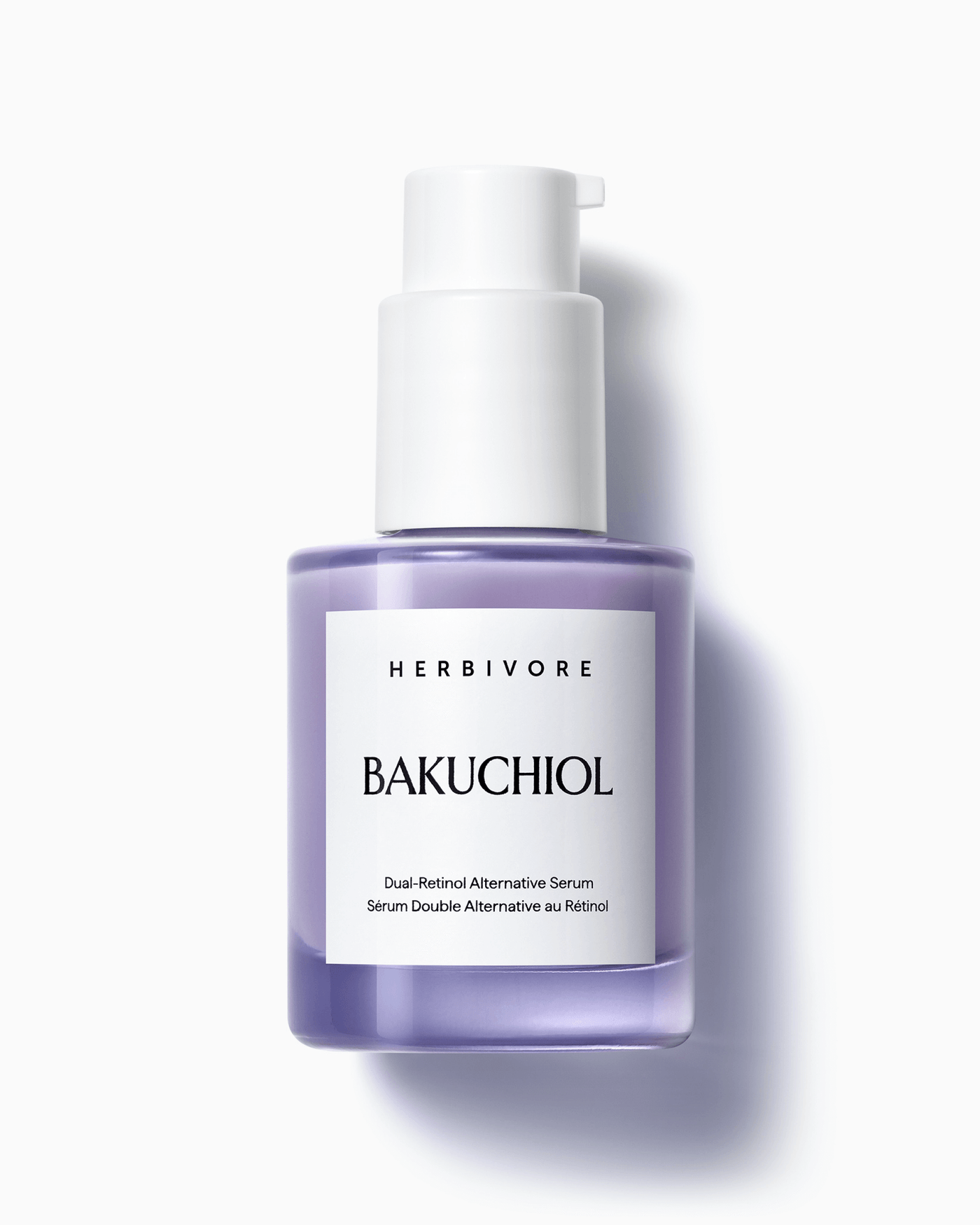
Bakuchiol gets pitched as "the natural retinol alternative" so often that it has become hard to tell what is hype and what is actually supported by the published research. The truth lives in between — bakuchiol does have peer-reviewed evidence for anti-aging effects, and it is genuinely better tolerated than retinol for sensitive skin and pregnancy. It is not, despite the marketing, identical to retinol in either mechanism or strength. Used right, it has a real and useful place in a skincare routine. Used as a one-to-one swap for tretinoin, it underdelivers.
This is what bakuchiol actually is, what the trials show, and where it earns its place — based on the published clinical evidence rather than the brand copy.
What Is Bakuchiol?
Bakuchiol is a meroterpene phenol extracted from the seeds of the Psoralea corylifolia plant, which has a long history of use in traditional Chinese and Ayurvedic medicine. Despite the marketing positioning, bakuchiol is not chemically related to retinol. The two molecules look nothing alike. What they share is a partial overlap in downstream effects on skin gene expression — both upregulate certain markers of dermal extracellular matrix synthesis, and both produce visible improvements in fine lines and tone over similar timeframes (PMID 24471735).
The skincare industry adopted bakuchiol meaningfully starting in the late 2010s, mostly aimed at consumers who wanted retinol-style benefits without retinol-style irritation, and at pregnant or breastfeeding individuals who cannot use any form of vitamin A topically.
The Science: What the Trials Actually Show
The most-cited human trial on bakuchiol is a 2018 randomized double-blind comparison of 0.5% bakuchiol cream against 0.5% retinol cream in 44 patients over 12 weeks (PMID 29947134). Both groups showed significant improvements in fine lines and hyperpigmentation, with no statistically significant difference between the two on the primary outcomes. Bakuchiol was meaningfully better tolerated — the retinol group reported more scaling and stinging.
A 2022 systematic review of bakuchiol in dermatology covered 30 articles and found that the molecule has plausible anti-aging effects across multiple studies, with a consistently favorable side-effect profile and no serious adverse events reported in any of the trials reviewed (PMID 36176207). The review noted that the evidence base is smaller than for retinoids, that most trials are short (12-16 weeks), and that long-term durability of effects is less well-characterized.
The takeaway from the literature: bakuchiol works modestly, comparable to mid-strength retinol over short timeframes, with significantly better tolerance. The evidence is not as deep as for retinoids — but it is not zero, and what is there is reasonably consistent.
What It Is Best For
Pregnancy and breastfeeding. Topical retinoids are off-limits per current OB-GYN consensus, which leaves a meaningful gap in the anti-aging toolkit for many people during the year or more those phases last. Bakuchiol is the most-studied non-retinoid option that has any anti-aging claim with peer-reviewed support behind it.
Reactive skin and rosacea. People who have tried retinol multiple times and reacted with persistent flushing, peeling, or stinging are good candidates for bakuchiol. The mechanism is different enough that someone reactive to retinol does not necessarily react to bakuchiol.
Beginners hesitant about retinol. Bakuchiol can be a comfortable introduction to the category of "active ingredients that smooth fine lines" without the well-documented retinization period.
Use alongside retinol. Some recent formulations pair the two. The combination is not strictly additive, but for some skin types the bakuchiol cushions the retinol's irritation profile while preserving most of its benefit.
Daytime use. Unlike retinol, bakuchiol is not photosensitizing. It can be used in the morning under sunscreen without amplifying UV damage, which is genuinely convenient.
What It Is Not Best For
Substitute for prescription tretinoin. Tretinoin is a meaningfully stronger anti-aging and anti-acne treatment than bakuchiol. Patients with significant photoaging, persistent acne, or hyperpigmentation that has not responded to over-the-counter actives are usually better served by a dermatologist consult than by trying to treat the same conditions with bakuchiol.
Acne treatment. The evidence for bakuchiol in acne specifically is limited and modest. For inflammatory acne, evidence-based topicals like adapalene, azelaic acid, and benzoyl peroxide are stronger choices.
Quick fixes. Bakuchiol is slow. The 12-week mark is roughly where visible change starts in most studies. Expecting results in three weeks will lead to disappointment.
How to Use It
Concentration: 0.5-1.0% is the range that has been used in the published trials. Most commercial formulations sit in this range. Concentrations significantly below 0.5% have less evidence behind them.
Timing: Once or twice daily. Many users tolerate twice-daily use without issue.
Pairing: Bakuchiol layers cleanly with most other ingredients — vitamin C, niacinamide, peptides, hyaluronic acid, and mild exfoliating acids on alternate days. The one combination to be careful with is high-strength chemical peels or aggressive AHAs the same night, where the cumulative irritation can still build up.
Sunscreen: Bakuchiol does not require sunscreen the way retinol does, but daily SPF is the right baseline regardless.
Common Mistakes
Buying a "bakuchiol-infused" product without checking the percentage. Many products list bakuchiol on the label but include it at fractional percentages well below the studied range. Look for products that disclose 0.5% or 1% bakuchiol — without that disclosure, treat the product as a low-active option at best.
Expecting tretinoin-level results. Even at 1.0%, bakuchiol is not equivalent to a 0.05% prescription tretinoin in clinical effect. Setting realistic expectations is the difference between a happy bakuchiol user and a disappointed one.
Stacking too many anti-aging ingredients. Bakuchiol plus retinol plus peptides plus vitamin C plus glycolic acid is a barrier-stress recipe for most skin. Pick two or three actives and rotate through them rather than layering all in one routine.
Stopping at week three. Like retinoids, bakuchiol takes 12+ weeks to show meaningful change. Patience is part of the protocol.
Final Thoughts
Bakuchiol is one of the most reasonable plant-derived ingredients in modern skincare, with real if modest published evidence behind it. It is not a magic-bullet retinol replacement, and the brands suggesting otherwise are overselling. But for the specific use cases where retinol is the wrong choice — pregnancy, severe sensitivity, daytime application — bakuchiol is the best-supported option currently available, and that is genuinely useful.
Medical Disclaimer
This article is for informational purposes and does not replace personalized advice from a board-certified dermatologist. Pregnant or breastfeeding individuals should still confirm with their obstetrician before introducing any new active skincare ingredient.
Affiliate Disclosure
Some links in this article may be affiliate links. If you purchase through them, BeautySift may earn a small commission at no additional cost to you. We only recommend products we have personally tested and would use ourselves. Affiliate revenue does not influence which products we choose to feature.


