If you have ever watched a single pimple turn into a brown spot that lasted three months, you have met hyperpigmentation. It is one of the most common skin concerns I get asked about and one of the slowest to fix, partly because the marketing claims around "brightening" products run so far ahead of what the formulas actually do. The good news: there are five or six topical ingredients with real evidence behind them, and a sensible routine built around them does fade dark spots — just on a timeline measured in months, not weeks.
This is what I have learned from treating my own post-acne marks, from talking to dermatologists about the published evidence, and from carefully reading systematic reviews of what actually works (PMID 39075672).
What Is Hyperpigmentation?
Hyperpigmentation is the umbrella term for any patch of skin that is darker than the surrounding skin. Underneath every patch is the same basic mechanism: melanocytes — the pigment-producing cells in the skin — have been overactivated and have deposited extra melanin in the upper layers of the epidermis or, in tougher cases, the dermis below.
The three forms most people encounter:
Post-inflammatory hyperpigmentation (PIH) is the dark spot left behind after an inflammatory event — a pimple, an ingrown hair, a cut, a stretch of eczema. PIH is more common and more persistent in deeper skin tones, sometimes lingering for 12-18 months even after the original blemish is long gone.
Melasma is a patchier hyperpigmentation usually on the cheeks, forehead, or upper lip, driven primarily by hormones (oral contraceptives, pregnancy) plus UV and visible light exposure. It is genuinely harder to treat than PIH and tends to come back when triggers return.
Sun spots / age spots / solar lentigines are flat brown spots from cumulative UV damage, usually on the face, hands, and shoulders of people over 40. They are the slowest of the three to fade and the most responsive to procedural treatments.
What Causes It
Inflammation, UV radiation, and hormones — in roughly that order — drive most hyperpigmentation. Inflammation activates melanocytes through a cascade of signals, which is why every popped pimple is a future dark spot risk. UV does the same thing but more directly, and visible light (the kind sunscreen does not always block) is now recognized as a meaningful trigger for melasma in particular. Hormones modulate melanocyte sensitivity in ways the dermatology field is still mapping.
The practical takeaway: any treatment plan for dark spots that ignores daily sunscreen will not work. SPF is not a "nice to have" here. It is the foundation. Anything you put on top is fine-tuning.

Ingredients That Help
A 2020 systematic review of post-inflammatory hyperpigmentation treatments identified the following topicals as having the strongest evidence base, and that consensus has held up in newer reviews (PMID 32845587).
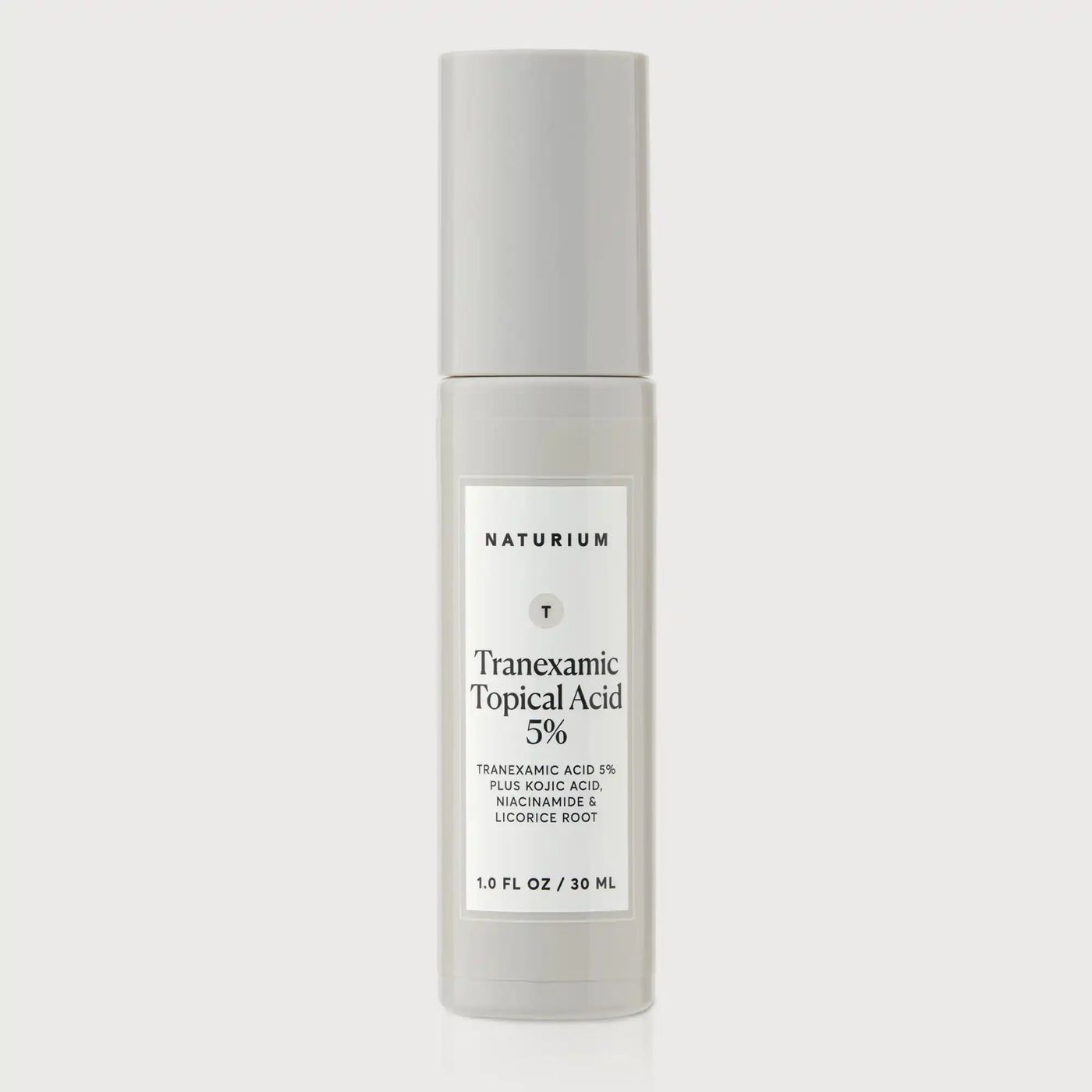
Tranexamic acid has emerged as one of the most useful topicals for both melasma and PIH in the last five years. It works by interfering with the plasmin-driven inflammatory signaling that activates melanocytes — a mechanism distinct from tyrosinase inhibition, which means it pairs well with traditional brightening agents. Concentrations of 2-5% in over-the-counter formulas show meaningful fading within 8-12 weeks of consistent use, and tolerability is excellent (PMID 37026889).
Niacinamide at 4-5% reduces the transfer of melanin from melanocytes to surrounding keratinocytes, which is a different intervention point from the tyrosinase inhibitors. It does not turn dark spots off at the source, but it slows their handoff into the visible layers of the skin. Studies on niacinamide for hyperpigmentation are less dramatic than the headlines suggest, but consistent improvement at the 8-12 week mark is real.
Vitamin C (l-ascorbic acid at 10-20%) is a tyrosinase inhibitor and a daytime antioxidant. The two functions combine into a useful AM serum: less melanin production going forward, plus some protection against the UV-driven oxidative stress that triggered the pigmentation in the first place. Stability is the catch — many vitamin C formulas degrade in months.
Retinoids (retinol, retinaldehyde, prescription tretinoin) accelerate the turnover of pigmented keratinocytes out of the upper layers of the skin. They do not do much directly to melanocytes, but they shorten the residence time of pigmented cells, which translates to visibly faster fading. Pair retinoids with sunscreen non-negotiably.
Azelaic acid at 10-20% is a tyrosinase inhibitor with a very gentle profile. It is one of the few brightening ingredients safe in pregnancy, and the prescription 15-20% formulations have a useful body of evidence for both melasma and PIH. The cosmetic experience is mediocre — azelaic acid often pills under sunscreen — but the results are quietly good.
Ingredients to Avoid
Most of the harm in this category is from over-treatment, not from any single bad ingredient. The biggest mistakes I see:
Hydroquinone for months at a time. It is the most-studied skin lightener, but extended use is associated with ochronosis — paradoxical darkening — and most dermatologists now prescribe it in cycles of 8-12 weeks with breaks. Long-term unsupervised use of OTC hydroquinone is a common path to making a problem worse.
Aggressive scrubs and physical exfoliants on PIH. Friction is itself an inflammatory trigger and can push borderline PIH into deeper, longer-lasting dermal pigmentation. If you are exfoliating a darkening area, choose chemical exfoliation under the supervision of a clinician.
Lemon juice, baking soda, or any DIY lightener. These swing skin pH wildly and cause irritation that often makes dark spots worse, not better. There is no peer-reviewed evidence for any of them.
A Sensible Routine
Morning: A gentle cleanser, vitamin C serum, broad-spectrum SPF 30 or higher (mineral or hybrid for melasma, since iron oxides also help block visible light). The sunscreen is the single most important part of this list. If you skip everything else and only do this, you will still see slow improvement.
Evening: A gentle cleanser, then a brightening serum (tranexamic acid or niacinamide on most nights, retinoid on alternating nights), then a barrier-supportive moisturizer. Add azelaic acid 2-3 nights a week if you tolerate it.
Realistic timeline: Ten to twelve weeks before you see meaningful fading on PIH, longer for melasma, often six months or more for solar lentigines. If you are at week four and frustrated, you are exactly on schedule.

Final Thoughts
Hyperpigmentation rewards patience more than any other skin concern I treat. The interventions that work are gentle and slow. The interventions that promise fast results are usually the ones that make pigmentation worse over time. Pick two or three of the ingredients above, run them for at least three months without changing anything else, and document with photographs once a month under the same lighting. That single habit will do more for your sense of progress than any other.
Medical Disclaimer
This article is for informational purposes and does not replace personalized advice from a board-certified dermatologist. If you have melasma, prescription-strength formulas (hydroquinone, triple-cream combinations) under medical supervision are usually more effective than OTC alternatives. If a dark spot is changing rapidly in size, color, or shape, see a clinician promptly to rule out other causes.
Affiliate Disclosure
Some links in this article may be affiliate links. If you purchase through them, BeautySift may earn a small commission at no additional cost to you. We only recommend products we have personally tested and would use ourselves. Affiliate revenue does not influence which products we choose to feature.


