If you have ever run your hand down the back of someone's arm and felt a stretch of tiny, flesh-colored bumps that look like permanent goosebumps, you have met keratosis pilaris. I have had it on the backs of my arms my entire life and on my upper thighs for most of it. It does not itch. It does not hurt. It is — depending on the person and the season — anywhere from invisible to noticeably bumpy and pink under bright bathroom light. And the most useful thing I learned, after years of trying scrubs that did nothing, was that the treatments which actually work are slow, simple, and almost entirely about chemical exfoliation rather than physical scrubbing.
This is what is going on under those bumps and what to do about them, based on the recent dermatology literature and a decade of trying things on my own skin (PMID 30043128).
What Is Keratosis Pilaris?
Keratosis pilaris (KP) is a very common, harmless skin condition where keratin — the protein that makes up the outermost skin layer — accumulates around hair follicles, plugging them and creating the small bumps that give the condition its "chicken skin" or "strawberry skin" nicknames. Each bump is the opening of a hair follicle filled with a hardened plug of keratin and dead skin cells.
KP affects somewhere between 50 and 80% of adolescents and 40% of adults to some degree, with a strong genetic component. Most people develop it in childhood or adolescence, and it often improves with age. The most common locations are the upper outer arms, thighs, buttocks, and sometimes the cheeks. There are several variants, including KP rubra (with a more inflamed, redder appearance) and KP atrophicans (which can leave small areas of post-inflammatory pigment change), but the most common form is simply small skin-colored bumps with no significant inflammation.
What Causes It
The underlying mechanism is a defect in keratinization at the hair follicle opening. Mutations in the filaggrin gene — the same gene linked to atopic dermatitis — are associated with KP, which is one reason KP often runs alongside eczema in the same person and the same family. Dry environments, low humidity, and harsh soaps tend to make KP look worse, while warm humid weather often improves it. Hormonal changes during adolescence are another reason KP often peaks in the teenage years (PMID 32886029).
There is no diet, supplement, or food sensitivity that has been demonstrated to cause or fix KP in the published literature. Genetic and environmental factors do most of the heavy lifting.
Ingredients That Help
The single best evidence we have for KP topical treatment points to chemical exfoliation with alpha hydroxy acids and humectant therapy with urea or lactic acid (PMID 35976015).
Lactic acid at 10-12% in a body lotion or cream is one of the most-supported treatments for KP. AmLactin is the classic over-the-counter formulation at this concentration. Lactic acid is both a chemical exfoliant — loosening the keratin plug at the follicle — and a humectant that draws water into the skin, which addresses the dryness component KP-prone skin tends to have. Twice daily application for at least 6-8 weeks shows visible smoothing in most people.

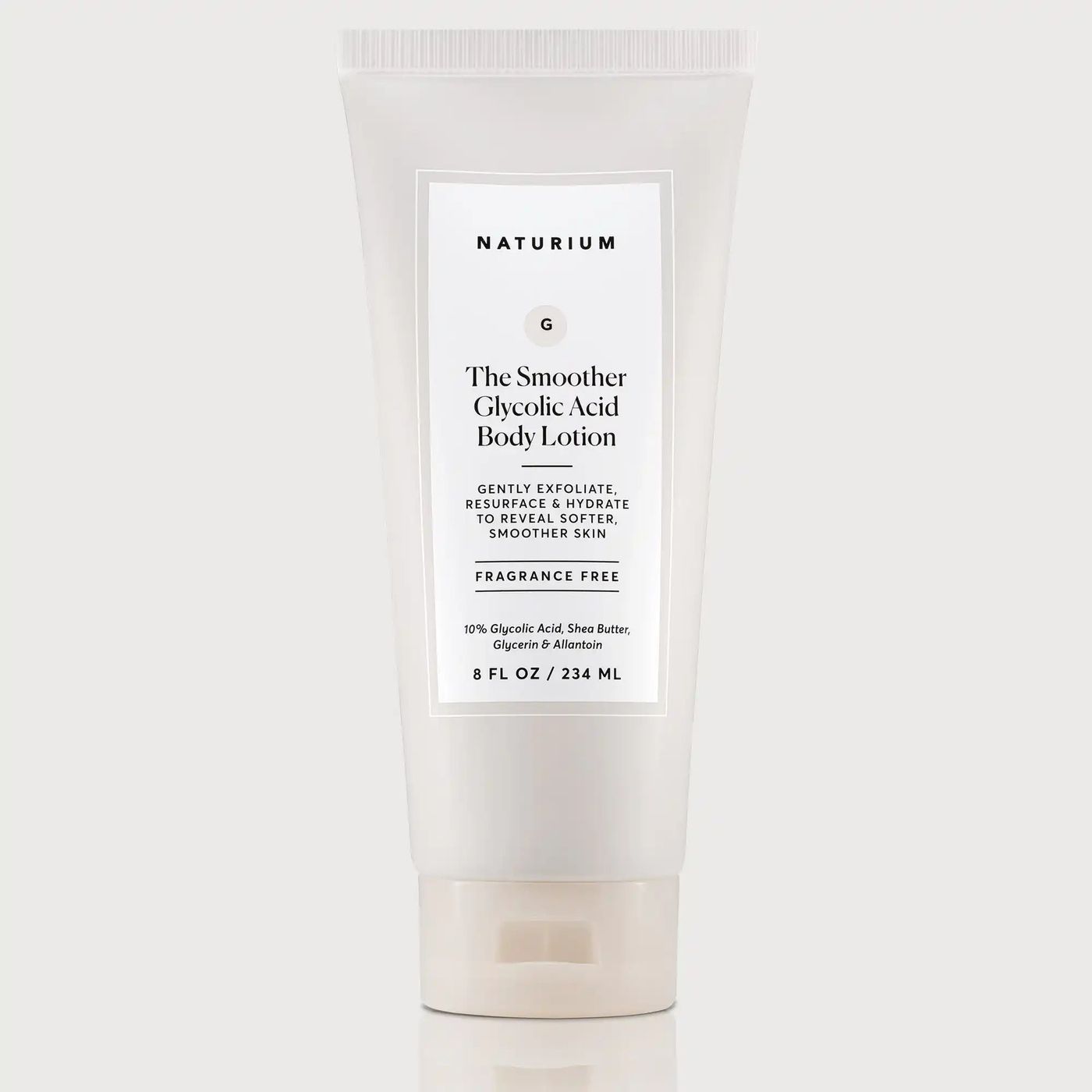
Glycolic acid at 8-12% in a body lotion works through similar mechanisms with slightly faster cell turnover. Naturium's Smoother glycolic body lotion at 10% is one of the popular options. The trade-off is more potential irritation than lactic acid, particularly on freshly shaved skin.
Urea at 10-20% is a humectant and a keratolytic — at higher concentrations it actually breaks down the keratin plug at the follicle. Eucerin Roughness Relief, CeraVe SA Cream for Rough and Bumpy Skin, and various urea creams are all useful. Urea creams tend to be cosmetically heavier than lactic or glycolic acid lotions but are particularly good in dry winter months.
Salicylic acid at 2% in a body wash or lotion is helpful when KP has an inflammatory or pustular component. Salicylic acid is lipophilic, meaning it penetrates the oily content of follicles where keratin builds up.
Topical retinoids — both prescription tretinoin and over-the-counter retinol body formulations — can help, particularly for KP rubra with persistent redness. They normalize follicular keratinization at the upstream level. They are slower than alpha hydroxy acids and have more irritation potential, so they are usually reserved for patients who have not responded to acid-based options.
Lasers — the 1064 nm Nd:YAG and pulsed dye laser — are the most effective treatments documented in the systematic reviews, particularly for the redness and inflammation components of KP rubra. They are not cheap and require multiple sessions, but for patients who have not gotten results from topicals, this is the next step worth discussing with a dermatologist.
What Does Not Help
Body scrubs. Coffee scrubs, sugar scrubs, salt scrubs, and synthetic-bead scrubs all create a brief illusion of smoothness through physical removal of surface keratin, but they do not address the follicular plugging underneath. They can also create micro-tears that worsen redness and post-inflammatory pigmentation in KP rubra.
Coconut oil. A perennially popular DIY treatment with no good evidence behind it for KP specifically. It is a fine moisturizer for some people but it does not exfoliate, and KP needs exfoliation.
Picking and squeezing. Almost guaranteed to leave scarring or dark marks, particularly in deeper skin tones. The temptation is real and the long-term cost is high.
Loofahs and harsh washcloths. Same issue as physical scrubs. Friction without targeted exfoliation rarely helps and often hurts.
A Sensible KP Routine
In the shower: Gentle cleanser, no scrubbing. Limit hot water exposure to under five minutes for affected areas. Pat dry rather than rub.
Twice daily: Apply a 10-12% lactic acid or 10% glycolic acid body lotion to the affected areas. The first 6-8 weeks are the test period — give it that long before judging the result. After that, you can usually drop to once daily for maintenance.
Optional alternating night treatment: Add a 10-20% urea cream on top of the alpha hydroxy acid lotion for the first month if your skin is also very dry, especially in winter.

Sunscreen: AHAs increase photosensitivity. If your KP is on areas regularly exposed to sun (forearms, lower legs in shorts), use sunscreen on those areas.
Realistic expectations: KP responds slowly. Six to eight weeks for visible smoothing, and the bumps return within two to four weeks of stopping treatment. KP is something you manage with a routine, not something you cure with a one-month effort.
Final Thoughts
Keratosis pilaris is harmless. The reason to treat it is cosmetic, and the right approach is one you can actually keep up — a single body lotion applied twice daily after the shower will outperform an elaborate seven-step plan you will abandon by month two. The boring routine wins. If you have tried two or three over-the-counter approaches without progress over six months, or if your KP has a meaningful inflammatory component, a dermatology consult to discuss prescription topicals or laser is the worthwhile next step.
Medical Disclaimer
This article is for informational purposes and does not replace personalized advice from a board-certified dermatologist. If your "KP" is suddenly worsening, intensely itchy, painful, or accompanied by other symptoms, see a clinician — several other skin conditions, including some forms of folliculitis, can mimic the appearance of KP and require different treatment.
Affiliate Disclosure
Some links in this article may be affiliate links. If you purchase through them, BeautySift may earn a small commission at no additional cost to you. We only recommend products we have personally tested and would use ourselves. Affiliate revenue does not influence which products we choose to feature.


