If you have spent any time on skincare social media, you have seen the words retinol, retinaldehyde, and tretinoin used as if they were three flavors of the same thing. They are not. They are three different molecules in the same family — vitamin A derivatives — that vary by potency, irritation profile, conversion steps in the skin, and whether you can buy them over the counter. Picking the right one is the most useful starting decision in an anti-aging or acne routine, and the wrong one is one of the most common reasons routines fail in the first eight weeks.
Here is the actual difference between the three, what the published clinical research supports, and how to pick.
The Retinoid Family
All topical retinoids belong to the vitamin A family and ultimately need to be converted to retinoic acid in the skin to bind to retinoic acid receptors and produce their effects. The three forms most commonly discussed in over-the-counter and prescription skincare differ by where they sit in this conversion chain (PMID 9284094).
Retinyl palmitate / retinyl acetate → retinol → retinaldehyde → retinoic acid (tretinoin) → bound to receptor → effect.
The closer the molecule starts to retinoic acid in the chain, the more potent it is and the more potential it has for irritation. The further from retinoic acid, the more conversion steps it has to go through and the gentler — and weaker — its effect tends to be.
Retinol: The Workhorse
Retinol is the most-studied over-the-counter retinoid and the form most beauty brands use when they put a "retinol" claim on a label. It is two conversion steps from retinoic acid — retinol to retinaldehyde to retinoic acid — and the conversion is relatively efficient in healthy skin. Topical retinol at 0.1% to 1.0% has been demonstrated to increase epidermal thickness, reduce fine lines, and improve overall skin tone with consistent use over months (PMID 36220974).
Retinol's main strengths: widely available, predictable, well-studied, and affordable. Most over-the-counter formulas are at 0.1-0.5%; the higher end (0.5-1.0%) is closer in clinical performance to low-strength prescription tretinoin. The main downside is that retinol is unstable in light and air, which is why packaging matters more for retinol products than for almost any other category — opaque tubes and airless pumps, not clear jars.
Best for: Beginners, anyone wanting an affordable evidence-based retinoid, sensitive-skin patients starting at the lower end of the percentage range.
Retinaldehyde (Retinal): The Underrated Middle Option
Retinaldehyde — sometimes labeled "retinal" — is one conversion step from retinoic acid, which makes it more potent than retinol and somewhat closer to tretinoin in efficacy. Despite this, it has a meaningfully better tolerance profile than tretinoin and roughly equivalent tolerance to retinol at comparable potencies (PMID 10473963).
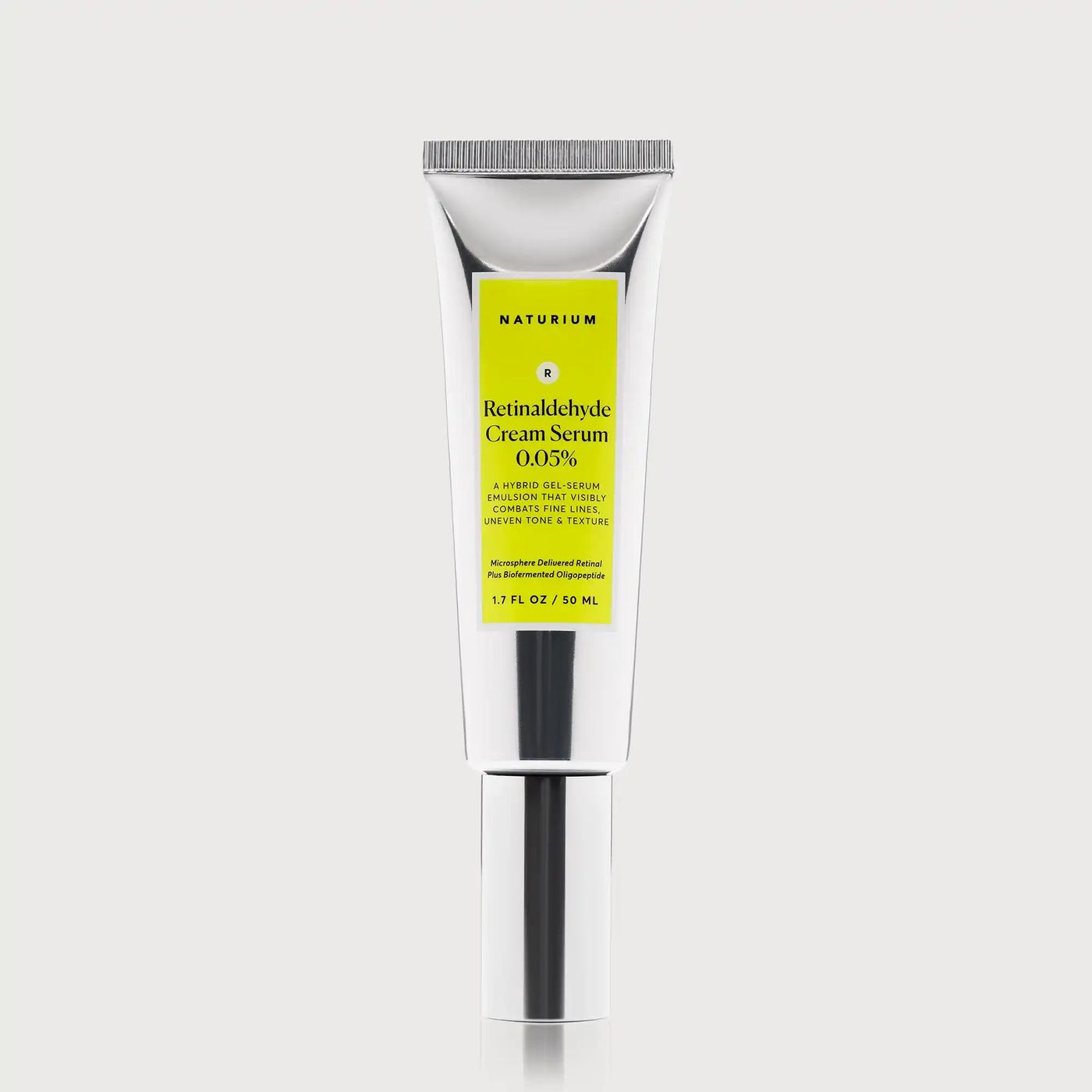
Retinaldehyde at 0.05-0.1% in a stable formulation produces results in the 8-12 week window that some studies show are comparable to retinol at 1.0%, with less irritation per unit of effect. The catch has historically been formulation difficulty — retinaldehyde is even less stable than retinol — and price. Newer microsphere-encapsulated retinaldehyde products at affordable price points have made the category meaningfully more accessible in the last few years.
Best for: People who have tried retinol and want more results, people who cannot tolerate tretinoin's irritation but want closer-to-prescription efficacy, anyone in their 30s or older who is already barrier-supported and ready for a slightly stronger active.
Tretinoin: The Prescription Standard
Tretinoin is retinoic acid itself — the active form that all the others convert to. Available by prescription only in the US, tretinoin is the most-studied topical anti-aging and anti-acne ingredient and the strongest member of the retinoid family available in standard cosmetic dermatology (PMID 39348007). Concentrations range from 0.025% to 0.1%, with the lower end appropriate for sensitive skin or first-time users and the higher end reserved for patients who tolerate the lower concentrations well.
Tretinoin produces faster and more robust results than over-the-counter alternatives. It is also the most irritating, with a near-universal "retinization" period of 4-8 weeks during which most patients experience peeling, redness, and dryness. The literature shows that with consistent use over 6-12 months, tretinoin produces measurable improvements in fine lines, hyperpigmentation, photodamage, and acne that exceed what over-the-counter retinoids deliver.
Best for: Acne treatment, moderate-to-significant photoaging, anyone who has plateaued on over-the-counter retinoids, patients willing to work with a dermatologist on the right concentration and rollout.
The Practical Differences
| Feature | Retinol | Retinaldehyde | Tretinoin | |---|---|---|---| | Conversion steps | 2 | 1 | 0 (active form) | | Strength | Mild-moderate | Moderate | Strong | | Irritation potential | Low-moderate | Low-moderate | Moderate-high | | Time to visible result | 12-16 weeks | 8-12 weeks | 6-12 weeks | | Availability | OTC | OTC | Prescription | | Typical OTC range | 0.1-1.0% | 0.05-0.1% | n/a | | Typical prescription range | n/a | n/a | 0.025-0.1% |
How to Pick
You have never used a retinoid before: start with retinol at the lowest concentration the brand sells, two nights a week for the first month, then every other night. Plan to give it 12-16 weeks before judging.
Retinol has not given you results after 6 months of consistent use, or you want stronger: step up to retinaldehyde at 0.05% nightly. Most people tolerate this transition well.
You have meaningful photoaging, persistent acne, or want the most-studied option: book a dermatology consult and ask about tretinoin. Start at 0.025% and titrate up only if tolerated.
You have rosacea or very reactive skin: retinaldehyde and prescription azelaic acid are usually better-tolerated than retinol in this group. Tretinoin is generally too irritating without careful management.
You are pregnant or breastfeeding: all topical retinoids are off-limits per current OB-GYN consensus. Use bakuchiol, niacinamide, and vitamin C as alternatives.
Common Mistakes
Switching brands of retinol every two months looking for "the right one." The active is the active. Pick a stable, opaque-packaging formula at the right percentage and stay with it for three months before judging.
Stacking retinol and tretinoin "for stronger results." They are the same family. Doubling them doubles the irritation, not the effect.
Stopping at the first peeling phase. The retinization period is real, expected, and resolves at week four to eight. Push through with moisturizer support and reduced frequency if needed.
Using a retinoid without sunscreen. All retinoids increase photosensitivity. Daily SPF 30 or higher is non-negotiable.
Combining retinoids with strong acids the same night. AHAs, BHAs, and benzoyl peroxide all interact with retinoids in ways that increase irritation without proportionally increasing benefit. Alternate nights or move acids to morning.
Final Thoughts
The right retinoid for you depends more on your starting point and your patience than on any objective ranking of the three. A consistent retinol routine for 12 months will outperform an aspirational tretinoin routine that gets abandoned in week six. Pick the strongest one you can use consistently, give it the time the literature actually supports, and resist the urge to upgrade every season.
Medical Disclaimer
This article is for informational purposes and does not replace personalized advice from a board-certified dermatologist. Tretinoin and other prescription retinoids require medical evaluation. Pregnant and breastfeeding individuals should not use topical retinoids of any class.
Affiliate Disclosure
Some links in this article may be affiliate links. If you purchase through them, BeautySift may earn a small commission at no additional cost to you. We only recommend products we have personally tested and would use ourselves. Affiliate revenue does not influence which products we choose to feature.


