
BHA Salicylic Exfoliants vs Kojic Acid Products: Sensitive-Skin Fit
Evidence-weighted comparison of BHA salicylic exfoliants and kojic acid products for sensitive skin, clogged pores, hormonal acne, and dark spots.
We analyzed 4 PubMed sources, FDA BHA safety guidance, AAD acne guidance, and Amazon US snapshots across 7 products. BHA picks averaged 4.62/5 across 15,674 Amazon ratings; kojic acid picks averaged 4.32/5 across 113,007 ratings. For sensitive skin, BHA fits clogged pores; kojic acid fits dark spots but has more allergy caveats.
| Criterion | BHA salicylic exfoliants Salicylic acid category $6.70 | Kojic acid products Kojic acid category $8 |
|---|---|---|
| Primary ingredient evidence How directly the cited ingredient literature supports the category's main skin goal. | 8.4/10 | 7.2/10 |
| Sensitive-skin tolerability Lower likelihood of stinging, allergic contact dermatitis, barrier disruption, or overuse irritation scores higher. | 7.4/10 | 6.2/10 |
| Hormonal-acne fit How well the category addresses clogged pores and acne lesions often seen alongside adult hormonal breakouts, without claiming to treat hormones. | 8.5/10 | 3.8/10 |
| Hyperpigmentation fit How directly the category supports dark spots, post-blemish marks, and melasma-leaning discoloration. | 5.9/10 | 8.1/10 |
| Amazon rating volume Representative Amazon US rating depth across selected products captured for this article. | 6.8/10 | 9.2/10 |
| Price and value Visible Amazon US price relative to formula role, product size, and likely routine frequency. | 8.1/10 | 8.5/10 |
| Routine flexibility How easily the category fits a mature, sensitivity-aware routine with moisturizer, sunscreen, retinoids, and barrier support. | 7.7/10 | 6.8/10 |
| Overall evidence strength Balance of peer-reviewed evidence, agency guidance, user rating depth, and US availability. | 8.0/10 | 7.3/10 |
| Overall score | 7.60 | 7.14 |
🏆 Winner: BHA salicylic exfoliants for sensitive, acne-prone skin; kojic acid products for discoloration-focused routines
BHA wins the sensitive acne-prone use case because AAD guidance names salicylic acid for opening clogged pores, and PubMed acne studies include a 12-RCT systematic review plus a day-98 comedonal-acne study reporting a 48.5% noninflammatory lesion reduction with salicylic acid peel protocols. Kojic acid wins the dark-spot use case, but the best cited melasma trial used kojic acid as a 2% adjunct, not as a standalone soap.
Best on a budget
The Ordinary Salicylic Acid 2% Solution for BHA value at a $6.70 Amazon snapshot; Good Molecules Brightening & Dark Spots Bar for a lower-price kojic-acid option at an $8.00 Amazon snapshot.
Best for results
BHA salicylic exfoliants for clogged pores, whiteheads, and acne-prone texture; kojic acid products for dark spots when used cautiously and paired with sunscreen.
Quick answer for sensitive skin
If your sensitive skin is also acne-prone, BHA salicylic exfoliants are the more practical first choice. The American Academy of Dermatology Association names salicylic acid as an acne treatment that opens clogged pores and exfoliates skin, and the salicylic-acid side of our Amazon snapshot averaged 4.62/5 across 15,674 ratings. That evidence fits clogged pores, whiteheads, blackheads, and the rough texture that often follows adult breakouts.
Kojic acid products are more pigment-focused. The strongest kojic acid citation we found is Lim 1999 in Dermatologic Surgery: a 40-woman split-face melasma trial where 2% kojic acid was added to a glycolic acid and hydroquinone gel for 12 weeks. That is useful dark-spot evidence, but it is not the same as saying every kojic acid soap will fade post-acne marks on sensitive skin. Kojic acid also has a documented allergic-contact-dermatitis caveat in Nakagawa 1995, which matters if your skin stings easily or reacts to fragrance-heavy bars.
What each ingredient is actually trying to do
BHA stands for beta hydroxy acid. In over-the-counter skin care, the FDA identifies salicylic acid as the most common BHA used in cosmetics. Its main appeal is oil-pathway access: it is commonly framed for pores, acne-prone texture, and comedones rather than for generalized brightening. That is why BHA tends to make more sense when a 40- or 50-something shopper says, “My chin keeps clogging,” “I still break out before my period,” or “Retinol helps texture but my pores still feel congested.”
Kojic acid is a brightening ingredient. It is usually discussed as a tyrosinase-inhibiting support for uneven pigment, dark spots, and melasma-leaning discoloration. In real retail products, though, kojic acid often appears with other brighteners, exfoliating acids, turmeric, niacinamide, alpha arbutin, licorice, or cleansing surfactants. That makes single-ingredient attribution harder. If a kojic acid bar improves the look of a mark, the result may reflect kojic acid, exfoliation, consistent sunscreen, less inflammation, or all of the above.
For mature sensitive skin, that distinction is the article’s main takeaway: BHA is the better category for clogged pores and acne-prone texture; kojic acid is the better category for discoloration goals, but only if your skin tolerates it and you are not using it aggressively.
Evidence check: BHA has the cleaner acne logic
The BHA side has better direct acne logic. AAD patient guidance describes salicylic acid as helping open clogged pores and exfoliate skin. Kessler 2008, a 20-patient split-face randomized study in Dermatologic Surgery, compared 30% glycolic acid and 30% salicylic acid peel protocols for mild to moderately severe acne. Both sides improved acne lesions, but the salicylic acid side had more sustained benefit at the 2-month follow-up and fewer adverse events after the initial treatment.
Levesque 2011 gives a useful numeric anchor for clogged pores. In a 20-subject split-face comedonal-acne study, the salicylic-acid peel arm reduced noninflammatory lesions by 48.5% by day 98. That does not translate directly to a 2% leave-on serum or a drugstore cleanser, but it supports why salicylic acid is more relevant to whiteheads and blackheads than kojic acid is.
Chen 2018, a BMJ Open systematic review, keeps the evidence honest. It reviewed 12 randomized trials with 387 participants and concluded that chemical peels can help acne, while also noting limitations in certainty and protocol consistency. For BeautySift scoring, that means BHA gets a strong but not unlimited acne-evidence score. It has a clear job; it still needs conservative use.
Evidence check: kojic acid is more discoloration-specific, less standalone
Kojic acid has a better pigment story than an acne story. Lim 1999 studied 40 women with melasma using a split-face design over 12 weeks. The kojic acid side used 2% kojic acid plus 10% glycolic acid and 2% hydroquinone; the comparison side used the same formula without kojic acid. More than half of melasma cleared in 24 of 40 patients, or 60%, on the kojic acid side, compared with 19 of 40 patients, or 47.5%, on the non-kojic side.
That is a meaningful signal, but it is also a caveat. The formula included glycolic acid and hydroquinone, and the study was on melasma, not a modern Amazon soap used in a shower routine. Austin 2019, a systematic review of topical melasma randomized controlled trials, places kojic acid within the broader melasma evidence base but does not make it the strongest-supported topical option compared with better-studied medical or multi-active approaches.
For post-acne hyperpigmentation after hormonal breakouts, kojic acid can be reasonable if your skin tolerates it. It is not an acne-control ingredient. It will not address oil flow, clogged pores, or hormone-linked inflammation. Think of it as a tone-support product after the breakout cycle is calmer, not as the product that stops the cycle.
Tolerability: the sensitive-skin difference
Sensitive skin is not one skin type. Some people are sensitive because their barrier is dry and reactive. Some are sensitive because they overuse acids. Some have rosacea-leaning flushing. Some are acne-prone and react to heavy creams. BHA and kojic acid fail in different ways.
BHA failure usually looks like over-exfoliation: tightness, peeling, a shiny dehydrated look, or stinging when moisturizer touches the skin. FDA BHA guidance emphasizes that salicylic-acid-related cosmetic ingredients should be formulated to avoid irritation and sun sensitivity. For a shopper over 40, that points to a slower routine: one BHA product, 2 or 3 nights weekly, followed by a bland moisturizer. If you already use a retinoid, do not stack a leave-on BHA on the same night until your skin has proved it can handle both.
Kojic acid failure can look more like irritation or allergy. Nakagawa 1995 patch-tested 220 female patients with suspected cosmetic-related contact dermatitis; among 8 patients who had used kojic-acid-containing products, 5 reacted to kojic acid and to their own 1% kojic-acid products. That is not a population-wide allergy rate, but it is enough to justify patch testing, especially with leave-on brighteners or strongly fragranced soaps.
Amazon snapshot: popularity does not equal suitability
Amazon volume favored kojic acid in this snapshot because kojic acid soaps are high-volume, low-price products. The four kojic products we tracked averaged 4.32/5 across 113,007 visible Amazon ratings. VALITIC Kojic Acid Dark Spot Remover Soap Bars alone accounted for 69,301 ratings at a 4.3/5 snapshot, while Kojie San Skin and Body Brightening Soap showed 31,225 ratings at 4.3/5.
BHA had lower total rating depth in the selected products, but higher average rating: 4.62/5 across 15,674 visible Amazon ratings. The Ordinary Salicylic Acid 2% Solution showed 4.7/5 across 9,997 ratings at a $6.70 snapshot. COSRX Niacinamide 2% + BHA 4% Blackhead Exfoliant Toner showed 4.5/5 across 4,179 ratings. Neutrogena Stubborn Texture Daily Acne Facial Cleanser showed 4.4/5 across 1,498 ratings.
Those numbers are not a clinical head-to-head. They help with retail confidence and product availability. The clinical question still comes first: if your main issue is active congestion, BHA is more aligned; if your main issue is residual brown marks, kojic acid is more aligned.
Product-side notes: 3 BHA picks and 4 kojic picks
The Ordinary Salicylic Acid 2% Solution is the cleanest budget BHA representative in this comparison. It is a leave-on serum, so it gives more control than a cleanser but also more irritation potential if layered with retinoids, benzoyl peroxide, or other acids. The Amazon snapshot showed 4.7/5 across 9,997 ratings, which gave it the strongest rating average among the selected BHA products.
COSRX Niacinamide 2% + BHA 4% Blackhead Exfoliant Toner is the more toner-style option. The niacinamide pairing is useful for shoppers who want oil-control and tone support in the same step, though sensitive users should still avoid assuming that more actives are automatically gentler. Neutrogena Stubborn Texture Daily Acne Facial Cleanser is the easiest short-contact BHA format. A cleanser can be less intense than a leave-on acid, though contact time and surfactant tolerance still matter.
On the kojic side, Good Molecules Brightening & Dark Spots Bar is the lowest-price representative in our snapshot at $8.00. Kitsch Kojic Acid Soap Turmeric Soap Bar had the highest average among the kojic group at 4.5/5 across 9,623 ratings. Kojie San and VALITIC bring much larger Amazon rating volume, but both are still soap formats, which can be drying for some mature sensitive faces. For many shoppers, kojic acid soap makes more sense for body discoloration or short-contact use than as a daily facial treatment.
How to choose by skin scenario
Choose BHA if your breakouts are still active. If you see closed comedones on the chin, jawline, or around the mouth, BHA has the better evidence connection. It can also help when adult hormonal breakouts leave rough texture after the bump goes down. Keep expectations cosmetic: BHA can reduce clogged-pore buildup, but it does not correct hormones.
Choose kojic acid if your acne is mostly quiet and the remaining problem is brown post-inflammatory marks. Kojic acid is better aimed at discoloration than at lesion control. Use it like a brightening support, not a scrub. If a soap is the format, lather briefly, rinse well, moisturize, and stop if itching or rash appears.
If you have both problems, sequence matters. Start with the acne-control step first because new inflammation can create new discoloration. Once your skin is tolerating BHA and your breakout frequency is lower, add a pigment-support step on alternate nights or as a short-contact wash. Adding both at full frequency in the same week is how sensitive routines often fail.
Routine template for women 35-55
Morning should stay boring: gentle cleanser or rinse, moisturizer if needed, and broad-spectrum sunscreen. Sunscreen is nonnegotiable for both categories because irritation and UV exposure can make post-inflammatory discoloration look more stubborn. If you use vitamin C or niacinamide in the morning and tolerate it well, keep it; do not add three new brighteners at once.
At night, use BHA 2 or 3 times weekly if clogged pores are your main issue. Use a pea-size amount for a leave-on serum or one cleanse with a BHA cleanser, then moisturize. On non-BHA nights, use barrier support: ceramides, glycerin, petrolatum in dry patches, or a simple moisturizer your skin already trusts.
If dark spots are the main issue and you want kojic acid, start with 2 or 3 short-contact uses weekly. Patch test first on the jaw or behind the ear. Do not use kojic acid soap as a twice-daily facial cleanser if your skin already feels tight. Mature skin often has less tolerance for repeated degreasing, especially in Midwest winter cold or dry Southwest air.
Verdict
BHA salicylic exfoliants win for sensitive skin when the problem is clogged pores, whiteheads, blackheads, or adult acne texture. The ingredient has clearer acne guidance from the AAD, direct FDA BHA safety context, and multiple PubMed acne citations. It is not irritation-free, but its job is well matched to hormonal-acne-adjacent congestion.
Kojic acid products win only when the main problem is discoloration and the skin can tolerate the format. The pigment evidence is real but more adjunctive: Lim 1999 supports 2% kojic acid added to a multi-active melasma gel, not every kojic bar on Amazon. The allergy caveat from Nakagawa 1995 also makes patch testing more important than it is for many basic BHA products.
For most sensitive, acne-prone women over 40, start with a conservative BHA routine, stabilize the barrier, then add a kojic acid product only if dark spots remain the priority.
Related reading
Both winners on Amazon
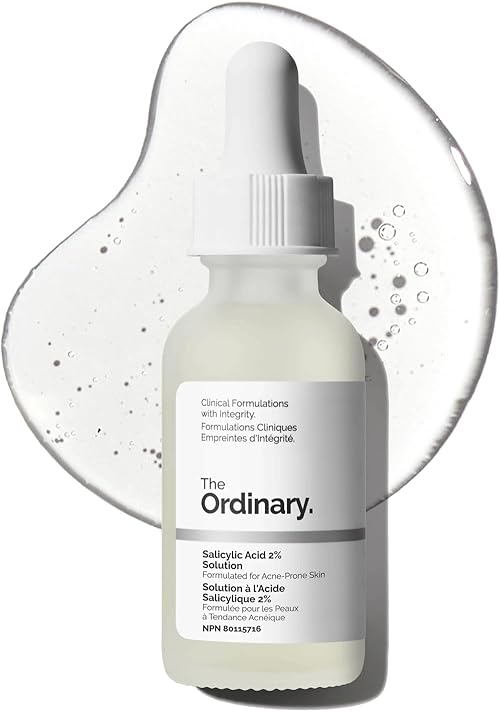
The Ordinary
The Ordinary Salicylic Acid 2% Solution
$6.70
"Budget BHA representative with 4.7/5 across 9,997 visible Amazon ratings in the snapshot."
What real Amazon buyers say
4.7★· 9,997 reviews"The texture is lightweight and absorbs quickly into the skin without feeling greasy or heavy, which makes it easy to include in both my morning and nighttime routine."
"Love the salicylic acid. I use it twice a week and the results have been great so far, my face feels exfoliated and it gives a fresh look."

COSRX
COSRX Niacinamide 2% + BHA 4% Blackhead Exfoliant Toner
$18.49
"BHA toner representative with niacinamide and 4.5/5 across 4,179 visible Amazon ratings in the snapshot."
What real Amazon buyers say
4.5★· 4,179 reviews"This is a great product! My skin feels and looks much smoother."
"This blackhead Exfoliant toner works better than I anticipated. It really makes my pores appear smaller and really helps control the blackheads."

Neutrogena
Neutrogena Stubborn Texture Daily Acne Facial Cleanser
$16.99
"Drugstore cleanser representative with salicylic acid and 4.4/5 across 1,498 visible Amazon ratings in the snapshot."
What real Amazon buyers say
4.4★· 1,498 reviews"It makes my skin feel clean and smooth without over-drying."
"My face didn't feel fully cleansed when I rinsed. I had to wash my face with a different soap."

Good Molecules
Good Molecules Brightening & Dark Spots Bar
$8
"Lower-price kojic-acid-side bar with 4.3/5 across 2,858 visible Amazon ratings in the snapshot."

Kitsch
Kitsch Kojic Acid Soap Turmeric Soap Bar
$9.48
"Kojic acid soap representative with 4.5/5 across 9,623 visible Amazon ratings in the snapshot."

Kojie San
Kojie San Skin and Body Brightening Soap
$9.14
"High-volume kojic acid soap representative with 4.3/5 across 31,225 visible Amazon ratings in the snapshot."
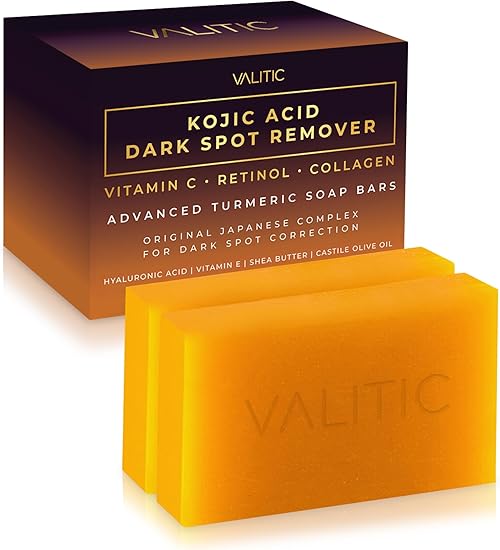
VALITIC
VALITIC Kojic Acid Dark Spot Remover Soap Bars
$11.99
"Highest-rating-volume kojic soap representative in this snapshot, with 4.3/5 across 69,301 visible Amazon ratings."