
Clean-Beauty vs Traditional Vitamin C Serums for Sensitive Skin in 2026
An evidence-weighted comparison of clean-positioned and traditional vitamin C serums for sensitive skin, with Amazon, Sephora, Ulta, brand, and PubMed sources.
We analyzed 8 US sources, including Amazon ratings for Mad Hippie (4.6/5, 3,671 ratings), Biossance (4.7/5, 1,100 ratings), and Paula's Choice C15 (4.2/5, 3,150 ratings), plus Sephora, Ulta, brand, Byrdie, and PubMed evidence. Mad Hippie is the gentler sensitive-skin winner; Paula's Choice is the stronger traditional results pick.
| Criterion | Vitamin C Serum Mad Hippie $27.19 | Squalane + Vitamin C Rose Advanced Facial Oil Biossance $74 | BOOST C15 Super Booster Paula's Choice $38.50 |
|---|---|---|---|
| Sensitive-skin tolerability How forgiving the formula appears for reactive skin, based on vitamin C form, texture, fragrance considerations, and public review language. | 8.8/10 | 7.7/10 | 6.8/10 |
| Evidence alignment for dullness and dark spots How closely the formula matches peer-reviewed topical vitamin C evidence for visible dullness, hyperpigmentation support, and photoaging-related tone concerns. | 7.2/10 | 6.7/10 | 8.9/10 |
| Mature-skin friendliness Balance of brightening support, dryness compatibility, makeup-layering practicality, and barrier-respectful use for women 35-55. | 8.5/10 | 8.1/10 | 7.3/10 |
| User sentiment depth Public review volume and rating strength across Amazon, Sephora, Ulta, and official brand snapshots available for this comparison. | 8.7/10 | 8.3/10 | 8.0/10 |
| Value in USD Visible Amazon US price compared with formula role, size, and likelihood of daily use without wasting product. | 9.0/10 | 5.9/10 | 8.1/10 |
| Formula directness Whether the product uses traditional low-pH L-ascorbic acid or a gentler derivative/oil format, and how directly that choice maps to published vitamin C evidence. | 7.1/10 | 6.4/10 | 8.8/10 |
| US accessibility Ease of finding the product through US Amazon, Sephora, Ulta, or official US retail channels. | 8.6/10 | 8.3/10 | 8.4/10 |
| Overall score | 8.27 | 7.34 | 8.04 |
🏆 Winner: Mad Hippie Vitamin C Serum
Mad Hippie wins for sensitive skin because it combines the strongest value score, 9.0, with the highest tolerability score, 8.8, and broad public sentiment: Amazon shows 4.6/5 across 3,671 ratings and Ulta shows 4.7/5 across 240 reviews. Paula's Choice C15 is the better evidence-aligned traditional results pick because its official page identifies a 15% vitamin C booster and PubMed evidence favors low-pH L-ascorbic acid delivery, but that same traditional format carries more sting potential for reactive skin.
Best on a budget
Mad Hippie Vitamin C Serum
Best for results
Paula's Choice BOOST C15 Super Booster
Bottom line
For sensitive skin, the clean-beauty side wins this comparison, but not because the word “clean” is a clinical standard. Mad Hippie Vitamin C Serum is the most balanced pick for a US shopper who wants brightness support without jumping straight into a sharper low-pH traditional serum. Amazon’s US page shows Mad Hippie at 4.6/5 across 3,671 global ratings, and Ulta’s public structured data shows 4.7/5 across 240 reviews. That combination gives it the strongest value-and-tolerability profile in this head-to-head.
Paula’s Choice BOOST C15 Super Booster is the stronger results-oriented traditional vitamin C serum. Its official US page positions the formula as a 15% vitamin C booster, and the Pinnell 2001 PubMed absorption paper supports the logic behind low-pH L-ascorbic acid delivery. The tradeoff is comfort. Traditional L-ascorbic acid can sting, especially on skin already stressed by retinoids, exfoliating acids, rosacea flares, or Midwest winter dryness.
Biossance Squalane + Vitamin C Rose Advanced Facial Oil sits between those two. It is the best clean-positioned pick for dry sensitive skin that likes a facial oil finish, but its $74 Amazon snapshot price and oil texture make it less universal than Mad Hippie.
What “clean” and “traditional” mean here
Beauty shoppers often use “clean vitamin C” to mean fragrance-conscious, cruelty-free, plant-forward, or sold by retailers with restricted-ingredient programs. That language can be useful for shopping, but it is not the same as a dermatology claim. A clean-positioned serum can still contain botanicals or aromatic components that bother reactive skin. A traditional serum can be fragrance-free and well-formulated, even if it uses a classic low-pH active system.
For this comparison, we treated Mad Hippie and Biossance as clean-positioned options because they are marketed around gentler, more lifestyle-led formulas and have strong US retail visibility in clean-beauty contexts. We treated Paula’s Choice C15 as the traditional contender because it is built around a familiar 15% vitamin C booster format and competes more directly with the classic L-ascorbic acid, vitamin E, and ferulic acid category.
The sensitive-skin question is not “Which label sounds safer?” It is “Which formula gives enough visible-brightening evidence without pushing my barrier into stinging, peeling, or redness?” For women 35-55, that matters because vitamin C is often being layered with sunscreen, retinoids, peptides, exfoliating acids, and richer moisturizers.
Why Mad Hippie wins for sensitive skin
Mad Hippie wins because it is the easiest product in this comparison to justify as a daily starting point. The Amazon rating snapshot, 4.6/5 across 3,671 ratings, is broad enough to be meaningful, and Ulta’s 4.7/5 across 240 reviews adds a second US retail signal. That does not prove it will work for every face, but it does show a strong public-tolerance pattern for a serum priced at $27.19 in the Amazon snapshot.
Its formula positioning also helps. The Amazon listing describes a stable, low-irritation vitamin C serum with vitamin E, ferulic acid, and hyaluronic acid. The key phrase for sensitive skin is not “natural” or “clean.” It is “low-irritation.” If your skin stings from traditional L-ascorbic acid, a gentler-feeling vitamin C routine can be more realistic than buying the strongest serum and abandoning it after one week.
Mature skin also benefits from the texture profile reviewers repeatedly mention. Amazon reviewers quoted on the product page describe it as wearing well under makeup and drying quickly. That matters for women 35-55 because a morning antioxidant has to sit under moisturizer, sunscreen, and often foundation. A serum that pills or stays tacky is less likely to survive real weekday use.
Where Paula’s Choice C15 is stronger
Paula’s Choice C15 is the better choice if your skin tolerates active serums and your main goal is the most evidence-aligned vitamin C format. The official Paula’s Choice US page reports 4.6/5 across 395 reviews and identifies C15 as a 15% vitamin C booster. Amazon’s US listing shows 4.2/5 across 3,150 ratings at $38.50 in the snapshot used here.
The evidence advantage comes from L-ascorbic acid research. The Pinnell 2001 Dermatologic Surgery paper reports that L-ascorbic acid absorption depends on low pH, and the 2023 Journal of Cosmetic Dermatology systematic review evaluated topical vitamin C evidence for melasma and photoaging. Those studies do not prove that one bottle of Paula’s Choice will clear dark spots, but they explain why traditional L-ascorbic acid formulas keep showing up in dermatologist and editor recommendations.
The downside is that evidence directness and comfort can move in opposite directions. Sensitive skin often reacts to low-pH formulas with tingling, flushing, or tightness. If you use prescription tretinoin, benzoyl peroxide, glycolic acid, or an at-home peel routine, Paula’s Choice C15 may be better introduced two or three mornings per week rather than daily from day one.
Where Biossance fits
Biossance is the dry-skin pick, not the universal winner. Amazon shows 4.7/5 across 1,100 global ratings, while Sephora’s public structured data shows 4.36/5 across 1,865 reviews. Those are strong sentiment signals, and the product makes the most sense for skin that feels tight, flaky, or depleted when using water-light serums.
The reason it does not win overall is texture and price. A facial oil can be elegant on dry cheeks and less ideal on an oily T-zone, especially in Florida summer humidity. At $74 in the Amazon snapshot, Biossance also costs more than both Mad Hippie and Paula’s Choice. For a 35-55 shopper who already owns a good moisturizer, the incremental value is strongest if oil-based cushioning is the missing step.
It is also less direct as a traditional vitamin C intervention. Biossance is useful when you want glow, softness, and a less clinical-feeling routine. Paula’s Choice is the sharper evidence play. Mad Hippie is the middle path: affordable, better tolerated on paper, and easier to layer under sunscreen and makeup.
Scorecard interpretation
The scoring deliberately separates tolerability from evidence strength. Paula’s Choice earns the highest evidence-alignment score, 8.9, because 15% vitamin C maps more directly to the L-ascorbic acid literature than a clean-positioned derivative or oil-style routine. Mad Hippie earns the highest tolerability score, 8.8, because its US review pattern and low-irritation positioning better fit reactive skin.
Value also shifts the result. Mad Hippie was $27.19 in the Amazon snapshot, compared with $38.50 for Paula’s Choice and $74 for Biossance. If two serums both require consistent morning use, the one that is easier to repurchase usually has a practical advantage. A vitamin C serum only helps if you can use it regularly, replace it before it oxidizes, and pair it with sunscreen.
For mature skin, the safest summary is this: choose Mad Hippie if you want the least fussy sensitive-skin starting point, choose Paula’s Choice if you already tolerate active serums and want a more traditional results path, and choose Biossance if dryness and a softer oil finish matter more than price.
How to introduce either type without irritation
Start with frequency, not strength. Use a new vitamin C serum every other morning for the first week, then increase only if your skin stays calm. Do not start a new retinoid, glycolic acid toner, and vitamin C serum in the same seven-day window. If redness appears, the problem may be the combination, not the vitamin C alone.
Apply vitamin C after cleansing and before moisturizer or sunscreen. If your skin is dry, apply a bland moisturizer after the serum and give it a minute before sunscreen. If your skin is oily, use less product than the dropper suggests and watch for pilling under SPF.
Do not judge hyperpigmentation progress without sunscreen. Vitamin C can support brighter-looking skin, but daily broad-spectrum SPF is still the anchor for sun spots, post-acne marks, and uneven tone. If you are dealing with melasma, rapidly changing pigmentation, or irritation-prone prescription routines, get dermatologist guidance instead of escalating actives on your own.
Who should choose each serum
Choose Mad Hippie if your skin often rejects active serums, you want a lower-cost daily antioxidant, or you need something that can sit under makeup without turning the morning routine into a texture experiment. Its strongest case is practical consistency: the Amazon and Ulta review snapshots both point to broad user acceptance, and the price is easier to repeat every few months.
Choose Paula’s Choice if your barrier is stable and you want the clearest traditional vitamin C logic. It is the most direct match for shoppers comparing 15% vitamin C boosters, but it should be introduced carefully if you also use retinoids or acids. Choose Biossance if dry cheeks, tightness, and winter dullness are bigger concerns than price. Its oil format can be comforting, but combination or breakout-prone skin may prefer a lighter serum.
Affiliate disclosure
BeautySift may earn a commission from Amazon links in this article. Affiliate relationships do not influence the scoring rubric; this comparison is based on public Amazon US listing data, Sephora and Ulta review snapshots, official brand data, US editorial context, and PubMed literature.
Related reading
Both winners on Amazon

Mad Hippie
Mad Hippie Vitamin C Serum
$27.19
"Best sensitive-skin balance in this comparison: Amazon shows 4.6/5 across 3,671 ratings, while Ulta public data shows 4.7/5 across 240 reviews."
What real Amazon buyers say
4.6★· 3,671 reviews"So far I love this serum. It goes under makeup very well and I've gotten compliments that my skin looks brighter. My skin feels smoother and my pores appear to be smaller."
"Such a great serum for this price point! Very thick and luxurious, yet fast drying. Has made a huge improvement in the brightness of my skin. I use this in my daily morning routine."
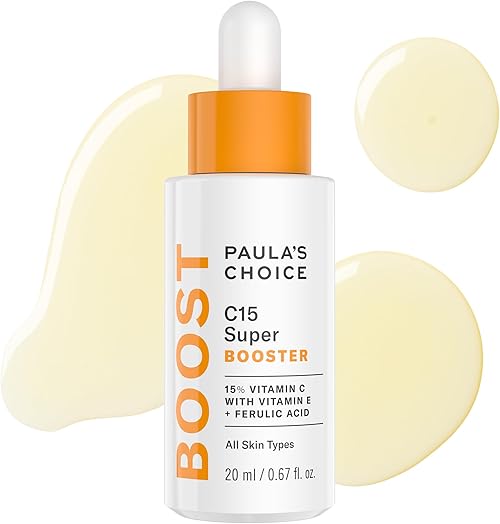
Paula's Choice
Paula's Choice BOOST C15 Super Booster
$38.50
"Best traditional results pick: official US page positions it as a 15% vitamin C booster and Amazon shows 4.2/5 across 3,150 ratings."
What real Amazon buyers say
4.2★· 3,150 reviews"Watery consistency and very light weight. Good mid-range price option for Vitamin C. Works great with my skin tone and has made my skin feel smoother and lessened the look of dark spots on my neck."
"I used to sell R+R. And this product comes pretty close to brightening the skins appearance. I like how it feels really light on my face and makes me feel luminous."

Biossance
Biossance Squalane + Vitamin C Rose Advanced Facial Oil
$74
"Best dry-skin clean-beauty option: Amazon shows 4.7/5 across 1,100 ratings, and Sephora public data shows 4.36/5 across 1,865 reviews."
What real Amazon buyers say
4.7★· 1,100 reviews"I got a little sample of this for last Christmas and it ruined me. It makes your face look brighter and healthier, and I knew I wanted to start using it in my routine."
"I am always skeptical buying online skincare but after reading all the reviews, I took a leap of faith and ordered my first bottle. After a weeks use I love the texture, a light weight oil (serum) and feel on my face."