Evening Primrose Oil vs DIM Supplements for Fine Lines
Evidence-weighted comparison of evening primrose oil and DIM supplements for fine lines, hormonal acne, hot flashes, tolerability, and US Amazon value.
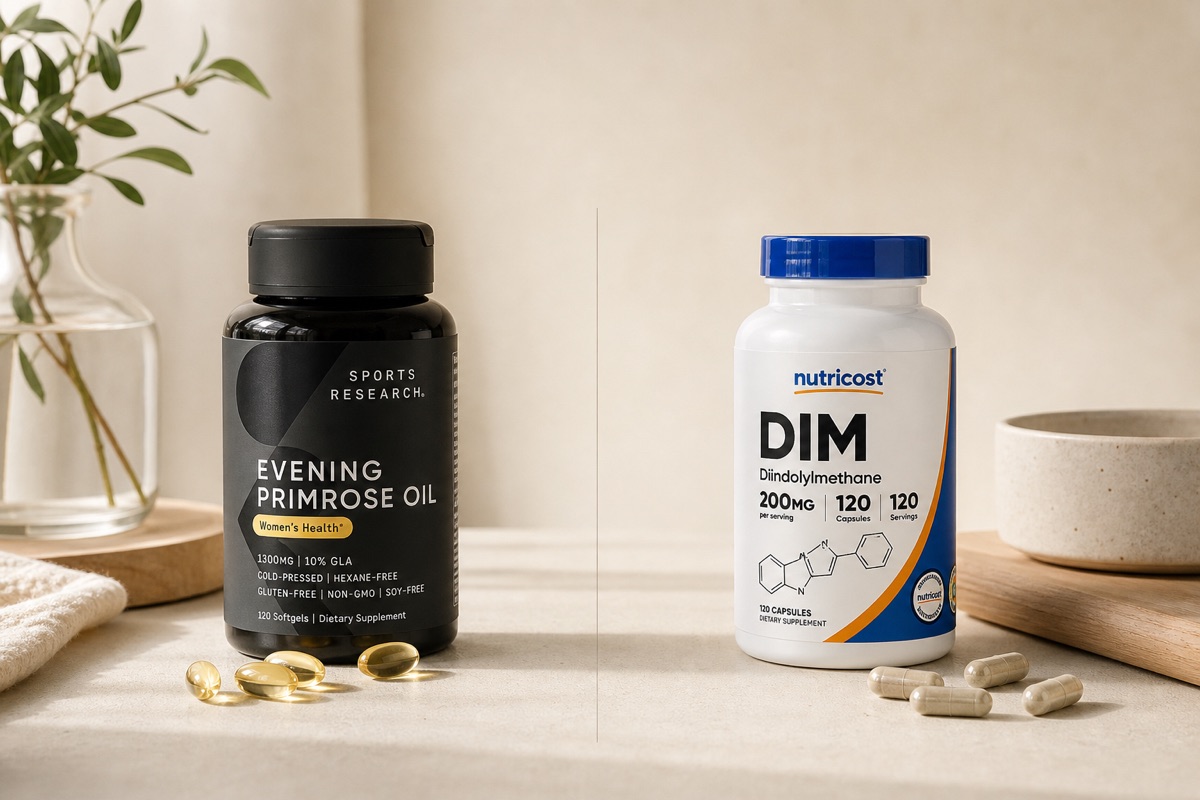
We analyzed 78,226 Amazon ratings across 6 US supplements plus PubMed studies on evening primrose oil (2005) and DIM estrogen metabolism (2023-2025). Evening primrose oil has the better skin-hydration case; DIM is more hormone-metabolism focused and has no direct fine-line evidence.
| Criterion | 🏆 Winner Evening primrose oil supplements Multi-brand category $14.08 | DIM supplements Multi-brand category $31.46 |
|---|---|---|
| Fine-line relevance How directly the ingredient category connects to skin hydration, elasticity, or visible fine-line support in the cited evidence. | 6.8/10 | 2.8/10 |
| Perimenopause symptom fit How closely the category maps to hot-flash, hormone-shift, or hormonal-acne shopper intent without treating supplements as drugs. | 5.8/10 | 7.2/10 |
| Amazon rating volume Representative US Amazon review totals: 41,867 evening primrose oil reviews versus 36,592 DIM reviews across the selected baskets. | 8.4/10 | 8.0/10 |
| Value Representative basket averages: evening primrose oil $14.08 versus DIM $31.46 across three Amazon products each. | 8.9/10 | 6.2/10 |
| Tolerability Penalizes ingredient categories that more often require hormone-sensitive cautions, medication review, or clinician discussion. | 7.6/10 | 6.1/10 |
| Evidence quality Strength of PubMed ingredient evidence for the specific beauty-adjacent question, not overall supplement popularity. | 6.9/10 | 5.6/10 |
| Overall score | 7.40 | 5.98 |
🏆 Winner: Evening primrose oil supplements
Evening primrose oil wins for fine-line shoppers because it leads fine-line relevance 6.8 to 2.8 and value 8.9 to 6.2 in our scoring. The 2005 Int J Cosmet Sci study directly examined biophysical skin parameters in healthy adults, while the cited DIM studies focus on estrogen metabolism in 2023-2025 rather than wrinkles. DIM has the stronger hormone-metabolism fit, but that is not the same as evidence for softening fine lines.
Best on a budget
NOW Foods Evening Primrose Oil 500 mg
Best for results
Evening primrose oil for skin hydration and DIM only for shoppers specifically discussing estrogen-metabolism support with a clinician
Bottom line
If your primary question is fine lines, evening primrose oil is the more logical supplement category than DIM. That does not mean it is a wrinkle treatment. It means the evidence sits closer to skin hydration, barrier feel, and biophysical skin parameters. The key PubMed citation here is Muggli 2005 in the International Journal of Cosmetic Science, which studied systemic evening primrose oil and skin parameters in healthy adults.
DIM is a different conversation. Its better-supported use case is estrogen-metabolism support, not collagen, wrinkles, or skin elasticity. PubMed-indexed DIM studies from Nutr Cancer 2023 and Menopause 2025 focus on estrogen pathways in women. That may be relevant to some perimenopause shoppers asking about hormonal acne or hormone shifts, but it is not direct evidence that DIM improves fine lines.
The Amazon signal is also split. Across the six representative products we analyzed, evening primrose oil had 41,867 reviews and an average representative basket price of $14.08. DIM had 36,592 reviews and an average representative basket price of $31.46. Popularity does not prove results, but it matters for US shopper confidence, refund risk, and how much real-world tolerance data exists.
What evening primrose oil is best at
Evening primrose oil is a source of gamma-linolenic acid, often shortened to GLA. In beauty-adjacent supplement shopping, that matters because shoppers usually want softer, less dry-looking skin rather than a drug-like effect. The 2005 PubMed study on systemic evening primrose oil is not a modern wrinkle trial, but it is directly closer to skin quality than the DIM literature we found.
In the Amazon basket, Sports Research Evening Primrose Oil carried the largest review base: 4.6/5 across 34,416 Amazon reviews at a $21.95 snapshot. NOW Foods Evening Primrose Oil 500 mg was the value outlier at $8.10 with 4.7/5 across 4,200 reviews. Solgar Evening Primrose Oil 1300 mg also held 4.7/5 across 3,251 reviews at $12.20. That gives evening primrose oil a stronger value score and a broader set of low-to-mid-price options.
For women 35-55 dealing with dryness, dullness, or fine lines that look worse when skin is dehydrated, evening primrose oil is the better category fit. It still should not replace sunscreen, retinoids, peptides, moisturizers, or prescription care. Think of it as a possible internal dryness-support supplement, not a substitute for topical actives that have stronger wrinkle evidence.
What DIM supplements are best at
DIM, or 3,3’-diindolylmethane, is a compound associated with cruciferous vegetables and estrogen metabolism. That explains why DIM products are marketed toward hormone balance, estrogen support, and sometimes perimenopause-related concerns. It also explains why the category needs more caution than a basic skin oil softgel. Hormone-adjacent does not mean harmless.
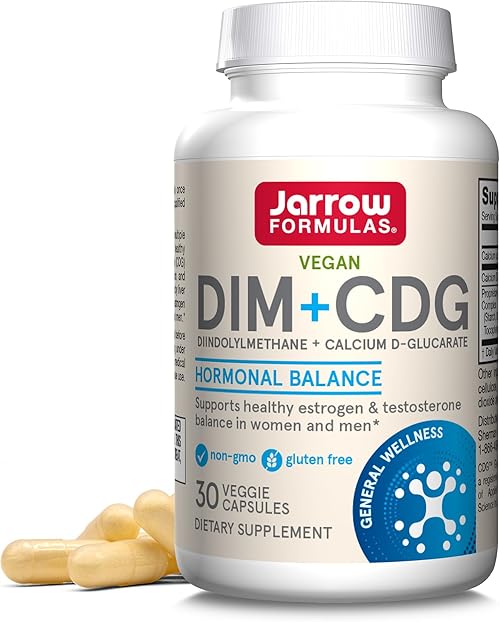
The strongest Amazon review signal here came from Nutricost DIM Supplement 200 mg, at 4.4/5 across 29,856 Amazon reviews. Nature’s Way DIM-plus had 4.5/5 across 6,012 reviews, while Jarrow Formulas DIM plus CDG had 4.6/5 across 724 reviews. The rating volume is meaningful, but the average basket price was higher than evening primrose oil: $31.46 versus $14.08 in this article’s representative set.
DIM may be a more natural fit for a shopper who is already talking with a clinician about hormone metabolism, new hormonal breakouts, or perimenopause changes. It is not the category I would choose for fine lines alone. The cited DIM studies from 2023 and 2025 help explain estrogen-pathway interest; they do not establish visible wrinkle improvement.
Fine lines: why the winner is not close
Fine lines are usually driven by several overlapping factors: collagen change, repeated expression, sun exposure, dehydration, barrier disruption, and lower estrogen after midlife. Supplements rarely address all of that. A fair comparison has to ask which category has evidence closest to the visible-skin question.
Evening primrose oil wins that narrow question because the cited 2005 skin-parameter study is at least skin-focused. It also has a plausible dry-skin fit for women whose lines are more visible in Midwest winter cold, Southwest dryness, or after overusing exfoliating acids. The score reflects that: evening primrose oil earned 6.8 for fine-line relevance versus DIM at 2.8.
DIM scored lower because its published evidence is pointed elsewhere. The 2023 Nutr Cancer paper and 2025 Menopause paper are useful for understanding why people discuss DIM with estrogen metabolism, but they are not cosmetic-aging studies. If an Amazon review says a shopper’s acne changed while using DIM, that is user sentiment, not proof that DIM treats acne or wrinkles.
Hormonal acne and hot flashes: where DIM pulls closer
For hormonal-acne intent, DIM becomes more competitive. Nutricost, Nature’s Way, and Jarrow all sit in a product category that US shoppers associate with estrogen balance. Amazon review language also frequently overlaps with cycle changes, perimenopause language, and breakouts. That is why DIM scored 7.2 for perimenopause symptom fit versus evening primrose oil at 5.8.
Even then, the responsible read is cautious. Acne after 40 can be influenced by hormones, stress, medications, skin-care occlusion, rosacea, or perioral dermatitis. Hot flashes are vasomotor symptoms, not a skin-care concern. Neither supplement should be positioned as a treatment for either concern, and the FDA dietary-supplement page is clear that supplements are regulated differently from drugs.
Evening primrose oil may appeal to shoppers who want a gentler, skin-oriented supplement with lower pricing. DIM may appeal to shoppers specifically researching hormone metabolism. If the concern is severe acne, new hot flashes, irregular bleeding, breast symptoms, or medication interactions, the next step is not a bigger Amazon bottle; it is a clinician conversation.
Tolerability and medication cautions
Evening primrose oil scored higher on tolerability because the category is more straightforward for many shoppers, though it is still a supplement. Softgels can cause stomach upset, aftertaste, or capsule-size complaints. People taking anticoagulants, seizure medications, or preparing for surgery should ask a clinician before using it.
DIM needs the wider caution label. Because the category is tied to estrogen metabolism, it is especially important to ask a clinician before using DIM with hormone therapy, tamoxifen, birth control, fertility treatment, or a history of hormone-sensitive conditions. A supplement can be sold over the counter and still be the wrong choice for a particular medical history.
There is also a practical adherence issue. In this evidence set, DIM costs more. A $31.46 representative basket price is not automatically unreasonable, but it is harder to justify when the goal is fine lines and the ingredient evidence is not fine-line-specific. If the shopper is going to spend money for visible aging, sunscreen, retinoid tolerance, moisturizer consistency, and in-office dermatology options usually deserve priority.
Product basket: three picks per side
For evening primrose oil, the most balanced basket is Sports Research for rating volume, NOW Foods for budget, and Solgar for a higher-dose softgel. Sports Research has the broadest Amazon signal at 34,416 reviews. NOW Foods is the least expensive in this comparison at $8.10. Solgar offers a 1300 mg softgel and 4.7/5 across 3,251 reviews.
For DIM, Nutricost is the high-volume pick, Nature’s Way is the familiar mid-price option, and Jarrow is the lower-review but lower-price DIM plus CDG format. Nutricost dominates review count with 29,856 Amazon reviews. Nature’s Way has 6,012 reviews and a long-standing DIM-plus position. Jarrow’s 724 reviews make it a smaller signal, but its $21.99 price is easier to defend than premium DIM options when the question is exploratory.
BeautySift’s recommendation is simple: choose evening primrose oil if your main goal is dry-looking fine lines and you have no supplement contraindications. Consider DIM only if your concern is hormone-metabolism support and a clinician agrees it fits your health context. Do not buy DIM as a wrinkle shortcut.
How to choose without overbuying
Start with the concern, not the trend. If the mirror issue is crepey texture after cleansing, tight cheeks, or lines that soften when you moisturize, evening primrose oil is the better match. Pair it with a boring topical routine: sunscreen every morning, moisturizer with ceramides or glycerin, and a retinoid only if your skin tolerates it.
If the issue is new jawline acne, oiliness shifts, or breakouts that track with cycle or perimenopause changes, DIM is at least thematically closer. The evidence still does not make it an acne treatment. Use that distinction to avoid overpromising yourself results. A dermatologist can sort hormonal acne from rosacea, irritation, or comedogenic skin-care buildup much faster than supplement trial-and-error.
For hot flashes, neither category is a first-line BeautySift pick based on this comparison. Hot flashes deserve menopause-specific guidance, especially if they affect sleep or quality of life. Cooling tools, breathable sleepwear, trigger tracking, and clinician-reviewed menopause therapies have a clearer role than buying a skin supplement and hoping it solves vasomotor symptoms.
Final verdict
Evening primrose oil is the winner for this specific query because the question includes fine lines. It has a more skin-relevant evidence base, a lower representative Amazon price, and slightly larger rating volume across the three-product basket. It is still a modest supplement category, not a replacement for topical anti-aging care.
DIM is worth considering only for a different shopper: someone focused on hormone-metabolism support, hormonal-acne discussions, or perimenopause changes, preferably with clinician input. It loses this fine-line comparison because the evidence does not point to wrinkles, elasticity, or skin hydration.
Related reading:
Both winners on Amazon

Sports Research
Sports Research Evening Primrose Oil
$21.95
"Largest evening-primrose signal in this set: 4.6/5 across 34,416 Amazon reviews, with cold-pressed oil positioned for women's health and skin health."
What real Amazon buyers say
4.6★· 34,416 reviews"Yes!!! This product has been a game changer! Prior to taking it literally last month I was extremely exhausted feeling beat down no energy and I started taking the supplement and I feel so much more better."

Nutricost
Nutricost DIM Supplement 200 mg
$46.95
"Largest DIM rating volume here: 4.4/5 across 29,856 Amazon reviews, with 200 mg DIM positioning for estrogen balance."
What real Amazon buyers say
4.4★· 29,856 reviews"I bought this product originally because I had very severe cystic acne. I had tried absolutely everything, so I figured that this supplement couldn't hurt, right?"

NOW Foods
NOW Foods Evening Primrose Oil 500 mg
$8.10
"Budget evening-primrose option with 4.7/5 across 4,200 Amazon reviews and the lowest representative price in this comparison."
What real Amazon buyers say
4.7★· 4,200 reviews"The gel tabs go down very easily. A great product for the price. A good addition to my daily vitamins."

Nature's Way
Nature's Way DIM-plus
$25.45
"Mid-priced DIM option with 4.5/5 across 6,012 Amazon reviews and long-running category presence."

Solgar
Solgar Evening Primrose Oil 1300 mg
$12.20
"Higher-dose evening-primrose softgel with 4.7/5 across 3,251 Amazon reviews and official positioning for healthy skin support."
Jarrow Formulas
Jarrow Formulas DIM plus CDG
$21.99
"DIM plus calcium D-glucarate format with 4.6/5 across 724 Amazon reviews; lower rating volume but lower price than many DIM competitors."