Galvanic Facial Wands vs High-Frequency Wands for Fine Lines
Evidence-weighted comparison of galvanic facial wands and high-frequency facial wands for fine lines, dullness, hormonal acne, sagging, and mature skin routines.
We analyzed 32,318 Amazon US ratings across 6 wands plus PubMed evidence on iontophoresis, photobiomodulation, and high-frequency acne devices. Galvanic wands fit fine-line and dullness routines better; high-frequency wands fit blemish-prone users more than wrinkle-focused shoppers.
| Criterion | 🏆 Winner Galvanic facial wands Multi-brand category $68.32 | High-frequency facial wands Multi-brand category $65.73 |
|---|---|---|
| Fine-line fit How directly the category maps to fine lines through red light, warmth, glide, hydration support, or wrinkle-specific evidence. | 7.8/10 | 5.8/10 |
| Ingredient-pairing logic How well the device category supports use with hydrating serums without adding unnecessary irritation risk. | 8.2/10 | 5.6/10 |
| Hormonal-acne fit How relevant the category is for occasional chin or jawline breakouts, with stronger weight for acne-specific evidence. | 5.4/10 | 7.2/10 |
| Tolerability Penalizes sting, electrical snapping, glass-electrode fragility, fragrance-dependent use, and overuse risk around mature skin. | 7.4/10 | 6.4/10 |
| Value Representative Amazon US basket averages: galvanic set $68.32 and high-frequency set $65.73 across three products per side. | 7.3/10 | 7.6/10 |
| Evidence quality Strength of PubMed evidence for the underlying mechanisms, with red-light wrinkle data weighted higher than in vitro acne-only evidence. | 7.7/10 | 5.9/10 |
| Overall score | 7.30 | 6.42 |
🏆 Winner: Galvanic facial wands
Galvanic facial wands win for fine-line shoppers because the category pairs better with hydrating serums and often bundles red light, warmth, and vibration. In our scoring, galvanic leads fine-line fit 7.8 to 5.8, ingredient-pairing logic 8.2 to 5.6, and evidence quality 7.7 to 5.9. The high-frequency side has much larger Amazon rating volume through NuDerma's 21,200-rating listing, but its strongest PubMed-adjacent support is acne-oriented rather than wrinkle-specific.
Best on a budget
HAMINOS 4-in-1 Facial Massager Wand for a low-cost galvanic-style device, or UUPAS High Frequency Wand if breakouts matter more than fine lines
Best for results
Solawave 4-in-1 Red Light Therapy Wand for fine-line and dullness routines; NuDerma Handheld Skin Therapy Wand for blemish-prone users who specifically want high-frequency treatment
Bottom line
Choose a galvanic facial wand if your main goal is making fine lines look softer through better hydration, serum glide, and a more consistent evening routine. Choose a high-frequency wand if your main concern is occasional hormonal breakouts along the chin or jawline and you are comfortable with a device that can feel more clinical, spark-prone, and technique-sensitive.
BeautySift compared three representative galvanic-style wands with three high-frequency wands using Amazon US rating volume, PubMed device literature, and official product positioning. The total Amazon review set is 32,318 ratings across the six featured products. That number does not prove wrinkle reduction, but it does show how much real-world use each category has accumulated among US shoppers.
The evidence split is important. Galvanic-style beauty wands borrow from the iontophoresis concept: Kanikkannan’s 2002 BioDrugs review defines transdermal iontophoresis as using low-level electric current to move ionic agents through skin. Home galvanic wands are not medical drug-delivery systems, so the honest claim is narrower: they make the most sense with water-based hydrating serums and routines built around slip, moisture, and consistency.
High-frequency facial wands are different. They use glass electrodes and a high-frequency current that creates a characteristic buzzing or ozone-like scent. The strongest PubMed-adjacent support we found is not for wrinkles; Frommherz et al. 2022 studied high-frequency devices in vitro as a possible acne vulgaris approach. That makes the category more relevant to blemish-prone skin than to fine lines around the eyes or mouth.
How the two technologies differ
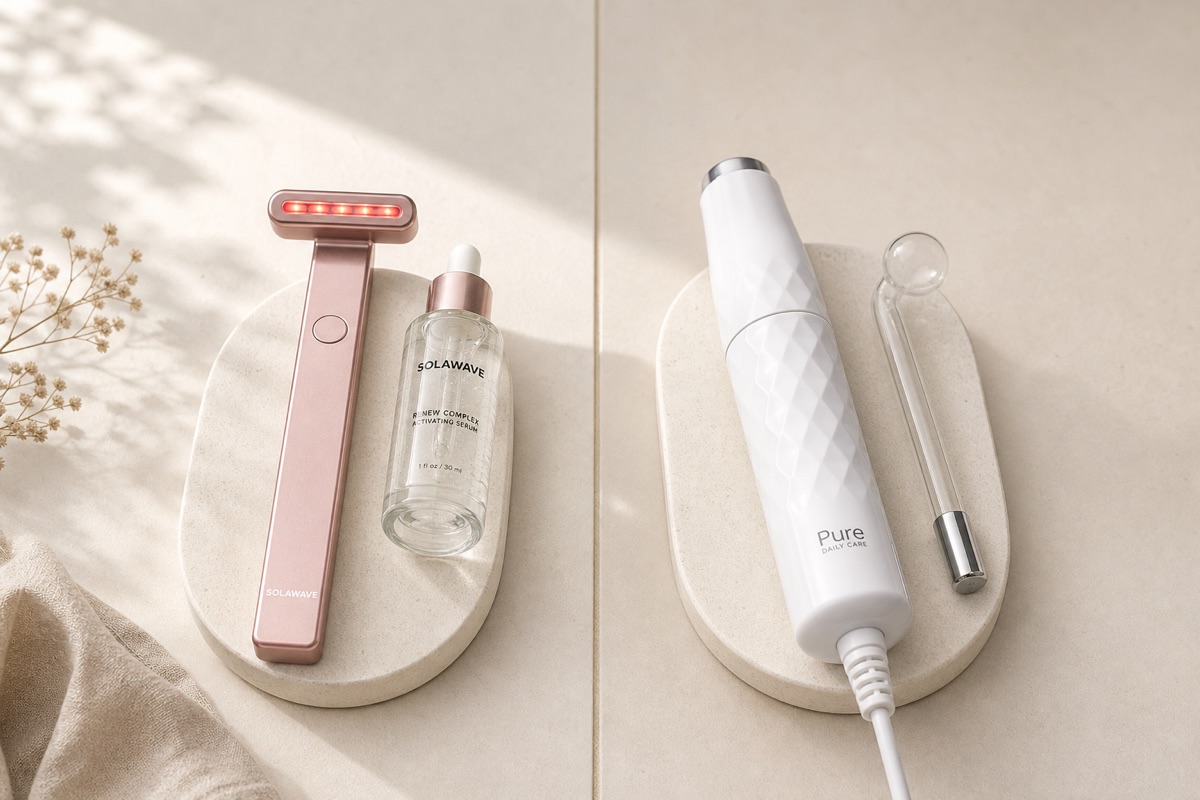
A galvanic wand is usually marketed as a serum-assist device. Current home versions often combine several features: low-level current, warmth, vibration, and sometimes red or blue LED. Solawave’s US positioning, for example, describes a 4-in-1 wand combining red light, galvanic current, warmth, and facial massage. The product’s Amazon listing shows 4.2/5 across 840 ratings at $144.97, so it is the pricier but more fine-line-relevant galvanic example in this set.
A high-frequency wand is usually marketed as a glass-electrode device for clarifying, tightening, and scalp or spot use. Pure Daily Care NuDerma is the dominant Amazon signal here, with 4.4/5 across 21,200 ratings at $69.95. NuDerma Professional adds more attachments and holds 4.4/5 across 7,300 Amazon ratings. UUPAS is the lower-cost high-frequency option in our basket at $27.29 with 4.3/5 across 687 ratings.
The two categories also feel different in a routine. Galvanic-style wands tend to glide over a serum and feel like a warm massage tool. High-frequency wands involve glass tubes, a buzzing sensation, and stricter avoidance around broken skin, metal jewelry, and sensitive eye areas. For women 35-55 who already use retinoids, exfoliating acids, or vitamin C, that difference matters because mature skin can be drier and less forgiving of overuse.
Fine lines: galvanic has the clearer user fit
For fine lines, galvanic-style wands win because they align with the things that actually make fine lines look softer at home: hydration, light reflection, consistent massage, and in some devices, red light. The red-light portion matters because the PubMed evidence is stronger than the evidence for high-frequency wrinkle reduction. Mota et al. 2023 reported a 31.6% red-light and 29.9% amber-light reduction in periocular wrinkle volume in a randomized controlled trial. Wunsch and Matuschka 2014 also reported improvements in complexion, skin roughness, and collagen-density measures with red and near-infrared light treatment.
That does not mean every red-light wand can reproduce a clinical protocol. Dose, wavelength, treatment time, and contact all matter. But when a galvanic-style wand includes red light and is used with a hydrating serum, the mechanism stack is more relevant to fine lines than high frequency alone. In our criteria, galvanic wands score 7.8 for fine-line fit versus 5.8 for high-frequency wands.
High-frequency wands can still make skin look temporarily smoother because massage, circulation, and post-device product application can change how the surface looks. The limitation is evidence quality. The high-frequency literature we found is acne-oriented, not wrinkle-focused. Amazon reviewers may mention smoother skin or tighter-looking pores, but those are self-reported observations, not controlled fine-line endpoints.
Hormonal acne: high frequency has the better rationale
If your fine lines are secondary and your bigger issue is occasional hormonal acne, the high-frequency category becomes more interesting. Frommherz et al. 2022 examined high-frequency devices in vitro as a possible acne approach, which is more directly relevant to blemish-prone skin than galvanic current alone. The NuDerma Handheld Skin Therapy Wand also has the largest Amazon user base in this set: 21,200 ratings, compared with 840 ratings for Solawave and 1,146 ratings for Dopsikn.
That rating volume is why high frequency scores 7.2 for hormonal-acne fit in our rubric, ahead of galvanic at 5.4. Users looking for a spot-focused device for chin breakouts may reasonably prefer a high-frequency wand, especially if they already own a simple moisturizer and do not want to buy a dedicated conducting serum.
The caveat is tolerability. High-frequency wands can be drying or irritating when used too often, especially around the mouth and chin where perimenopausal skin may already be reactive. Avoid using one over open blemishes, freshly waxed skin, an exfoliating-acid peel, or immediately after retinoid irritation. If your acne is cystic, painful, or scarring, a dermatologist-guided plan will be more evidence-based than a home wand.
Ingredient pairing and routine design
Galvanic-style wands are easier to place in a mature-skin routine because they pair naturally with water-based, fragrance-free products. Think glycerin, hyaluronic acid, panthenol, peptides, or a bland conductive gel. The goal is slip and hydration, not forcing active ingredients into the skin. The 2022 J Control Release review by Phatale et al. describes advanced transdermal delivery approaches for overcoming the skin barrier, but home beauty devices should not be treated like medical delivery systems.
For fine lines, a practical routine is simple: cleanse, apply a hydrating serum or gel, use the device as directed, then seal with moisturizer. If you use retinoids, keep the device step separate from irritated nights. If you use vitamin C in the morning, do not assume a galvanic wand makes it more effective; vitamin C stability and formula design matter more than device marketing.
High-frequency wands are less serum-dependent. Many instructions call for clean, dry skin or a thin gauze barrier, depending on the device. That can be useful for oily or breakout-prone skin, but it is less aligned with fine-line plumping. If you already have dry cheeks, a tight jawline, or flaking from retinaldehyde, a high-frequency wand is more likely to feel like an extra stressor than a fine-line solution.
Price and Amazon rating volume
The representative price baskets are close: $68.32 average for the three galvanic-style devices and $65.73 for the three high-frequency devices. The difference is not meaningful enough to choose by category alone. Instead, the price question is about what you are paying for.
Solawave is the premium galvanic-side pick at $144.97, with 4.2/5 across 840 Amazon ratings. Dopsikn is the budget galvanic pick at $39.99, with 4.3/5 across 1,146 ratings. HAMINOS is the lowest-cost galvanic-style device at $19.99, but its 61-rating sample is small, so we weighted it lightly.
On the high-frequency side, NuDerma Handheld has the strongest signal: $69.95 and 4.4/5 across 21,200 Amazon ratings. NuDerma Professional costs $99.95 and shows 4.4/5 across 7,300 ratings. UUPAS is the budget high-frequency pick at $27.29 and 4.3/5 across 687 ratings. If you are buying purely on Amazon rating volume, NuDerma wins. If you are buying for fine-line relevance, Solawave’s feature set is better aligned with the concern.
Tolerability and safety flags
Neither category should be treated as risk-free just because it is sold for home use. Stop if you feel burning, sharp pain, persistent redness, swelling, or a headache-like sensation. Do not use electrical facial devices over implanted electronic devices, active infections, broken skin, or areas your clinician has told you to avoid. If you are pregnant, have epilepsy, have metal implants near the treatment area, or recently had injectables, lasers, microneedling, or surgery, ask a clinician before using either category.
For sensitive mature skin, galvanic-style devices are usually easier to moderate. You can choose a bland gel, keep sessions short, and avoid high-active nights. High-frequency devices require more technique: the glass electrode must be handled carefully, the sensation should not feel like a painful zap, and the eye area needs special caution. One NuDerma reviewer specifically wrote that users should hear the probe working but are “not really supposed to feel anything,” which is a useful reminder that stronger is not necessarily better.
The safest interpretation is this: galvanic for hydration-focused fine-line support, high frequency for occasional breakout support, and neither as a substitute for sunscreen, retinoids, moisturizers, or dermatology care when lines, acne, or sagging are significant.
BeautySift verdict
Galvanic facial wands are the better buy for this specific query: fine lines. They score higher for fine-line fit, ingredient-pairing logic, and evidence quality because the best galvanic-style devices often include red light and warmth, and red-light facial rejuvenation has more relevant PubMed support than high-frequency wrinkle claims.
High-frequency wands are not a bad category; they are just more narrowly useful. They make the most sense if you are blemish-prone, comfortable with glass electrodes, and want a spot-oriented device with large Amazon rating volume. NuDerma’s 21,200-rating Amazon signal is meaningful, but it does not override the mismatch between acne-oriented evidence and a fine-line shopper’s main goal.
If you want one device for fine lines, dullness, and a more polished evening routine, choose a galvanic-style wand such as Solawave or a lower-cost galvanic-style alternative. If you want a separate tool for hormonal chin breakouts and occasional clarifying sessions, choose high frequency and keep it away from irritated skin.
Related reading
Both winners on Amazon

Solawave
Solawave 4-in-1 Red Light Therapy Wand
$144.97
"Best fine-line fit in this comparison because it combines galvanic current with red light, warmth, and facial massage; Amazon shows 4.2/5 across 840 ratings."
What real Amazon buyers say
4.2★· 840 reviews"This wand has been a great addition to my nightly skincare routine. At first, an additional 12 minutes added to my nightly skincare routine seemed a bit daunting for me to commit to. However, once I started using the wand, I quickly fell in love with it!"
"The Solawave Wand has been such a great addition to my skincare routine. It's sleek, easy to use, and feels soothing on the skin. I've noticed my face looks brighter and more refreshed after consistent use, and it really gives that spa-like treatment at home."

Pure Daily Care
Pure Daily Care NuDerma Handheld Skin Therapy Wand
$69.95
"Largest user-signal product in the set: Amazon shows 4.4/5 across 21,200 ratings for a neon high-frequency wand positioned for tightening, wrinkles, dark circles, and clarifying."
What real Amazon buyers say
4.4★· 21,200 reviews"Certain things you should know before you purchase this ( or have it ). Normally, you aren't supposed to feel anything ( it even says that in the instructions ). You hear the probe working but again, you are not really supposed to feel anything."
"I use it in the evening everyday for 5-10 minutes all over my face. I find that using it right after moisturizing with a serum and high-liquid gel moisturizer helps the wand to glide around more smoothly."

Dopsikn
Dopsikn 7 Color Galvanic Machine
$39.99
"Lower-cost galvanic-style option with red light, warmth, and vibration; Amazon shows 4.3/5 across 1,146 ratings."
What real Amazon buyers say
4.3★· 1,146 reviews"I was pleasantly surprised by how practical and easy to use this device is. The LED light and massage feature leave my face and neck feeling refreshed and relaxed. It feels well-made, and the design is very comfortable to use."
"I bought the device from Dopsikn a few weeks ago, and honestly, I was pleasantly surprised. I use it as part of my nightly routine, and the sensation is very relaxing. The light is gentle, but you can tell it works effectively on the skin."

Pure Daily Care
NuDerma Professional Skin Therapy Wand
$99.95
"High-frequency upgrade option with 6 neon and argon wands; Amazon search listing shows 4.4/5 across 7,300 ratings."
UUPAS
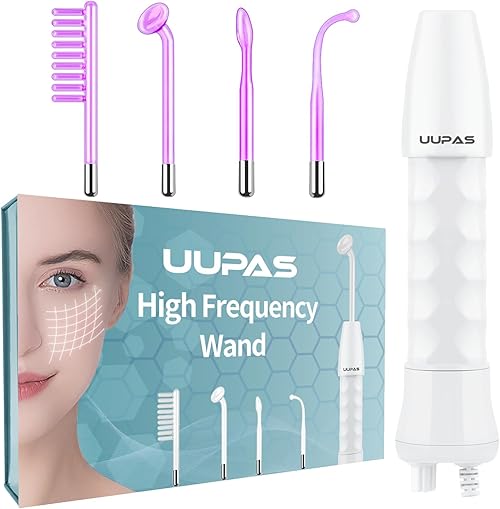
UUPAS Portable High Frequency Facial Wand
$27.29
"Budget high-frequency wand with four violet tubes; Amazon search listing shows 4.3/5 across 687 ratings."

HAMINOS
HAMINOS 4-in-1 Facial Massager Wand
$19.99
"Lowest-cost galvanic-style device in the set, positioned for heat, vibration, red and blue light, and ionic skincare absorption; Amazon search listing shows 4.2/5 across 61 ratings."