
Glycolic Acid Products vs Mandelic Acid Products for Sensitive Skin
Evidence-weighted comparison of glycolic acid products and mandelic acid products for sensitive skin, hormonal breakouts, dullness, tolerability, and value.
We analyzed PubMed studies including a 45-patient glycolic-vs-mandelic peel trial, 6 Amazon US listings totaling about 17,600 ratings, and official brand claims. Mandelic acid is the better first choice for sensitive skin; glycolic acid has stronger evidence for dullness and texture.
| Criterion | Glycolic acid products AHA exfoliant category $17.50 | Mandelic acid products Gentler AHA exfoliant category $14.95 |
|---|---|---|
| Sensitive-skin tolerability Lower expected sting, peeling, barrier disruption, and over-exfoliation risk scores higher. | 5.9/10 | 8.4/10 |
| Dullness and texture evidence Strength of ingredient evidence and category fit for radiance, surface smoothness, and rough texture. | 8.6/10 | 7.1/10 |
| Hormonal-acne fit Practical usefulness for adult breakouts, post-acne marks, and routines that may already include retinoids or benzoyl peroxide. | 6.8/10 | 8.0/10 |
| Amazon rating volume Representative visible Amazon US rating depth across three products per side, weighted toward larger rating counts. | 8.7/10 | 5.8/10 |
| Value Visible Amazon US price relative to formula relevance, size, and expected use frequency. | 8.0/10 | 8.1/10 |
| Evidence strength Published ingredient literature plus directness of the evidence to fine lines, pigmentation, acne, or exfoliation endpoints. | 8.5/10 | 7.2/10 |
| Overall score | 7.75 | 7.43 |
🏆 Winner: Mandelic acid products for sensitive skin; glycolic acid products for faster dullness and texture payoff
Mandelic acid wins the sensitive-skin question because it scores 8.4 for tolerability versus 5.9 for glycolic acid, largely due to gentler leave-on positioning and lower over-exfoliation risk. Glycolic acid wins dullness and texture, with stronger PubMed support from Sharad 2013 and a 2001 wrinkle-imaging study, plus much larger Amazon rating volume across the three glycolic representatives.
Best on a budget
Natural Outcome Mandelic Acid Serum 10% for a low-price mandelic entry; L'Oreal Paris Revitalift 10% Pure Glycolic Acid Face Serum for a high-volume glycolic option under $20
Best for results
Glycolic acid products for visible dullness, rough texture, and wrinkle-adjacent exfoliation; mandelic acid products for sensitive skin with adult breakouts or post-acne marks
Bottom line
For sensitive skin, mandelic acid products are the safer first bet. For faster visible smoothing and dullness, glycolic acid products have the stronger evidence base. That is the central tradeoff in the “glycolic acid products vs mandelic acid products” question: glycolic acid is more established and often more potent; mandelic acid is more forgiving when the barrier is reactive.
We analyzed PubMed-indexed peel studies, official US brand pages, and six Amazon US product snapshots totaling about 17,600 visible ratings. The glycolic side had the larger Amazon signal, led by L’Oreal Paris Revitalift 10% Pure Glycolic Acid Face Serum at 9,243 ratings and 4.5/5 in the May 24, 2026 snapshot. The mandelic side had lower volume, but the product positioning and review language were more aligned with sensitivity, especially Paula’s Choice 6% Mandelic Acid + 2% Lactic Acid at 817 ratings and 4.5/5.
If your skin is dry, sting-prone, rosacea-prone, or already juggling retinoids during perimenopause, start with mandelic acid. If your skin is resilient and the main issue is dullness, rough texture, or a crepey look under makeup, glycolic acid can be the better tool.
Why glycolic acid feels more powerful
Glycolic acid is the smallest alpha hydroxy acid commonly used in skin care, which helps explain both its appeal and its risk profile. It can give visible smoothness because it exfoliates the stratum corneum efficiently. That is useful when mature skin looks dull under foundation, when texture catches highlighter, or when pores look more obvious because dead skin is sitting unevenly on the surface.
The evidence base is also deeper. Sharad’s 2013 PubMed review describes glycolic acid peel therapy across acne, post-inflammatory hyperpigmentation, photoaging, melasma, and seborrhea. A 2001 Journal of Dermatological Science paper evaluated glycolic acid for wrinkles using computer-assisted facial imaging. Those are not the same as saying a $17 home serum will behave like an in-office peel, but they do make glycolic acid the stronger ingredient when the goal is resurfacing.
The drawback is tolerability. Glycolic acid products can sting around the nose, mouth, and neck. They can also backfire when used too often with retinoids, benzoyl peroxide, vitamin C, or facial scrubs. For women 35-55, that matters because skin may be drier, slower to recover, and more reactive during hormonal shifts.
Why mandelic acid is often better for sensitive skin
Mandelic acid is also an AHA, but it is usually treated as the gentler sibling. Its larger molecular size means it is commonly positioned for slower, less aggressive exfoliation. In practical terms, mandelic acid is easier to place into a routine that already includes moisturizer, sunscreen, and occasional retinoid use.
The PubMed record is smaller, but it is relevant to breakouts and post-acne marks. A 2019 Journal of Cutaneous and Aesthetic Surgery study compared 35% glycolic acid, 20% salicylic-10% mandelic acid, and phytic acid peels in 45 patients with active acne and postacne pigmentation. A 2020 Journal of Cosmetic Dermatology study compared 45% mandelic acid with 30% salicylic acid in 50 patients with mild-to-moderate acne vulgaris. Those are professional peel settings, not over-the-counter serum trials, but they support why mandelic acid shows up in adult-acne and discoloration products.
For hormonally influenced breakouts, mandelic acid has a practical advantage: it can support exfoliation without always demanding the strongest acid night. That makes it useful for chin congestion, post-breakout marks, and dullness when skin is too sensitive for frequent glycolic use.
Ingredient evidence: stronger is not always better
A simple ingredient hierarchy would put glycolic acid first for exfoliation power. That is why it scored 8.6 for dullness and texture evidence versus 7.1 for mandelic acid. Glycolic acid has more historical use in photodamage and wrinkle-adjacent literature, and the three glycolic Amazon representatives in this comparison had about 16,343 combined visible ratings.
But sensitive skin does not reward maximum potency. Mandelic acid scored 8.4 for tolerability versus 5.9 for glycolic acid because the category is easier to use conservatively. Paula’s Choice combines 6% mandelic acid with 2% lactic acid, while Natural Outcome uses a 10% mandelic serum format with hyaluronic acid. Those are still exfoliating products, but they are less likely to be the first thing we would flag for over-exfoliation compared with 10-14% glycolic serums.
The fairest way to choose is to name the job. If the job is “make my skin look brighter by next week,” glycolic acid wins. If the job is “help with texture and marks without angering sensitive skin,” mandelic acid wins.
Amazon rating volume and price
Amazon volume is not clinical proof, but it helps show what US shoppers can actually buy and review. In the May 24, 2026 snapshots, the glycolic side had much larger visible rating volume: L’Oreal Paris Revitalift 10% Pure Glycolic Acid Face Serum had 9,243 ratings, Alpha Skin Care Renewal Serum 14% Glycolic AHA had about 4,700, and La Roche-Posay Glycolic Acid Serum had about 2,400.
The mandelic side was smaller: Paula’s Choice had 817 ratings, Almond Clear Face & Body Clearing Serum Level 1 had 668, and Natural Outcome Mandelic Acid Serum 10% had 248. That lower volume is one reason mandelic acid scored 5.8 for Amazon rating volume versus glycolic acid at 8.7.
Prices were close enough that cost should not decide the category by itself. The representative glycolic products ranged from $17.50 to $37.59. The mandelic representatives ranged from $14.95 to $29.95. If budget is the main issue, Natural Outcome Mandelic Acid Serum at $14.95 and L’Oreal Revitalift Glycolic Serum at $17.50 were the clearest low-entry options in this snapshot.
Which should you use for hormonal acne?
For hormonally influenced breakouts, mandelic acid is usually the better first acid. It is less aggressive than glycolic acid and has acne-adjacent PubMed support from peel studies involving mandelic acid or salicylic-mandelic combinations. That does not make it an acne medication, but it does make it a sensible exfoliating support product when breakouts leave marks.
Glycolic acid can still help if the breakout pattern is tied to dullness, clogged-looking texture, and uneven surface buildup. The problem is that overuse may create more irritation, and irritation can make post-inflammatory marks look worse. If your chin breaks out before your period and your cheeks are dry, start with mandelic acid before reaching for a strong glycolic serum.
If you already use a prescription retinoid, benzoyl peroxide wash, or azelaic acid, introduce only one exfoliating acid. Use it on a non-retinoid night and watch for tightness the next morning. A shiny, hot, or papery skin feel is a sign to reduce frequency, not to add another active.
Routine guidance for women 35-55
Start low and slow. A mandelic acid product can usually begin at two nights per week, followed by moisturizer. A glycolic acid product is better started once weekly, especially if it is 10% or higher. The neck and chest are often less tolerant than the face, so do not automatically bring a face acid down the neck.
Morning sunscreen is not optional. Both glycolic and mandelic acid products are used to manage dullness, post-acne marks, and uneven tone, but the routine only makes sense if UV exposure is controlled. For Midwest winter dryness, pair acid nights with a ceramide moisturizer. For Florida summer humidity, keep the acid layer light and avoid stacking multiple exfoliants under sweat-prone conditions.
The simplest decision tree: choose mandelic acid if your skin is sensitive, acne-prone, or barrier-compromised. Choose glycolic acid if your skin is resilient and dullness is the main complaint. If you want both, use mandelic acid as the regular acid and reserve glycolic acid for occasional resurfacing.
Product notes from this comparison
L’Oreal Paris Revitalift 10% Pure Glycolic Acid Face Serum is the glycolic value pick because the Amazon snapshot showed 9,243 ratings at $17.50 and the US brand page identifies a 10% glycolic acid formula. It is best for resilient skin that wants brightness and texture help, not for a damaged barrier.
Paula’s Choice 6% Mandelic Acid + 2% Lactic Acid Exfoliant is the sensitive-skin pick because the formula is built around a moderate mandelic-lactic blend and the Amazon listing showed 4.5/5 across 817 ratings. It is still an exfoliant, so it should not be layered casually with retinoids at first.
Natural Outcome Mandelic Acid Serum 10% is the budget mandelic option in this comparison. Its Amazon volume is smaller at 248 ratings, but the $14.95 snapshot price makes it a lower-risk entry point for shoppers who want mandelic acid before trying glycolic acid.
La Roche-Posay Glycolic Acid Serum and Alpha Skin Care Renewal Serum represent the stronger glycolic side. La Roche-Posay adds tone-supporting ingredients around glycolic acid, while Alpha Skin Care’s 14% positioning is better suited to experienced acid users. Almond Clear Face & Body Clearing Serum Level 1 rounds out the mandelic side for shoppers focused on face-and-body congestion.
Affiliate disclosure
BeautySift may earn a commission from Amazon links in this article. Affiliate relationships do not affect the scoring rubric; the comparison above is based on PubMed-indexed literature, Amazon US listing snapshots, official brand pages, and ingredient-role analysis.
Related reading
Both winners on Amazon

L'Oreal Paris
L'Oreal Paris Revitalift 10% Pure Glycolic Acid Face Serum
$17.50
"High-volume glycolic representative with a disclosed 10% glycolic acid claim, $17.50 snapshot price, and 4.5/5 across 9,243 Amazon ratings."
What real Amazon buyers say
4.5★· 9,243 reviews"This serum does even the skin tone, gently exfoliates, and doesn't irritate or dry my skin."

Paula's Choice
Paula's Choice 6% Mandelic Acid + 2% Lactic Acid Exfoliant
$15
"Gentler AHA representative with 6% mandelic plus 2% lactic acid positioning, $15.00 snapshot price, and 4.5/5 across 817 Amazon ratings."
What real Amazon buyers say
4.5★· 817 reviews"It gives the perfect subtle touch of exfoliation and my skin looks noticeably smoother and brighter after each use."
"Works great for my sensitive skin . The dark gray is good but can be tooo strong."
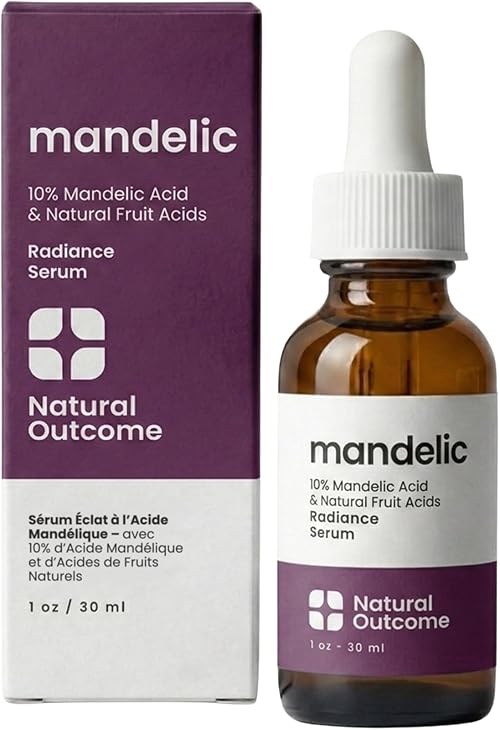
Natural Outcome
Natural Outcome Mandelic Acid Serum 10%
$14.95
"Low-price 10% mandelic acid serum with hyaluronic acid, $14.95 snapshot price, and 4.4/5 across 248 Amazon ratings."
What real Amazon buyers say
4.4★· 248 reviews"I love how this brings all impurities to the top of the skin without irritating your skin. Its unscented and it works well."
"This serum is a bargain compared to my old one, and helps with almost every skin concern- from acne to aging."

La Roche-Posay
La Roche-Posay Glycolic Acid Serum with Tranexamic Acid, Kojic Acid and Vitamin B5
$37.59
"Mid-prestige glycolic serum representative with vitamin B5 support and 4.4/5 across about 2,400 Amazon ratings."

Alpha Skin Care
Alpha Skin Care Renewal Serum 14% Glycolic AHA
$23
"Stronger glycolic serum representative with 14% glycolic AHA positioning and 4.5/5 across about 4,700 Amazon ratings."

Almond Clear
Almond Clear Face & Body Clearing Serum Level 1
$29.95
"Mandelic-acid clearing-serum option for face and body concerns, with 4.3/5 across 668 Amazon ratings in the search snapshot."