
Hypochlorous Acid Sprays vs Centella Asiatica Products for Fine Lines
Evidence-weighted comparison of hypochlorous acid sprays and centella asiatica products for fine lines, redness, hot-flash flushing, acne-prone skin, and sensitive routines.
We analyzed 2 PubMed centella/madecassoside papers, 1 PubMed dermatology review on hypochlorous-adjacent antiseptics, and Amazon US snapshots across 6 products. Centella asiatica has better fine-line relevance; hypochlorous acid sprays fit redness-prone, sweaty, acne-prone, or hot-flash flushing routines.
| Criterion | Hypochlorous acid sprays Redness and breakout-support spray category $14.03 | Centella asiatica products Barrier and calming serum category $15.69 |
|---|---|---|
| Fine-line evidence Strength of published evidence tied to photoaging, collagen support, elasticity, or wrinkle-adjacent endpoints. | 3.8/10 | 7.2/10 |
| Redness and irritation fit How well the category matches sensitive, flushing-prone, post-workout, and compromised-barrier routines. | 8.4/10 | 8.0/10 |
| Hormonal-acne routine fit Usefulness when breakouts are triggered by sweat, occlusion, mask wear, or cycle-related inflammation. | 8.6/10 | 6.8/10 |
| Amazon rating volume Representative Amazon US rating depth across three products per side, weighted toward larger visible rating counts. | 8.8/10 | 7.3/10 |
| Value Visible Amazon US price relative to size, expected frequency, and evidence strength. | 8.3/10 | 8.2/10 |
| Tolerability Lower likelihood of stinging, peeling, fragrance irritation, and barrier disruption scores higher. | 8.7/10 | 8.1/10 |
| Typical user fit How clearly the category answers common shopper goals: fine lines, flushing, redness, breakouts, or barrier comfort. | 7.1/10 | 8.0/10 |
| Overall score | 7.67 | 7.66 |
🏆 Winner: Centella asiatica products for fine lines; hypochlorous acid sprays for hot-flash flushing and breakout-prone skin
Centella asiatica wins the fine-line question because the cited PubMed literature includes madecassoside and Centella asiatica data tied to photoaged skin and UVB-related fibroblast changes. Hypochlorous acid sprays score higher for Amazon rating volume and practical tolerability: BRIOTECH and SkinSmart each show more than 12,800 Amazon ratings in the May 2026 snapshot, while their role is better framed as calming, cleansing, and breakout-support rather than wrinkle care.
Best on a budget
BRIOTECH Topical Skin Spray for a large hypochlorous-acid format; SKIN1004 Madagascar Centella Ampoule for a centella serum under $16 in the Amazon snapshot
Best for results
Centella asiatica products for fine-line support; hypochlorous acid sprays for redness, sweat-related breakouts, and hot-flash flushing support
Quick verdict
For fine lines, centella asiatica products have the stronger evidence trail. The clearest cited human-facing paper is the 2008 Experimental Dermatology study of topical ascorbic acid plus madecassoside in photoaged human skin, while the 2012 International Journal of Molecular Medicine paper connects titrated Centella asiatica extract to UVB-related changes in human dermal fibroblasts. That does not make every centella serum a wrinkle treatment; it means the ingredient family has more direct photoaging relevance than hypochlorous acid sprays.
Hypochlorous acid sprays answer a different problem. Based on the Amazon US snapshots in our source list, the hypochlorous-acid side has larger rating volume: SkinSmart shows 12,862 ratings, BRIOTECH shows 12,878, and Tower 28 shows 4,823. The practical appeal is speed and low residue. A spray can be used after sweating, after a hot flash, after a mask-heavy commute, or before moisturizer when skin feels flushed and reactive.
Our verdict: choose centella if your main question is fine lines plus barrier comfort. Choose hypochlorous acid if your main pattern is redness, sweat-triggered blemishes, hormonal-acne flares, or perimenopause flushing that makes you want a fast, non-greasy reset.
What each category actually does
Hypochlorous acid is used in dermatology-adjacent antiseptic and cleansing contexts, but cosmetic facial sprays should be framed carefully. They are not retinoids, exfoliating acids, peptides, or sunscreen. In this comparison, we score hypochlorous acid sprays high for tolerability and routine fit, not for direct wrinkle correction. The 2026 American Journal of Clinical Dermatology scoping review we cite covers sodium hypochlorite in dermatology context; that supports the broader antimicrobial and dermatologic relevance, but it is not a fine-line clinical trial for facial mists.
Centella asiatica products usually appear as ampoules, serums, gel creams, and cica moisturizers. Many US Amazon listings lean on calming, hydration, and sensitive-skin language. The fine-line argument is more indirect than a prescription retinoid, but it is stronger than the hypochlorous-acid argument because madecassoside and Centella asiatica extract have published links to photoaged skin and UVB-stressed fibroblasts. For a 35-55 shopper dealing with dryness, barrier fatigue, and fine lines that look worse when skin is irritated, that matters.
The biggest shared limitation: neither category replaces daily broad-spectrum sunscreen. If fine lines are the priority, sunscreen, retinoids if tolerated, moisturizers, and pigment-safe routines still do the heavy lifting. Hypochlorous acid and centella are support categories.
Scorecard: fine lines, redness, acne, and value
Centella wins fine-line evidence, 7.2 to 3.8, because the cited PubMed papers connect the ingredient family to photoaging-adjacent endpoints. Hypochlorous acid sprays win hormonal-acne routine fit, 8.6 to 6.8, because a low-residue spray is easier to use after workouts, during humid commutes, or after hot-flash sweating without adding another cream layer.
On Amazon rating volume, hypochlorous acid leads. The three hypochlorous products in our snapshot total 30,563 visible Amazon ratings: SkinSmart at 12,862, BRIOTECH at 12,878, and Tower 28 at 4,823. The three centella products total 15,761 visible Amazon ratings: SKIN1004 at 12,579, PURITO at 2,820, and COSRX at 362. Rating volume is not proof of efficacy, but it is useful evidence of user adoption and complaint patterns.
Value is close. BRIOTECH at $14.03 for an 8.5 oz spray and SKIN1004 at $15.69 for a 3.38 fl oz ampoule both scored well in the May 2026 Amazon snapshot. Tower 28 at $28.00 is more expensive per ounce, but it is positioned as a facial beauty mist rather than a utility-size spray. COSRX at $21.94 has a smaller Amazon rating base, so it is harder to weight as heavily.
When hypochlorous acid sprays make more sense
Pick hypochlorous acid if your skin gets flushed quickly, if sweat often triggers bumps, or if you want something you can use without touching your face. That is especially relevant for women navigating perimenopause, when hot flashes can make skin feel damp, reactive, and prickly at inconvenient times. A spray is easy to keep near a desk, gym bag, or nightstand.
The Amazon user evidence lines up with that use case. SkinSmart’s product-page snapshot shows 4.7/5 across 12,862 ratings, and one verified reviewer wrote, “I have sensitive, acne-prone skin and was looking for something gentle that would help with breakouts without drying me out or causing irritation.” Tower 28’s snapshot is smaller at 4,823 ratings but more beauty-specific; the brand’s official US page identifies SOS as a hypochlorous acid facial spray.
Skip hypochlorous acid as your only fine-line product. It may help skin look calmer by reducing the visible chaos around redness or blemishes, but that is not the same as supporting collagen, elasticity, or photodamage repair. Also watch the mist format: some sprays feel refreshing, while others dispense more like a utility spray and can wet hairline or clothing.
When centella asiatica products make more sense
Pick centella if fine lines look worse when your skin is dry, tight, over-exfoliated, or recovering from acne products. Centella serums and cica creams tend to pair well with moisturizers and retinoid-adjacent routines because their main job is comfort, not exfoliation. The 2008 Experimental Dermatology paper is not a modern consumer-product trial for every Amazon serum, but it gives centella’s madecassoside branch a stronger photoaging argument than hypochlorous acid sprays have.
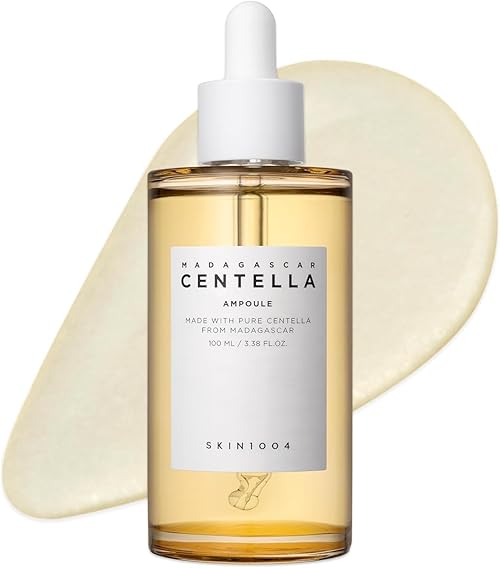
SKIN1004 is the strongest Amazon-volume representative on the centella side in this snapshot: 4.7/5 across 12,579 ratings at $15.69. A verified Amazon reviewer wrote, “Pretty good! I loveee the applicator since it makes it really easy to apply. My skin has been super glowy ever since I’ve used this.” PURITO’s unscented serum is lower-volume at 2,820 ratings, but its fragrance-free positioning makes sense for sensitive skin. COSRX Pure Fit Cica Serum has only 362 ratings in the snapshot, so we treat it as a niche cica option rather than the category anchor.
Skip centella if you need an on-the-go sweat reset or if every serum layer makes your skin feel hot. In that case, a hypochlorous acid spray may be more usable during the day, with centella reserved for evening repair.
Best routine fit for women 35-55
For morning, keep the routine simple: cleanse, use centella serum if your skin is dry or tight, moisturize, and finish with sunscreen. If you get hot-flash flushing after makeup is on, a hypochlorous acid spray can be used as a non-greasy reset, but let it dry rather than rubbing it in. Avoid layering it immediately over strong exfoliating acids if your barrier already feels compromised.
For evening, centella fits better as a steady support step. It can sit after cleansing and before moisturizer, especially on nights when retinoids, benzoyl peroxide, or exfoliating acids are not being used. If you use prescription acne medication or a retinoid, ask your clinician how to place calming products around it; BeautySift is analyzing public evidence, not giving medical treatment instructions.
For breakout-prone weeks, use the two categories differently. Hypochlorous acid is the quick-use category after sweat, masks, or hot flashes. Centella is the recovery category when pimples leave redness, tightness, or irritated patches. Together, they can make a routine feel less aggressive without promising wrinkle reversal.
Product notes from the evidence set
SkinSmart Antimicrobial Facial Cleanser is the highest-ranked hypochlorous facial option because it combines strong Amazon rating volume, a moderate $17.99 price, and a low-residue spray format. BRIOTECH Topical Skin Spray is the value-size alternative at $14.03 with 12,878 Amazon ratings, though its utility positioning may feel less cosmetically elegant. Tower 28 SOS Daily Rescue Facial Spray is the beauty-forward option, but at $28.00 it asks shoppers to pay more for the face-mist experience.
On the centella side, SKIN1004 Madagascar Centella Ampoule is the clearest category anchor because it has 12,579 Amazon ratings, 4.7/5, and a $15.69 snapshot price. PURITO Centella Unscented Serum is the better pick if you want an unscented serum format with barrier-care positioning. COSRX Pure Fit Cica Serum is worth considering if you already like COSRX textures, but the 362-rating snapshot gives it less evidence weight than SKIN1004 or PURITO.
Bottom line
For the exact query, centella asiatica products beat hypochlorous acid sprays for fine lines. The evidence is still supportive rather than definitive, but it is more directly connected to photoaging than hypochlorous acid’s evidence base. Hypochlorous acid sprays win for a different 35-55 reality: flushed skin after hot flashes, sweat-related blemishes, sensitive-skin panic moments, and hormonal-acne routines that cannot tolerate another active serum.
If you can only buy one, buy for your main symptom. Fine lines plus dryness: centella. Redness plus sweat-triggered breakouts: hypochlorous acid. If both patterns show up, use hypochlorous acid as the quick spray and centella as the calming serum step.
Related reading
Both winners on Amazon

SkinSmart
SkinSmart Antimicrobial Facial Cleanser
$17.99
"Hypochlorous-acid-side high-volume representative with 4.7/5 and 12,862 Amazon ratings in the product-page snapshot."
What real Amazon buyers say
4.7★· 12,862 reviews"I have sensitive, acne-prone skin and was looking for something gentle that would help with breakouts without drying me out or causing irritation"
"Great product. The bottle doesn't necessarily spray a mist, but it's a standard spray and overall has great coverage."
SKIN1004
SKIN1004 Madagascar Centella Ampoule
$15.69
"Centella-side high-volume representative with 4.7/5 and 12,579 Amazon ratings in the product-page snapshot."
What real Amazon buyers say
4.7★· 12,579 reviews"Pretty good! I loveee the applicator since it makes it really easy to apply. My skin has been super glowy ever since I’ve used this."
"Was just patch testing and put this on some awful mosquito bites and it actually calmed them down (less red, less itchy)."

BRIOTECH
BRIOTECH Topical Skin Spray
$14.03
"Large-format hypochlorous acid spray with 4.6/5 and 12,878 Amazon ratings in the product-page snapshot."
What real Amazon buyers say
4.6★· 12,878 reviews"From the very first use, I was impressed by how effective yet gentle this product is."
"What I love most is how gentle yet effective it feels. It doesn’t have that harsh chemical smell that a lot of disinfectants do"

Tower 28
Tower 28 SOS Daily Rescue Facial Spray
$28
"Beauty-focused hypochlorous acid facial spray with 4.6/5 and 4,823 Amazon ratings in the product-page snapshot."

PURITO
PURITO Centella Unscented Serum
$18.40
"Unscented centella serum representative with 4.5/5 and 2,820 Amazon ratings in the product-page snapshot."

COSRX
COSRX Pure Fit Cica Serum
$21.94
"Centella/cica serum representative with 4.5/5 and 362 Amazon ratings in the product-page snapshot."