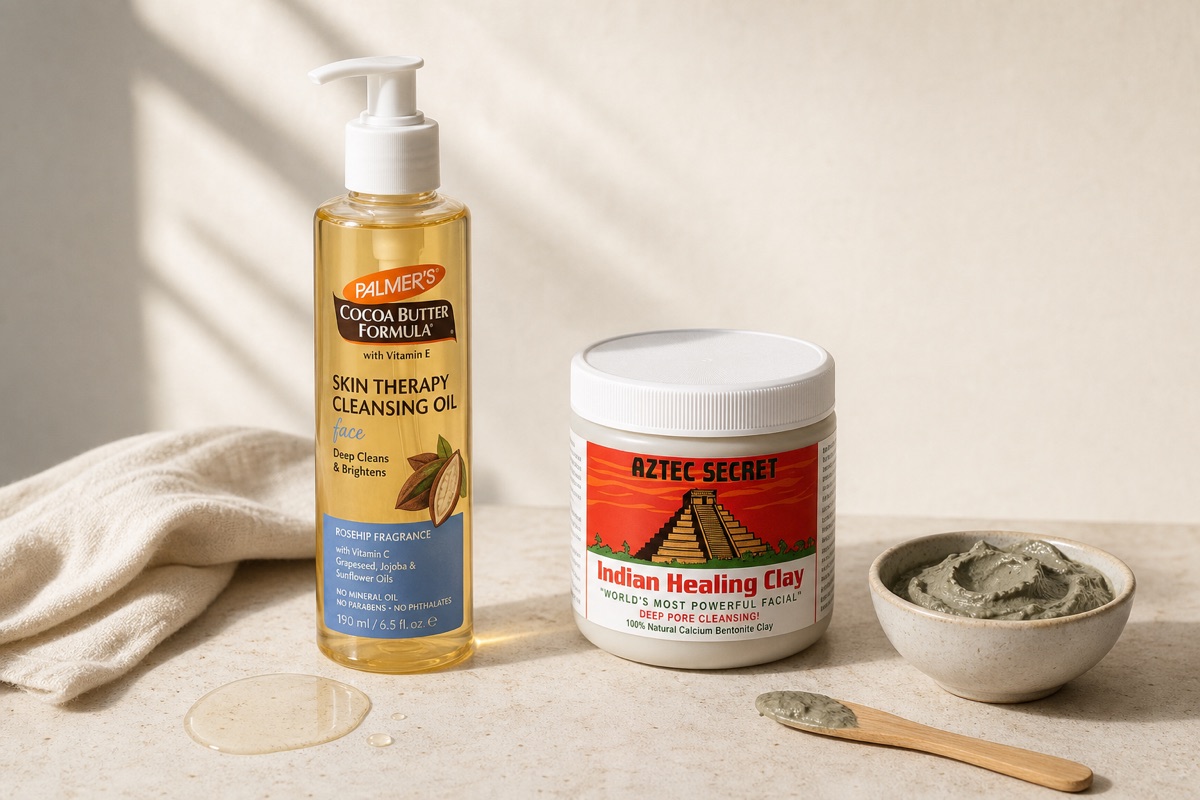
Oil Cleansers vs Clay Masks: Evidence-Weighted Head-to-Head
A US-focused comparison of oil cleansers and clay masks for dryness, hormonal acne, makeup removal, pores, price, and tolerability in mature skin routines.
Based on 6 Amazon US listings with 148,416 combined ratings plus PubMed cleanser and bentonite research, oil cleansers win for daily dryness-friendly cleansing, while clay masks fit weekly oil-control support for hormonal-acne-prone skin.
| Criterion | 🏆 Winner Oil cleansers Category benchmark $9.23 | Clay masks Category benchmark $14.95 |
|---|---|---|
| Dryness and barrier fit How well the format supports mature or perimenopausal skin that feels tight, flaky, or retinoid-dry. | 8.8/10 | 5.8/10 |
| Hormonal-acne routine fit Usefulness for oil, sunscreen, makeup removal, clogged pores, and occasional jawline breakouts without overstripping. | 8.0/10 | 7.9/10 |
| Ingredient evidence Support from cleanser-barrier research, bentonite and montmorillonite literature, brand ingredient disclosures, and INCI format logic. | 8.2/10 | 7.5/10 |
| Amazon rating depth Relative confidence from public Amazon US rating volume across the sampled products on each side. | 7.6/10 | 9.2/10 |
| Tolerability Likely comfort for sensitive, dry, retinoid-using, or easily flushed skin when used as directed. | 8.4/10 | 6.4/10 |
| Value Price accessibility across sampled Amazon US products and likely cost per use. | 8.1/10 | 8.6/10 |
| Routine flexibility Fit across daily sunscreen removal, makeup days, humid summers, winter dryness, and active-heavy skin-care routines. | 8.9/10 | 6.8/10 |
| Overall score | 8.29 | 7.46 |
🏆 Winner: Oil cleansers
Oil cleansers win this head-to-head for women 35-55 because they solve a daily problem: removing sunscreen and makeup without the tight, stripped finish that PubMed cleanser research warns can follow harsh cleansing. Clay masks have the deeper Amazon rating pool in this sample, 108,731 ratings versus 39,685 for oil cleansers, but they are better treated as weekly oil-control support rather than a daily cleanse.
Best on a budget
Clay masks
Best for results
Oil cleansers
Quick Answer
Oil cleansers are the better daily choice if your skin is dry, mature, sunscreen-heavy, or easily tight after washing. Clay masks are the better occasional tool if your main issue is oil buildup, visible congestion, or hormonal-acne-prone shine around the T-zone and jawline. In our Amazon US snapshot, the clay side had the larger review pool, 108,731 ratings across 3 sampled products, while the oil-cleanser side had 39,685 ratings across 3 sampled products. The larger clay review count does not make clay better for daily use; it mainly shows that classic clay powders are extremely popular and low-cost.
The most practical verdict for women 35-55: use an oil cleanser as the regular removal step, then use a clay mask selectively. PubMed cleanser research by Ananthapadmanabhan et al. links harsh cleansing with protein and lipid disruption, while Draelos’ cleanser review supports choosing milder formats when skin is dry or reactive. A 2024 Archives of Dermatological Research review on bentonites and montmorillonites gives clay a plausible skin-care role, but clay still needs careful frequency because absorbency can be a downside for already-dry skin.
What each format actually does
Oil cleansers are not moisturizers, and clay masks are not acne medication. That distinction matters. An oil cleanser is a removal product: it helps dissolve sunscreen films, long-wear makeup, sebum, and oil-soluble residue before rinsing. Many modern formulas emulsify with water, meaning the oil turns milky and rinses cleaner than a plain facial oil. That makes oil cleansing useful for women who wear mineral sunscreen, water-resistant SPF, foundation, or richer moisturizers during Midwest winter cold or Southwest dryness.
Clay masks are absorbent treatment masks. Bentonite, kaolin, and related clays can bind oil and leave skin feeling cleaner, which is why they appeal to users with midlife hormonal breakouts or shine. The Aztec Secret Amazon listing alone showed 99,237 ratings at 4.6/5, far more rating volume than any oil cleanser in our sample. That popularity is real, but it does not remove the tolerability issue: absorbent clays can make dry cheeks feel tight if used too often, left on until fully cracked, or mixed with irritating add-ons.
Ingredient evidence: oil removal versus oil absorption
The ingredient logic is different. Oil cleansers rely on the chemistry of like dissolving like: oils and esters help loosen makeup, sunscreen, and sebum, then emulsifiers help the residue rinse. This is why the category can be helpful even for acne-prone adults, provided the cleanser rinses well and is followed by a gentle second cleanse when needed. The AAD face-washing guidance recommends gentle, non-abrasive, alcohol-free cleansing; oil cleansers can fit that goal when they do not leave a film or fragrance irritation.
Clay masks use absorbent minerals. The 2024 PubMed-indexed review on bentonites and montmorillonites discusses potential cutaneous benefits, which supports clay as more than a folk remedy. Still, the evidence is format-level, not a guarantee that every clay mask is gentle. A powder mixed with apple cider vinegar is a very different experience from a pre-mixed kaolin cream mask with humectants. For dry or retinoid-adjusting skin, water mixing and short contact time are usually more conservative than acidic DIY mixes.
Amazon evidence and price: clay wins volume, oil wins daily utility
On rating volume, clay masks win decisively in this sample. The 3 clay products contributed 108,731 Amazon ratings, led by Aztec Secret Indian Healing Clay at 99,237 ratings and 4.6/5. The 3 oil cleansers contributed 39,685 Amazon ratings, led by DHC Deep Cleansing Oil at 24,123 ratings and 4.6/5. Those numbers favor clay for shopper familiarity and social proof.
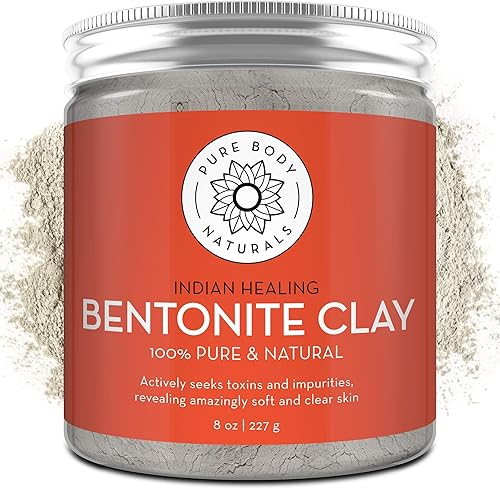
On price, the picture is mixed. Pure Body Naturals Bentonite Clay Powder was the lowest-priced product in our snapshot at $7.49, and Palmer’s Skin Therapy Cleansing Oil was close at $9.23. Dermalogica Precleanse, at $49.00 in the Amazon snapshot, makes the oil-cleanser category look more expensive if you only compare prestige options. But cost per use depends on routine role. A clay powder may last months because it is weekly; an oil cleanser empties faster because it is daily or near-daily. That is why our value scores are close: clay masks score 8.6, oil cleansers 8.1.
Tolerability for mature, dry, and hormonal-acne-prone skin
For the BeautySift audience, tolerability is the deciding category. Dryness is common in midlife routines, especially with retinoids, exfoliating acids, menopause-related barrier changes, and daily sunscreen. Oil cleansers score 8.4 for tolerability because they can remove residue without the squeaky-clean finish many dry-skin users dislike. DHC and Palmer’s both sit at 4.6/5 in Amazon snapshots, and customer review excerpts repeatedly mention makeup removal, softness, and lack of stripping.
Clay masks score 6.4 for tolerability because their best feature, oil absorption, can become the problem. A clay mask used once weekly on the nose, chin, or jawline may be useful. A clay mask used every night on dry cheeks is more likely to create tightness and rebound irritation. This is especially relevant for hormonal acne, where the instinct is often to dry everything out. Better strategy: remove sunscreen thoroughly, keep the barrier steady, and use clay only where oil is actually the issue.
Which side fits which user?
Choose oil cleansers if you wear SPF daily, use foundation or tinted sunscreen, have dry cheeks, or feel tight after foaming cleansers. They also make sense if your hormonal acne appears alongside dehydration, because incomplete sunscreen removal and over-cleansing can both complicate the routine. Palmer’s is the value pick, DHC is the high-volume classic, and Dermalogica is the prestige benchmark in this article’s featured products.
Choose clay masks if your main complaint is midday oil, blackhead-prone areas, or a congested T-zone. Aztec Secret is the high-volume powder option, Pure Body Naturals is the budget powder alternative, and Papa Recipe is the ready-to-use cream mask for people who do not want to mix clay in a bowl. Keep clay away from already-flaky areas, and rinse before the mask dries into a hard, cracked shell.
Best routine if you want both
The balanced routine is simple. On most nights, use an oil cleanser only when you need to remove sunscreen, water-resistant SPF, or makeup. Massage it onto dry skin, add water to emulsify, rinse, then follow with a gentle cleanser if your skin still feels coated. This keeps the oil cleanser in its correct role: removal, not treatment.
Once a week, use a clay mask after cleansing, but apply it strategically. Oily nose and chin? Mask there. Dry cheeks? Skip them. If you are using a prescription retinoid, strong retinol, benzoyl peroxide, or an exfoliating acid, avoid making clay-mask night the same night as your strongest active. Mature skin often does better with fewer aggressive steps done consistently than with a maximalist routine that creates irritation.
Common mistakes that skew the comparison
The biggest oil-cleanser mistake is treating it like a leave-on face oil. A true cleansing oil should be rinsed. If the formula emulsifies, you should see it turn cloudy when water is added. If skin still feels coated after rinsing, a second gentle cleanse is reasonable, especially after water-resistant sunscreen. That does not mean the oil cleanser failed; it means the sunscreen film was designed to be stubborn.
The biggest clay-mask mistake is waiting until the mask is completely dry and cracked. That dramatic tight feeling is not proof that pores are cleaner. For dry or mature skin, it is often a sign that water has been pulled from the surface. A shorter contact time usually makes more sense than pushing through discomfort. If cheeks are dry but the nose is oily, use clay only on the nose, chin, or jawline instead of applying it like a full-face treatment.
Another mistake is using clay as the only acne strategy. Hormonal acne is influenced by oil, inflammation, follicular plugging, and hormone patterns; a rinse-off mask can only play a supporting role. If breakouts are painful, cystic, or leaving marks, a dermatologist-guided plan matters more than adding another drying step.
How we weighted the winner
Our scoring gives oil cleansers the overall win because daily compatibility carries more weight than occasional pore feel. Oil cleansers scored higher on dryness fit, tolerability, and routine flexibility. Clay masks scored higher on Amazon rating depth and slightly higher on value because the sampled powders are inexpensive and long-lasting. That split is why the verdict is not “clay masks are bad.” It is more precise: clay masks are useful when used less often, while oil cleansers solve a daily removal problem with fewer dryness trade-offs.
If your skin is oily everywhere and rarely feels tight, the clay-mask side may matter more to you than our overall winner suggests. If your cheeks are dry, your neck is sensitive, or you use retinoids, the oil-cleanser advantage becomes stronger. The right choice depends less on age alone and more on how your skin feels 10 minutes after cleansing.
Final verdict
Oil cleansers win overall because they answer the more frequent problem: removing sunscreen, makeup, and oil-soluble residue without worsening dryness. Clay masks are still useful, especially for hormonal-acne-prone oiliness, but they belong in the weekly-support category. If your skin is both dry and breakout-prone, start with the gentler daily removal step before adding absorbent treatments.
Affiliate note: BeautySift may earn a commission from Amazon links, but scoring is based on the evidence above, not commission rate.
Related reading
Both winners on Amazon

Palmer's
Palmer's Cocoa Butter Formula Skin Therapy Cleansing Oil
$9.23
"Best value oil cleanser in this sample; Amazon snapshot showed 4.6/5 across 12,459 ratings at a lower entry price than the prestige oil cleansers."
What real Amazon buyers say
4.6★· 12,459 reviews"I believe no matter your skin type this is gentle enough for everyone! It's helped with the texture of my skin and helped to pull excess oils and dirt out of my pores."
"I have tried a lot of oil cleansers in the past and hands down, this is my favorite. Bonus that it is also the cheapest."

DHC
DHC Deep Cleansing Oil
$21.49
"Highest-volume oil cleanser in this sample; Amazon snapshot showed 4.6/5 across 24,123 ratings and the brand positions it as an olive-oil-based makeup remover."
What real Amazon buyers say
4.6★· 24,123 reviews"This has to be the best face cleanser/makeup removers I have ever used in my 42 years of existence."
"it takes my makeup off great and it leaves my skin feeling so smooth and soft. its very lightweight and it is very easy to use."

Aztec Secret
Aztec Secret Indian Healing Clay
$14.95
"Most-reviewed clay option in this sample; Amazon snapshot showed 4.6/5 across 99,237 ratings and the brand identifies it as calcium bentonite clay."
What real Amazon buyers say
4.6★· 99,237 reviews"I bought this face mask as a weekly reset to help remove buildup from makeup and oil throughout the week. The clay is a fine powder with no noticeable scent and has a muted green color."
"I love to use this product for detoxing when bathing. Be sure to use a wood spoon. Use with hot water , Epson salt or baking soda."

Dermalogica
Dermalogica Precleanse Oil Cleanser
$49
"Prestige oil-cleanser benchmark with the highest star average among sampled oil cleansers: 4.7/5 across 3,103 Amazon ratings."
Pure Body Naturals
Pure Body Naturals Bentonite Clay Powder
$7.49
"Budget clay powder alternative; Amazon snapshot showed 4.6/5 across 8,899 ratings at the lowest price in this sample."

Papa Recipe
Papa Recipe Tea Tree Control Mud Cream Mask
$12.99
"Cream-format clay mask for users who want bentonite and kaolin without mixing a powder; Amazon snapshot showed 4.5/5 across 595 ratings."