
Squalane Oils vs AHA Exfoliants for Fine Lines
An evidence-weighted comparison of squalane oils and AHA exfoliants for fine lines, dryness, dullness, and mature skin texture.
Based on 91,012 Amazon US ratings across 6 current products, FDA AHA safety guidance, and PubMed-cited alpha hydroxy acid research, AHAs have stronger fine-line and dullness evidence; squalane oils are the better fit when dryness and barrier comfort are the main issue.
| Criterion | Squalane facial oils Multiple brands $10.40 | 🏆 Winner AHA exfoliants Multiple brands $13.50 |
|---|---|---|
| Fine-line evidence Ingredient evidence from PubMed and brand-positioned use cases, with FDA safety context for AHAs. | 5.8/10 | 8.4/10 |
| Dryness and barrier comfort Fit for tight, flaky, mature skin when the main complaint is moisture loss rather than uneven texture. | 8.8/10 | 5.9/10 |
| Dullness and hyperpigmentation fit How directly the category addresses surface-cell buildup, uneven tone, and glow-related claims. | 5.6/10 | 8.7/10 |
| Amazon rating volume Six-product Amazon US snapshot: three squalane products total 9,293 ratings; three AHA products total 53,016 ratings. | 7.1/10 | 9.4/10 |
| Tolerability for reactive skin Likely irritation risk based on ingredient function and FDA caution that AHAs can increase sun sensitivity. | 8.6/10 | 6.2/10 |
| Value Current Amazon US prices in this comparison range from $8.00 to $34.00 for squalane and $13.50 to $25.90 for leave-on AHA products. | 8.1/10 | 8.7/10 |
| Overall score | 7.33 | 7.88 |
🏆 Winner: AHA exfoliants
AHA exfoliants win for fine lines when the visible issue is texture, dullness, or sun-related uneven tone: the AHA side has stronger PubMed-backed resurfacing evidence and 53,016 Amazon ratings across three selected products versus 9,293 for the squalane side. Squalane oils win only when dryness and comfort outweigh resurfacing goals.
Best on a budget
The Ordinary 100% Plant-Derived Squalane for dryness; The Ordinary Glycolic Acid 7% Exfoliating Toner for dullness and texture.
Best for results
AHA exfoliants, especially glycolic or blended mandelic/lactic acid formulas used slowly and paired with daily sunscreen.
Quick verdict: choose by the line type, not by the trend
Squalane oils and AHA exfoliants are often sold to the same shopper: someone seeing fine lines, dullness, dryness, and less bounce than she had in her 30s. They do not do the same job.
Squalane is an emollient. It helps soften the surface, reduce dry feel, and make makeup sit better when skin looks crinkly from dehydration. AHA exfoliants, including glycolic, lactic, and mandelic acid, are resurfacing ingredients. They loosen dead surface cells, which is why they fit dullness, uneven texture, and some visible fine-line concerns more directly.
Our evidence-weighted winner for fine lines is AHA exfoliants. The AHA side in this comparison has 53,016 Amazon US ratings across three selected products, led by The Ordinary Glycolic Acid 7% Exfoliating Toner at 4.7/5 across 51,309 ratings. The squalane side has 9,293 ratings across three selected products, led by The Ordinary 100% Plant-Derived Squalane at 4.7/5 across 5,400 ratings and Biossance 100% Squalane Oil at 4.6/5 across 1,393 ratings.
That does not make squalane the lesser category. It makes it the wrong tool if the only goal is resurfacing. For women 35-55 whose fine lines look sharper in winter, after over-cleansing, or during perimenopausal dryness, squalane may be the more comfortable first step.
What the evidence says about fine lines
The best evidence in this matchup sits on the AHA side. A frequently cited PubMed-indexed study, Ditre et al. in the Journal of the American Academy of Dermatology, examined alpha hydroxy acids on photoaged skin in 1996. That study is not a one-to-one match for every over-the-counter toner sold today, but it supports the broader point: AHAs have clinical literature around photoaged texture, epidermal effects, and visible skin quality.
The FDA also has a dedicated consumer page for alpha hydroxy acids in cosmetics. The agency does not endorse a product, but it does warn that AHAs can increase sun sensitivity and irritation risk. That warning matters because the same exfoliating behavior that makes AHAs useful for dullness can make them a poor fit for a compromised barrier.
Squalane has a different evidence profile. It is not a collagen-remodeling or exfoliating active. Its value is practical: it behaves like a lightweight oil that can reduce the look and feel of surface dryness. Biossance’s US brand page positions 100% Squalane Oil as a hydrating face, body, and hair oil derived from sugarcane squalane. Amazon reviewers echo that comfort angle; one verified purchaser quoted in the listing said it “absorbs quickly without feeling greasy” and was useful for “menopause related dry skin.”
So the line is clear: if fine lines are paired with dullness and rough texture, AHAs have the stronger argument. If fine lines are most visible when your skin is dry, tight, or makeup is catching, squalane may improve the look without adding acid-related irritation.
Category scores: where each side wins
Using the product-comparison scoring model, AHA exfoliants scored higher for fine-line evidence, dullness, hyperpigmentation fit, and rating volume. The category scored 8.4 for fine-line evidence and 8.7 for dullness and hyperpigmentation fit. That reflects the PubMed alpha hydroxy acid literature, the FDA’s category-specific safety guidance, and a much larger Amazon review base in this product set.
Squalane oils scored higher for dryness and barrier comfort, with an 8.8 in that criterion versus 5.9 for AHAs. That is the most important squalane advantage. Mature skin often becomes less tolerant of repeated exfoliation, especially when hormonal dryness, prescription retinoids, indoor heat, or low-humidity climates are part of the routine.
Value is close. The selected squalane products range from $8.00 for Good Molecules Squalane Oil to $34.00 for Biossance 100% Squalane Oil. The selected leave-on AHA products range from $13.50 for The Ordinary Glycolic Acid 7% Exfoliating Toner to $25.90 for Paula’s Choice 6% Mandelic Acid + 2% Lactic Acid Exfoliant. The Ordinary’s glycolic toner has the strongest price-to-rating-volume ratio in the whole comparison, but the squalane side has good low-cost options too.
Tolerability is where shoppers should slow down. The FDA’s AHA page specifically warns about sun sensitivity. That does not mean AHAs are unsafe; it means they require sunscreen discipline and a lower-frequency start. Squalane has fewer usage rules, though very acne-prone users may still dislike the feel of any oil.
Best squalane oil picks from this comparison
Biossance 100% Squalane Oil is the best squalane-side representative if dryness is the main complaint. It costs $34.00 in the Amazon snapshot we captured, comes in a larger 3.3-ounce bottle, and holds 4.6/5 across 1,393 Amazon ratings. Its fit is dry cheeks, crepey-looking makeup days, and perimenopausal skin that needs a simple finishing layer over moisturizer.
The Ordinary 100% Plant-Derived Squalane is the budget squalane pick. At $10.40 and 4.7/5 across 5,400 Amazon ratings, it is the cleanest low-risk way to see whether a lightweight oil helps your dry fine lines look less etched. It is not the pick if you are trying to fade spots or smooth bumpy texture quickly.
Good Molecules Squalane Oil is the lowest upfront squalane price in our Amazon snapshot at $8.00, with 4.6/5 across 2,500 ratings. It makes sense for shoppers who want a small, inexpensive bottle before committing to a bigger size. Use it after moisturizer, not instead of every humectant or barrier cream in your routine.
Best AHA exfoliant picks from this comparison
The Ordinary Glycolic Acid 7% Exfoliating Toner is the evidence-volume leader. The Amazon listing shows 4.7/5 across 51,309 ratings, and The Ordinary’s US brand page positions it for uneven tone, textural irregularities, and dullness. It is the best budget AHA for experienced acid users, but it is not the first bottle we would suggest for highly reactive skin.
Paula’s Choice 6% Mandelic Acid + 2% Lactic Acid Exfoliant is the more cautious AHA pick. Mandelic acid is often favored by people who want a slower-feeling AHA experience, and this formula uses a blend rather than a straight glycolic-only approach. The Amazon snapshot shows 4.5/5 across 817 ratings at $25.90. It is the better AHA-side choice if your skin has rejected stronger exfoliants before.
Prequel Skin Multi-Acid Milk Peel is the newer-format contender. It shows 4.6/5 across 890 Amazon ratings and a $22.99 price in the Amazon snapshot. Because it is a multi-acid peel format, use it conservatively. A larger bottle does not mean more frequent use is better.
How to choose for dry, mature skin
Start with the complaint you see in the mirror at 3 p.m., not the ingredient you see trending online.
Choose squalane if your fine lines look worse when your skin is dry, your foundation catches around cheeks or mouth lines, or your routine already includes a retinoid, benzoyl peroxide, or prescription active. Squalane can sit at the end of a routine and reduce that papery look without asking your skin to exfoliate.
Choose an AHA if the issue is dullness, roughness, visible flakes that do not come from irritation, or uneven tone from sun exposure. AHAs are more likely to change the look of texture because they are actually working on surface-cell turnover. The tradeoff is that they are easier to overuse.
For many women 35-55, the best answer is not either-or. A practical routine is an AHA one or two nights per week, moisturizer every night, and squalane on dry nights or over moisturizer when skin feels tight. If your skin stings when you apply bland moisturizer, pause acids first.
Use them together without overdoing it
AHA nights should be simple: cleanse, apply the acid product as directed, moisturize, and stop. If your skin feels dry after moisturizer, a few drops of squalane can help seal in comfort. Avoid stacking AHAs with retinoids, scrubs, strong vitamin C, or other exfoliating acids on the same night unless a dermatologist has built that plan for you.
Sunscreen is non-negotiable with AHAs. The FDA specifically notes increased sun sensitivity with alpha hydroxy acids, so daily broad-spectrum SPF matters even if you exfoliate only at night. This is especially relevant for hyperpigmentation; exfoliating without UV protection can undermine the reason you started.
If you are new to acids, start with once weekly for two weeks. Move to twice weekly only if there is no burning, persistent redness, tight shine, or peeling that looks like irritation. Squalane can be used more often, but oily or breakout-prone users should start with two or three drops rather than a full dropper.
Bottom line
AHA exfoliants are the stronger choice for fine lines linked to dullness, rough texture, and uneven tone. They win on ingredient evidence, Amazon rating volume, and direct relevance to hyperpigmentation-adjacent dullness. The strongest budget example here is The Ordinary Glycolic Acid 7% Exfoliating Toner at 4.7/5 across 51,309 Amazon ratings.
Squalane oils are the stronger choice for dry-looking fine lines, especially when skin is reactive, perimenopausal, or already using stronger actives. Biossance 100% Squalane Oil and The Ordinary 100% Plant-Derived Squalane are not resurfacing products, but they can make skin feel less tight and look smoother under makeup.
If you want one category for fine lines, choose an AHA and use it carefully. If you want your skin to tolerate that AHA long enough to benefit, keep squalane or another barrier-supportive moisturizer in the routine.
Related reading
Both winners on Amazon

The Ordinary
The Ordinary Glycolic Acid 7% Exfoliating Toner
$13.50
"Highest Amazon evidence volume in this comparison: 4.7/5 across 51,309 ratings, with glycolic acid positioned for dullness and texture."
What real Amazon buyers say
4.7★· 51,309 reviews"It helps exfoliate the skin and makes it look smoother, brighter, and more even over time. After regular use, my skin feels softer and looks more refreshed."

Biossance
Biossance 100% Squalane Oil
$34
"Best squalane-side representative for dry, mature skin: 4.6/5 across 1,393 Amazon ratings and a large 3.3-ounce bottle."
What real Amazon buyers say
4.6★· 1,393 reviews"It absorbs quickly without feeling greasy and leaves my skin soft, smooth, and well hydrated. It has been especially great for menopause related dry skin."

Paula's Choice
Paula's Choice 6% Mandelic Acid + 2% Lactic Acid Exfoliant
$25.90
"Gentler AHA profile than straight glycolic acid, with mandelic and lactic acids and 4.5/5 across 817 Amazon ratings."
What real Amazon buyers say
4.5★· 817 reviews"It gives the perfect subtle touch of exfoliation and my skin looks noticeably smoother and brighter after each use."

The Ordinary
The Ordinary 100% Plant-Derived Squalane
$10.40
"Budget squalane option with 4.7/5 across 5,400 Amazon ratings and a simple one-active format for dry or tight-feeling skin."

Prequel
Prequel Skin Multi-Acid Milk Peel
$22.99
"A newer multi-acid AHA option with 4.6/5 across 890 Amazon ratings and a larger 7.6-ounce format."
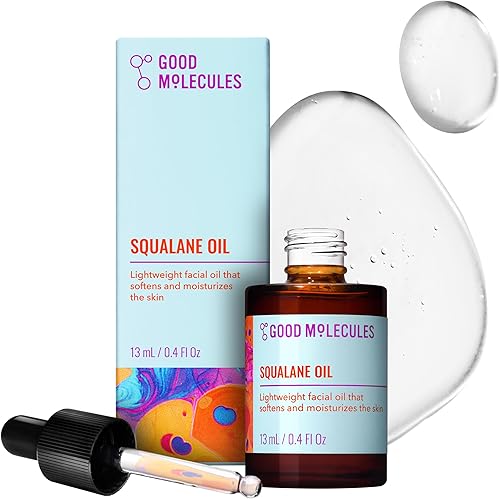
Good Molecules
Good Molecules Squalane Oil
$8
"Lowest upfront squalane price in this comparison, with 4.6/5 across 2,500 Amazon ratings."