Tranexamic Acid Serum vs Retinol for Fine Lines in 2026
Evidence-weighted comparison of tranexamic acid serums and retinol products for fine lines, dark spots, tolerability, value, and mature-skin routines.
We analyzed 5 Amazon US listings totaling about 44,600 visible ratings, 2 PubMed citations, Sephora/Ulta retail positioning, and Allure/Byrdie editorial context. Retinol wins for fine lines; tranexamic acid is the better discoloration-focused add-on.
| Criterion | Tranexamic acid serums Discoloration serum category $11.94 | Retinol products Vitamin A fine-line category $21.17 |
|---|---|---|
| Fine-line evidence Strength of direct published and product-positioning evidence for fine wrinkles, texture, and photoaging. | 5.7/10 | 8.8/10 |
| Hyperpigmentation evidence Strength of evidence for melasma-leaning discoloration, post-acne marks, dark spots, and uneven tone. | 8.9/10 | 6.2/10 |
| Tolerability Lower likelihood of peeling, burning, barrier disruption, and starter-routine difficulty scores higher. | 8.1/10 | 6.3/10 |
| Value Visible Amazon US pricing weighed against category evidence, expected use frequency, and rating depth. | 8.6/10 | 8.0/10 |
| Mature-skin friendliness Fit for 35-55 routines dealing with fine lines, discoloration, dryness, and sensitivity at the same time. | 7.8/10 | 8.2/10 |
| Amazon review signal Visible Amazon rating volume and star averages across representative products in each category. | 7.8/10 | 8.5/10 |
| Routine flexibility Ease of layering with moisturizers, sunscreen, niacinamide, vitamin C, and barrier-support products. | 8.4/10 | 6.8/10 |
| Overall score | 7.90 | 7.54 |
🏆 Winner: Retinol products for fine lines; tranexamic acid serums for dark spots
Retinol wins the fine-line comparison because the PubMed-indexed Kafi 2007 trial directly measured fine wrinkling over 24 weeks, while the strongest tranexamic acid evidence is discoloration-focused, including a 2024 meta-analysis of 22 melasma RCTs and 1,280 patients. Tranexamic acid scores higher for hyperpigmentation and tolerability; retinol scores higher for fine-line evidence and Amazon review depth.
Best on a budget
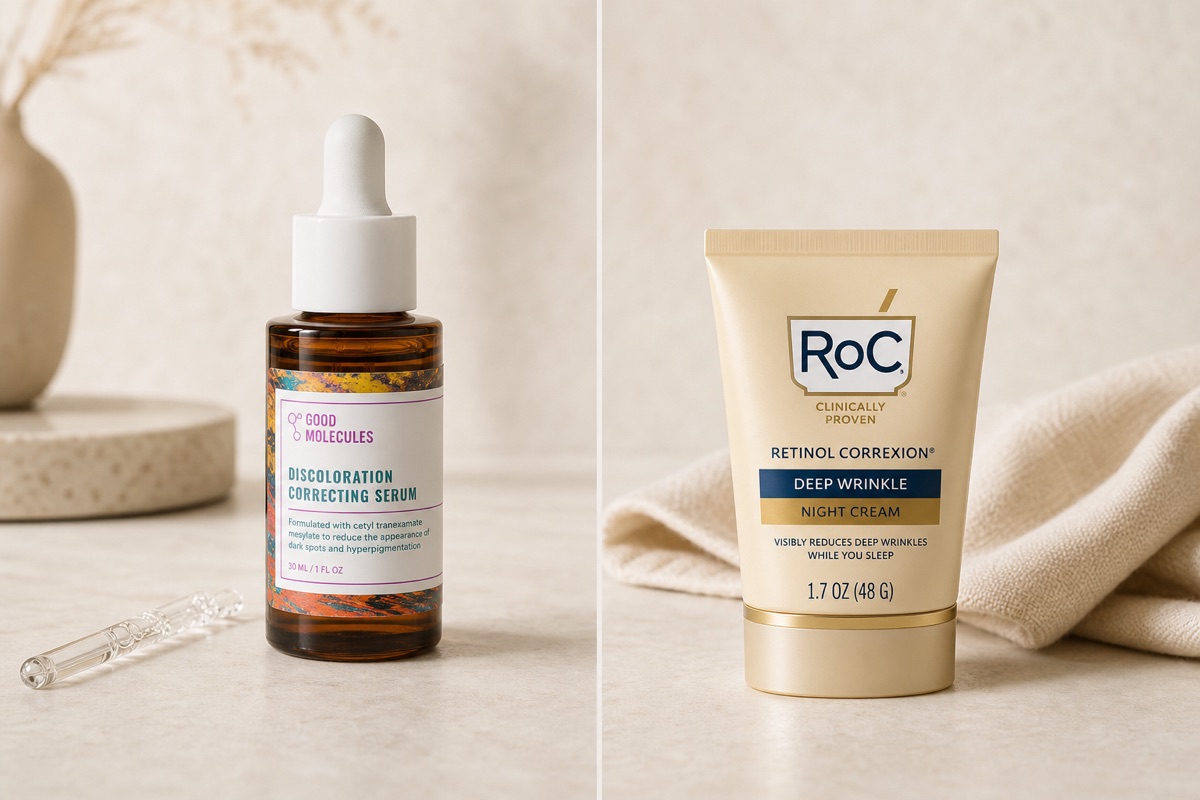
Good Molecules Discoloration Correcting Serum for dark spots; RoC Retinol Correxion Night Cream for a low-cost retinol fine-line routine
Best for results
Retinol products for fine-line and texture goals; tranexamic acid serums for discoloration that accompanies aging or post-breakout marks
Bottom line: choose by the primary problem
If the question is strictly fine lines, retinol is the stronger 2026 choice. BeautySift’s evidence-weighted score puts retinol products ahead on fine-line evidence because the Kafi 2007 PubMed study followed 36 elderly subjects for 24 weeks and reported statistically significant improvement in fine wrinkling scores with topical 0.4% retinol versus vehicle. That is closer to the shopper’s fine-line question than the public tranexamic acid literature.
If the question is dark spots, melasma-leaning discoloration, or post-breakout marks, tranexamic acid is the better fit. The strongest source we found for tranexamic acid is Khurana et al. 2024, a PubMed-indexed melasma meta-analysis covering 22 randomized controlled trials and 1,280 patients. That does not make tranexamic acid a wrinkle active; it makes it a credible pigmentation active.
For women 35-55, the practical answer is often not either/or. Retinol addresses fine lines and texture. Tranexamic acid supports a more even-looking tone. A routine can use both, but the winning active depends on whether the mirror concern is etched lines around the eyes and mouth or uneven brown patches and old breakout marks.
The contenders we scored
For the tranexamic acid side, we used three US-available Amazon representatives: Good Molecules Discoloration Correcting Serum, Paula’s Choice Clinical Discoloration Repair Serum, and Minimalist Tranexamic Acid Serum + HPA. Amazon’s May 24, 2026 snapshots showed Good Molecules at 4.4/5 across 14,809 visible ratings at $11.94, Paula’s Choice at 4.2/5 across 1,286 visible ratings at $55, and Minimalist at 4.2/5 across about 4,000 visible ratings at $11.99.
For the retinol side, we used RoC Retinol Correxion Night Cream and Olay Retinol 24 MAX Night Smoothing Serum. Amazon’s May 24, 2026 snapshots showed RoC at 4.4/5 across 23,821 visible ratings at $21.97 and Olay at 4.4/5 across about 3,900 visible ratings at $21.17. Those two products are not identical textures, but they represent the mass US retinol category that shoppers most often compare against brightening serums.
Affiliate availability did not affect scoring. We weighted direct fine-line evidence, pigmentation evidence, tolerability, value, mature-skin friendliness, Amazon review signal, and routine flexibility.
Fine lines: retinol has the more direct evidence
Retinol wins the fine-line criterion 8.8 to 5.7. The reason is simple: the cited retinol literature measured wrinkling. Kafi et al. 2007 evaluated topical retinol for 24 weeks in 36 elderly subjects and reported significant improvement in fine wrinkling scores compared with vehicle. That is not the same as saying every over-the-counter retinol cream will perform like a study lotion, but it gives the category a stronger fine-line rationale than tranexamic acid.
Tranexamic acid’s public evidence base points elsewhere. Khurana et al. 2024 pooled 22 randomized controlled trials and 1,280 patients for melasma management. Melasma studies are relevant for discoloration-prone skin, especially for women who notice brown patches becoming more stubborn with age, hormonal shifts, or cumulative UV exposure. They are not fine-line studies.
This distinction matters because many product pages combine “brightening,” “tone,” “texture,” and “aging” language. A serum can make skin look fresher by reducing uneven tone without directly improving wrinkles. Retinol is the better-supported alternative active when the goal is softening fine lines.
Dark spots: tranexamic acid is the cleaner match
Tranexamic acid wins the hyperpigmentation criterion 8.9 to 6.2. Good Molecules, Paula’s Choice, and Minimalist all position their formulas around discoloration, dark spots, post-acne marks, melasma-looking uneven tone, or PIH. Amazon review language also clusters around brightness and tone: Good Molecules had 14,809 visible ratings in our snapshot, and quoted reviewers specifically referenced lightweight texture, dark marks, brighter skin, and more even tone.
Retinol can still help skin look more even because it supports visible renewal over time. It may be especially useful when dark spots appear alongside rough texture or dullness. But if a shopper’s main frustration is brown patches that outlast blemishes or sun exposure, tranexamic acid is more targeted and usually easier to add without the peeling period that can happen with retinoids.
That is why the winner is split: retinol for lines, tranexamic acid for spots. A single “best active” answer would be less accurate than matching the active to the visible concern.
Tolerability: tranexamic acid is usually easier to start
Tranexamic acid scores 8.1 for tolerability versus 6.3 for retinol. That score reflects mechanism and user experience. Tranexamic acid serums are not exfoliating acids in the way glycolic or lactic acid products are, and they are not retinoids. Many formulas pair tranexamic acid with niacinamide, humectants, or soothing support, which can make them easier for dry or reactive mature skin.
Retinol asks more from the skin barrier. Amazon’s RoC page shows the upside and the caution in the same review set. One verified reviewer wrote, “Moisturizes and so far, no irritation at all.” Another wrote, “Effective but can irritate sensitive skin.” That spread is typical of retinol: some users tolerate it well, while others need a slower schedule, more moisturizer, or a lower-strength product.
For a first retinol after 40, start two nights weekly, use a pea-size amount, and moisturize generously. If your skin is already tight, hot, peeling, or over-exfoliated, stabilize the barrier before adding retinol.
Value: both categories can be affordable
Tranexamic acid edges out retinol on value, 8.6 to 8.0, because two of the three tranexamic representatives are close to $12 in our Amazon snapshot. Good Molecules was $11.94 at 4.4/5 across 14,809 visible ratings, and Minimalist was $11.99 at 4.2/5 across about 4,000 visible ratings. Paula’s Choice is the premium outlier at $55.
Retinol is also accessible. RoC was $21.97 with 23,821 visible Amazon ratings, and Olay Retinol 24 MAX Night Smoothing Serum was $21.17 with about 3,900 visible ratings. For a fine-line routine, those prices are competitive because retinol is usually used at night and slowly at first.
The value decision should factor in wasted product from irritation. A $12 serum that you can use consistently may outperform a stronger product you abandon after burning or dryness. For retinol, budget for a bland moisturizer and daily sunscreen; those are not optional extras in a realistic mature-skin routine.
Mature-skin routine fit after 35
For women 35-55, fine lines and discoloration often show up together. Perimenopause-related dryness, more visible texture, slower recovery from blemishes, and cumulative sun exposure can make the face look less even even before deep wrinkles appear. That is where combining categories can make sense.
A balanced routine might use tranexamic acid in the morning, moisturizer, and broad-spectrum sunscreen. Retinol can sit at night two or three times weekly, followed by moisturizer. On non-retinol nights, use barrier support rather than stacking exfoliating acids. If you already use vitamin C, keep the routine simple: vitamin C or tranexamic acid in the morning, not five brightening products at once.
The most common mistake is treating every visible change as a line. Uneven pigment can exaggerate texture. Dryness can exaggerate creasing. Before escalating to a stronger retinoid, check whether the skin needs more consistent sunscreen, a richer moisturizer, and a targeted discoloration serum.
Product notes: who should pick what
RoC Retinol Correxion Night Cream is the best fit here for shoppers whose main goal is fine lines and who want a low-cost retinol cream with deep Amazon review volume. Amazon showed 4.4/5 across 23,821 visible ratings, which gives it the strongest user-volume signal in this comparison. Skip it if your skin reacts quickly to retinoids or if fragrance-free serum textures are your preference.
Good Molecules Discoloration Correcting Serum is the value pick for dark spots and uneven tone. Amazon showed 4.4/5 across 14,809 visible ratings, and the $11.94 price makes it easier to use consistently. It is not the winner for fine lines, but it is the most practical pigmentation add-on.
Paula’s Choice Clinical Discoloration Repair Serum is the premium tranexamic option. At $55 in the Amazon snapshot, it needs to justify itself through formula preference and brand trust rather than low price. It makes more sense for stubborn discoloration than for someone shopping primarily for crow’s-feet or smile lines.
Minimalist Tranexamic Acid Serum + HPA is another low-price brightening option, with Amazon search showing 4.2/5 across about 4,000 visible ratings. Olay Retinol 24 MAX Night Smoothing Serum gives the retinol side a fragrance-free serum format for shoppers who do not want a cream.
Verdict
Retinol is the winner for fine lines in 2026. Tranexamic acid is the winner for hyperpigmentation. If you are choosing one active for lines around the eyes, mouth, or forehead, choose a retinol product and introduce it slowly. If your bigger concern is melasma-looking patches, post-acne marks, or uneven tone, choose tranexamic acid and pair it with sunscreen.
If both concerns matter, use both categories strategically rather than layering aggressively. Tranexamic acid is the lower-drama daily brightening support; retinol is the higher-evidence fine-line active that requires more patience and barrier care.
FAQs
Is tranexamic acid or retinol better for fine lines?
Retinol is better supported for fine lines. The cited Kafi 2007 PubMed study measured fine wrinkling over 24 weeks, while the strongest tranexamic acid evidence we cited is a 2024 melasma meta-analysis of 22 randomized controlled trials and 1,280 patients.
Can tranexamic acid replace retinol?
Not for fine lines. Tranexamic acid can be a smart alternative if you cannot tolerate retinol and mainly want help with discoloration, but it should not be framed as a like-for-like wrinkle active.
Can I use tranexamic acid with retinol?
Yes, but separate them at first. Use tranexamic acid in the morning under sunscreen and retinol at night two or three times weekly. If dryness or stinging appears, reduce retinol frequency before dropping the brightening serum.
Which active is better for sensitive skin?
Tranexamic acid is usually easier to start. Retinol has stronger fine-line evidence, but it more often causes dryness, flaking, or a burning sensation during the adjustment period.
How long should I wait before judging results?
For retinol, think in 12-24 weeks, not days. The Kafi 2007 study assessed outcomes at 24 weeks. For discoloration serums, give the routine at least 8-12 weeks and keep sunscreen consistent, because UV exposure can re-darken spots.
Related reading
Both winners on Amazon

RoC
RoC Retinol Correxion Night Cream for Deep Wrinkles
$21.97
"Highest fine-line relevance in this comparison, with Amazon showing 4.4/5 across 23,821 visible ratings and retinol as the active category with direct wrinkle evidence."
What real Amazon buyers say
4.4★· 23,821 reviews"Moisturizes and so far, no irritation at all."
"Effective but can irritate sensitive skin"

Good Molecules
Good Molecules Discoloration Correcting Serum
$11.94
"Best value representative for the tranexamic-acid side, with Amazon showing 4.4/5 across 14,809 visible ratings at $11.94."
What real Amazon buyers say
4.4★· 14,809 reviews"The formula feels super lightweight on my skin, absorbs quickly, and doesn't leave me greasy or sticky at all."
"I've been using this for 3 weeks and let me tell you all the compliments I've been getting about my skin looking brighter and more even toned."

Paula's Choice
Paula's Choice Clinical Discoloration Repair Serum
$55
"Premium tranexamic-acid representative with Amazon showing 4.2/5 across 1,286 visible ratings and a formula positioned for stubborn dark spots."
What real Amazon buyers say
4.2★· 1,286 reviews"I've tried several products for melasma, with few results. However, Paula's Choice Discoloration Repair Face Serum is slowing fading my brown spots after applying 2x/day for two months."
"Smooth and hydrating. Easy to apply and it does clarify skin."

Minimalist
Minimalist Tranexamic Acid Serum + HPA
$11.99
"Low-price tranexamic-acid option with Amazon search showing 4.2/5 across about 4,000 visible ratings."

Olay
Olay Retinol 24 MAX Night Smoothing Serum
$21.17
"Fragrance-free retinol-serum representative with Amazon search showing 4.4/5 across about 3,900 visible ratings."