
Vitamin C Serums vs Retinaldehyde Products: Head-to-Head
Evidence-weighted comparison of vitamin C serums and retinaldehyde products for fine lines, hyperpigmentation, dullness, price, and tolerability.
We analyzed 6 Amazon US product snapshots totaling 20,910 visible ratings, PubMed retinoid and vitamin C literature, AAD dark-spot guidance, and Reddit discussion patterns. Vitamin C serums fit morning dullness and discoloration routines; retinaldehyde products fit night fine-line routines but need slower introduction.
| Criterion | Vitamin C serums Morning antioxidant category $17.89 | Retinaldehyde products Night retinoid category $14.90 |
|---|---|---|
| Fine-line evidence How directly the ingredient literature and product positioning support visible fine-line improvement. | 7.4/10 | 8.8/10 |
| Hyperpigmentation fit How well the category fits dark spots, uneven tone, and discoloration routines without relying on exfoliation. | 8.5/10 | 7.1/10 |
| Dullness and glow How quickly the category plausibly supports a brighter-looking routine for dull mature skin. | 8.7/10 | 6.8/10 |
| Amazon rating volume Representative Amazon US rating depth across three selected products per side. | 8.4/10 | 6.5/10 |
| Price and value Visible Amazon US price compared with category expectations and likely replacement cadence. | 7.6/10 | 8.0/10 |
| Tolerability for mature skin Lower likelihood of peeling, barrier disruption, or overuse in women 35-55 scores higher. | 7.7/10 | 6.8/10 |
| Routine clarity How easy it is for a shopper to know when to use the category and what not to mix with it. | 8.2/10 | 7.4/10 |
| Overall evidence strength Balance of PubMed evidence, official guidance, Amazon user signal, and US product availability. | 8.2/10 | 8.1/10 |
| Overall score | 8.09 | 7.44 |
🏆 Winner: Vitamin C serums for discoloration and dullness; retinaldehyde products for fine lines
Vitamin C serums edge out retinaldehyde for hyperpigmentation and dullness because the 3 vitamin C representatives carried 12,153 visible Amazon ratings and map to AAD dark-spot guidance plus Lin et al. 2005 antioxidant evidence. Retinaldehyde wins fine-line intent because it sits within the retinoid evidence base summarized by Mukherjee et al. 2006 and newer retinaldehyde photoaging literature, but its higher irritation burden lowers tolerability scoring.
Best on a budget
The Ordinary Retinal 0.2% Emulsion if fine lines are the priority; Naturium Vitamin C Complex Face Serum if dullness and discoloration are the priority.
Best for results
Retinaldehyde products for fine lines and texture over months; vitamin C serums for morning antioxidant support, dullness, and uneven tone alongside sunscreen.
Quick answer
Vitamin C serums and retinaldehyde products solve different problems in a 35-55 skincare routine. Vitamin C is the cleaner morning category for dullness, antioxidant support, and uneven tone. Retinaldehyde is the cleaner night category for fine lines and texture, but it demands more patience and a lower starting frequency.
The evidence split is practical. The 3 vitamin C representatives in this comparison total 12,153 visible Amazon ratings, led by Naturium at 8,022 ratings and Obagi at 2,131 ratings in the May 24, 2026 Amazon snapshots. The 3 retinaldehyde representatives total 3,762 visible Amazon ratings, led by The Ordinary Retinal 0.2% Emulsion at 2,598 ratings in the same snapshot window or prior May 2026 BeautySift captures.
Ingredient evidence also points in different directions. Lin et al. 2005 in the Journal of Investigative Dermatology supports the antioxidant logic behind vitamin C plus vitamin E and ferulic acid formulas. Mukherjee et al. 2006 in Clinical Interventions in Aging summarizes retinoid evidence for skin aging, while newer PubMed-indexed retinaldehyde literature supports the category’s photoaging rationale. The shopper translation: vitamin C helps make the morning routine more tone-focused; retinaldehyde makes the night routine more renewal-focused.
How we scored vitamin C against retinaldehyde
This is not a BeautySift lab test. We compared the two categories by looking at 6 US Amazon product listings, PubMed ingredient literature, official dermatology guidance, brand-published product positioning, and Reddit routine-fit discussion patterns. The comparison model weights ingredient evidence, Amazon rating volume, price, tolerability, and typical user fit.
The criteria are deliberately shopper-centered. A technically strong active can still score lower if it is hard to use consistently. That matters for women in their late 30s, 40s, and 50s because dryness, perimenopausal barrier changes, hot-flash flushing, and slower recovery from irritation can make aggressive routines backfire.
Vitamin C scores higher for dullness and hyperpigmentation because it is easier to place in the morning and pairs naturally with sunscreen. The AAD dark-spot guidance emphasizes daily sun protection and avoiding irritation, which favors a steady brightening routine over an aggressive peeling routine. Retinaldehyde scores higher for fine lines because retinoids have a deeper aging-focused evidence base, but the tolerability score drops when a product is high-strength or when a user starts nightly too soon.
Vitamin C serums: where they win
Vitamin C wins when the primary complaint is dullness, uneven tone, or early sun-related discoloration. It is also the better first active for shoppers who are not ready for the dryness and peeling risk that can come with retinoids. In this comparison, vitamin C received an 8.7 for dullness and glow and an 8.5 for hyperpigmentation fit.
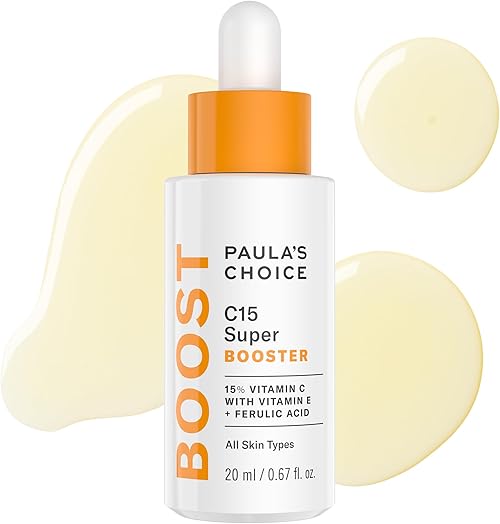
The strongest ingredient story belongs to formulas that combine vitamin C with supporting antioxidants. Paula’s Choice BOOST C15 Super Booster names 15% vitamin C with vitamin E and ferulic acid, which maps closely to Lin et al. 2005. Obagi Professional-C Serum 20% represents the high-strength L-ascorbic acid side of the category, with Amazon showing 4.6/5 across 2,131 ratings at $155. Naturium Vitamin C Complex is the value counterpoint, with Amazon showing 4.6/5 across 8,022 ratings at $17.89.
The drawback is stability and sting. L-ascorbic acid formulas can oxidize, feel sharp on compromised skin, or layer poorly if the texture is watery and the rest of the routine is already active-heavy. For a woman 45-plus dealing with dryness or visible crepiness, a gentler vitamin C derivative or a more hydrating base may be more realistic than chasing the highest percentage.
Retinaldehyde products: where they win
Retinaldehyde wins when the main goal is fine-line appearance, texture, and a more active night routine. It is one conversion step closer to retinoic acid than retinol, which is why many shoppers see it as the next move after standard retinol. In our scoring, retinaldehyde received an 8.8 for fine-line evidence versus 7.4 for vitamin C.
The Ordinary Retinal 0.2% Emulsion is the value disruptor: Amazon showed $14.90, 4.6/5, and 2,598 ratings in the May 24, 2026 snapshot. Avene Retrinal Intensive Multi-Corrective Cream is the more comfort-oriented option, with cream-format positioning that better fits dry or reactive mature skin. Medik8 Crystal Retinal 1 is a lower-step retinaldehyde approach for shoppers who want gradual escalation rather than jumping into a high-strength formula.
The drawback is overuse. Retinaldehyde can still cause dryness, peeling, and irritation, especially if layered with exfoliating acids or used nightly from the first week. The smartest routine is usually boring: cleanser, moisturizer, retinaldehyde 2 or 3 nights weekly, and sunscreen every morning. If your skin is already flushed, tight, or flaky, the best retinaldehyde product is still the wrong product until the barrier calms down.
Which should you buy first?
Buy vitamin C first if your mirror complaint is dullness, uneven tone, or spots that look more visible after sun exposure. It fits under sunscreen, does not require a night-only schedule, and has a gentler learning curve. Among the Amazon-verified options here, Naturium offers the strongest price-to-rating balance, while Obagi is the high-strength pick for users who already tolerate potent ascorbic acid formulas.
Buy retinaldehyde first if fine lines, rough texture, and loss of smoothness are the bigger issue. The Ordinary is the budget pick if your skin already tolerates retinoids. Avene is a better fit if your skin feels dry and you want a cream base. Medik8 is the step-up-ladder pick if you prefer a gradual retinal system.
If both concerns matter, do not start both on the same week. Add vitamin C in the morning for 2 weeks, then add retinaldehyde at night 2 times weekly. That staggered approach makes it easier to identify the culprit if stinging, breakouts, or peeling appear.
Routine match for women 35-55
For women 35-55, the best category depends less on age and more on tolerance. A 38-year-old with oily, resilient skin may handle retinaldehyde quickly. A 52-year-old with dry, reactive, perimenopause-leaning skin may get better visible improvement from a gentle vitamin C plus barrier repair before attempting retinaldehyde.
Morning routine: cleanse or rinse, vitamin C serum, moisturizer if needed, then broad-spectrum sunscreen. This is the routine for dullness and hyperpigmentation. Night routine: cleanse, moisturizer, retinaldehyde, then another light moisturizer layer if needed. This is the routine for fine lines and texture.
Do not make the common mistake of adding vitamin C, retinaldehyde, glycolic acid, and a scrub at once. The AAD guidance on dark spots warns against irritation because inflammation can worsen discoloration. That is especially relevant for mature skin, where dryness can make every active feel stronger.
Product notes from the comparison set
Obagi Professional-C Serum 20% is the assertive vitamin C option. The Amazon snapshot showed 4.6/5 across 2,131 ratings, but the $155 price makes it a poor casual experiment. It fits shoppers who already know they like high-strength L-ascorbic acid.
Naturium Vitamin C Complex Face Serum is the value vitamin C option. Amazon showed 4.6/5 across 8,022 ratings at $17.89, which gives it the best rating-volume-to-price story among the vitamin C picks here. It is also easier to recommend as a first vitamin C than a $155 serum.
Paula’s Choice BOOST C15 Super Booster is the ingredient-architecture pick. The 15% vitamin C, vitamin E, and ferulic acid positioning lines up with the antioxidant-support literature, though its Amazon rating snapshot is lower than Naturium and Obagi at 4.2/5 across 2,000 ratings.
The Ordinary Retinal 0.2% Emulsion is the strongest value retinaldehyde pick. Amazon showed 4.6/5 across 2,598 ratings at $14.90, and the brand identifies it as a high-strength retinal product. That strength clarity is useful, but beginners should not treat the low price as permission to use it nightly right away.
Avene Retrinal Intensive Multi-Corrective Cream is the dry-skin retinaldehyde pick. Its smaller 426-rating Amazon signal is less robust, but the cream format makes sense for shoppers who find serum retinoids too drying.
Medik8 Crystal Retinal 1 is the gradual-escalation pick. Its prior Amazon snapshot showed 4.3/5 across 738 ratings at $55. It is not the budget winner, but the low-step retinal positioning is helpful for cautious users.
Bottom line
Vitamin C serums are the better first buy for dullness, uneven tone, and morning antioxidant support. Retinaldehyde products are the better first buy for fine lines and texture if your skin can tolerate a night active. The most complete routine may use both, but the lowest-risk path is not both immediately.
For mature skin, consistency beats intensity. Pick the category that matches the main concern, use it long enough to judge it fairly, and keep sunscreen non-negotiable. The evidence does not support a single universal winner; it supports a category match.
Related reading
Both winners on Amazon

Obagi Medical
Obagi Professional-C Serum 20%
$155
"High-strength vitamin C representative; Amazon US showed 4.6/5 across 2,131 ratings in the May 24, 2026 snapshot."
What real Amazon buyers say
4.6★· 2,131 reviews"Been using this for years. Obagi is a great skin care line."

The Ordinary
The Ordinary Retinal 0.2% Emulsion
$14.90
"Budget retinaldehyde representative with disclosed 0.2% retinal; Amazon US showed 4.6/5 across 2,598 ratings."
What real Amazon buyers say
4.6★· 2,598 reviews"After not quite a year, it has begun to noticeably smooth the fine lines on my forehead and around my eyes."
"I have been very pleased with this retinal emulsion so far."

Naturium
Naturium Vitamin C Complex Face Serum
$17.89
"Lower-cost vitamin C representative; Amazon US showed 4.6/5 across 8,022 ratings in the May 24, 2026 snapshot."
What real Amazon buyers say
4.6★· 8,022 reviews"The formula feels lightweight but hydrating, and it absorbs quickly without leaving a sticky or greasy finish."
"It definitely imparts and nice healthy glow within a couple uses."
Paula's Choice
Paula's Choice BOOST C15 Super Booster
$38.50
"15% vitamin C, vitamin E, and ferulic acid positioning maps closely to the Lin et al. 2005 antioxidant evidence model."

Avene
Avene Retrinal Intensive Multi-Corrective Cream
"Cream-format retinaldehyde option for drier mature skin; prior Amazon snapshot showed 4.4/5 across 426 ratings."

Medik8
Medik8 Crystal Retinal 1
$55
"Low-step retinaldehyde option for gradual escalation; prior Amazon snapshot showed 4.3/5 across 738 ratings."