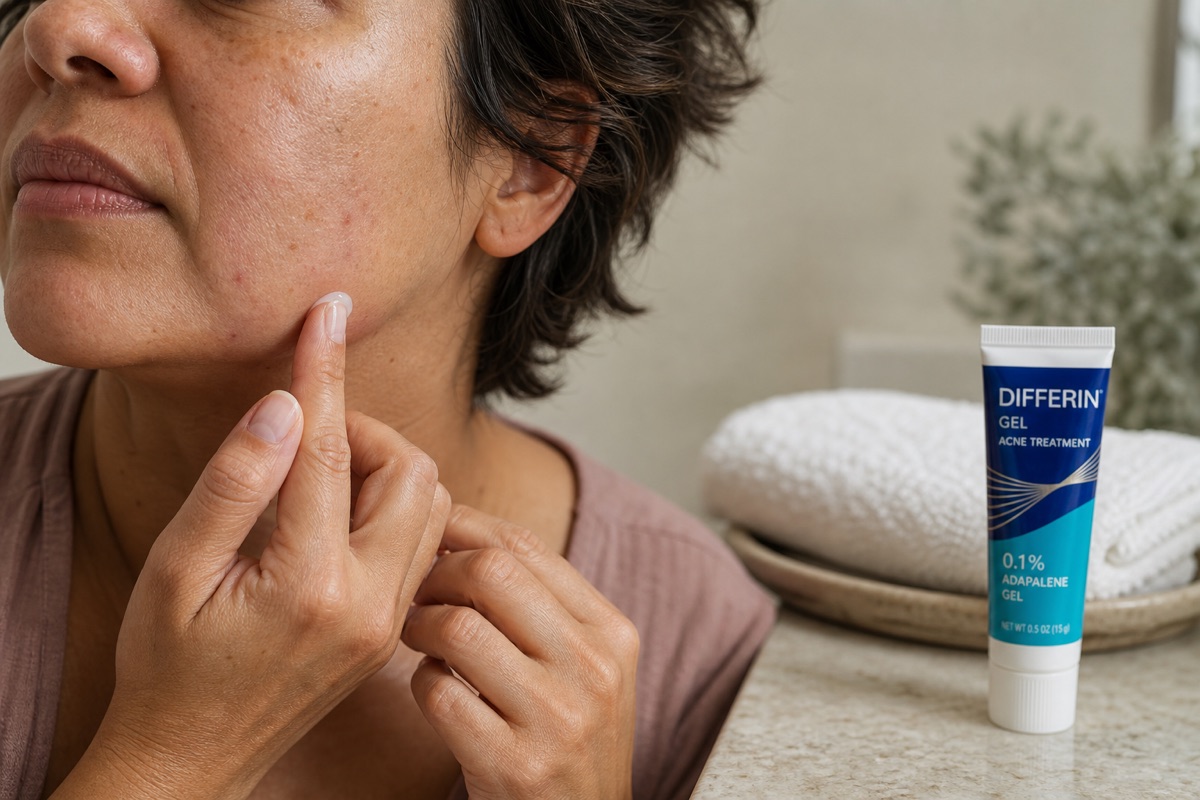
Adult Hormonal Acne After 40: What Is Different and What Works in 2026
An evidence-weighted guide to adult hormonal acne after 40, including perimenopause triggers, OTC actives, prescription options, and when to see a dermatologist.
Based on 9 sources including AAD adult-acne guidance, FDA OTC acne rules, and Collier 2008 in JAAD reporting acne in 26.3% of women ages 40-49, adult hormonal acne after 40 is usually slower, drier, and more jawline-focused than teen acne. The strongest OTC starting points are adapalene 0.1%, benzoyl peroxide, and a barrier-first routine.
Editor's top Amazon picks for this guide
Real Amazon products that match this protocol. Affiliate links — your purchases support BeautySift.
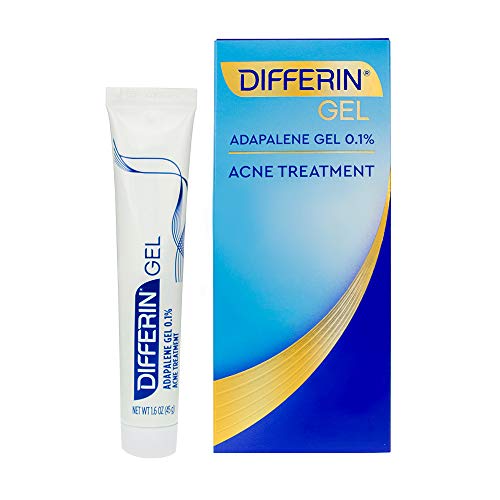
Differin
Differin Gel Acne Treatment 0.1% Adapalene
$16.99
"FDA-approved OTC adapalene 0.1% option for acne prevention and clogged-pore control."
What real Amazon buyers say
4.6★· 4,018 reviews"The “purging” phase around weeks 4-6 was anything but awesome, but I stuck through it knowing that it was temporary, and that the acne that arose during that time was going to “pop up” regardless."
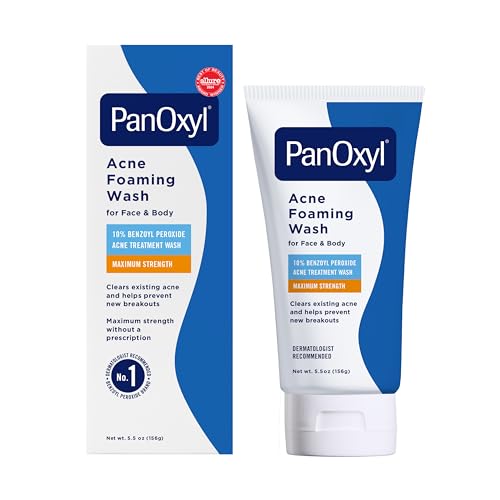
PanOxyl
PanOxyl Acne Creamy Wash 4% Benzoyl Peroxide
$10.99
"A 4% benzoyl peroxide wash format for inflamed acne when adult skin may not tolerate stronger leave-on routines."
What real Amazon buyers say
4.6★· 80,608 reviews"This wash is excellent. It provides powerful cleansing, helps reduce acne effectively, and leaves the skin feeling fresh. The foaming formula is easy to use and works quickly without being overly harsh."
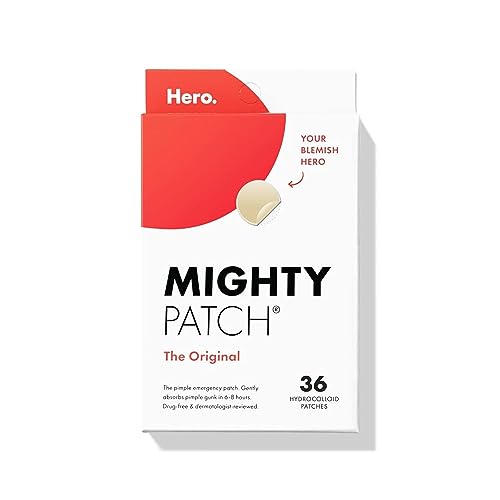
Hero Cosmetics
Hero Cosmetics Mighty Patch Original
$12.99
"Hydrocolloid patches help protect surface pimples from picking while a longer-term acne routine does the prevention work."
What real Amazon buyers say
4.6★· 183,434 reviews"They stay put, even if you accidentally touch your face, and don’t irritate my skin. I also like that they’re practically invisible enough to wear during the day if needed."
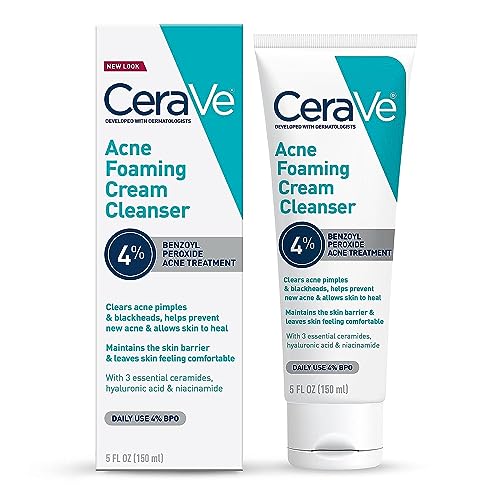
CeraVe
CeraVe Acne Foaming Cream Cleanser 4% Benzoyl Peroxide
$15.99
"A benzoyl peroxide cleanser positioned for acne treatment with a barrier-aware cream-to-foam format."
What you'll learn
- Adult hormonal acne after 40 is often lower-face, persistent, and slower to calm than teen acne, especially around perimenopause.
- The best OTC evidence starts with adapalene 0.1% for prevention and benzoyl peroxide for inflamed lesions, used slowly enough to protect the barrier.
- Salicylic acid can help clogged pores, but adult skin often tolerates fewer exfoliating steps than teenage skin.
- Azelaic acid is worth discussing when breakouts leave dark marks, redness, or sensitivity, but prescription and cosmetic strengths are not the same.
- Cystic, scarring, sudden, or treatment-resistant acne after 40 deserves medical evaluation rather than endless product switching.
Steps
-
1 Confirm that the pattern fits adult hormonal acne
Look for recurring inflamed bumps on the chin, jawline, lower cheeks, and neck, especially if they flare before a period, during perimenopause symptoms, after stress, or after sleep disruption. Adult female acne is not always caused by abnormal hormone blood tests; PubMed reviews describe increased sebaceous-gland sensitivity and chronic lower-face inflammation as common patterns.
-
2 Separate acne from rosacea, perioral dermatitis, and irritation
After 40, several conditions can mimic acne. Rosacea may bring flushing and stinging; perioral dermatitis often clusters around the mouth and nose; over-exfoliation can create acne-like bumps with burning. If the breakout is new, widespread, painful, itchy, or paired with rash, stop escalating acids and retinoids and get a clinician's diagnosis.
-
3 Build the base routine before adding treatment strength
Use a gentle cleanser, lightweight non-comedogenic moisturizer, and broad-spectrum sunscreen as the baseline. Adult acne routines fail when the treatment is effective but the barrier cannot tolerate it. AAD guidance recognizes acne treatments can dry or irritate skin, so the support routine is not optional; it is what keeps adapalene or benzoyl peroxide usable long enough to matter.
-
4 Start adapalene 0.1% as the prevention step
FDA approved adapalene 0.1% gel for OTC acne treatment in 2016. Use a pea-size amount over the acne-prone area, not as a spot treatment, 2 to 3 nights weekly at first. Apply to fully dry skin and moisturize before or after if needed. Expect dryness early and judge improvement over 8 to 12 weeks, not after one weekend.
-
5 Use benzoyl peroxide for inflamed pimples, but choose tolerability
Benzoyl peroxide is an FDA-recognized OTC acne active and has evidence for reducing C. acnes without bacterial resistance. For adult skin that is dry, menopausal, or retinoid-sensitive, a 2.5% to 4% product or short-contact wash is often a more sustainable starting point than layering a strong leave-on treatment every night. It can bleach towels and pillowcases.
-
6 Use salicylic acid only if clogged pores are a major issue
Salicylic acid can help oily congestion and blackheads, and FDA OTC rules recognize it as an acne active. The mistake after 40 is stacking salicylic acid cleanser, toner, peel pads, and retinoid together. If you use adapalene, keep salicylic acid to a separate morning or non-retinoid night no more than a few times weekly until tolerance is clear.
-
7 Consider azelaic acid when marks, redness, or sensitivity dominate
AAD treatment guidance includes azelaic acid among acne options, and prescription azelaic acid has stronger drug-label context than many cosmetic azelaic products. It may be a better conversation with a dermatologist if you have post-acne dark marks, rosacea overlap, or poor tolerance for benzoyl peroxide. Do not assume every over-the-counter azelaic serum performs like a prescription acne medication.
-
8 Know when OTC care is no longer enough
See a dermatologist or qualified clinician if acne is cystic, painful, scarring, suddenly appearing after 40, worsening quickly, or not improving after 8 to 12 weeks of consistent OTC care. Also seek care for irregular periods, new facial hair, scalp hair thinning, unexplained weight change, pregnancy, breastfeeding, or medication changes. Prescription options may include spironolactone, combined oral contraceptives, topical antibiotics with benzoyl peroxide, or isotretinoin for severe cases.
Bottom line
Adult hormonal acne after 40 is not simply teenage acne arriving late. The epidemiology supports taking it seriously: Collier 2008 reported acne in 26.3% of women ages 40 to 49, and AAD guidance notes that women commonly experience adult acne from hormonal fluctuation, stress, products, medication effects, and underlying medical conditions.
BeautySift did not test products on a panel. We analyzed AAD guidance, FDA OTC acne records, PubMed dermatology literature, INCI roles, and verified Amazon product identifiers. We may earn a commission from Amazon links, but affiliate status does not affect the evidence weighting.
What changes after 40
The biggest change is not that acne becomes mysterious. It is that the margin for irritation gets smaller. Many women still need acne treatment, but the surrounding skin may be drier, more reactive, or more prone to post-acne marks than it was at 18.
Common adult patterns include:
- Chin, jawline, lower cheek, and neck flares.
- Deeper inflamed bumps rather than only blackheads and forehead congestion.
- Breakouts that correlate with cycle changes, perimenopause symptoms, stress, or sleep disruption.
- A slower response to routine changes because barrier repair and acne prevention are happening at the same time.
- Higher risk of confusing acne with rosacea, perioral dermatitis, folliculitis, or irritation.
What actually works first
Using the product-comparison framework, we weighted routine options by clinical evidence, tolerability, formulation logic, accessibility, and value. That places adapalene and benzoyl peroxide ahead of trendy spot treatments, while still leaving room for patches and barrier support.
Adapalene 0.1% is the best OTC prevention step for many adults because FDA approved it as an over-the-counter acne retinoid. It is not a same-day spot treatment. It helps reduce clogged pores and future lesions when used consistently.
Benzoyl peroxide is the best OTC inflamed-breakout partner because FDA OTC rules recognize it as an acne active and JAAD guidance supports its role in acne regimens. It can be irritating, so a short-contact cleanser or lower-strength product often fits adult skin better than an aggressive leave-on layer.
Salicylic acid is useful when clogged pores and blackheads are prominent, but it is easier to overuse. After 40, more exfoliation is not always more progress.
Azelaic acid is a reasonable option to discuss when sensitivity, redness, or post-acne marks matter. Prescription azelaic acid and cosmetic azelaic products are not interchangeable in evidence level or labeling.
A practical 12-week routine
Morning:
- Gentle cleanse or rinse.
- Moisturizer if skin feels tight.
- Benzoyl peroxide wash only if inflamed acne is active and your skin tolerates it.
- Broad-spectrum sunscreen.
Evening:
- Gentle cleanse.
- Moisturizer if dry or sensitive.
- Adapalene 0.1% on acne-prone areas 2 to 3 nights weekly at first.
- Moisturizer again if needed.
On non-adapalene nights, keep the routine boring. If you want salicylic acid, use it on a separate night and start once weekly. If you need a hydrocolloid patch, use it on a clean, dry, surface-level pimple rather than under a thick cream.
What to avoid
Avoid changing the whole routine every week. Acne prevention ingredients need time, and irritation can make adult acne look worse. Also avoid layering an acid cleanser, salicylic toner, benzoyl peroxide leave-on, adapalene, and a drying mask in the same 24 hours unless a clinician specifically designs that plan.
Do not use retinoids if pregnant, trying to conceive, or breastfeeding without clinician guidance. Prescription acne medications and hormonal therapies require individual screening.
When a dermatologist matters
OTC skincare is reasonable for mild acne, but it should not delay medical care for painful cysts, scarring, sudden-onset acne after 40, rapidly worsening acne, or acne paired with irregular periods, new facial hair, scalp hair thinning, or unexplained weight changes. Adult acne can be routine, but it can also be a clue that the diagnosis or treatment plan needs a professional review.
Related BeautySift reading
Listicle: Best treatments for perimenopause hormonal acne -> /listicles/best-treatments-perimenopause-hormonal-acne-2026/
Guide: Bakuchiol vs retinol for sensitive 40-plus skin -> /guides/bakuchiol-vs-retinol-sensitive-40plus-2026/
More perimenopause skincare guides -> /guides/