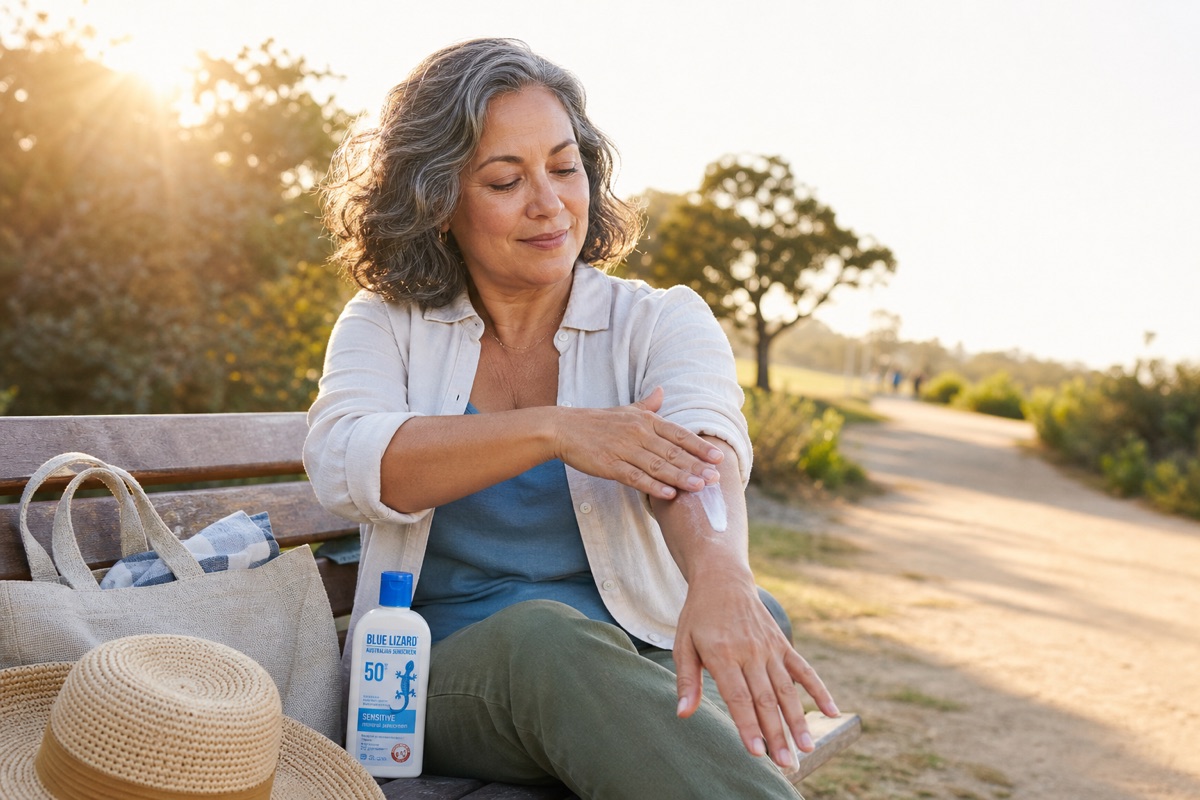
Body Sunscreens for Beginners: A Starter Guide
A beginner-friendly, evidence-led guide to choosing and using body sunscreen, with Amazon options for sensitive skin, daily wear, and outdoor days.
We analyzed 48,477 Amazon ratings across 5 US body sunscreens, FDA SPF guidance, and 2 PubMed randomized sunscreen studies. Beginners should start with broad-spectrum SPF 30 or higher, use enough lotion to cover exposed skin, and reapply every 2 hours outdoors.
Editor's top Amazon picks for this guide
Real Amazon products that match this protocol. Affiliate links — your purchases support BeautySift.

Blue Lizard
Blue Lizard Sensitive Mineral SPF 50 Sunscreen Lotion
$14.07
"Best mineral starting point for sensitive body skin: zinc oxide format, SPF 50, and 4.6/5 across 14,658 Amazon reviews."
What real Amazon buyers say
4.6★· 14,658 reviews"This is a good mineral sunscreen if you want strong SPF 50 protection without a chemical sunscreen feel. It feels soothing and hydrating, and I like that it is made for sensitive skin."

Sun Bum
Sun Bum Original SPF 50 Sunscreen Body Lotion
$18.99
"Best familiar beach-day lotion: SPF 50, 8-ounce size, and 4.7/5 across 14,218 Amazon reviews."
What real Amazon buyers say
4.7★· 14,218 reviews"This is a light-feeling lotion that was great to put on my face under my make-up. The smell is a light-scented tropical smell. Most importantly, this sunscreen works."

Supergoop!
Supergoop! PLAY Everyday Lotion SPF 50
$58
"Best premium pump for daily body use: 18-ounce size, lightweight texture feedback, and 4.6/5 across 10,461 Amazon reviews."
What real Amazon buyers say
4.6★· 10,461 reviews"Pros: extremely lightweight, no greasiness or oiliness at all. Zero white cast, the second you start rubbing it in it turns invisible and feels almost like nothing."

Banana Boat
Banana Boat Light As Air Sunscreen Lotion SPF 50 Twin Pack
$19.98
"Best budget twin pack for families or frequent reapplication: 12 total ounces and 4.7/5 across 4,852 Amazon reviews."

Coppertone
Coppertone Pure and Simple Baby Sunscreen Lotion SPF 50
$8.39
"Best low-cost mineral fallback for fragrance-averse households: zinc oxide format and 4.6/5 across 4,288 Amazon reviews."
What you'll learn
- For beginners, the safest default is broad-spectrum SPF 30 or higher on every exposed body area, not only on beach days.
- Use enough sunscreen to create an even film; most under-application problems come from using a thin moisturizer-sized amount on arms, chest, and legs.
- Reapply every 2 hours outdoors and sooner after swimming, heavy sweating, or towel drying, following FDA and AAD public guidance.
- Choose texture by behavior: mineral for sensitive-skin comfort, lighter chemical lotions for daily adherence, and larger pump bottles for body coverage.
- For women 35-55, do not forget the chest, back of hands, forearms, shoulders, and lower legs; these are high-exposure zones for visible sun damage.
Steps
-
1 Start with broad-spectrum SPF 30 or higher
Choose a US sunscreen labeled broad-spectrum and SPF 30 or higher. FDA and AAD guidance both emphasize broad-spectrum protection because body skin needs UVA and UVB coverage, not only burn prevention. SPF 50 is a practical beginner choice because it gives some margin for imperfect application.
-
2 Match the formula to your skin and your day
Pick mineral zinc oxide if chemical filters often sting or if fragrance is a concern. Pick a lighter lotion if you avoid sunscreen because it feels sticky. Pick water-resistant labeling for pool, beach, gardening, golf, walking, or Florida summer humidity. The best starter sunscreen is the one you will actually use on enough skin.
-
3 Apply more than you think you need
Spread sunscreen in sections: neck and chest, each arm, each leg, shoulders, hands, and any exposed back or torso. Do not treat body sunscreen like body lotion perfume; missed edges are common around straps, sleeve lines, ankles, and the backs of knees. Let it dry before dressing when possible.
-
4 Reapply on a clock, not by feel
Outdoors, reapply every 2 hours and after swimming, sweating, or towel drying. Sunscreen can still feel present after the protective film has been disrupted. Keep a smaller tube in your bag or car console only for transport; avoid storing sunscreen in high heat long term.
-
5 Build the habit around exposure zones
Women 35-55 often notice accumulated sun exposure first on the decolletage, forearms, shoulders, lower legs, and hands. Put sunscreen where clothing does not cover, even for errands, commuting, school pickup, outdoor dining, or weekend yard work. Consistency matters more than a perfect product lineup.
Bottom line
Body sunscreen is not a beach-only product. For a beginner, the useful starter rule is simple: choose a broad-spectrum SPF 30 or higher, apply it to every exposed area, and reapply every 2 hours when you are outdoors. FDA sunscreen guidance explains that broad-spectrum products address both UVA and UVB exposure, while the American Academy of Dermatology recommends broad-spectrum, SPF 30 or higher, and water-resistant sunscreen for sun protection.
BeautySift did not test these sunscreens on a panel. We analyzed 48,477 Amazon ratings across five US body sunscreens, FDA and AAD public guidance, two PubMed-indexed randomized sunscreen studies, official product positioning, and INCI-level filter patterns. We may earn a commission from Amazon links, but affiliate status does not influence product selection or evidence weighting.
This guide is for US women 35-55 who want a realistic sunscreen habit for the neck, chest, shoulders, forearms, hands, and legs. The goal is not to memorize every UV filter. The goal is to buy one body sunscreen you can tolerate, use enough of it, and keep reapplying when exposure continues.
Why body sunscreen matters after 35
Most shoppers understand face SPF before body SPF. That leaves high-exposure areas underprotected: the V of the chest, tops of shoulders, backs of hands, forearms, lower legs, and the strip of skin around sandals or sleeves. These are also areas where many women notice mottled tone, rough texture, and crepey-looking dryness over time.
The strongest evidence in this guide is not a beauty-brand claim. In a randomized trial follow-up published in J Clin Oncol in 2011, Green and colleagues reported reduced melanoma after regular sunscreen use. A separate randomized trial published in Annals of Internal Medicine in 2013 by Hughes and colleagues found that regular sunscreen use helped prevent skin aging compared with discretionary use. Those studies do not mean sunscreen is a cosmetic cure-all, but they do support a boring, consistent habit.
For beginners, SPF 50 can be a practical default. The FDA’s SPF framework is based on controlled testing, while real life involves missed edges, sweating, straps, sleeves, towel drying, and not using enough product. A higher SPF does not give permission to stay out indefinitely, but it can provide a little forgiveness when application is imperfect.
Step 1: Choose broad-spectrum first
Do not start with scent, packaging, or whether a product looks good in a beach bag. Start with the label. Look for “broad spectrum” and SPF 30 or higher. Broad-spectrum matters because UVB is linked to burning, while UVA contributes to deeper photoaging patterns. A product that is only pleasant but not broad-spectrum is not the best first body sunscreen.
Water resistance is the next decision. If you are walking in heat, gardening, golfing, swimming, sweating, doing outdoor errands in a humid Southeast summer, or sitting at a pool, water-resistant labeling is useful. FDA labeling uses water-resistance time claims rather than the old idea of “waterproof” sunscreen. If you are mostly commuting to an office and covering your arms with clothing, texture may matter more than water resistance.
Blue Lizard Sensitive Mineral SPF 50 is the clearest mineral starting point in this set. Amazon lists it at 4.6/5 across 14,658 reviews, and the current listing’s review summary highlights sensitive-skin compatibility, non-irritating feel, zinc oxide, and the common tradeoff of possible white cast. That is exactly the beginner mineral equation: often gentler, sometimes thicker.
Step 2: Pick mineral, chemical, or hybrid by behavior
Mineral sunscreens use zinc oxide and/or titanium dioxide as active UV filters. They are often the safer first guess for people who say chemical sunscreens sting their eyes or make body skin feel itchy. The downside is texture. Mineral body SPF can leave a white cast, feel thicker, or transfer to dark clothing if you dress too quickly.
Chemical sunscreens use organic UV filters that tend to spread more transparently. They are often easier for arms and legs because they feel more like lotion. The downside is that some users dislike fragrance, eye sting, or the feel of certain filters. Hybrid formulas combine both routes, but the beginner choice should come down to adherence: which one will you use at the right amount?
Sun Bum Original SPF 50 is the familiar beach-day option here. Amazon lists it at 4.7/5 across 14,218 reviews, and review language emphasizes a lighter lotion feel, scent, and burn prevention. It is not the best fit if you dislike fragrance, but it makes sense for people who will not use a dense mineral cream on arms and legs.
Supergoop! PLAY Everyday Lotion SPF 50 is the premium pump-bottle approach. Amazon lists the 18-ounce size at 4.6/5 across 10,461 reviews, and the review summary specifically mentions no white cast, fragrance feedback, and a non-greasy feel. The price is much higher than drugstore body sunscreens, but the pump format can help if your real failure point is under-applying small tubes.
Step 3: Apply by body section
The most common body-sunscreen mistake is using a face-sized amount for a body-sized job. Apply in sections so you can see what you covered: neck and decolletage, each arm, each hand, each leg, shoulders, feet if exposed, and any back or torso skin that clothing does not cover. If you are wearing a scoop neck, tank top, shorts, sandals, or a dress, apply before you leave the bathroom so straps and hemlines do not create missed borders.
Let the product dry before dressing when possible. This reduces transfer and helps the film settle. For mineral sunscreens, take the extra 30 to 60 seconds to blend around collarbones, wrists, and ankles. For lighter chemical lotions, resist the temptation to use a whisper-thin layer just because the texture spreads easily.
Banana Boat Light As Air SPF 50 twin pack is a value pick for this step because larger total volume encourages reapplication. Amazon lists the twin pack at 4.7/5 across 4,852 reviews and a $19.98 snapshot price for 12 total ounces. In product-comparison terms, its value score is stronger than premium pump formats, while the texture positioning is friendlier than many heavy beach lotions.
Step 4: Reapply before you think you need to
Sunscreen reapplication should be based on time and disruption, not only on how your skin feels. FDA and AAD guidance both support reapplication during continued exposure, especially after swimming or sweating. Outdoors, use the 2-hour clock. Reapply sooner if you towel off, sweat heavily, change clothing, or spend time in water.
This is where beginners often need a system, not more motivation. Keep one body sunscreen near the door, one in a gym or pool bag, and one smaller tube in a tote when the weather is hot. Do not store sunscreen in a hot car for weeks; high heat is not a good long-term storage plan. For outdoor events, set a phone reminder. For beach days, reapply when snacks or water breaks happen.
Do not rely on makeup, body shimmer, or a thin SPF body oil as your only protection unless the label clearly provides broad-spectrum SPF and you apply enough. Decorative products are easy to under-apply. If you like a glow finish, put the sunscreen down first, then add the cosmetic layer after it sets.
Step 5: Build around your real life
The best beginner sunscreen is not the one with the most elegant ingredient story. It is the one that fits your ordinary week. If you walk a dog every morning, choose a bottle you can use on forearms, hands, neck, and calves without thinking. If you garden on weekends, choose water resistance and enough volume. If you hate white cast on deeper skin tones, prioritize transparent chemical or hybrid lotions and use a mineral option only where it truly works for you.
For sensitive or fragrance-averse households, Coppertone Pure and Simple Baby SPF 50 is a low-cost mineral fallback. Amazon lists it at 4.6/5 across 4,288 reviews and an $8.39 snapshot price. It is marketed for babies, but adults can use baby-labeled sunscreen; the practical value is often the simpler mineral positioning. The tradeoff is the same as other mineral lotions: it may feel thicker or look paler on some skin tones.
If you are using retinoids, exfoliating acids, or brightening products on the chest or shoulders, be more disciplined with body SPF. Actives can make your cosmetic goals harder to maintain if the skin is repeatedly exposed without protection. That does not mean you need a 10-step body routine. It means sunscreen belongs before body retinol dreams, not after.
Product roles for a beginner protocol
Choose one product role first. You do not need five body sunscreens to begin.
For sensitive skin or fragrance caution, Blue Lizard Sensitive Mineral SPF 50 is the best starting point in this set. The evidence-weighted score is strongest for tolerability and mineral-filter clarity, with the expected white-cast caveat.
For beach bags and family use, Sun Bum Original SPF 50 is the easiest mainstream lotion. Its 14,218-review Amazon footprint and 4.7/5 rating make it the highest-volume comfort pick here, though scent-sensitive users may prefer a fragrance-free mineral route.
For daily exposed skin and pump-bottle adherence, Supergoop! PLAY Everyday Lotion SPF 50 is the premium option. The 18-ounce size supports full-body use better than tiny tubes, but the $58 snapshot price makes it a behavior investment, not a budget pick.
For value and frequent reapplication, Banana Boat Light As Air SPF 50 twin pack is the practical household choice. For a low-cost mineral backup, Coppertone Pure and Simple Baby SPF 50 makes sense when price and zinc oxide matter more than cosmetic elegance.
Common beginner mistakes
Do not save body sunscreen only for vacation. Incidental exposure from commuting, errands, outdoor lunches, and weekend sports accumulates on the same areas over and over.
Do not stop at the face and neck. Hands, forearms, shoulders, chest, and lower legs often get more routine sun than the face because they are uncovered in normal clothing.
Do not assume a high SPF cancels out reapplication. SPF is not a timer that lasts all day. Sweat, water, clothing friction, and under-application change the real-world result.
Do not choose a product you hate using because an ingredient list sounds impressive. If the texture makes you avoid it, the evidence does not matter in practice. A comfortable broad-spectrum SPF 30 or higher used generously is the better beginner win.
FAQ
How much body sunscreen should I use for daily errands?
Apply by exposed area rather than guessing a single amount. Cover the neck, chest, arms, hands, lower legs, and feet if they are exposed. If you can still see dry missed streaks or you only used a pea-sized amount per arm, you probably under-applied.
Is mineral sunscreen always better for mature skin?
No. Mineral sunscreen can be a good choice for sensitive skin, but it is not automatically better for every woman over 35. If white cast or thickness makes you use too little, a lighter chemical body sunscreen may protect you better in real life.
Can body sunscreen replace body lotion?
Sometimes for daytime, especially if the formula feels moisturizing. If your skin is dry, apply a plain body lotion first, let it absorb, then apply sunscreen. Do not dilute sunscreen by mixing the two together in your palm.
Should I use sunscreen on my chest every day?
Yes, if your chest is exposed. The decolletage gets frequent incidental sun from V-necks, scoop necks, workout tops, and driving. Sunscreen is more reliable than trying to correct uneven tone after years of exposure.
When should I throw out body sunscreen?
Follow the expiration date on the package. If the product smells off, separates, changes texture, or was stored in extreme heat for a long time, replace it. Sunscreen is not a good category for stretching questionable old bottles.