Collagen Peptide Powders After 40: Dos and Don'ts for Skin Support
An evidence-led guide to using collagen peptide powders after 40, including realistic skin benefits, dosing, timing, safety checks, and Amazon product picks.
Based on 26 randomized trials in a 2023 Nutrients meta-analysis, plus Proksch 2014 trials in 69 and 114 women, collagen peptides may modestly support hydration, elasticity, and fine-line appearance after 8-12 weeks when used consistently.
Editor's top Amazon picks for this guide
Real Amazon products that match this protocol. Affiliate links — your purchases support BeautySift.

Sports Research
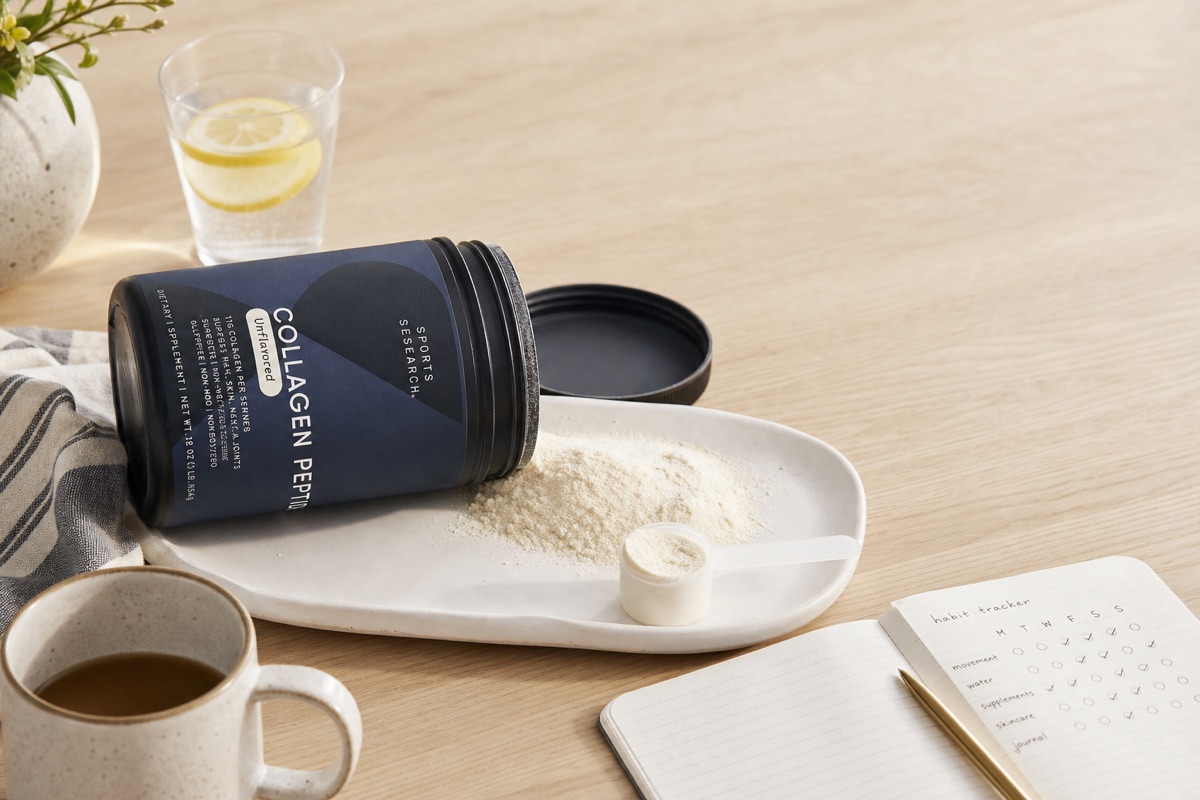
Sports Research Collagen Peptides Powder, Unflavored
$32
"A straightforward bovine collagen peptide powder for readers who want a clearly labeled, unflavored daily scoop; Amazon listed 4.6/5 across 7,995 ratings in our May 2026 scrape."

Great Lakes Wellness
Great Lakes Wellness Collagen Peptides Powder, Unflavored
$29
"A widely reviewed unflavored collagen peptide option for shoppers who prioritize broad user-sentiment volume; Amazon listed 4.6/5 across 128,980 ratings in our May 2026 scrape."

Perfect Supplements
Perfect Supplements Hydrolyzed Collagen Peptides Powder
$25
"A lower-volume alternative for shoppers trying to avoid the same overused collagen SKUs; Amazon listed 4.5/5 across 103 ratings in our May 2026 scrape."
What you'll learn
- Most skin-focused collagen peptide studies measure changes after 8-12 weeks, so daily consistency matters more than taking a large scoop once in a while.
- Collagen powders are dietary supplements, not FDA-approved wrinkle treatments; check allergens, dose, third-party testing, and medication concerns before starting.
- Study doses for skin often range from 1-5 g daily, while commercial powders may provide 10-20 g per serving; more is not automatically better for fine lines.
- Choose a product that names the collagen source, lists grams per serving, and fits your routine without excess sugar or ingredients that upset your stomach.
Steps
-
1 Pick a dose you can repeat daily
Start with the labeled serving or a lower amount if your stomach is sensitive, then use it daily for 8-12 weeks before judging visible skin changes. Proksch 2014 studied 2.5 g and 5 g daily in women age 35-55, while Kim 2018 studied 1 g daily in women age 40-60. Many Amazon powders provide higher servings, so the practical goal is consistency, not chasing the biggest scoop.
-
2 Match the collagen source to your allergies and preferences
Read whether the powder is bovine, marine, porcine, chicken, eggshell membrane, or multi-collagen. Marine collagen can matter for fish allergies, and multi-collagen blends may include egg or chicken-derived materials. If you keep kosher, halal, pescatarian, or avoid pork, the source line is more useful than the front-label phrase collagen peptides.
-
3 Pair collagen with the basics that collagen cannot replace
Collagen peptides may support hydration and elasticity in trials, but they do not replace sunscreen, sufficient dietary protein, vitamin C intake, sleep, strength training, or dermatology care. Bolke 2019 studied collagen peptides with vitamin C, and FDA guidance still treats supplements as food-category products rather than approved skin-aging drugs.
-
4 Choose quality signals before flavor claims
Prioritize products that disclose grams of collagen peptides per serving, source type, allergen warnings, and third-party verification when available. USP and NSF explain that verification programs can check label contents, contaminants, and manufacturing practices. Flavor, creamer texture, and viral popularity should come after those basics.
-
5 Stop if your body objects
Mild taste fatigue is one thing; hives, wheezing, severe stomach upset, swelling, or a new rash are not. Stop the supplement and contact a clinician if you suspect an allergic or adverse reaction. FDA maintains a process for reporting dietary supplement problems, which matters because supplements are not pre-approved for effectiveness before sale.
Quick answer
Based on 26 randomized trials in the 2023 Nutrients meta-analysis by Pu et al., plus Proksch 2014 trials in 69 and 114 women, collagen peptides may modestly support skin hydration, elasticity, and fine-line appearance after 8-12 weeks. The realistic play after 40 is not “take collagen and reverse aging.” It is: choose a clear dose, take it consistently, protect your skin barrier, and avoid products that hide source, serving size, or allergen details.
Why collagen gets more interesting after 40
After 40, many women notice a shift that feels different from standard dry skin: crepey texture on the neck, slower bounce-back, more visible smile lines, and a face that looks tired even with the same routine. Perimenopause can add dryness and barrier volatility, while normal chronological aging changes collagen turnover. Collagen peptide powders sit in the supplement lane, not the cosmetic lane, so the evidence has to be read carefully.
The strongest case is modest support, not dramatic lifting. In Proksch et al. 2014, 69 women age 35-55 took 2.5 g or 5 g of specific collagen peptides daily for 8 weeks, and skin elasticity improved versus placebo. In a second Proksch 2014 study of 114 women age 45-65, 2.5 g daily was associated with about a 20% reduction in eye wrinkle volume after 8 weeks, with dermal markers including procollagen type I reported higher in the treatment group.
That is useful, but it is not a blank check for every tub that says collagen. The 2023 Nutrients meta-analysis by Pu et al. included 26 randomized controlled trials and 1,721 participants, and found hydrolyzed collagen improved hydration and elasticity versus placebo, but effects varied by source, dose, duration, and molecular weight. Translation: the label matters.
The dos: how to use collagen peptides without overthinking it
Do pick a dose you can repeat. The skin studies we found often used 1-5 g daily, while many US powders sell 10-20 g servings because they are also marketed for hair, nails, joints, and protein routines. A bigger serving is not automatically a better fine-line strategy. If the full scoop bothers your stomach, a half serving taken daily is more useful than an ambitious scoop you abandon by week two.
Do give it an 8-12 week window. Proksch 2014 measured changes at 4 and 8 weeks, and Bolke et al. 2019 followed women 35+ for 12 weeks. If a product page promises visible change in a few days, treat that as marketing language, not the clinical time frame.
Do check the collagen source. Bovine collagen is common and usually more affordable. Marine collagen may appeal if you avoid beef, but it can be a problem if you have fish allergies. Multi-collagen blends can include chicken, fish, bovine, porcine, or eggshell membrane ingredients. For women juggling perimenopause symptoms and new sensitivities, the source line is not a footnote.
Do pair collagen with vitamin C and adequate protein from food. Bolke 2019 studied collagen peptides with vitamin C, and basic collagen biology depends on vitamin C. You do not need a sugary collagen drink mix to get there; citrus, strawberries, bell peppers, or a basic multivitamin context may be enough if your clinician says it fits your diet.
Do look for quality signals. The FDA says dietary supplements are not approved for safety or effectiveness before sale. USP and NSF verification programs can help shoppers identify products that have been checked for label accuracy and contaminants, depending on the specific certification. If a brand cannot tell you grams per serving, source, or allergen information, skip it.
The don’ts: where collagen powder gets oversold
Don’t use collagen as a sunscreen substitute. UV exposure is still one of the biggest visible-aging accelerators, and no scoop blocks UVA through a car window or during a Florida summer walk. If fine lines and sagging are your concerns, broad-spectrum SPF remains the non-negotiable baseline.
Don’t expect collagen to behave like a topical retinoid. Retinoids work through skin-cell turnover pathways in the skin; collagen peptides are digested into amino acids and peptides that may signal skin-support processes. Those are different lanes. You can use both if your skin and clinician allow it, but one does not replace the other.
Don’t ignore digestive feedback. Some users report bloating, aftertaste, or nausea with larger servings. The trials above did not show a major adverse-event signal, and the 2021 systematic review by de Miranda et al. reported no adverse events across 19 studies and 1,125 participants, but real-world tolerance still varies.
Don’t assume “grass-fed,” “marine,” or “multi” proves better skin results. Those terms may matter for sourcing preference, but clinical outcomes depend on the specific peptide, dose, and study. A plain unflavored powder with transparent labeling can be a better buy than a flavored beauty blend with more sweetener than evidence.
Don’t start right before surgery, during pregnancy, or while managing complex medical conditions without asking a clinician. NIH supplement guidance emphasizes professional input when supplements overlap with medical conditions, medications, pregnancy, nursing, or planned procedures.
A simple 12-week protocol for women 40+
Week 1 is a tolerance week. Choose one product, confirm the source, and start with the label serving or a partial serving if you are sensitive. Mix it into coffee, tea, water, a smoothie, or oatmeal. Keep everything else stable so you can tell whether collagen is bothering your stomach.
Weeks 2-4 are habit-building weeks. Take it at the same time daily. Morning coffee works for many people; evening tea works if caffeine triggers hot flashes. Track only two or three skin observations, such as cheek dryness, makeup settling around smile lines, and neck crepiness. More tracking creates noise.
Weeks 5-8 are the first reasonable checkpoint. Proksch 2014 measured improvements by 8 weeks, so this is when you can ask whether your skin feels less dry or makeup sits better. Do not judge sagging by mirror anxiety under harsh bathroom lights. Use the same lighting, same time of day, and same moisturizer when comparing.
Weeks 9-12 are the fair verdict window. If you see no change in hydration, bounce, or fine-line appearance and you dislike the routine, stop. If you notice modest improvement and the product is affordable, continuing can be reasonable. If the only benefit is that you bought an expensive tub, that is not a benefit.
Product-fit notes for the featured powders
Sports Research Collagen Peptides is the clean daily-routine pick in this protocol because it is unflavored, widely available on Amazon US, and avoids the extra flavor system that can make daily use harder for sensitive stomachs. In our Amazon page scrape, the listing showed 4.6/5 across 7,995 ratings. That is user-sentiment volume, not proof of wrinkle reduction.
Great Lakes Wellness Collagen Peptides is the broad-consensus pick for shoppers who want the reassurance of a large Amazon rating base. Our May 2026 scrape found 4.6/5 across 128,980 ratings. The caution is the same as with any popular supplement: confirm the seller, read the current label, and do not assume a large rating count means the exact outcome you want.
Perfect Supplements Hydrolyzed Collagen Peptides is included as a rotation-friendly alternative because BeautySift avoids reusing the same ASINs across too many articles. Its Amazon listing showed 4.5/5 across 103 ratings in our scrape, meaning the sentiment base is much smaller. That makes it less proven by user volume, but useful for readers seeking a less-crowded SKU.
Who should skip collagen powder for now
Skip or pause if you have a known allergy to the collagen source, a history of supplement reactions, kidney disease, liver disease, or a clinician-advised protein restriction. Also pause before surgery unless your clinician says otherwise. Collagen powders are often treated as casual wellness products, but they still add a daily supplement to your routine.
Skip if the budget tradeoff hurts your core routine. A collagen tub should not displace sunscreen, a barrier moisturizer, prescribed medication, or enough protein in meals. If you have $30 to spend this month and no daily SPF, buy the SPF first.
Skip if the product hides too much. No source, no grams per serving, no allergen clarity, no manufacturer identity, or an Amazon listing with confusing seller information are all reasons to move on.
Bottom line
Collagen peptide powders have enough human evidence to be worth considering after 40, especially for dryness, elasticity, and fine-line appearance. They do not have enough evidence to promise lifted cheeks, erased wrinkles, or menopause-proof skin. The smart version is boring: choose a transparent powder, take a reasonable daily dose for 8-12 weeks, keep sunscreen and protein habits steady, and stop if the cost or tolerance does not make sense.