Common Mistakes With At-Home IPL Devices
An evidence-led guide to the IPL mistakes that raise irritation risk, slow results, or waste money, with safer routines for US women 35-55.
We analyzed 5 PubMed-indexed IPL papers, FDA light-device safety guidance, 4 Amazon US device listings, and official protocols from SmoothSkin, JOVS, Silk'n, and BoSidin. The most common at-home IPL mistakes are skipping eligibility checks, treating tanned skin, waxing instead of shaving, over-flashing, and judging results before an 8-12 week routine.
Editor's top Amazon picks for this guide
Real Amazon products that match this protocol. Affiliate links — your purchases support BeautySift.

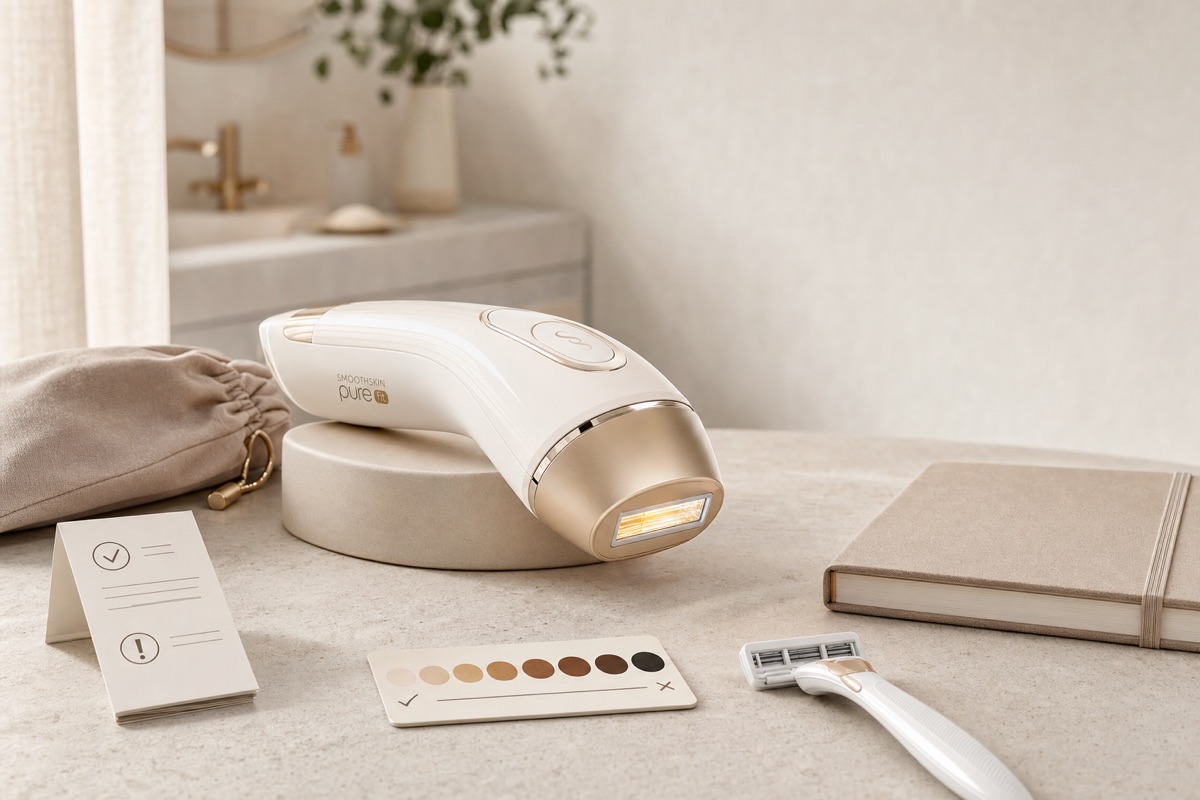
SmoothSkin
Pure Fit IPL Hair Removal Device
$349
"Strong protocol fit for beginners because the official brand page emphasizes skin-tone sensing and a structured 12-week use window; Amazon's primary listing view showed 3.9/5 across 37 ratings."
What real Amazon buyers say
3.9★· 37 reviews"I've tried many different laser hair removal devices. Tria has been the only other one that works this well."
"It has completely made my armpit hair go away for months at a time."

JOVS
Venus Pro II IPL Hair Removal
$249.99
"Best midrange fit for users who want cooling and a rotating head; JOVS states Fitzpatrick I-V compatibility and excludes Fitzpatrick VI on its official product page."
What real Amazon buyers say
4.4★· 2,615 reviews"I have waited 3 months to write this review to make sure the product did or did not work. It truly works."
"By the 4th week the hair growth was noticeably thinner and some areas were completely smooth."

BoSidin
IPL Hair Removal with Ice-Cooling
$129.98
"Best lower-cost cooling pick for shoppers who want a beginner routine without paying prestige-device prices; Amazon's listing showed 4.4/5 across 2,070 ratings."
What real Amazon buyers say
4.4★· 2,070 reviews"The instruction manual is clear and easy to follow, explaining step by step how to use the device correctly."
"The device is effective, painless, and very practical."

Silk'n
Motion Premium IPL Laser Hair Removal Device
$224.25
"Useful alternative for shoppers who want a legacy hair-removal device brand and auto-adjust positioning, with a 4.1/5 Amazon listing snapshot."
What you'll learn
- The biggest IPL mistake is treating before confirming your exact skin-tone, hair-color, medication, and body-area eligibility.
- Do not use IPL on tanned, sunburned, self-tanned, irritated, or freshly exfoliated skin because pigment and barrier changes matter.
- Shave before IPL, but avoid waxing, tweezing, threading, or epilating during the active program because IPL needs a pigment target.
- More flashes are not a shortcut; repeated passes on one spot can raise irritation risk without proving better hair reduction.
- Judge at-home IPL over an 8-12 week routine, not after one or two sessions, because hair cycles and low-fluence devices need consistency.
Steps
-
1 Check candidacy before buying or flashing
Compare your skin tone, hair color, body area, medications, and pigment history with the manual for the exact device. At-home IPL is usually most suitable when there is contrast between darker hair and lighter-to-medium skin. Many devices do not work well on gray, white, red, or very light blonde hair, and many exclude the deepest skin tones.
-
2 Patch test on the exact area you plan to treat
Use the lowest allowed setting and wait the device's recommended window before treating a larger area. Patch testing matters more if you use retinoids, exfoliating acids, prescription topicals, or have dry, reactive, or pigment-prone skin. Stop for sharp pain, blistering, swelling, or color change that persists.
-
3 Prep by shaving and removing residue
Shave close to the skin so light is not wasted singeing surface hair. Clean away deodorant, fragrance, body oil, self-tanner, shimmer lotion, sunscreen, and heavy moisturizer, then dry fully. Do not wax, tweeze, thread, or epilate during the IPL program.
-
4 Flash in rows and avoid stacking passes
Hold the treatment window flat, let the contact sensor engage, and move in organized rows. Use stamp mode for curves and glide mode only when the manual allows it on broad areas. Do not repeatedly flash one spot to make up for impatience or missed sessions.
-
5 Follow the schedule for 8-12 weeks
Use a calendar reminder and treat according to the brand protocol. SmoothSkin frames results across 2, 6, and 12 weeks, and a 2025 Lasers in Medical Science comparison followed 84 participants for 3 months. Resume the normal schedule after a missed week instead of doubling flashes.
-
6 Build sun protection and bland aftercare into the plan
Skip IPL on sunburned, tanned, or freshly self-tanned skin. For exposed areas, use broad-spectrum sunscreen and protective clothing. After treatment, choose bland moisturizer and pause fragranced body oils, scrubs, retinoids, and exfoliating acids until skin feels calm.
Quick Answer
The most common at-home IPL mistakes are not dramatic; they are routine errors repeated for weeks. Based on 5 PubMed-indexed IPL papers, FDA light-device safety guidance, 4 Amazon US device listings, and official protocols from SmoothSkin, JOVS, Silk’n, and BoSidin, the avoid list is clear: do not skip the skin-tone chart, do not treat tanned skin, do not wax before IPL, do not flash the same spot repeatedly, and do not expect full results after one weekend.
Why small IPL mistakes matter more after 35
At-home IPL devices use intense pulsed light to target pigment in the hair pathway. They are lower-fluence consumer devices, not professional laser appointments, and that difference matters. The 2019 Lasers in Surgery and Medicine review explains that low-fluence home light devices can support hair reduction, but they depend heavily on correct use and repeated sessions.
For US women 35-55, the practical risk is often stacking. A leg or underarm routine may include shaving, retinoid body lotion, exfoliating acids, fragrance, hot yoga, sun exposure, and then IPL. Each step may seem ordinary on its own. Together, they can make skin less tolerant.
The evidence base supports patience. A 2009 Journal of Cosmetic and Laser Therapy study evaluated a low-fluence home-use IPL device in 29 people with Fitzpatrick I-III skin across 31 body and facial areas. A 2025 Lasers in Medical Science comparison followed 84 participants for 3 months. Those time frames are not a promise that every shopper will get the same result, but they do argue against panic-flashing more often because hair is still visible after two sessions.
This guide focuses on mistakes that affect safety, comfort, and realistic expectations. We did not test devices; we analyzed published studies, FDA safety context, brand protocols, and Amazon listing snapshots.
Mistake 1: buying before checking skin tone and hair color
At-home IPL is not equally suitable for every skin tone and hair color. Most consumer IPL devices work best when there is a clear contrast between darker hair and lighter-to-medium skin. Gray, white, red, and very light blonde hair often respond poorly because there is less pigment for the light energy to target.
Deeper skin tones require more caution. Melanin-rich skin can absorb more light energy, which can raise the risk of burns, blistering, or post-inflammatory hyperpigmentation if the device is not designed for that tone. The studies we reviewed were not universal: the 2009 Journal of Cosmetic and Laser Therapy study included Fitzpatrick I-III skin, while the 2015 Lasers in Medical Science UV-after-IPL trial enrolled 16 subjects with Fitzpatrick II-V skin.
Use the chart for the exact model. JOVS states Fitzpatrick I-V compatibility and excludes Fitzpatrick VI on its Venus Pro II page. SmoothSkin emphasizes skin-tone sensing on the Pure Fit page. Those details are useful, but they are not permission to override a sensor or ignore an exclusion.
A good buying rule: if the device’s chart says your hair color or skin tone is outside the range, do not buy it as a gamble. The better choice is a dermatologist or licensed professional who can discuss alternatives.
Mistake 2: skipping the patch test
A patch test can feel tedious, especially when the device arrives and the marketing copy promises quick routines. It is still one of the highest-value steps.
Patch test the exact body area you plan to treat. Skin on the lower leg is not the same as skin on the upper lip, underarm, bikini line, or chest. Start at the lowest allowed setting for your skin tone. If the manual allows stepping up, do it gradually and wait the recommended time before treating a full area.
Normal responses can include mild warmth or temporary redness. Stop if you feel sharp pain, blistering, swelling, intense burning, gray or white discoloration, or redness that intensifies instead of calming. A 2023 Lasers in Surgery and Medicine postmarketing surveillance analysis focused on adverse-event reports for a home-use IPL device, which is a useful reminder that consumer devices can still create real problems when settings, candidacy, or aftercare go wrong.
Patch testing is especially important if you use retinoids, prescription topicals, exfoliating body lotions, benzoyl peroxide, or peels. Mature skin can also be drier and slower to forgive aggressive stacking.
Mistake 3: treating tanned, sunburned, or self-tanned skin
Sun exposure is not a separate topic from IPL. It belongs in the protocol.
Do not use IPL on sunburned skin, a fresh tan, or heavy self-tanner. A 2015 Lasers in Medical Science randomized trial enrolled 16 subjects with Fitzpatrick II-V skin to evaluate ultraviolet radiation after low-fluence home-use IPL. That study does not map perfectly to every modern device, but it shows that researchers considered UV exposure important enough to study in connection with home IPL.
Self-tanner deserves its own warning. Even though it is cosmetic color rather than a natural tan, it changes the surface color that the device sees. Many brand protocols warn against treating over artificial tan because the device may read the skin differently and because residue can sit under the treatment window.
If you are treating lower legs, forearms, upper lip, or chest, plan around real life. A Florida beach week, a Southwest hiking trip, or Midwest summer yard work may be the wrong time to start. Use broad-spectrum sunscreen and protective clothing on exposed treated areas, and pause if the skin is burned or freshly darkened.
Mistake 4: waxing, tweezing, or epilating instead of shaving
Shaving is the prep step for IPL. Waxing, tweezing, threading, and epilating are not.
IPL depends on pigment in the hair target. Removing the hair from the root can leave less target for the device. Shaving keeps the hair pathway below the surface while removing the part that would otherwise singe above the skin.
Shave close to the skin before treatment, but do not flash over razor burn. If the area stings when you apply plain moisturizer, wait. Clean away deodorant, fragrance, body oil, sunscreen, makeup, heavy moisturizer, and shimmer lotion. Dry the area fully before using the device.
Underarms need extra care because deodorant residue, shaving nicks, and friction are common. For bikini-line use, stay on external skin only and follow the allowed-area language in the manual. For facial use, use only a device and attachment that explicitly allow face treatment, and stay away from eyes, eyelids, brows, lips, and the area above the cheekbone unless your manual says otherwise.
Mistake 5: using the highest intensity because you want faster results
Higher is not automatically better. The right intensity is the highest level your skin tone, hair color, body area, and manual allow you to tolerate after patch testing, not the highest number on the device.
Many consumer IPL devices include contact sensors, skin-tone sensors, or cooling features. Those can improve usability, but they are not a safety waiver. A cooling plate may make a flash feel easier while the light exposure still needs to match your skin tone and body area.
The FDA’s laser-product safety guidance frames light-emitting devices around exposure and hazard control. For a home user, the practical translation is simple: do not bypass built-in safety features, do not cover sensors, and do not try to force a device to flash when it refuses.
If you feel sharp pain, stop. If an area stays hot, swollen, blistered, or visibly discolored, stop and seek appropriate medical advice. At-home IPL is a beauty-tech routine, not a contest for how much energy you can tolerate.
Mistake 6: flashing the same spot over and over
Another common error is over-flashing. Users worry they missed a strip of skin, so they stack multiple flashes on the same patch. That can raise irritation risk without proving better hair reduction.
Work in rows. Hold the device flat so the contact sensor can read correctly. Move slowly enough to know where you have treated. Use glide mode only on broad, flat areas if your manual allows it. Use stamp mode around curves such as ankles, knees, fingers, underarms, and bikini-line edges.
A slight overlap may be part of some instructions, but repeated passes are different. If you miss a small area, note it for next time rather than treating the same zone repeatedly in one session. The 2019 review of home light-based hair-removal devices supports the logic of consistency with lower-fluence technology; it does not support improvising a professional-level dose at home.
This is also where progress photos help. Take a photo every 2-4 weeks under the same light. Look for slower regrowth and less dense hair rather than perfectly bare skin after one session.
Mistake 7: quitting after two sessions or doubling after a missed week
IPL is tied to hair cycles. Not every follicle is in the same phase at the same time, so a single session cannot address everything.
SmoothSkin’s official page frames results across 2, 6, and 12 weeks. The 2025 Lasers in Medical Science comparison followed 84 participants for 3 months across axilla, calf, or forearm sites. Those numbers point to a multi-week evaluation window.
The mistake goes both ways. Some shoppers quit too early because visible hair remains after two sessions. Others miss a week and then double the next session. Neither is a good interpretation of the evidence. Use the manual’s schedule. If you miss a week, resume the normal cadence rather than doubling flashes or increasing intensity.
For women 35-55 with busy schedules, the most realistic setup is a calendar reminder, a small progress log, and a routine attached to a specific night. Consistency beats intensity.
Mistake 8: pairing IPL with aggressive skincare
IPL does not need retinol, exfoliating acids, scrubs, or strong vitamin C to work. Those products may be useful elsewhere in a routine, but freshly treated skin is not the place to stack actives.
Keep aftercare bland. Use a plain moisturizer if the skin feels dry. Avoid fragranced body oils, body acids, scrubs, benzoyl peroxide, retinoids, and strong vitamin C on treated areas until the skin feels normal. If you are treating face, neck, chest, or forearms and already use prescription actives, separate device days from active-skincare days at first.
Heat and friction matter too. Avoid hot tubs, saunas, very hot showers, intense workouts, and tight clothing if the area is warm or pink. Bikini-line and underarm skin can be especially reactive because shaving, sweat, deodorant, and clothing friction overlap.
A useful rule: if the skin is irritated enough that plain moisturizer stings, skip IPL that day.
Evidence-weighted device picks that fit a safer protocol
We selected these featured products because they have verified Amazon ASINs, fit the protocol discussion, and represent different shopper needs. We weighted device recommendations by official safety language, Amazon listing evidence, price diversity, and fit for a conservative beginner routine. We did not test them.
SmoothSkin Pure Fit is the strongest match for shoppers who want a sensor-led routine. The brand emphasizes skin-tone sensing and 2-, 6-, and 12-week result framing, while the Amazon snapshot we analyzed showed ASIN B09JSGWWMS and a 3.9/5 rating across 37 ratings. Its best use case is someone who wants structure and is willing to pay more for sensor-led guidance.
JOVS Venus Pro II is the better midrange fit for users who want cooling and a rotating head. JOVS states Fitzpatrick I-V compatibility and excludes Fitzpatrick VI, which is the kind of explicit boundary we prefer to see in a device protocol. The Amazon listing snapshot showed 4.4/5 across 2,615 ratings.
BoSidin’s ice-cooling IPL device is the lower-cost cooling pick. The Amazon snapshot showed 4.4/5 across 2,070 ratings, and the format suits a shopper who wants a more affordable entry point before moving to a prestige device.
Silk’n Motion Premium is the legacy-brand alternative. Its Amazon snapshot showed 4.1/5, and it gives shoppers another valid ASIN in the category without relying on the most overused hero devices.
When to skip at-home IPL entirely
Skip IPL if your skin tone or hair color falls outside the device chart. Skip it on sunburned skin, a fresh tan, self-tanner, tattoos, moles you cannot avoid, open skin, rash, bruises, irritated eczema, or any new or changing spot.
Ask a clinician before using IPL if you are pregnant, take photosensitizing medication, have a photosensitivity disorder, have a history of keloids, recently used isotretinoin, recently had a strong peel or laser treatment, or have melasma-prone hyperpigmentation. At-home IPL is sold as a consumer device, but that does not make every home user a safe candidate.
Also skip if you know you will not follow the schedule. Sporadic high-intensity use is the wrong tradeoff. A slower, consistent, lower-irritation routine is more aligned with the evidence we reviewed.