Common Mistakes With Clay Masks After 40
A practical, evidence-led clay mask guide for women over 40: how to choose, prep, apply, rinse, and recover without overdrying mature skin.
We analyzed 101,333 Amazon ratings across 3 US-available clay masks, Innisfree's 30-woman consumer study, AAD dry-skin guidance, and PubMed menopause-skin literature. After 40, the biggest clay-mask mistake is letting clay fully crack-dry instead of rinsing while it is still slightly tacky.
Editor's top Amazon picks for this guide
Real Amazon products that match this protocol. Affiliate links — your purchases support BeautySift.

Innisfree
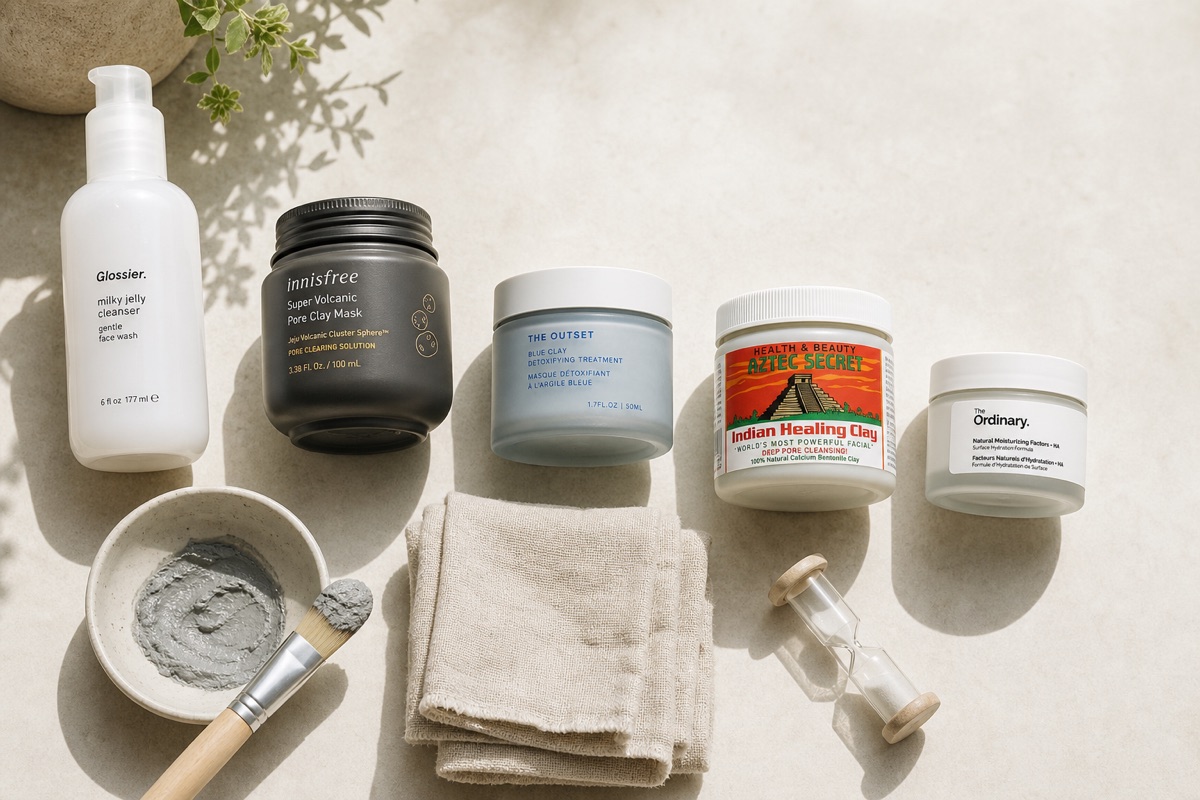
Innisfree Super Volcanic Clay Mask
$18
"Best balanced example for an off-the-shelf clay mask: 4.6/5 across 1,944 Amazon ratings, with a brand-cited 30-woman consumer study on cleaner-looking pores and less oil."
What real Amazon buyers say
4.6★· 1,944 reviews"I have mature (age 60), dry, sensitive skin. This facial mask always leaves my face with baby smooth skin that is refreshed, more plump, and calm."
"I use it twice a week for approximately 7 minutes per session and I have seen a very noticeable improvement in my skin."

The Outset
The Outset Blue Clay Face Mask
$46
"Best fragrance-free prestige option for shoppers who want clay plus niacinamide and salicylic acid in a less stark texture; 4.5/5 across 152 Amazon ratings."
What real Amazon buyers say
4.5★· 152 reviews"This blue clay mask is the absolute best. it doesn't dry out my sensitive skin and it really, truly makes my skin feel clean and purified.I use it twice a week."
"It has a velvety texture and leaves your skin very soft!"

Aztec Secret
Aztec Secret Indian Healing Clay 16 oz
$14.95
"Best budget bentonite powder for experienced users who can customize dilution and timing; 4.6/5 across 99,237 Amazon ratings, but potentially drying if overused."
What real Amazon buyers say
4.6★· 99,237 reviews"I left it on for a few minutes until it started to dry, and after rinsing, my skin felt very clean, refreshed, and free of buildup."
"Im older, and I notice a huge difference with the softness of my skin, its not coarse or dry anymore and my child-like rosy glow is back!"
What you'll learn
- After 40, use clay as a targeted oil-management step, not a full-face drying treatment every time your skin looks dull.
- Rinse before the mask fully cracks; a clay layer that feels tight and flaky is more likely to leave mature skin uncomfortable.
- Choose formulas by skin zone: creamy or fragrance-free for dry cheeks, stronger bentonite only on oily T-zone areas.
- Do not pair a clay mask with retinoid, peel pad, scrub, and high-strength acid in the same night unless your skin already tolerates that routine.
- Follow every clay mask with a bland moisturizer; the AAD specifically emphasizes moisturizing promptly after washing for dry skin.
Steps
-
1 Choose the clay strength by zone, not by pore anxiety
Start with your current skin pattern: oily T-zone, dry cheeks, hormonal chin congestion, or all-over dullness. After 40, many people need clay only where oil collects. Use creamy or fragrance-free masks on dry zones and reserve stronger bentonite powders for the T-zone.
-
2 Prep with a gentle cleanse and skip the pre-mask scrub
Wash with a non-stripping cleanser, pat skin damp to dry, and stop there. Scrubbing first can stack friction with clay absorption. Mature-skin tip: if cheeks flush easily, apply a thin moisturizer there before masking only the nose, forehead, or chin.
-
3 Apply a thin, even layer and keep it away from reactive areas
Use less than you think. A thin layer gives clay contact without creating a plaster-like film. Avoid eyelids, lip corners, nasal folds, and any flaky retinoid patches. Mature-skin tip: map the mask around expression-line areas rather than filling every crease.
-
4 Time the mask by feel, not by a cracked-dry finish
Most mature skin does better when clay is rinsed while it is still slightly tacky. Innisfree's listing gives a 10-minute direction, while Aztec Secret warns sensitive skin not to exceed 5 to 10 minutes. Mature-skin tip: start with 5 minutes once weekly before increasing.
-
5 Rinse with slip and replace water immediately
Soften the mask with lukewarm water, massage only enough to loosen it, then rinse. Do not scrape with a rough washcloth. Follow with a hydrating serum if you use one and a bland moisturizer. Mature-skin tip: wait until skin is calm before judging brightness.
-
6 Separate clay nights from retinoid and acid nights
Clay can fit a routine with retinol, glycolic acid, salicylic acid, or vitamin C, but not all at once for most people. Put clay on a separate night from strong actives. Mature-skin tip: if skin feels tight the next morning, reduce clay frequency before changing everything else.
Bottom line
The most common clay-mask mistake after 40 is treating clay like a punishment step: thick layer, full-face coverage, cracked-dry finish, then an acid or retinoid because the skin looks temporarily matte. That approach may feel satisfying in the moment, but it can leave mature skin tight, duller by the next morning, and more reactive to the rest of the routine.
BeautySift did not test clay masks in a lab or run a panel. We analyzed Amazon US rating snapshots for Innisfree, The Outset, and Aztec Secret; brand-published directions and consumer-study claims; American Academy of Dermatology dry-skin guidance; PubMed literature on hormone-related skin changes; and INCI-level clay-mask patterns. The product examples below are not the only usable options. They are practical reference points for different clay-mask styles: balanced cream mask, fragrance-free prestige mask, and strong budget powder.
Skill level: beginner. The goal is to make clay useful again without making your skin pay for it.
Why clay masks feel different after 40
Clay masks work by absorbing surface oil and helping lift residue from the skin surface. That can be helpful when the T-zone looks shiny, makeup separates around the nose, or hormonal chin congestion makes skin feel bumpy. The problem is that the same absorbent quality can become uncomfortable when the skin barrier is drier, thinner-feeling, or already irritated by retinoids, acids, indoor heat, or low humidity.
That shift is common for women in the 35-55 range. A 2011 PubMed-indexed review, “Estrogen and skin: therapeutic options,” discusses how estrogen-related changes can affect skin thickness, collagen, dryness, and repair. A 1996 Dermatology study also examined postmenopausal skin with non-invasive measurement techniques. Those papers do not mean every woman over 40 has the same skin type. They do support a practical point: a mask routine that felt fine at 29 may need gentler timing and better recovery at 49.
Clay is not bad for mature skin. Overuse is the issue. If a mask makes pores look cleaner for one evening but your cheeks feel papery the next day, the routine needs adjusting. Think of clay as a targeted oil-management tool, not a weekly full-face reset that must leave the face squeaky clean.
Mistake 1: Buying the strongest clay instead of the right texture
The first mistake happens before the jar is opened. Many shoppers choose the mask that promises the deepest clean, then apply it everywhere. After 40, a better question is: where do I actually need clay?
If your concern is hormonal acne around the chin, use clay there. If foundation breaks up on the nose by noon, use clay on the nose and inner cheeks. If your cheeks are dry but your forehead is shiny, multi-mask: clay on the T-zone, moisturizer on the cheeks. You do not get extra credit for drying skin that was not oily in the first place.
Texture matters. Innisfree Super Volcanic Clay Mask is a ready-made cream mask with AHA and volcanic clusters; the Amazon listing cites a 30-woman consumer study where 93% felt pores looked cleaner after 1 use and 100% felt skin was less oily and smoother after 2 weeks. The Outset Blue Clay Face Mask is positioned as fragrance-free and includes blue clay, salicylic acid, and niacinamide, which may appeal to shoppers who want a more cushiony prestige texture. Aztec Secret Indian Healing Clay is a 100% calcium bentonite powder with 99,237 Amazon ratings, but the listing itself warns sensitive skin users not to leave it on longer than 5 to 10 minutes.
Mature-skin tip: choose the least aggressive texture that solves the actual problem. If you only need makeup to sit better around the nose, a targeted 5-minute T-zone mask is smarter than a strong full-face powder.
Mistake 2: Scrubbing, steaming, or exfoliating before clay
Clay already adds an absorbing step. Pairing it with a scrub, hot steam, peel pad, or cleansing brush can turn a normal mask night into an irritation stack. This is especially risky if you use retinol, glycolic acid, salicylic acid, or low-pH vitamin C during the same week.
Prep should be boring. Use a gentle cleanser, rinse well, and pat the skin mostly dry. If your cheeks are dry or prone to flushing, apply a thin layer of bland moisturizer to those areas before putting clay only where you need it. That small buffer can keep the mask from migrating into dry folds around the mouth and nose.
The American Academy of Dermatology’s dry-skin guidance emphasizes gentle cleansing, fragrance-free products, and moisturizing promptly after washing. That advice is not clay-specific, but it is directly relevant to clay-mask recovery. If a mask routine requires aggressive pre-cleansing to feel effective, it is probably not the right routine for skin that is already getting drier.
Mature-skin tip: skip the “open the pores” ritual. Pores do not open and close like doors, and hot water can make redness more obvious. Lukewarm water and a clean application are enough.
Mistake 3: Applying clay like spackle
A thick clay layer dries unevenly, pulls at expression lines, takes longer to rinse, and tempts you to scrub. You only need a thin, opaque layer. If skin still shows faintly through the mask in a few places, that is usually fine. The mask needs contact, not volume.
Use a brush or clean fingers and avoid eyelids, the under-eye area, lip corners, nostril creases, and any flaky retinoid patches. These areas tend to show irritation faster. If you are masking for hormonal chin congestion, keep it on the chin and jawline rather than coating the whole face by habit.
This is also where product selection intersects with technique. A creamy clay mask can be spread thinly and rinsed more easily. A powder mask can be customized, but it can also become too concentrated. If you mix bentonite powder, start looser than the dramatic social-media paste. A thinner mix dries less aggressively and is easier to remove without friction.
Mature-skin tip: do not pack clay into smile lines, marionette lines, or the crease beside the nose. Mask around them. Temporary tightness in those areas can make skin look more lined for the rest of the evening.
Mistake 4: Waiting for the cracked-dry stage
The cracked-dry finish is one of the biggest clay-mask myths. It looks dramatic, but it is not a requirement for cleaner-looking skin. For many women over 40, it is the point where useful oil absorption turns into avoidable dryness.
Use the clock and your skin feel. Innisfree’s Amazon listing gives a 10-minute suggested use. Aztec Secret’s listing specifically says sensitive skin should not leave the clay on longer than 5 to 10 minutes to reduce redness and drying. Those directions are more useful than waiting for a mask to become chalky.
A simple rule: rinse when the mask has changed color and feels set, but before your face feels immobilized. It can still be slightly tacky. If the mask cracks when you smile or talk, you probably waited too long for mature skin.
Mature-skin tip: make the first session short. Five minutes once weekly gives you information without overwhelming the barrier. If the next morning is calm, you can slowly adjust. If the next morning is tight, you already have your answer.
Mistake 5: Rinsing with friction and calling redness a glow
Removal matters as much as application. Clay can cling, especially around the nose and chin. Do not attack it with a rough towel. Press lukewarm water onto the mask until it softens, then use light circular motions to loosen it. A soft washcloth is fine if you dab and sweep gently; scrubbing until skin squeaks is not.
After rinsing, judge your skin in stages. Immediately after clay, skin may look brighter because surface oil is reduced and circulation is up from rinsing. That is not the same as long-term brightening. If redness lingers, skin feels hot, or moisturizer stings, the routine was too much.
Follow with hydration and moisturizer. If you already tolerate a simple hydrating serum, use it. Then seal with a fragrance-free moisturizer. Keep the rest of the night bland. The AAD’s general dry-skin advice to moisturize promptly after washing fits well here because clay removal is, functionally, another wash step.
Mature-skin tip: wait 20 to 30 minutes before deciding whether your skin looks better. The best clay-mask result after 40 is clean, calm skin, not a hot, shiny flush.
Mistake 6: Stacking clay with retinoids, acids, and benzoyl peroxide
Clay masks often sit in routines that already include active ingredients. That is where trouble starts. A woman using retinol two nights a week, glycolic acid once weekly, vitamin C in the morning, and benzoyl peroxide on breakouts does not need to add a harsh clay night on top of everything.
Separate categories. Use clay on a non-retinoid, non-peel night. If you use salicylic acid for hormonal breakouts, do not assume more salicylic acid in a mask is automatically better. The Outset mask, for example, lists salicylic acid and niacinamide in its Amazon product copy; that may be useful for some oily or congested skin, but it is still an active-leaning formula. Treat it accordingly.
For dullness, clay can make skin look fresher by removing surface oil and buildup, but it is not a substitute for sunscreen, consistent moisturizer, or a well-tolerated brightening routine. If dullness comes from dryness, more clay can make it worse.
Mature-skin tip: if you are increasing retinol, pause clay for 2 weeks. Let one variable change at a time. Your skin cannot tell you what worked if every active moved in the same week.
A simple clay-mask routine after 40
Use this sequence when you want the benefits without the common pitfalls.
First, decide the zone. T-zone only is enough for many women. Chin-only can make sense for hormonal congestion. Full-face masking should be reserved for truly oily, resilient skin, not used by default.
Second, cleanse gently. Skip scrubs, hot steam, and peel pads. Pat dry. If cheeks are dry, apply moisturizer there before masking other zones.
Third, apply a thin layer. Keep it away from the eye area, lip corners, nostril folds, and flaky patches. Set a timer for 5 minutes the first time, especially with bentonite powder or any formula that contains acids.
Fourth, rinse before the cracked stage. Use lukewarm water, soften the mask, and remove with minimal friction. Do not chase a squeaky-clean feel.
Fifth, moisturize. Use a hydrating serum if it is already part of your routine, then a fragrance-free moisturizer. Skip retinoid, scrub, and strong acid steps that night if your skin feels tight.
Sixth, review the next morning. If makeup sits more smoothly and skin feels calm, the routine is working. If cheeks are tight, shiny, or sting with moisturizer, reduce time, reduce area, or choose a gentler mask.
Product notes for US shoppers
Innisfree Super Volcanic Clay Mask is the most balanced example in this guide because it has a ready-made texture, clear 10-minute directions, 1,944 Amazon ratings, and a brand-cited 30-woman consumer study on cleaner-looking pores and reduced oil feel. It is still not automatically right for dry cheeks, because it includes AHA and is designed around pore and sebum concerns.
The Outset Blue Clay Face Mask is the more expensive fragrance-free option. Its Amazon listing highlights blue clay, salicylic acid, and niacinamide. Based on the listing and 152 Amazon ratings, it is a better fit for shoppers who want a softer-feeling clay format and are willing to pay for that texture. It is not the value pick.
Aztec Secret Indian Healing Clay is the strongest budget reference point. The 99,237-rating Amazon snapshot shows why it is popular, but popularity does not make it gentle. The brand listing’s own 5 to 10 minute sensitive-skin caution is the key detail for women over 40. If you use it, customize the mix, keep it thin, and start with targeted areas.
BeautySift may earn a commission from Amazon links, but affiliate status does not influence inclusion. We prioritize evidence type, US availability, formula role, and mature-skin tolerability signals.
When to skip clay entirely
Skip clay if your skin is peeling from retinoids, sunburned, wind-chapped, recently waxed, or stinging with plain moisturizer. Skip it on active eczema-like patches, open blemishes, or any rash that is spreading. A cosmetic mask is not a treatment for painful cystic acne, infection, or persistent dermatitis.
Also skip clay when the real issue is dehydration. If your skin looks dull but feels tight, absorbs moisturizer quickly, and shows fine creping under makeup, a hydrating routine may help more than oil absorption. In that case, look at moisturizers, gentle exfoliation timing, and sunscreen consistency before adding more clay.
The best clay-mask routine after 40 is usually smaller than expected: fewer zones, less time, less friction, more moisturizer.