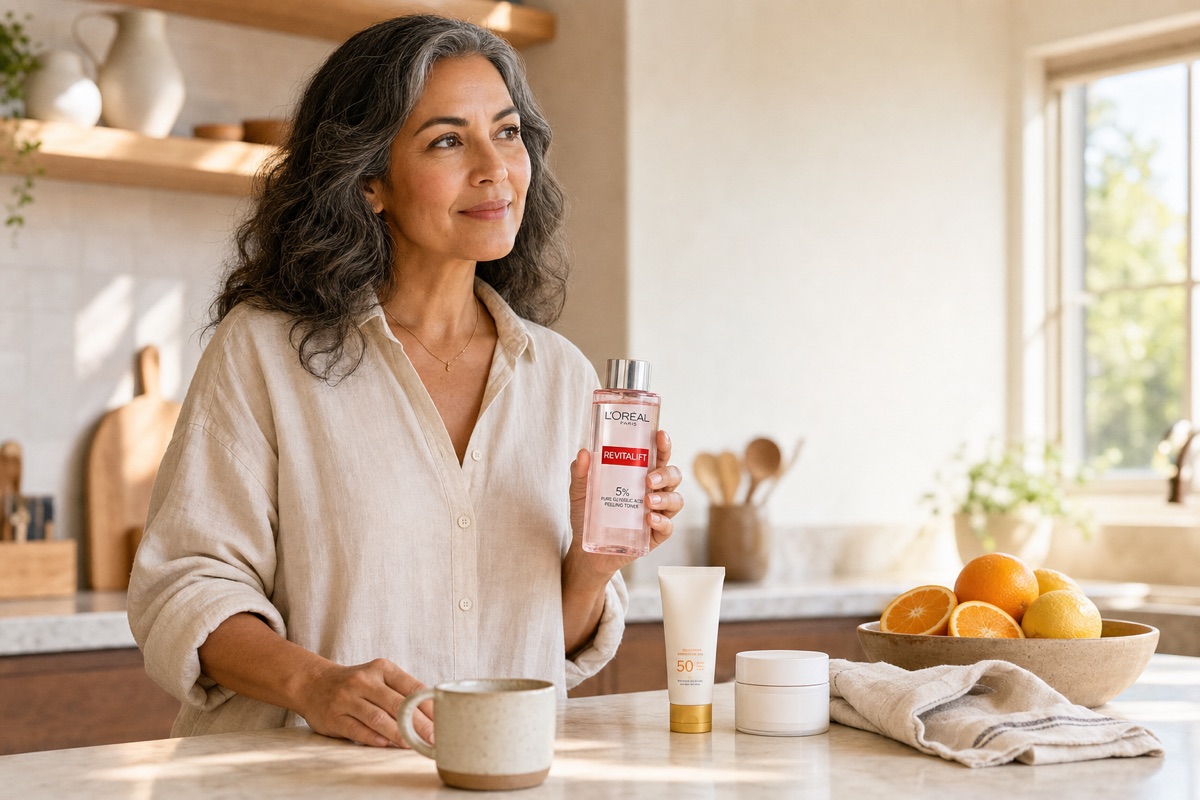
Common Mistakes With Glycolic Acid Products: A Safer Guide for Mature Skin
An evidence-led guide to the most common glycolic acid mistakes, with safer use steps for dull mature skin, sunscreen pairing, and barrier support.
Based on FDA AHA guidance, 2 PubMed clinical studies including a 74-person 8% glycolic/lactic acid trial, AAD exfoliation guidance, and Amazon review snapshots, the biggest glycolic acid mistakes are starting too strong, using it too often, skipping sunscreen, and pushing through irritation.
Editor's top Amazon picks for this guide
Real Amazon products that match this protocol. Affiliate links — your purchases support BeautySift.

L'Oreal Paris
Revitalift 5% Pure Glycolic Acid Peeling Toner
$13.99
"Lower-strength 5% glycolic acid option for users who want a beginner AHA step rather than jumping straight to a stronger peel."
What real Amazon buyers say
4.5★· 51,201 reviews"I’ve really liked using this toner! It’s gentle but still effective—my skin feels smoother and looks a little brighter after consistent use."

The Ordinary
Glycolic Acid 7% Exfoliating Toner
$13.50
"Widely reviewed 7% glycolic toner that fits a once- or twice-weekly acid-night schedule for tolerant skin."
What real Amazon buyers say
4.7★· 56,162 reviews"I’ve been using this glycolic acid toner for a few weeks now, and I have to say—my skin and I are finally on better terms."
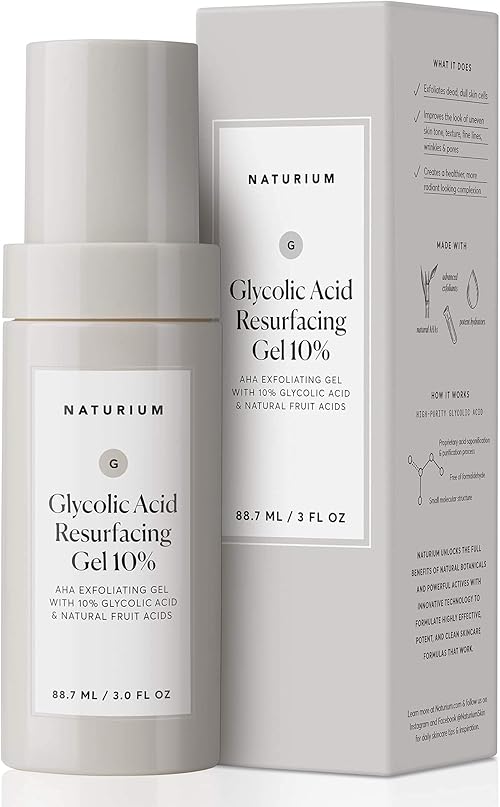
Naturium
Glycolic Acid Resurfacing Gel 10%
$22.99
"A stronger 10% glycolic gel for experienced AHA users who already tolerate lower-frequency exfoliation and daily sunscreen."
What real Amazon buyers say
4.6★· 685 reviews"This product is highly effective for individuals with larger pores and acne-prone skin. While it may take some time for your skin to adapt, it can cause acne to surface initially."

Vanicream
Daily Facial Moisturizer With Ceramides and Hyaluronic Acid
$13.97
"A fragrance-free barrier-support moisturizer for acid nights and recovery nights when glycolic acid makes skin feel dry or tight."

Neutrogena
Ultra Sheer Dry-Touch Sunscreen Lotion SPF 70
$5.51
"A broad-spectrum sunscreen option for the non-negotiable morning step when using AHAs that can increase UV sensitivity."
What you'll learn
- Glycolic acid can support smoother, brighter-looking skin, but FDA AHA guidance makes sunscreen and conservative strength selection part of the protocol.
- The safest starter pattern is one glycolic acid night weekly, followed by moisturizer, with no retinoid or scrub in the same routine.
- A 10% glycolic product is not automatically better than a 5% or 7% product if mature skin is dry, tight, or newly reactive.
- Stop glycolic acid temporarily if sunscreen, moisturizer, or cleanser starts to sting; that pattern points to barrier stress, not better exfoliation.
- Published AHA studies ran for weeks to months, including 6 months in Ditre 1996, so daily escalation is not the evidence-based shortcut.
Steps
-
1 Step 1: Pick one glycolic product, not a stack
Choose one leave-on glycolic acid product and pause other exfoliating acids, scrubs, and peel pads for the first month. FDA AHA guidance points consumers toward 10% or less AHA and pH 3.5 or greater when possible, while AAD exfoliation guidance warns that exfoliation can cause dry, irritated skin.
-
2 Step 2: Start with one night weekly
Use glycolic acid once weekly at night for the first 2 weeks, then consider a second weekly night only if cleanser, moisturizer, and sunscreen remain comfortable. SkinCeuticals' 10% glycolic directions advise every-other-evening use for the first week and then nightly as tolerated; BeautySift weights that phrase as the key caution.
-
3 Step 3: Separate glycolic acid from retinoids and scrubs
Do not use glycolic acid in the same routine as retinol, retinal, tretinoin, benzoyl peroxide, abrasive scrubs, or another acid toner when starting. AAD guidance says current products and medications can change exfoliation tolerance, so one active variable is easier to troubleshoot than five.
-
4 Step 4: Moisturize after acid and on recovery nights
Apply a plain moisturizer after glycolic acid unless the product label directs otherwise, and keep recovery nights boring: cleanse, moisturize, stop. If skin over 40 feels tight or shiny after exfoliation, add more barrier support before increasing acid frequency.
-
5 Step 5: Use broad-spectrum sunscreen every morning
FDA AHA guidance says alpha hydroxy acids can increase sun sensitivity and advises sunscreen, protective clothing, and limited sun exposure while using AHAs and for 1 week after stopping. FDA sunscreen guidance also says to reapply at least every 2 hours outdoors.
-
6 Step 6: Pause if the barrier complains
Pause glycolic acid for 7 to 14 days if moisturizer burns, sunscreen stings, redness persists, flakes collect around the mouth or nose, or skin looks glossy-tight. Restart only after bland products feel normal again, and restart at the lowest previous frequency.
-
7 Step 7: Judge results in months, not days
The PubMed trials behind AHA confidence were not overnight claims: Stiller 1996 studied 8% glycolic acid and 8% lactic acid in 74 participants, while Ditre 1996 followed 17 adults aged 35 to 55 for 6 months with a stronger 25% AHA protocol. Give a conservative routine time before escalating.
Bottom line
Glycolic acid is useful for dullness because it is an alpha hydroxy acid that loosens surface buildup and can support a smoother-looking skin texture. It is also one of the easiest active ingredients to overuse. BeautySift did not test these products on a panel. We analyzed FDA AHA guidance, AAD exfoliation guidance, PubMed studies, US brand directions, INCI fit, and Amazon product-page snapshots to build a safer protocol for women 35 to 55.
Affiliate disclosure: we may earn a commission from Amazon links. Affiliate status does not influence the order of products, evidence weighting, or the safety-first guidance in this article.
The practical answer is not “avoid glycolic acid.” It is “use one glycolic acid product, use it less often than your enthusiasm suggests, moisturize, and treat sunscreen as part of the acid routine.” FDA AHA guidance specifically notes that AHAs can increase sun sensitivity and advises sun protection while using them and for 1 week afterward.
Mistake 1: starting with the strongest glycolic acid you can find
Many shoppers read “dullness” and reach for the highest percentage. That is not how the evidence should be interpreted. FDA AHA guidance advises consumers to reduce risk by choosing AHA products with 10% or less AHA concentration and a final pH of 3.5 or greater when possible. That does not mean every 10% product is right for every face. It means 10% is already the upper edge of the FDA’s consumer-risk guidance.
For a beginner, a 5% glycolic product such as L’Oreal Paris Revitalift 5% Pure Glycolic Acid Peeling Toner is the more conservative first lane. The Ordinary Glycolic Acid 7% Exfoliating Toner is a classic mid-strength option for people who already tolerate acids. Naturium Glycolic Acid Resurfacing Gel 10% belongs later, after you know your skin tolerates glycolic acid and you are consistent with sunscreen.
Product-comparison weighting favors tolerability for mature skin because dullness after 40 often overlaps with dryness, barrier stress, and uneven texture. A stronger acid that makes sunscreen sting is not a better brightening routine; it is a routine that will be harder to maintain.
Mistake 2: using glycolic acid every night because the label allows it
Brand directions can describe a maximum tolerated use pattern, not the safest starting pattern for every person. SkinCeuticals’ US directions for its 10% glycolic overnight product advise every-other-evening use for the first week, then nightly as tolerated. The phrase “as tolerated” matters more than the word “nightly.”
A safer BeautySift starter schedule is simple:
- Week 1: one glycolic acid night.
- Week 2: one glycolic acid night.
- Weeks 3 and 4: two glycolic acid nights only if skin is calm.
- Recovery nights: cleanser and moisturizer only.
This schedule is deliberately slower than many product labels. AAD guidance on safe at-home exfoliation warns that exfoliation can cause dry, irritated skin and should be adjusted to skin type and current products. For women 35 to 55, the hidden variable is often a changing barrier: skin may be drier than it was 5 years ago even if the product shelf looks the same.
Mistake 3: stacking glycolic acid with retinol, scrubs, or another acid
The most common glycolic acid failure pattern is not one product. It is the stack: glycolic toner, vitamin C serum, retinol, scrub cleanser, and a peel mask in the same week. When skin gets red or flaky, the user blames the newest product, but the real issue is too many exfoliating or irritating signals at once.
Do not use glycolic acid on the same night as retinol, retinal, prescription tretinoin, benzoyl peroxide, abrasive scrubs, strong vitamin C, or another AHA/BHA product when you are starting. AAD exfoliation guidance specifically says to consider current medications and products because they can affect skin sensitivity.
A workable weekly structure looks like this:
- Monday: glycolic acid night.
- Tuesday: moisturizer-only recovery.
- Wednesday: retinoid night if already tolerated.
- Thursday: moisturizer-only recovery.
- Friday: no active if skin feels dry; antioxidant in the morning only if comfortable.
- Weekend: adjust around sun exposure, travel, and dryness.
If you are new to glycolic acid and retinol, choose one active for the first month. Texture routines work better when you can tell what caused the result.
Mistake 4: using glycolic acid on compromised skin
The Ordinary’s US directions for Glycolic Acid 7% Exfoliating Toner warn not to use it on sensitive, peeling, or compromised skin. That warning should be treated as routine design, not fine print. Glycolic acid is not the product to push through a flare.
Pause glycolic acid if you see any of these signals:
- Moisturizer burns.
- Sunscreen stings the morning after acid.
- Skin looks shiny-tight instead of softly smooth.
- Flakes collect around the nose, mouth, or chin.
- Redness lasts into the next day.
- Cleansing feels uncomfortable with a previously bland cleanser.
Use a 7- to 14-day reset: gentle cleanser, plain moisturizer, and daily sunscreen. Vanicream Daily Facial Moisturizer is included here because its role is not exfoliation; it is barrier support on acid nights and recovery nights. If bland products sting, stop all leave-on actives and consider medical advice, especially with swelling, rash, bleeding, intense itch, or persistent flushing.
Mistake 5: skipping sunscreen because the acid is used at night
Nighttime use does not erase daytime UV sensitivity. FDA AHA guidance says AHAs can increase sun sensitivity and advises sunscreen, protective clothing, and limited sun exposure while using AHA products and for 1 week after stopping. FDA sunscreen guidance advises broad-spectrum SPF 15 or higher and reapplication at least every 2 hours outdoors; AAD anti-aging guidance recommends broad-spectrum, water-resistant SPF 30 or higher.
For a glycolic acid user, sunscreen is not a separate anti-aging lecture. It is part of the acid protocol. If glycolic acid makes your sunscreen burn, do not switch to a stronger acid. Reduce glycolic frequency, add moisturizer, and make the morning routine wearable again.
The Neutrogena Ultra Sheer Dry-Touch SPF 70 listing is included as an accessible Amazon sunscreen example, not as the only acceptable sunscreen. The best sunscreen for this protocol is the one you will apply generously and reapply during outdoor exposure.
Mistake 6: expecting overnight anti-aging results
Glycolic acid can improve the look of roughness and dullness quickly because the skin surface reflects light more evenly when flakes are controlled. The deeper anti-aging claims require more restraint. PubMed evidence does support alpha hydroxy acids for photoaged skin, but the timeframes were not overnight.
Stiller 1996 studied 8% glycolic acid and 8% L-lactic acid creams in a double-blind vehicle-controlled trial of 74 participants with photodamaged skin. Ditre 1996 followed 17 adults aged 35 to 55 using stronger 25% AHA lotions for 6 months and reported about a 25% increase in skin thickness in treated skin. Bernstein 2001 reported glycolic-acid-associated increases in type I collagen mRNA and hyaluronic acid content in human skin.
Those studies support patient, consistent use. They do not support turning a starter toner into a nightly peel because you want glow by Friday.
Mistake 7: treating tingling as proof that the product is working
Tingling is not a score. A brief sensation can happen with acidic products, but burning is not a badge of effectiveness. For mature or perimenopause-adjacent skin, the better metric is what happens the next morning.
Ask four questions after each acid night:
- Did moisturizer feel normal?
- Did sunscreen apply without stinging?
- Did redness fade quickly?
- Did flakes improve without tightness?
If the answer is yes, the schedule may be appropriate. If the answer is no, reduce frequency before changing brands. The product-comparison rubric weights tolerability because the most elegant AHA formula still fails if it interrupts sunscreen adherence.
Mistake 8: using glycolic acid for every kind of dullness
Not all dullness is exfoliation failure. Dullness can come from dehydration, inconsistent sunscreen, irritation, sleep disruption, indoor heating, low humidity, makeup residue, or pigment concerns that need antioxidant support rather than more acid.
Glycolic acid is most logical when dullness feels like rough texture or visible surface buildup. If dullness looks like uneven brown spots, daily sunscreen and a morning antioxidant may matter more. If dullness looks like tight, crepey dryness, moisturizer and recovery nights may matter more. If dullness comes with burning, flushing, or rash, do not self-escalate acids.
A simple decision rule: if your skin feels rough but comfortable, a low-frequency glycolic product may help. If your skin feels tight, hot, or raw, a glycolic product is the wrong next step.
A safer glycolic acid protocol
Use this starter protocol for dull mature skin:
Morning:
- Gentle cleanse or water rinse.
- Moisturizer if skin feels dry.
- Broad-spectrum sunscreen.
Evening on acid night:
- Gentle cleanse.
- Wait until skin is dry if your product stings on damp skin.
- Apply one glycolic acid product only.
- Apply moisturizer unless the product label directs otherwise.
Evening on recovery nights:
- Gentle cleanse.
- Moisturizer.
- No acid, scrub, peel, or retinoid if skin feels tight.
Stay at one acid night weekly until the routine feels boring. Boring is a good sign with glycolic acid. It means the product is doing its surface-smoothing job without forcing the barrier to negotiate every morning.
Related reading
5-Step Glow Routine for Skin Over 40: Gentle Exfoliation, Antioxidants, Barrier Support