Common Mistakes With Mandelic Acid After 40
A practical guide to using mandelic acid after 40, with selection tips, application order, mature-skin pitfalls, and Amazon product examples.
We analyzed 7,032 Amazon US ratings across 4 mandelic-acid products, 3 PubMed-indexed chemical-peel papers, FDA cosmetic-claim guidance, and official brand pages. The biggest mistake after 40 is treating mandelic acid like a daily toner instead of a slow, dry-skin-only exfoliant.
Editor's top Amazon picks for this guide
Real Amazon products that match this protocol. Affiliate links — your purchases support BeautySift.

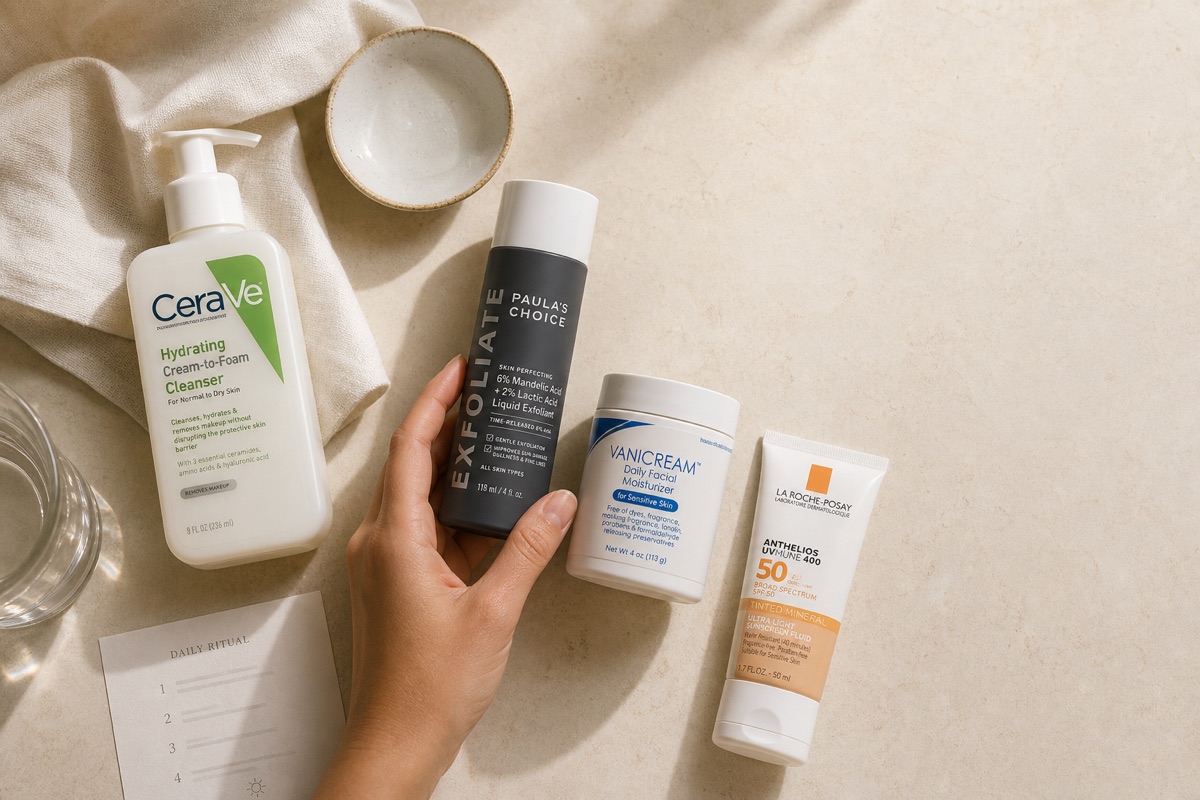
Paula's Choice
Paula's Choice 6% Mandelic Acid + 2% Lactic Acid Exfoliant
$15
"Best controlled starter format for mature skin because the official page discloses 6% mandelic acid plus 2% lactic acid and Amazon lists 4.5/5 across 817 ratings."
What real Amazon buyers say
4.5★· 817 reviews"This is the best mandelic acid product I’ve tried to date. Amazing for surface level texture, pore size and pigmentation."
"Works great for my sensitive skin . The dark gray is good but can be tooo strong. I use this one once or twice a week and the dark gray one once a month."

The Ordinary
The Ordinary Mandelic Acid 10% + Hyaluronic Acid
$7.80
"Best budget 10% mandelic acid example: The Ordinary identifies the formula as 10% mandelic acid plus HA, and Amazon lists 4.6/5 across 4,223 ratings."
What real Amazon buyers say
4.6★· 4,223 reviews"It feels almost oily going on but then it feels like it is drawing moisture to the skin. It then absorbs and has helped make my skin so soft, brighter, and has helped reduce and make more removable dark keratin plugs I am prone to on my chin."
"It’s gentle but still makes my skin look smoother and brighter. I have oily skin and it helps control excess shine without drying me out."
By Wishtrend
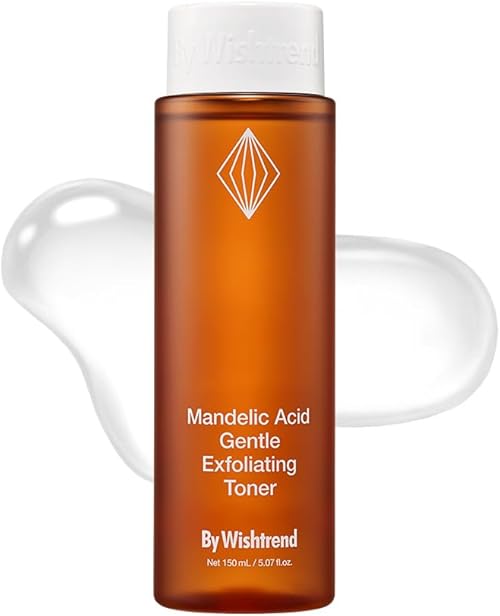
By Wishtrend Mandelic Acid 5% Gentle Exfoliating Toner
$22
"Best lower-strength toner example for cautious users: Amazon lists 4.4/5 across 1,280 ratings for this 5% mandelic-acid exfoliating toner."
What real Amazon buyers say
4.4★· 1,280 reviews"It's super gentle. No burning, no weird tingling, just a nice clean feel. I use it most nights, and my skin has been looking way smoother."
"DO NOT apply this on damp skin should be on dry skin I have found that on damp skin it makes your skin tingle and burn"

Tree To Tub
Tree To Tub Mandelic Acid Serum
$14.99
"Best multi-AHA mandelic serum example for shoppers who want mandelic acid with lactic and glycolic acids; Amazon lists 4.4/5 across 712 ratings."
What you'll learn
- Use mandelic acid on fully dry skin at night, then moisturize; damp-skin application is a common irritation trigger.
- After 40, start with one night weekly for 2 weeks before increasing, especially if you also use retinoids or vitamin C.
- Choose lower-strength or blended formulas when your main concerns are dullness and uneven tone rather than acne-prone oiliness.
- Do not stack mandelic acid with retinol, scrubs, strong vitamin C, or benzoyl peroxide in the same routine unless your dermatologist advised it.
- Daily sunscreen is part of the mandelic-acid protocol because exfoliation can make visible discoloration harder to manage.
Steps
-
1 Choose the right strength before you buy
Start by matching the formula to your skin history, not the highest acid percentage on the label. For dry or reactive mature skin, a 5% toner or a 6% mandelic plus 2% lactic blend is often easier to control than a 10% single-acid serum. Mature-skin tip: if your cheeks already feel tight after cleansing, prioritize a formula that also includes humectants or use fewer nights per week.
-
2 Patch test for two nights
Apply a small amount along the jaw or behind the ear on two separate nights. Do not patch test over retinoid-irritated, freshly waxed, or sunburned skin. Mild tingling can happen with AHAs, but burning, swelling, or lasting redness means the product is not a good match right now. Mature-skin tip: wait until your barrier feels calm for 3 to 5 days before trying again.
-
3 Prep with a gentle cleanse and dry skin
Cleanse with a non-scrubbing, low-foam cleanser, then wait until your skin is completely dry. Water can increase the sting of leave-on acids because it changes how evenly the product spreads. Mature-skin tip: if Midwest winter cold or indoor heat leaves your face tight, apply a plain moisturizer first around the mouth, nose, and orbital bone as a buffer.
-
4 Apply a thin layer and avoid high-friction zones
Use less than you think: a few drops for a liquid or a pea-size amount for a serum. Keep it away from eyelids, corners of the nose, lip lines, and freshly shaved areas. Mature-skin tip: expression lines around the mouth can collect product, so use moisturizer there before and after if that area gets flaky.
-
5 Follow with barrier support, not another active
After mandelic acid, use a moisturizer with glycerin, ceramides, cholesterol, fatty acids, squalane, or panthenol. Skip retinol, exfoliating pads, benzoyl peroxide, and low-pH vitamin C in the same night. Mature-skin tip: if your foundation catches on dry patches the next morning, reduce frequency before blaming the formula.
-
6 Build frequency slowly and track results
Use once weekly for 2 weeks, then twice weekly if there is no peeling, burning, or tightness. Most cosmetic exfoliation benefits are gradual: smoother texture may show before discoloration looks softer. Mature-skin tip: photograph the same cheek in the same window light every 2 weeks so you judge tone, not day-to-day redness.
-
7 Protect the results every morning
Use broad-spectrum SPF 30 or higher every morning, especially if your goal is dullness or hyperpigmentation. Mandelic acid can help lift surface dullness, but unprotected UV exposure can keep spots looking darker. Mature-skin tip: choose a sunscreen that sits well under makeup, because the sunscreen you actually reapply beats the elegant one you avoid.
Bottom line
Mandelic acid is one of the more forgiving alpha hydroxy acids, but the most common mistake after 40 is using that reputation as permission to overdo it. BeautySift did not test these products in a lab. We analyzed 7,032 Amazon US ratings across four mandelic-acid products, official brand pages from Paula’s Choice and The Ordinary, three PubMed-indexed papers on mandelic-acid or broader AHA peel use, FDA cosmetic-claim guidance, and INCI-level formula patterns.
The practical answer: use mandelic acid like a slow resurfacing tool, not a daily clarifying toner. For dullness and hyperpigmentation, the best routine is boring on purpose: cleanse gently, wait until skin is dry, apply a thin layer at night, moisturize, and use sunscreen the next morning. If you are 40-plus and already juggling retinol, vitamin C, dryness, hot-flash flushing, or makeup that catches on texture, the spacing matters as much as the acid.
We may earn a commission from Amazon links, but affiliate status does not affect the protocol. The products in the featured module are examples of different mandelic-acid formats: Paula’s Choice for a measured 6% mandelic plus 2% lactic blend, The Ordinary for a budget 10% serum, By Wishtrend for a lower-strength toner format, and Tree To Tub for a multi-AHA serum.
Mistake 1: Buying the strongest mandelic acid first
Mandelic acid gets described as gentle because its molecule is larger than glycolic acid, so it tends to feel slower on skin. That does not make every mandelic formula gentle. A 10% serum, a 5% toner, and a professional chemical peel are not interchangeable.
For a first routine after 40, look at three things before the percentage. First, check whether mandelic acid is the main exfoliant or part of a blend. Paula’s Choice discloses 6% mandelic acid plus 2% lactic acid on its official US page, which makes it a measured AHA blend rather than a mystery acid cocktail. The Ordinary discloses Mandelic Acid 10% + HA on its official US page, which is more direct but still requires careful frequency. By Wishtrend’s Amazon listing positions its toner around 5% mandelic acid, which can be a better starting format for cautious users.
Second, check the support ingredients. Glycerin, hyaluronic acid, panthenol, beta-glucan, squalane, ceramides, or fatty alcohols help make an exfoliating routine less drying. Third, check what is missing. If the formula is loaded with fragrance, denatured alcohol, or multiple acids and you already flush easily, move slowly or choose a simpler product.
Mature-skin tip: if your skin looks dull but also feels tight, treat tightness as the louder signal. Hydrate and repair for a week before adding acid. Exfoliating a compromised barrier can make skin look shinier for a night and rougher by the weekend.
Mistake 2: Applying it to damp skin
A recurring user-review theme on Amazon is that application technique changes tolerability. One verified Amazon reviewer for By Wishtrend wrote, “DO NOT apply this on damp skin should be on dry skin I have found that on damp skin it makes your skin tingle and burn.” That is not a clinical trial, but it is a useful real-world warning because damp skin can make leave-on acids spread faster and feel sharper.
The safer method is simple. Cleanse with a non-scrubbing cleanser. Pat dry. Wait a few minutes until your face no longer feels damp around the nose, jaw, and hairline. Then apply a thin layer of mandelic acid. Do not chase a wet-skin glow with an acid product.
This step matters more after 40 because the same acid that looked fine on oilier skin in your 30s may feel different when cheeks are drier, the mouth area is more crease-prone, or perimenopause makes skin more reactive. A product can be reasonable and still be wrong on a damp, recently cleansed face.
If you want extra insurance, use the sandwich method only on fragile zones: moisturizer around the corners of the nose, corners of the mouth, and under the orbital bone; mandelic acid on the broader cheek, chin, or forehead areas where you want smoothing; then moisturizer again.
Mistake 3: Stacking it with retinol or scrubs
Mandelic acid and retinol can both belong in a mature-skin routine, but not usually on the same night. The mistake is thinking a mild AHA plus a familiar retinoid equals one efficient anti-aging routine. In practice, that often equals flaking around the mouth, stinging when moisturizer goes on, and foundation clinging to patches.
A clean weekly schedule is easier. Put mandelic acid on Monday night. Put retinol on Wednesday or Thursday night. Keep the other nights barrier-focused with moisturizer only. If you use prescription tretinoin, ask your dermatologist how often to exfoliate; do not build a social-media routine on top of a prescription plan.
Physical scrubs are another common problem. An acid already loosens surface buildup. A scrub adds friction, and friction is not the same as radiance. If your goal is smoother texture, give mandelic acid two to four weeks at low frequency before deciding whether you need anything else.
Product-comparison scoring favors tolerability and formula clarity here, not just strength. A 2024 PubMed-indexed review of AHAs in dermatological practice supports the broader idea that AHAs can be useful in skin care, but it does not make aggressive stacking a good home strategy. The FDA also reminds shoppers that “cosmeceutical” is not a regulatory category, so appearance claims should be read as cosmetic claims, not treatment guarantees.
Mistake 4: Expecting pigment changes without sunscreen
Mandelic acid can make skin look clearer by helping shed dull surface cells. PubMed includes chemical-peel studies involving salicylic-mandelic acid combinations for acne and post-acne pigmentation, including Garg et al. in Dermatologic Surgery 2009 and a 2019 comparative study indexed under acne and post-acne pigmentation. Those studies are not the same as using an over-the-counter serum at home after 40, but they help explain why mandelic acid appears in tone-focused routines.
The mistake is using an exfoliant at night and then treating sunscreen as optional. If your concerns are dullness and hyperpigmentation, UV exposure is the part of the routine that can undo visible progress. You do not need a complicated SPF strategy. Use broad-spectrum SPF 30 or higher each morning, enough to cover face and neck, and reapply when you are outdoors.
For US shoppers in Florida summer humidity, lightweight fluid sunscreens may be easier to reapply. For Southwest dryness or Midwest winter, a more moisturizing sunscreen can prevent the tight, shiny look that makes people exfoliate more. The right sunscreen texture is not a side issue; it is what makes the mandelic-acid plan sustainable.
Mature-skin tip: if mineral sunscreen settles into lines, try a hydrating serum or moisturizer first rather than exfoliating more. Lines that look more visible under sunscreen are often dryness and texture interacting with film-formers, not proof that you need another acid night.
Mistake 5: Judging results too quickly
Mandelic acid is not an overnight spot corrector. It is a routine tool for texture, glow, and the appearance of uneven tone. Verified Amazon reviewers across the category often describe smoother or brighter-looking skin, but those are user-reported cosmetic outcomes. The Ordinary’s Amazon listing shows 4.6/5 across 4,223 ratings, and Paula’s Choice shows 4.5/5 across 817 ratings, yet those snapshots do not tell you how your skin will respond in one week.
Give the routine a fair trial without escalating every few days. Use once weekly for two weeks. If there is no lasting redness, burning, or flaking, move to twice weekly. Hold there for at least another two weeks before changing products. Take photos in the same light, because bathroom lighting can make redness look like pigment one day and dullness the next.
If your skin gets rougher, shinier, or more makeup-resistant, reduce frequency. Over-exfoliated mature skin often looks tight and reflective, not necessarily obviously peeling. That is why the best cue is comfort after moisturizer. If your regular moisturizer suddenly stings, stop mandelic acid until the barrier settles.
Mistake 6: Putting it too close to the eyes, lips, and nose
The eye area, upper lip, nostril creases, and corners of the mouth are high-risk zones for over-application. They are also the places where mature skin shows irritation fastest. A little acid can migrate as you sleep, especially if you apply too much or layer a heavy occlusive over it immediately.
Keep mandelic acid on the broader face: forehead, outer cheeks, chin, and areas where dullness or uneven texture is the target. Avoid eyelids completely. Stop short of the lip line. If the sides of your nose get flaky from allergies, tissues, or retinoids, skip that area.
For a practical map, apply moisturizer first to the eye contour, nostril folds, and mouth corners. Then apply mandelic acid elsewhere. Finish with moisturizer across the face. This does not make the acid useless; it keeps the product where you actually want exfoliation.
This is especially important if your routine includes hair-removal methods. Do not use mandelic acid the same night as waxing, dermaplaning, threading, or shaving the face. Give skin a cushion of several days, because micro-irritation plus acid is a common path to burning and blotchy redness.
A simple weekly routine for dullness and hyperpigmentation
Here is the beginner version. Monday night: gentle cleanser, dry skin, mandelic acid, moisturizer. Tuesday night: moisturizer only. Wednesday night: retinol if you use one, or moisturizer only. Thursday night: moisturizer only. Friday night: mandelic acid if the first night caused no tightness, flaking, or sting. Weekend: recovery and sunscreen.
Morning stays consistent: gentle cleanse or rinse, hydrating serum if you use one, moisturizer as needed, and broad-spectrum SPF 30 or higher. Vitamin C can stay in the morning if your skin tolerates it, but do not start a new strong vitamin C and a new AHA in the same week. Change one variable at a time.
If your skin is oilier and resilient, you may eventually use mandelic acid three nights weekly. If your skin is dry, rosacea-prone, or retinoid-treated, once weekly may be enough. The goal after 40 is not maximum exfoliation. It is better light reflection, smoother makeup, and a calmer path toward more even-looking tone.
When to stop or ask a dermatologist
Stop mandelic acid if you see swelling, blistering, raw patches, crusting, or burning that lasts beyond the application window. Also stop if hyperpigmentation looks darker after irritation, because inflammation can worsen the appearance of uneven tone in many skin tones.
Ask a board-certified dermatologist about persistent melasma-like patches, sudden discoloration, acne that scars, or any spot that changes shape, color, or texture. Over-the-counter mandelic acid is a cosmetic exfoliant. It is not a substitute for prescription pigment care, acne treatment, or a skin-cancer check.
The FDA’s cosmetic-claim guidance is useful here: skin-care products can improve appearance, but they should not be framed as drugs unless they go through the drug pathway. For shoppers, that means you can expect smoother-looking skin and a brighter-looking surface. You should not expect a serum to diagnose, treat, or cure a medical pigment condition.