
Common Mistakes With Mandelic Acid Products After 35
An evidence-led guide to the most common mandelic acid mistakes, with a safer protocol for sensitive skin, hormonal acne, and mature texture.
We analyzed 6 Amazon US mandelic acid listings totaling 7,179 ratings, 3 PubMed acne-peel studies, FDA AHA sunburn guidance, and brand ingredient claims. The biggest mistake is using mandelic acid like a daily toner instead of a slow-start exfoliant: begin 1-2 nights weekly, moisturize, and use SPF.
Editor's top Amazon picks for this guide
Real Amazon products that match this protocol. Affiliate links — your purchases support BeautySift.

The Ordinary
Mandelic Acid 10% + Hyaluronic Acid
$7.80
"Best budget starter for a simple 10% mandelic acid routine; Amazon US lists 4.6/5 across 4,224 ratings and the brand positions it as superficial exfoliation."
What real Amazon buyers say
4.6★· 4,224 reviews"I’ve been using this for a few weeks and I’m honestly impressed. It’s gentle but still makes my skin look smoother and brighter."
"It feels almost oily going on but then it feels like it is drawing moisture to the skin. It then absorbs and has helped make my skin so soft, brighter"

Naturium
Mandelic Topical Acid 12%
$20
"Best niacinamide pairing for texture and uneven tone; Amazon US lists 4.5/5 across 860 ratings and the formula adds niacinamide and fruit acids."
What real Amazon buyers say
4.5★· 860 reviews"I use it on my skin, which is in pretty good condition and have already seen and felt results after only one week."
"My skin is noticeably softer and smoother. I’ll update if this changes!"

Paula's Choice
6% Mandelic Acid + 2% Lactic Acid Liquid Exfoliant
$15
"Best lower-strength liquid for cautious exfoliation; Amazon US lists 4.5/5 across 817 ratings and Paula's Choice discloses 6% mandelic plus 2% lactic acid."
What real Amazon buyers say
4.5★· 817 reviews"It gives the perfect subtle touch of exfoliation and my skin looks noticeably smoother and brighter after each use."
"Works great for my sensitive skin . The dark gray is good but can be tooo strong. I use this one once or twice a week"
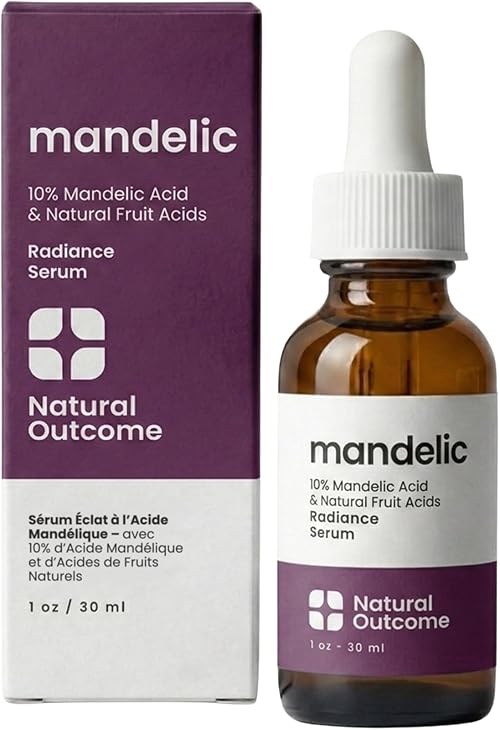
Natural Outcome
Mandelic Acid Serum 10%
$14.95
"Best mid-budget 10% serum alternative when The Ordinary is out of stock; Amazon US lists 4.4/5 across 248 ratings."

The INKEY List
Mandelic Acid Treatment
$14
"Best spot-focused format for post-blemish marks; Amazon US lists 4.3/5 across 318 ratings and positions it for hyperpigmentation."
What you'll learn
- Mandelic acid is often gentler than smaller AHAs, but gentle does not mean daily use is the right starting point for sensitive or hormonally reactive skin.
- The most common mistake is stacking mandelic acid with retinoids, benzoyl peroxide, scrubs, peels, or strong vitamin C before the barrier has adapted.
- Use mandelic acid at night, start 1-2 times weekly, moisturize generously, and follow FDA AHA guidance by wearing broad-spectrum SPF in the morning.
- For women 35-55, the best mandelic acid routine usually treats texture, clogged pores, and post-blemish marks without chasing a stripped, squeaky finish.
- If burning, swelling, persistent peeling, or worsening dark marks appear, pause the acid and rebuild the barrier before trying again.
Steps
-
1 Start with 1-2 nights per week
Use mandelic acid after cleansing on dry skin, then follow with a plain moisturizer. Stay at 1-2 nights weekly for at least 2 weeks before increasing frequency. This reduces the common mistake of treating a gentle AHA as a daily toner from night one.
-
2 Keep the same-night routine boring
On mandelic acid nights, skip retinoids, scrubs, benzoyl peroxide, peel pads, and other exfoliating acids. Pair the acid with glycerin, hyaluronic acid, niacinamide, ceramides, or petrolatum-based barrier support instead.
-
3 Watch for delayed irritation
Do not judge tolerance only by the first 10 minutes. AHA irritation may show up the next morning as tightness, shine, flakes, redness, stinging with moisturizer, or new sensitivity around the mouth and nose.
-
4 Use sunscreen every morning
The FDA warns that alpha hydroxy acids can increase sun sensitivity. Use broad-spectrum SPF daily, especially if you are using mandelic acid for post-blemish marks, uneven tone, or texture after hormonal breakouts.
-
5 Reassess after 6-8 weeks
Texture and clogged-pore changes are usually easier to judge than pigment. After 6-8 weeks, decide whether to keep the same frequency, increase by one night weekly, or switch to a different active if irritation outweighs visible benefit.
Bottom line
Mandelic acid is the alpha hydroxy acid people often choose when glycolic acid feels too sharp. That reputation is reasonable: mandelic acid has a larger molecular structure than glycolic acid, and the 2020 PubMed comparative study of 50 acne patients reported better tolerability for 45% mandelic acid peels than 30% salicylic acid peels. But a gentler acid can still create an irritated barrier when it is used too often, layered with too many actives, or treated like a quick fix for hormonal acne.
BeautySift did not test these products in a lab. We analyzed 6 Amazon US mandelic acid listings totaling 7,179 ratings, FDA AHA guidance, official brand ingredient claims, and 4 PubMed-indexed papers on acne, alpha hydroxy acids, and superficial chemical peels. The most useful pattern is clear: mandelic acid is best approached as a slow-start exfoliant for texture, clogged pores, and post-blemish uneven tone, not as a nightly punishment for breakouts.
We may earn a commission from Amazon links. Affiliate status does not change the protocol: start low, keep the rest of the routine calm, and protect the skin from sun exposure.
Mistake 1: assuming gentle means harmless
The biggest mandelic acid mistake is confusing lower sting with zero risk. A product can feel comfortable for the first 10 minutes and still cause dryness, flakes, or next-day sensitivity after several uses. That matters for women 35-55 because mature skin often has less margin for barrier damage: perimenopause, indoor heating, prescription retinoids, and long-term sun exposure can all make the same acid feel harsher than it did at 28.
Amazon review language mirrors that split. The Ordinary Mandelic Acid 10% + HA has a strong rating snapshot, 4.6/5 across 4,224 Amazon ratings, and reviewers often mention smoother or brighter-looking skin. Yet even positive reviews describe needing moderation. One verified reviewer wrote that the product was gentle compared with other AHAs but could make skin more dry and sensitive if used too many nights in a row.
A smarter rule: no matter how gentle the marketing sounds, treat mandelic acid as an active. Begin 1-2 nights weekly. If your skin is comfortable after 2 full weeks, add one more night. If moisturizer stings, your face looks shiny-tight, or fine lines look suddenly more obvious, the skin is asking for fewer acid nights, not a stronger product.
Mistake 2: stacking it with every other active
Mandelic acid mistakes usually happen in crowded routines. A shopper uses a mandelic serum, then adds retinol, benzoyl peroxide, a vitamin C serum, a scrub, and a clay mask because the breakout feels urgent. The result is often not faster clearing; it is a compromised barrier that makes redness, peeling, and post-inflammatory marks more likely.
For hormonally reactive skin, this is especially tempting around the jawline and chin. But mandelic acid is not a hormone regulator. PubMed acne literature supports mandelic acid mainly as an exfoliating or peel ingredient. In the 2022 Journal of Cosmetic Dermatology acne tarda study, the mandelic acid component was part of a controlled 16-week protocol with 58 participants and oral isotretinoin; that is very different from stacking several over-the-counter actives at home.
Use a simple acid-night template instead: cleanse, apply mandelic acid to dry skin, moisturize. If your skin is very sensitive, reverse the first two steps after cleansing: apply a thin moisturizer layer, then mandelic acid, then moisturizer again. Save retinol for a different night. Save benzoyl peroxide for a different time of day or a spot-use plan recommended by your clinician.
Mistake 3: using it as a daily anti-aging shortcut
Mandelic acid can make skin look smoother because exfoliation reduces rough surface buildup. It can also help dullness look less flat. Those are cosmetic benefits worth pursuing. The mistake is expecting a leave-on mandelic acid serum to do the work of sunscreen, retinoids, pigment care, barrier repair, and in-office procedures all at once.
This matters for common 35-55 concerns: texture around the cheeks, post-breakout marks on the chin, and dullness that appears worse in Midwest winter cold or Southwest dryness. More acid is not automatically more glow. Too much exfoliation can make skin look waxy, thin, and less even under makeup.
The evidence-weighted product comparison favors products that make restraint easier. Paula’s Choice 6% Mandelic Acid + 2% Lactic Acid scored strongest for cautious use because its acid level is disclosed and its Amazon listing shows 4.5/5 across 817 ratings. Naturium scored well for formula support because it pairs mandelic acid with niacinamide, but its 12% strength still deserves a slow introduction. The Ordinary scored best on value, with 4.6/5 across 4,224 ratings and a $7.80 Amazon snapshot, but budget pricing does not change the frequency rule.
Mistake 4: skipping sunscreen because the acid is used at night
Night use does not erase morning responsibility. The FDA’s alpha hydroxy acid guidance warns that AHAs can increase sun sensitivity and recommends sun protection. That warning is directly relevant if you use mandelic acid for post-blemish marks or uneven tone: UV exposure can keep discoloration looking darker, while irritation plus sun can make the cycle more frustrating.
Use broad-spectrum SPF every morning. Reapply when you are outdoors, sweating, or driving for long stretches. This is not about turning a skincare routine into a 12-step system; it is about protecting the result you are trying to get from the acid.
If your current sunscreen pills over mandelic-acid-night moisturizer, change the morning moisturizer or sunscreen texture before increasing exfoliation. A sunscreen you actually wear daily beats a perfect pigment routine you abandon after a week.
Mistake 5: ignoring delayed irritation signs
Immediate burning is an obvious stop sign, but delayed irritation is the one people miss. With mandelic acid, watch the next 24-48 hours. Warning signs include tightness after cleansing, tiny flakes around the nose and mouth, cheeks that look shiny but feel dry, makeup catching on patches, or moisturizer suddenly stinging.
If those signs show up, pause mandelic acid for at least a week and rebuild with bland hydration. Look for glycerin, petrolatum, ceramides, cholesterol, squalane, panthenol, or colloidal oatmeal. Do not try to “push through” irritation for faster brightening. For melanin-rich skin, that strategy can backfire because irritation may leave more visible post-inflammatory hyperpigmentation.
The 2021 PubMed retrospective peel analysis included 214 superficial peel sessions and tracked complications such as persistent hyperpigmentation. That was a clinician-managed peel setting, not a home-serum routine, but it reinforces the same practical point: pigment concerns need a low-irritation plan.
Mistake 6: choosing the wrong format for the job
Not every mandelic acid product should be used the same way. A watery liquid, a serum, a spot treatment, and a blended acid formula can all carry the same ingredient name but behave differently in a routine.
The Ordinary Mandelic Acid 10% + HA is a budget serum for broad texture and dullness. Naturium Mandelic Topical Acid 12% is a stronger-feeling option for shoppers who also want niacinamide support. Paula’s Choice 6% Mandelic Acid + 2% Lactic Acid is a cautious liquid for people who prefer a lower mandelic percentage, though it includes lactic acid too. The INKEY List Mandelic Acid Treatment is better framed as a targeted post-blemish mark product than a full-face nightly acid for reactive skin.
If your main issue is inflamed jawline acne, mandelic acid may be a supporting tool, not the center of the plan. If your main issue is rough texture and dullness, a full-face low-frequency protocol makes more sense. If your main issue is brown patches or melasma-like discoloration, sunscreen and pigment-specific ingredients need equal or greater priority.
A safer mandelic acid protocol
Start with a patch test along the jaw or behind the ear for two nights. That will not guarantee full-face tolerance, but it can catch obvious reactions. Then use the product on dry skin one night in week one. Follow with a plain moisturizer. Do not use retinol, benzoyl peroxide, scrubs, peel pads, or other acids that night.
If skin feels normal, use it twice in week two, spaced at least 3 nights apart. If skin still feels normal, stay at twice weekly for weeks three and four. For many women 35-55, twice weekly is the useful maintenance dose. If clogged pores or roughness persist and your skin is not dry, increase to three nights weekly. Daily use should be the exception, not the default.
Judge results in layers. After 2 weeks, look for smoother texture and fewer rough patches. After 4 weeks, judge clogged-pore patterns. After 6-8 weeks, judge post-blemish mark appearance, with the reminder that sunscreen consistency heavily influences tone. Stop earlier if irritation appears.
Product examples that match the protocol
The featured products above are not mandatory buys; they are examples of different ways to build the protocol. The Ordinary is the simplest low-cost starter. Naturium is the niacinamide-supported option for someone who already tolerates acids. Paula’s Choice is the lower-mandelic-percentage liquid for cautious exfoliation. Natural Outcome and The INKEY List are alternatives when you want a different price point or a more targeted format.
Across the six Amazon listings we analyzed, the rating average ranged from 4.3/5 to 4.6/5, with sample sizes ranging from 248 ratings for Natural Outcome to 4,224 ratings for The Ordinary. That spread matters: a small, enthusiastic rating pool is useful but less stable than thousands of reviews. It is one reason BeautySift weighs The Ordinary and Paula’s Choice more heavily for general guidance, while treating lower-count products as optional protocol examples.
When to stop and ask a dermatologist
Pause mandelic acid if you develop swelling, crusting, intense burning, persistent peeling, or new dark marks after irritation. Also seek medical guidance for painful cystic acne, sudden adult-onset acne, acne with irregular periods or hair growth changes, or breakouts that leave scars. Those patterns can sit beyond what a cosmetic exfoliant can reasonably address.
For most shoppers, the best mandelic acid routine is intentionally unexciting: slow frequency, no same-night active pileup, moisturizer, sunscreen, and honest reassessment. That is the difference between using mandelic acid as a useful exfoliant and turning it into another barrier problem.