Common Mistakes With Menopause Supplements: A Safety-First Guide
A practical, evidence-led guide to menopause supplement mistakes, from megadose biotin to mismatched hot-flash formulas, with safer product examples.
We analyzed 51,305 Amazon rating signals, FDA biotin safety guidance, NCCIH menopause guidance, and 5 PubMed-indexed studies. The biggest menopause supplement mistake is treating every symptom like a vitamin gap instead of matching the ingredient, dose, and safety caveat to your main concern.
Editor's top Amazon picks for this guide
Real Amazon products that match this protocol. Affiliate links — your purchases support BeautySift.

Amberen
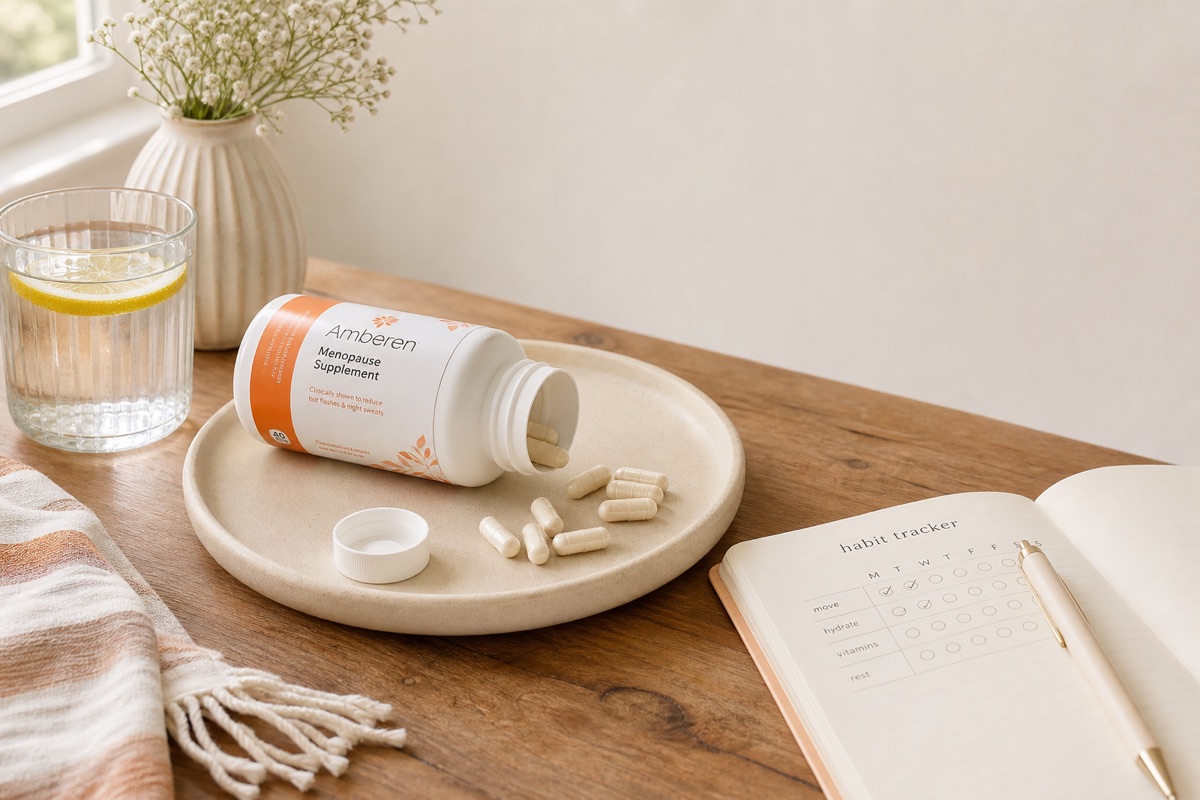
Amberen Menopause Supplement
$24.97
"Large Amazon review base plus PubMed-indexed randomized-trial evidence for a succinate-based dietary supplement approach."
What real Amazon buyers say
4.2★· 23,800 reviews"I'm 52 and was starting to get hot flashes."

Life Extension
Life Extension Menopause 731
$18
"ERr 731 rhapontic rhubarb formula with PubMed-indexed studies and a 2024 systematic review; Amazon showed 705 ratings at 4.0/5."
What real Amazon buyers say
4.0★· 705 reviews"Hot flashes & night sweats are greatly reduced"

MaryRuth's
MaryRuth's Organic Menopause Gummies
$22.46
"Gummy format for shoppers who dislike capsules; Amazon showed 169 ratings at 4.3/5, with NCCIH cautions for black cohosh evidence limits."
What real Amazon buyers say
4.3★· 169 reviews"I've noticed my hot flashes are greatly reduced to one or two a day !"
What you'll learn
- Start with your top symptom, not the biggest supplement stack; hot flashes, hair thinning, sleep, and dryness point to different evidence questions.
- High-dose biotin is a common hair supplement mistake because the FDA warns it can interfere with certain lab tests.
- A menopause supplement should be time-boxed for 8 to 12 weeks unless your clinician gives a different plan.
- Herbal formulas need medication and condition screening, especially if you use thyroid medicine, blood thinners, hormone therapy, or have liver concerns.
Steps
-
1 Name the symptom you are actually trying to improve
Write down one primary outcome before you buy: fewer hot flashes, better sleep continuity, less shedding, or fewer dryness complaints. Amazon data can show popularity, but it cannot tell you whether a formula matches your symptom. In our May 2026 snapshot, Amberen had 23,800 Amazon ratings and Life Extension Menopause 731 had 705, yet those rating counts answer a different question than hair-density support.
-
2 Screen for lab-test and medication conflicts first
Before adding biotin, black cohosh, phytoestrogens, or multi-ingredient menopause blends, check your medication list and upcoming labs. The FDA specifically warns that biotin can interfere with some lab tests, so a hair supplement can become a medical-record problem if your clinician does not know you take it.
-
3 Match the ingredient to the evidence, then time-box the trial
Use the strongest available evidence for the symptom you named. PubMed indexed a 2024 systematic review of ERr 731 for menopause symptoms, a 2019 pooled analysis of a succinate-based supplement, a 2011 randomized study of EstroG-100, and a 2012 pilot study of S-equol for hot flashes. That does not prove every branded blend works for every woman; it means the ingredient family deserves a more careful look than a generic beauty gummy.
-
4 Track results and side effects in the same note
Use a simple weekly log: hot flashes per day, sleep interruptions, shedding level, skin dryness, digestive upset, headaches, and any new medication changes. If nothing changes after 8 to 12 weeks, continuing because you already bought the bottle usually adds cost without better evidence. Stop sooner and call a clinician for rash, jaundice, palpitations, severe mood changes, or unusual bleeding.
Quick answer
The most common menopause supplement mistake is buying for a label promise instead of a defined symptom. We analyzed 51,305 Amazon rating signals across featured menopause products, FDA biotin safety guidance, NCCIH menopause guidance, and PubMed-indexed studies on ERr 731, succinate-based supplements, EstroG-100, and S-equol. The safer approach is to pick one main concern, screen medication and lab-test conflicts, then run a time-boxed trial you can actually evaluate.
This guide is written for US shoppers in the 35 to 55 range who are seeing perimenopause show up in skin, hair, sleep, temperature regulation, and mood at the same time. It is not medical advice, and BeautySift does not test supplements or diagnose hormone changes. We are aggregating public evidence so you can have a more informed conversation with your clinician.
Why menopause supplement mistakes are so easy to make
Menopause marketing compresses several different issues into one bottle: hot flashes, night sweats, mood swings, sleep, bloating, low energy, hair shedding, brittle nails, and dry skin. That is convenient copy, but it is not how symptoms behave. A formula built around rhapontic rhubarb extract is not the same kind of product as a high-biotin hair vitamin, and neither answers the same question as checking ferritin, thyroid status, vitamin D, or medication side effects.
Popularity can also distort the decision. In our May 2026 Amazon source snapshot, Amberen showed 23,800 ratings at 4.2/5, Life Extension Menopause 731 showed 705 ratings at 4.0/5, and MaryRuth’s Organic Menopause Gummies showed 169 ratings at 4.3/5. Amazon review volume is useful for accessibility and tolerability signals, but it does not replace ingredient-specific evidence. PubMed indexed a 2024 systematic review for ERr 731, a 2019 pooled analysis for a succinate-based supplement approach, a 2011 randomized study of EstroG-100, and a 2012 pilot study of S-equol. Those citations support a more specific question: which ingredient family fits which symptom?
Mistake 1: Treating hair thinning like a generic beauty-vitamin problem
Hair thinning around perimenopause can feel sudden, and that panic makes high-dose hair gummies tempting. The problem is that hair shedding has multiple routes. Lower estrogen may change the hair cycle. Androgen sensitivity can matter. Thyroid shifts, low iron stores, low protein intake, rapid weight loss, stress, illness, and medications can all contribute. A biotin-heavy product may be irrelevant if the issue is iron status, thyroid medication timing, or female-pattern hair loss.
The FDA warning about biotin is the clearest safety example here: biotin may interfere with certain lab tests. That matters because midlife women are often getting thyroid panels, cardiac markers, hormone workups, or routine physical labs while also self-treating hair shedding. If you take a hair supplement, put the exact dose in your medication list and ask whether you should pause it before specific labs. Do not assume a vitamin is invisible to your medical care.
A better move: document shedding, scalp visibility, part width, and recent triggers for 4 weeks before adding anything. If the loss is patchy, sudden, painful, accompanied by scalp inflammation, or follows a medication change, move to a clinician or dermatologist rather than shopping for a broader supplement stack.
Mistake 2: Buying the biggest blend instead of the best-matched ingredient
A long Supplement Facts panel can look more serious than a short one. In practice, more ingredients can make the formula harder to evaluate. If a product combines phytoestrogens, adaptogens, sleep herbs, vitamins, minerals, and hair actives, you may not know what helped, what caused nausea, or what duplicated something in your multivitamin.
This is where evidence-weighted comparison helps. We scored featured examples by symptom fit, evidence relevance, safety caveats, Amazon review signal, and US accessibility. Amberen is a large-review-base example with a succinate-based evidence thread; the 2019 PubMed-indexed pooled analysis is relevant to that category. Life Extension Menopause 731 is narrower, built around ERr 731; the 2024 PubMed-indexed systematic review makes that ingredient family easier to evaluate. MaryRuth’s Organic Menopause Gummies may fit shoppers who strongly prefer gummies, but its black-cohosh-centered positioning needs NCCIH’s evidence and safety caveats in view.
The mistake is not choosing one of these products. The mistake is choosing without knowing what you are asking the product to do.
Mistake 3: Ignoring medication, hormone-therapy, and condition context
Menopause supplements are sold over the counter, but that does not make every combination low-risk. Phytoestrogen ingredients, black cohosh, sedating herbs, minerals, and high-dose vitamins can create practical issues if you take thyroid medication, blood thinners, antidepressants, sleep aids, hormone therapy, or multiple prescription medicines. Liver history matters for some herbal categories. Kidney history matters for some minerals. Upcoming surgery can change what your clinician wants you to pause.
NCCIH’s menopause guidance is useful because it does not treat complementary approaches as automatically harmless. It emphasizes evidence limits and safety discussions, which is exactly the right framing for a midlife supplement decision. If you are already under care for breast cancer history, clotting risk, liver disease, abnormal bleeding, thyroid disease, or severe mood symptoms, supplement shopping should not be the first step.
Bring the bottle, not just the brand name, to your appointment. The dose and full ingredient panel matter.
Mistake 4: Expecting hot-flash evidence to translate to skin or hair results
A menopause formula can have evidence for vasomotor symptoms and still have little direct evidence for hair density, skin elasticity, or nail strength. Hot flashes are measurable in clinical studies; hair and skin outcomes require different endpoints. If a product’s evidence centers on hot flashes, do not mentally upgrade that to hair regrowth.
For example, PubMed’s 2012 S-equol pilot study is relevant to hot flashes, and the 2011 EstroG-100 randomized study is relevant to menopause symptoms. That does not mean either should be described as a proven hair-growth treatment. Likewise, Amazon reviews that mention fewer night sweats are not the same as scalp photography or hair-count outcomes.
For hair thinning, look for a broader plan: protein adequacy, ferritin or iron discussion with a clinician, thyroid review, vitamin D status when appropriate, scalp inflammation assessment, and evidence-based topical options such as minoxidil when indicated. A supplement can sit inside that plan; it should not replace it.
Mistake 5: Not setting a stop date
Supplements often become background subscriptions. That is costly and makes it hard to notice whether anything changed. Set a start date, a review date, and a stop rule before the first dose. For many non-urgent menopause symptoms, 8 to 12 weeks is a practical window for tracking. If the product claims a specific timing on its label, use that as the minimum evaluation window only if it is safe for your situation.
Your weekly note does not need to be elaborate. Track hot flashes per day, night sweats per week, sleep interruptions, hair shedding, digestive symptoms, headaches, mood changes, and any new medications. Keep the scoring simple: 0 for absent, 1 for mild, 2 for moderate, 3 for disruptive. The goal is not a perfect study; it is to prevent memory from rewriting the outcome.
Stop sooner if you develop a rash, severe digestive distress, palpitations, unusual bleeding, jaundice, dark urine, marked mood changes, or anything that feels medically unusual. Call a clinician rather than trying to offset side effects with another supplement.
Step-by-step safer protocol
Step 1: Pick one primary outcome
Choose one: fewer hot flashes, better sleep, less shedding, improved dryness, or fewer mood swings. If you pick three, you will not know what worked. Write the outcome in one sentence: “I want to reduce night sweats from 5 nights a week to 2,” or “I want to understand whether my shedding improves after I address labs and nutrition.”
Step 2: Check the conflict list
List prescriptions, hormone therapy, thyroid medicine, anticoagulants, antidepressants, sleep aids, liver history, kidney history, cancer history, and upcoming labs. Add biotin dose if you take it. The FDA biotin warning is specific enough that it belongs in this checklist, especially for hair-focused shoppers.
Step 3: Choose the narrowest reasonable formula
If hot flashes are the target, an ingredient-specific formula with PubMed-indexed evidence is easier to evaluate than a broad beauty blend. If hair is the target, do not default to biotin until nutrition, thyroid, iron status, stress, medications, and pattern of loss have been considered. If format is the barrier, a gummy may improve adherence, but it should not override safety and evidence fit.
Step 4: Run one trial at a time
Do not start a menopause supplement, collagen powder, new multivitamin, sleep gummy, and hair capsule in the same week. Start one product, keep the rest stable, and track the same symptoms weekly. If you change five variables, you have no clean signal.
Step 5: Decide before you reorder
At the 8 to 12 week mark, ask three questions: Did the target symptom improve? Were side effects tolerable? Is there a better-supported option for the remaining concern? If the answer is no, do not keep buying out of habit.
Product examples that fit the protocol
Amberen Menopause Supplement is the large-review-base example in this guide. The Amazon snapshot we analyzed showed 23,800 ratings at 4.2/5, and the relevant evidence thread includes a 2019 PubMed-indexed pooled analysis of two randomized placebo-controlled trials of a succinate-based supplement approach. It is most useful as an example of why popularity and ingredient-specific evidence both need to be reviewed.
Life Extension Menopause 731 is the narrower evidence-specific example. The Amazon snapshot showed 705 ratings at 4.0/5, and the relevant source set includes a 2024 PubMed-indexed systematic review and meta-analysis of ERr 731. The smaller review base means less broad user-sentiment signal than Amberen, but the ingredient focus is cleaner.
MaryRuth’s Organic Menopause Gummies are included as a format-fit example. The Amazon snapshot showed 169 ratings at 4.3/5. Gummies can help adherence for shoppers who avoid capsules, but NCCIH’s menopause guidance still matters because black cohosh and similar herbal categories should be screened for evidence limits and safety context.
We may earn a commission on Amazon links, but commission does not change which products are included or how safety caveats are written.
When to skip supplements and call a clinician first
Do not make supplements your first move if bleeding returns after menopause, hot flashes are severe and sudden, hair loss is patchy or scarring, scalp pain is present, weight changes are unexplained, mood symptoms feel unsafe, or you have chest pain, palpitations, jaundice, or neurological symptoms. Those are not shopping problems.
Also call before starting if you are pregnant, trying to conceive, nursing, using hormone therapy, taking anticoagulants, managing thyroid disease, or being monitored for cancer recurrence. A supplement can be easy to buy and still be wrong for your medical context.