
Common Mistakes With Perimenopause Serum After 40
A practical guide for US women over 40 on choosing, layering, and troubleshooting perimenopause serums without worsening dryness or fine lines.
We analyzed 3 Amazon serum listings totaling 22,070 visible ratings, PubMed aging-skin studies from Bissett 2004 and Kafi 2007, FDA sunscreen guidance, and brand ingredient pages. The biggest serum mistake after 40 is stacking actives faster than the barrier can tolerate.
Editor's top Amazon picks for this guide
Real Amazon products that match this protocol. Affiliate links — your purchases support BeautySift.

Paula's Choice
Paula's Choice Clinical 20% Niacinamide Vitamin B3 Concentrated Face Serum
$38.50
"High-strength niacinamide option for experienced users; Amazon US shows 4.5/5 across 2,001 ratings and the brand positions it for pores, uneven tone, and texture."
What real Amazon buyers say
4.5★· 2,001 reviews"This product really helps improve skin texture and minimize the look of pores. A little goes a long way, and it absorbs well without feeling greasy."
"Holy grail dark spot corrector! Worth every penny!"
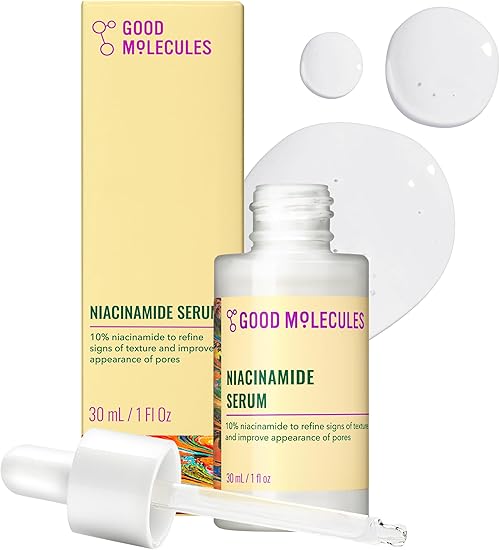
Good Molecules
Good Molecules Niacinamide Serum
$5.97
"Budget-friendly 10% niacinamide serum; Amazon US shows 4.7/5 across 12,577 ratings, the strongest rating-to-price signal in this set."
What real Amazon buyers say
4.7★· 12,577 reviews"This is a great Niacinamide Serum, especially at this price point."
"I have been using the Good Molecules facial serum on my face for 2 years.I love the way it decreases the pores."

Olay
Olay Super Serum
$29.94
"Multiactive serum with niacinamide, vitamin C, vitamin E, peptide, and AHA positioning; Amazon US shows 4.5/5 across 7,492 ratings."
What real Amazon buyers say
4.5★· 7,492 reviews"My skin looks noticeably brighter and more even, and it feels super hydrated without being greasy or heavy."
"Have been using this for a few months and no it does not make you 20 years younger (nothing will), but it does help hydrate your skin and does help make your fine lines not so noticeable."
What you'll learn
- The safest perimenopause serum strategy is choosing one job per serum: hydration, tone, texture, or retinoid support, not all actives at once.
- Dryness and fine lines after 40 often look worse when serum frequency rises faster than moisturizer, sunscreen, and recovery nights.
- Niacinamide has stronger aging-skin tolerance logic than many aggressive acid blends, but high percentages can still feel drying on reactive skin.
- Retinol evidence is measured across months, so nightly use in week one is usually a mistake for dry or perimenopausal skin.
- A serum should sit between cleansing and moisturizer; if it pills, stings, or leaves skin tight, reduce amount before buying a stronger formula.
Steps
-
1 Mistake 1: Buying a serum before naming the problem
Start by choosing one primary goal for the next 8 to 12 weeks: dryness support, fine-line texture, uneven tone, or breakout marks. Mature-skin tip: if cheeks feel tight by noon, treat barrier comfort as the first goal before adding retinol or acid-heavy brighteners.
-
2 Mistake 2: Choosing the strongest active first
A high-strength serum can be useful for experienced users, but stronger is not automatically better after 40. PubMed evidence for niacinamide includes 5% and aging-skin studies, while Kafi 2007 followed 0.4% retinol over 24 weeks. Mature-skin tip: begin with a tolerable frequency and give the active enough weeks to work.
-
3 Mistake 3: Applying serum to damp, reactive skin
Hydrating serums may suit slightly damp skin, but retinoids and low-pH vitamin C often sting more when applied too soon after washing. Mature-skin tip: if your moisturizer burns, pause active serums and wait until bland moisturizer feels comfortable for several days.
-
4 Mistake 4: Layering vitamin C, acids, and retinol in one routine
Serum stacking is a common reason perimenopause routines fail. Use antioxidant or niacinamide serum in the morning if tolerated, retinol on scheduled nights, and exfoliating acids on separate nights. Mature-skin tip: never increase strength and frequency in the same week.
-
5 Mistake 5: Skipping moisturizer after serum
Serums are treatment layers, not a complete barrier plan. Follow with a cream or lotion so humectants do not leave skin feeling tight in Southwest dryness, Midwest winter cold, or low indoor humidity. Mature-skin tip: apply moisturizer while the serum is still slightly tacky unless the product directions say otherwise.
-
6 Mistake 6: Forgetting sunscreen when chasing fine lines
FDA sunscreen guidance says broad-spectrum sunscreen should be used before sun exposure and reapplied at least every 2 hours outdoors. Mature-skin tip: if serum makes sunscreen sting or pill, the serum amount, order, or frequency is the problem to troubleshoot first.
-
7 Mistake 7: Calling irritation a purge
Dry flakes, burning, swelling, rash, and persistent redness are not proof that a serum is working. They are tolerability signals. Mature-skin tip: stop the newest active, return to cleanser-moisturizer-sunscreen basics for 7 to 14 days, and seek medical advice for severe or spreading symptoms.
Bottom line
The common serum mistake after 40 is not buying the wrong buzzword. It is building a routine that asks dry, more reactive skin to tolerate too many actives at once. A perimenopause serum can be useful for fine lines, dullness, visible pores, post-blemish marks, and dehydration, but it should not be treated like a replacement for moisturizer or sunscreen.
BeautySift did not test these products on a panel. We analyzed PubMed-indexed studies, FDA sunscreen guidance, official US brand pages, and three Amazon US serum listings totaling 22,070 visible ratings. The product examples are evidence-weighted routine tools, not medical treatment recommendations. We may earn a commission from Amazon links, but affiliate status does not affect scoring.
Step 1: Choose one serum job, not five
Before buying a serum, name the problem in plain language. Is the issue tightness after cleansing, fine lines that look worse by afternoon, uneven tone, visible pores, or chin-breakout marks? Those problems can overlap during perimenopause, but they do not all need the same first product.
For dryness and fine lines, the mistake is often jumping straight to retinol, acid toner, or a strong vitamin C serum because the packaging promises firmness or glow. A better first pass is to decide whether the skin is under-hydrated, irritated, or ready for treatment. If moisturizer burns, sunscreen stings, or cheeks feel hot after cleansing, your first job is barrier comfort. A treatment serum can wait.
Niacinamide is a reasonable bridge ingredient for many over-40 routines because PubMed-indexed Bissett 2004 connects topical niacinamide with aging-skin appearance markers, while Bissett 2005 studied 5% niacinamide in 50 women over 12 weeks. That does not mean every niacinamide serum is gentle for everyone. It means the ingredient has a better evidence story for tone, texture, and barrier-adjacent concerns than many trendy blends.
Mature-skin tip: buy the serum that solves the most visible daily problem, not the one with the longest active list. If your foundation catches on flakes, hydration and barrier support matter more than another peel.
Step 2: Match strength to tolerance
High percentages attract attention, but tolerance determines whether the product stays in the routine. Paula’s Choice Clinical 20% Niacinamide is the strongest niacinamide example in this guide, and the Amazon listing shows 4.5/5 across 2,001 ratings. It may fit experienced users who want a targeted texture and pore serum. It is not the default starting point for skin that is stinging, peeling, or recovering from retinoids.
Good Molecules Niacinamide Serum is the simpler value example. Its Amazon listing shows 4.7/5 across 12,577 ratings, and the brand positions it as a 10% niacinamide formula. In the product-comparison framework, it scores better for value and beginner accessibility, while Paula’s Choice scores higher for active intensity. Olay Super Serum, at 4.5/5 across 7,492 Amazon ratings, is the streamlined multiactive option, but its AHA positioning means it deserves more caution if you already exfoliate.
Retinol needs even more patience. Kafi 2007 studied 0.4% retinol over 24 weeks in 36 participants. That is a months-long timeline, not proof that using a retinol serum every night in week one will work faster. For dry perimenopausal skin, 1 to 2 nights weekly is a practical start.
Mature-skin tip: do not increase strength and frequency together. If you move from a mild serum to a stronger one, keep the schedule stable for at least 2 weeks.
Step 3: Prep skin so the serum does not backfire
Serum performance starts before the dropper. A stripping cleanser can make any active feel harsher. Hot water, cleansing brushes, scrubs, and long face-washing sessions can leave perimenopause skin tight before the treatment even touches it.
For most morning routines, cleanse only if needed, then apply serum in a thin layer. For hydrating or niacinamide serums, slightly damp skin may be comfortable. For retinol and low-pH vitamin C, wait until skin is dry unless the product directions say otherwise. Pinnell 2001 reported that L-ascorbic acid absorption depended on a formulation pH below 3.5, which helps explain why classic vitamin C serums can feel sharp on compromised skin.
Use less than you think. A full dropper is often too much for the face and neck, especially under sunscreen. Two to four drops or a pea-size amount is usually enough, depending on texture. If the serum foams, pills, or remains sticky after several minutes, reduce the amount before blaming the formula.
Mature-skin tip: protect the corners of the nose, mouth, and under-eye area. These zones often show serum overuse first through flaking, creasing, or concealer separation.
Step 4: Put serums in the right order
A simple order works for most non-prescription routines: cleanse, serum, moisturizer, sunscreen in the morning. At night: cleanse, serum on treatment nights, moisturizer. If you use multiple serums, the thinner water-based one usually goes before a creamier one, but the better answer after 40 is to use fewer serums at once.
Do not stack low-pH vitamin C, exfoliating acids, and retinol in the same routine unless a dermatologist has specifically built that plan for you. The routine may look efficient, but irritation often interrupts consistency. When skin is dry, the visible fine lines you are trying to soften can look deeper because the barrier is inflamed and dehydrated.
Olay Super Serum is a good example of why label reading matters. It is appealing because it combines niacinamide, vitamin C, vitamin E, peptide, and AHA positioning in one product. That can simplify a shelf. It also means you should not casually pair it with a separate peel pad, glycolic toner, and retinol on the same night.
Mature-skin tip: keep a weekly active calendar. For example, niacinamide in the morning, retinol Monday and Thursday nights, moisturizer-only recovery on the other nights, and acids no more than weekly if tolerated.
Step 5: Seal serum with moisturizer
A serum is not a moisturizer just because it feels slippery. Many serums are built to deliver actives, humectants, or antioxidants in a light vehicle. Perimenopause dryness often needs a cream or lotion on top so water does not evaporate and leave skin feeling tighter 20 minutes later.
This matters most in dry indoor air, Midwest winter cold, and arid Southwest climates. It also matters under makeup. If a serum makes skin look shiny but foundation still catches on cheek flakes, the routine is missing barrier support. Apply moisturizer after the serum settles but before skin feels parched.
If you are using retinol, moisturizer can also work as a buffer. Apply moisturizer first, wait a few minutes, then apply a small amount of retinol, or apply moisturizer after retinol if your skin tolerates direct application. The goal is consistency without burning.
Mature-skin tip: watch the neck. Neck skin often tolerates active serums less well than the face. Use leftover serum only if the neck is comfortable, and moisturize there every time.
Step 6: Do not let serum sabotage sunscreen
No fine-line serum outperforms consistent sunscreen. FDA guidance says to use broad-spectrum sunscreen before sun exposure and reapply at least every 2 hours outdoors. That matters because retinoids, exfoliating acids, and brightening routines can be undermined by daily UV exposure.
If sunscreen pills over serum, troubleshoot order and quantity. Use less serum, wait longer before sunscreen, or move the serum to nighttime. If sunscreen stings after a new serum, pause the serum and rebuild comfort with moisturizer. Do not skip SPF because the active step made the morning routine annoying.
Vitamin C is commonly used in the morning because antioxidant positioning pairs logically with daytime environmental exposure, but a stinging vitamin C serum is not mandatory. Niacinamide may be a better morning step for someone whose cheeks flush easily.
Mature-skin tip: choose the sunscreen texture first if you wear makeup daily. A serum that ruins SPF adherence is a poor fit, even if the ingredient list looks impressive.
Step 7: Know when to pause or get help
Some adjustment can happen with active serums, especially retinoids. Persistent burning, swelling, rash, cracking, bleeding, or worsening redness is not a normal milestone. It is a stop sign. Return to a basic routine for 7 to 14 days: gentle cleansing, moisturizer, sunscreen, and no exfoliating or retinoid serum.
Do not call every breakout a purge. Niacinamide, vitamin C, peptides, and hydrating serums do not require a purge phase. Retinoids can change the pace of clogged pores for some users, but cystic acne, painful rash, or eye-area swelling deserves professional advice.
Perimenopause can overlap with rosacea, eczema, allergic contact dermatitis, medication changes, thyroid shifts, and new sensitivity. Cosmetic serums can support a routine, but they should not delay evaluation when symptoms are severe or persistent.
Mature-skin tip: keep one bland fallback routine on hand. When a serum experiment fails, you should not have to buy five new products to calm the skin.
Evidence-weighted serum picks for this guide
Using the product-comparison framework, these three serum examples were scored for evidence relevance, formula logic, Amazon user signal, value, accessibility, and mature-skin tolerability.
Paula’s Choice Clinical 20% Niacinamide is the targeted option. It fits experienced users who want a more assertive niacinamide step for texture, pores, and uneven tone. The caveat is strength: if your cheeks are dry or your routine already includes retinol, introduce it slowly.
Good Molecules Niacinamide Serum is the lower-risk value pick. Its 10% niacinamide positioning and large Amazon rating base make it easier to justify as a first serum step when the routine needs simplicity. It is less plush than prestige formulas, but that simplicity can help when you are trying to identify what your skin actually tolerates.
Olay Super Serum is the multitasking pick for shoppers who want fewer bottles. Its Amazon review base is strong, and the active story is broad. The trade-off is that AHA positioning changes how you layer it. Treat it as an active serum, not as a bland hydrator.
A 14-day serum reset plan
Use this plan if your current serum routine is causing tightness, pilling, or stinging.
Days 1 to 7: stop retinol, acids, strong vitamin C, peel pads, scrubs, and active masks. Use gentle cleanser, moisturizer, and sunscreen. If sunscreen still stings, keep the routine bland and consider a dermatologist if symptoms persist.
Days 8 to 14: reintroduce one serum only. Choose the one that best matches your priority. Use it every other morning or 2 nights that week, not twice daily. Keep moisturizer and sunscreen consistent. Do not add a second active until the first one is boringly tolerable.
After day 14: increase frequency only if skin is comfortable. If dryness returns, reduce frequency rather than changing every product. A serum that works 3 times a week is more useful than one that irritates nightly.