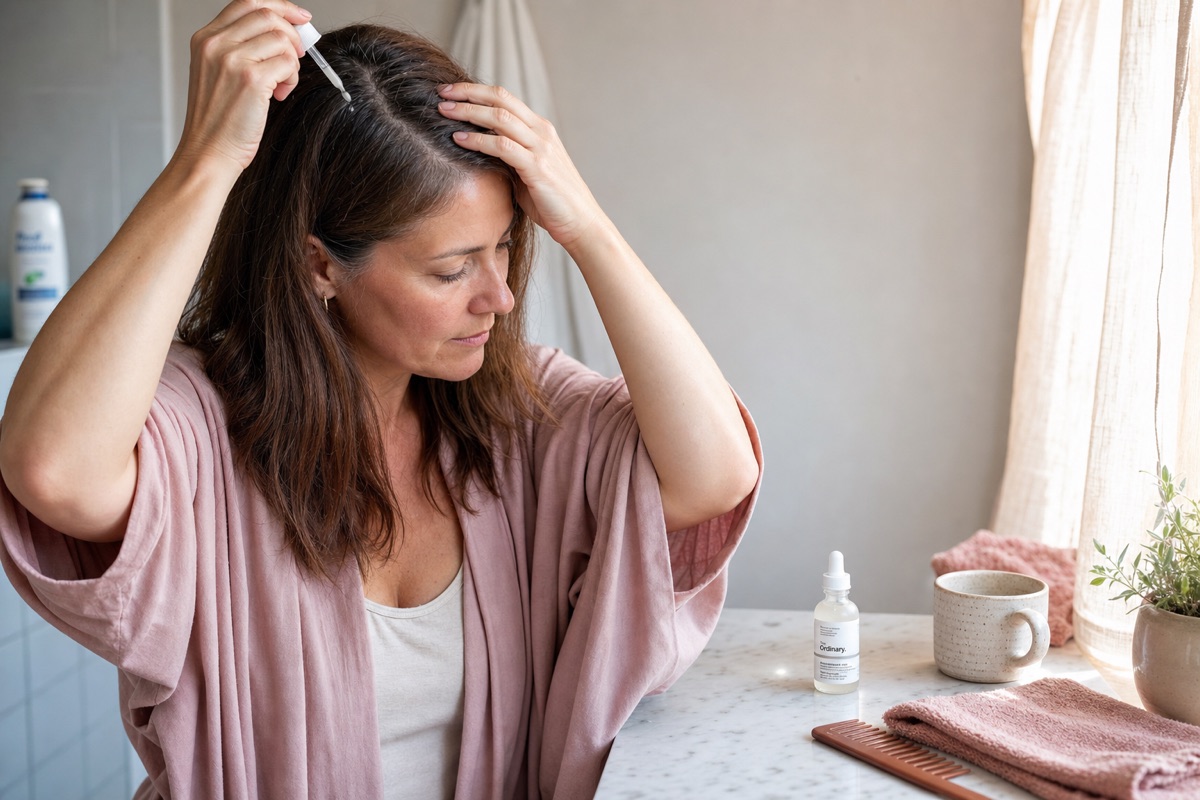
Daily Scalp Care Routine for Perimenopause: Exfoliation, Flake Control, and Serums
An evidence-weighted daily scalp routine for perimenopause, covering gentle cleansing, exfoliation cadence, anti-flake actives, massage, and scalp serums.
Based on a PubMed-indexed postmenopause study of 178 women, a 620-subject randomized dandruff shampoo trial, and 2026 menopause dermatology review data, a perimenopause scalp routine should prioritize gentle daily-to-every-other-day cleansing, 1-2 weekly exfoliation, targeted anti-flake shampoo, 4-minute massage, and a non-greasy scalp serum.
Editor's top Amazon picks for this guide
Real Amazon products that match this protocol. Affiliate links — your purchases support BeautySift.

Nizoral
Nizoral Anti-Dandruff Shampoo with 1% Ketoconazole
$15.88
"Best fit for the anti-flake step when itch and visible flakes suggest Malassezia-driven dandruff; use as directed, not as a daily cosmetic shampoo."

Neutrogena
Neutrogena T/Sal Therapeutic Shampoo
$15.54
"A practical salicylic acid option for the weekly buildup-control step when the scalp feels coated or flaky without heavy oiling."

The Ordinary
The Ordinary Natural Moisturizing Factors + Hyaluronic Acid Scalp Serum
$14.70
"A lightweight hydration step for tight-feeling scalp skin when oil-based serums feel too heavy at the roots."

Mielle Organics
Mielle Organics Rosemary Mint Scalp & Hair Strengthening Oil
$8.90
"A low-cost pre-shampoo oil-massage option; better for dry lengths and scalp comfort than for users who develop oily roots or follicle congestion."

Briogeo
Briogeo Scalp Revival Charcoal + Coconut Oil Micro-Exfoliating Shampoo
$42
"A higher-cost scrub-shampoo format for occasional scalp exfoliation; best reserved for users who tolerate physical texture without tenderness."
What you'll learn
- Perimenopause scalp care should be boring and consistent: cleanse enough to keep oil and styling residue moving, but avoid aggressive scrubbing that inflames the scalp.
- Use anti-flake actives only when flakes, itch, or seborrheic dermatitis patterns are present; cosmetic exfoliation is not a substitute for a medicated dandruff step.
- A once- or twice-weekly exfoliation cadence is a safer starting point than daily acids or scrubs, especially when the scalp feels tight or color-treated hair is fragile.
- Scalp massage is best treated as a circulation-and-comfort habit; it should never be framed as a cure for hormonal thinning or patchy shedding.
- See a dermatologist promptly for sudden shedding, bald patches, pain, bleeding, heavy scale, or scalp symptoms that do not improve with a conservative routine.
Steps
-
1 Step 1: Set your scalp baseline before adding actives
For 7 days, note three things: how fast roots look oily, whether flakes are dry powder or greasy scale, and whether the scalp itches or burns. Perimenopause can overlap with female pattern hair loss, telogen shedding, seborrheic dermatitis, color-processing irritation, and dry-skin tightness. A 2022 Menopause study found female pattern hair loss in 52.2% of 178 postmenopausal women, so thinning concerns deserve a scalp-health check rather than a random stronger scrub.
-
2 Step 2: Cleanse on a realistic daily-to-every-other-day rhythm
If your roots are oily, you work out, or you use dry shampoo, daily or every-other-day cleansing can be reasonable. If your scalp is dry and non-flaky, two to four washes weekly may be enough. The goal is not to train the scalp; it is to remove sweat, oxidized sebum, sunscreen, styling polymers, and dry shampoo before they build up. Choose a gentle non-medicated shampoo for ordinary wash days, then reserve medicated or exfoliating formulas for specific problems.
-
3 Step 3: Use anti-flake shampoo as a targeted treatment lane
When flakes are persistent, itchy, or greasy, use an anti-flake active instead of adding more oils. Ketoconazole and zinc pyrithione have stronger evidence for dandruff and seborrheic dermatitis patterns than cosmetic scalp serums. In a 620-subject randomized double-blind trial, anti-dandruff shampoos were assessed with scalp flaking and histamine endpoints, which is more relevant than general shine claims. Follow the product label, let the lather contact the scalp, and rotate back to a gentle shampoo on non-treatment wash days.
-
4 Step 4: Exfoliate once weekly, then adjust only if calm
Start with one exfoliation session weekly. If the scalp is oily, coated, or heavy with dry shampoo residue, a salicylic acid shampoo can help loosen buildup. If the scalp is comfortable and you prefer a scrub format, keep pressure light and avoid using it on inflamed or scratched skin. Move to twice weekly only if flakes or buildup return quickly and there is no stinging, tenderness, or increased shedding. Do not use a scrub and a medicated anti-flake shampoo in the same wash until you know your scalp tolerates each one separately.
-
5 Step 5: Add a 4-minute massage without pulling the hair
Massage can be useful for product distribution and scalp comfort, but technique matters. Use finger pads, not nails, and keep the motion on the skin instead of dragging through the hair shaft. Four minutes is a practical ceiling for daily consistency: long enough to cover the scalp, short enough to avoid overworking fragile roots. If you see more breakage, tangling, or shedding in your hands after massage, reduce pressure or switch to massage only on wash days.
-
6 Step 6: Choose the serum texture by scalp type
For tight, dry scalp skin, a lightweight hydrating serum is usually easier to tolerate than a heavy oil. For dry lengths plus a comfortable scalp, use oil as a pre-shampoo treatment and keep it mostly off the root area. For oily or flaky scalps, skip leave-on oils until flakes are controlled; occlusive residue can make styling buildup harder to manage. Leave-on serums should make the scalp feel calmer or less tight within the day, not greasy, itchy, or coated.
-
7 Step 7: Escalate when the pattern looks medical
Book a dermatology visit if shedding is sudden, patchy, painful, associated with redness or scale, or continuing for more than several weeks despite a gentle routine. Also seek care if you recently started hormone therapy, stopped hormone therapy, changed thyroid medication, had iron deficiency, or noticed eyebrow thinning. Cosmetic scalp care can support comfort and hygiene, but it cannot diagnose female pattern hair loss, scarring alopecia, psoriasis, infection, or medication-related shedding.
Why scalp care changes around perimenopause
Perimenopause does not create one universal scalp type. Some people notice oilier roots, some notice dryness and itching, and some first notice that the part line looks wider. The safest routine is built like a decision tree: cleanse for hygiene, treat flakes only when flakes are present, exfoliate slowly, then add massage or serum only if they solve a real comfort problem.
BeautySift did not test this routine on a panel. We analyzed PubMed-indexed literature, including a 2022 postmenopause hair-loss prevalence study, a 2026 menopause dermatology systematic review, and randomized dandruff-shampoo evidence, then cross-checked US Amazon product pages for real, currently identifiable scalp-care options.
Affiliate disclosure: we may earn a commission on links. Affiliate availability does not influence the routine order or the evidence weighting.
The daily routine at a glance
Morning or wash-day reset:
- Check the scalp: oily, tight, flaky, itchy, or calm.
- Cleanse if sweat, dry shampoo, sunscreen, or oil is sitting at the roots.
- Use anti-flake shampoo only on flake-control days.
- Condition mid-lengths and ends, not the scalp, unless the formula is designed for scalp use.
- Apply a lightweight scalp serum only if the scalp feels tight or dry.
- Massage for up to 4 minutes with finger pads and low pressure.
Non-wash day:
- Avoid layering dry shampoo repeatedly over old dry shampoo.
- Massage only if it does not increase shedding or tenderness.
- Skip leave-on oils if the scalp is flaky or oily.
- Wash sooner if itch, odor, or visible residue appears.
Exfoliation cadence: the conservative schedule
Use this starter cadence for 4 weeks before making it more intense:
Week 1: one salicylic acid shampoo or one gentle scrub-shampoo session.
Week 2: repeat once if the scalp stayed calm; skip if it felt tender.
Week 3: add a second session only for heavy buildup or persistent flakes.
Week 4: keep the lowest frequency that controls buildup.
This matters because perimenopause routines often fail from overcorrection. If the scalp is already inflamed, a scrub can make it feel cleaner for one day and angrier by day three. If the scalp is just coated with styling residue, a once-weekly buildup step may be enough.
Anti-flake actives: when to use which lane
Ketoconazole is the practical choice when flakes are itchy, recurrent, and dandruff-like. It belongs on the scalp, needs contact time, and should be used according to the label.
Zinc pyrithione has randomized dandruff-shampoo evidence, including the 620-subject trial cited in the sources. It is most relevant when regular use of an anti-dandruff shampoo keeps flakes and itch controlled.
Salicylic acid is more of a scale-and-buildup loosener. It can be useful when the scalp feels coated, but it is not the same as an antifungal dandruff active.
If flakes are thick, painful, bleeding, or sharply bordered, stop self-escalating and seek dermatology care. Psoriasis, seborrheic dermatitis, contact dermatitis, and infection can look similar to a shopper trying to diagnose them in a mirror.
Serum and massage rules that protect fragile roots
A scalp serum should have a job. Hydrating serums are for tightness. Pre-shampoo oils are for comfort and dry-feeling skin, not for an oily scalp with flakes. Hair-density serums should be judged by their published evidence and ingredient transparency, not by before-and-after photos alone.
Massage should feel like moving the scalp skin gently, not rubbing the hair. Keep nails out of it, avoid aggressive silicone brushes on tender areas, and stop if the drain shed looks abruptly different. Shedding that increases after every massage is a sign to reduce friction and get the scalp evaluated if it continues.
A simple weekly schedule
Monday: gentle shampoo, conditioner on lengths, optional hydrating scalp serum.
Tuesday: non-wash day or rinse after workout; no dry-shampoo stacking.
Wednesday: anti-flake shampoo if flakes or itch are active; otherwise gentle shampoo.
Thursday: non-wash day; 4-minute low-pressure massage if comfortable.
Friday: exfoliation day with salicylic acid shampoo or a gentle scrub-shampoo, not both.
Saturday: gentle shampoo only if roots are oily or sweaty.
Sunday: scalp check, clean brushes, and reset styling products for the next week.
When to ask a dermatologist
Ask for medical advice if shedding is sudden, patchy, painful, or paired with redness, pustules, heavy scale, or scalp tenderness. Also ask if thinning starts after a medication change, major illness, iron deficiency, thyroid shift, or hormone-therapy change. The 2026 menopause dermatology review found alopecia among the strongest postmenopausal associations, but that does not mean every perimenopause scalp issue is cosmetic.
Related BeautySift reading
Review: Nutrafol Women Balance review -> /reviews/nutrafol-women-balance-review-2026/