Double Cleansers Dos and Don'ts After 40
An evidence-led guide to double cleansing after 40, including when to use balm, micellar water, or a gentle second cleanser without stripping mature skin.
We analyzed 3 Amazon US cleanser listings, AAD dry-skin guidance, and PubMed cleansing-barrier reviews from 2004 and 2013. After 40, double cleanse only when sunscreen, makeup, or long-wear tint needs it: use an oil, balm, or micellar first, then a low-friction gentle cleanser.
Editor's top Amazon picks for this guide
Real Amazon products that match this protocol. Affiliate links — your purchases support BeautySift.

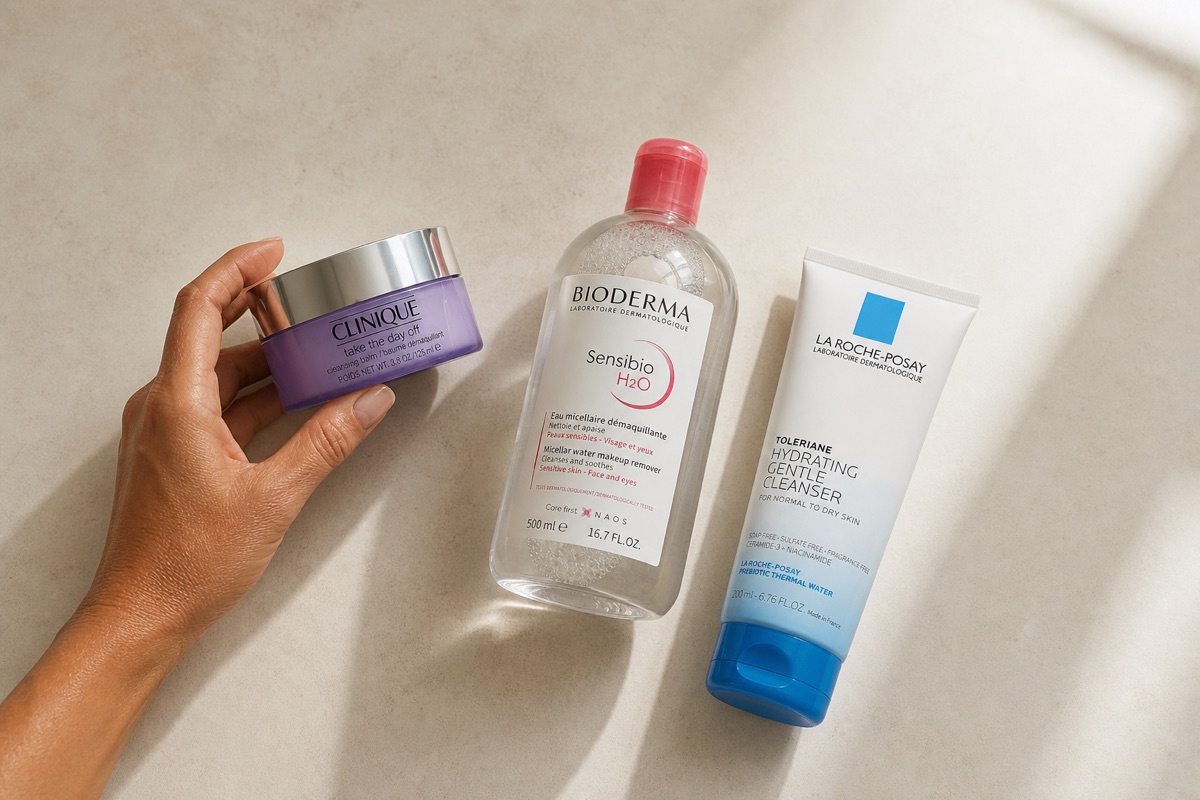
Clinique
Clinique Take The Day Off Cleansing Balm
$44
"Best first cleanse for long-wear makeup and sunscreen in this protocol: Amazon lists 4.7/5 across 6,935 ratings."

Bioderma
Bioderma Sensibio H2O Micellar Water
$19.99
"Best low-mess first cleanse for lighter makeup days, with 4.7/5 across 57,861 Amazon ratings."

La Roche-Posay
La Roche-Posay Toleriane Hydrating Gentle Face Cleanser
$19.99
"Best gentle second cleanse for normal-to-dry mature skin; Amazon lists 4.6/5 across 38,430 ratings."
What you'll learn
- Double cleanse only when there is something meaningful to remove, such as mineral sunscreen, water-resistant SPF, long-wear foundation, or heavy eye makeup.
- After 40, the second cleanse should be gentle and brief because over-cleansing can make dullness, tightness, and retinoid dryness look worse.
- Use balm, oil, or micellar water as the first step, but do not treat the first cleanse as a facial massage that lasts several minutes.
- Hormonal acne-prone skin still needs residue removal, but it benefits from low-friction cleansing more than from squeaky, stripped skin.
- If skin feels tight 10 minutes after washing, reduce cleansing time, skip the morning cleanser, or switch the second cleanse before adding another active.
Steps
-
1 Decide whether tonight actually needs two cleanses
Use two cleanses when you wore water-resistant sunscreen, mineral SPF, long-wear foundation, heavy concealer, sweat-resistant tint, or eye makeup. Use one gentle cleanse when you stayed indoors with light moisturizer or non-water-resistant sunscreen. The goal is residue removal, not proving discipline.
-
2 Choose a first cleanse by residue type
Pick a balm or oil for tenacious sunscreen, long-wear makeup, and mascara. Pick micellar water for lighter makeup, quick sunscreen removal, or nights when you dislike balm texture. Keep cotton pressure light if you use micellar water around the eyes.
-
3 Emulsify, rinse, and keep friction low
Massage the first cleanser with fingertips, add water until it turns milky if the formula emulsifies, then rinse. Keep the massage under about 60 seconds. Longer rubbing is not better for mature skin that is already dry, reactive, or retinoid-adjusting.
-
4 Use a gentle second cleanser only where needed
Follow with a low-foam or hydrating cleanser, especially around the hairline, jaw, and sides of the nose where residue can linger. Avoid hot water, cleansing brushes, gritty scrubs, and the squeaky-clean finish that often signals too much surfactant exposure.
-
5 Moisturize quickly and adjust by morning feedback
Apply moisturizer while skin is still slightly damp. The next morning, check for tightness, new flaking, shiny dehydration, or makeup catching on rough patches. If those appear, shorten the routine before adding acids, retinoids, or more cleansing steps.
Bottom line
Double cleansing after 40 is useful when it solves a real residue problem: water-resistant sunscreen, mineral SPF, long-wear foundation, heavy concealer, eye makeup, or a day of sweat and reapplication. It becomes counterproductive when it turns into two full face washes every night regardless of what was on your skin.
BeautySift did not test cleansers on a panel. We analyzed Amazon US listing snapshots for three protocol products, PubMed-indexed cleansing and barrier literature, AAD dry-skin guidance, official brand positioning, and INCI-level cleanser roles. We may earn a commission from Amazon links, but affiliate status does not influence product selection or evidence weighting.
The practical rule: first cleanse to loosen film, second cleanse to remove residue, then stop. Mature skin often has less room for aggressive cleansing because dullness, dehydration lines, and retinoid dryness can all look worse when the barrier is overworked, especially during dry winter weeks.
Why double cleansing changes after 40
In your 20s, a strong cleanser may feel like a clean slate. After 40, the same routine can leave skin tight, shiny, and dull by morning. That does not mean mature skin is fragile by default. It means the routine has to respect barrier lipids, hormonal dryness, retinoid use, lower humidity, and the reality that many women 35-55 wear daily sunscreen or complexion makeup.
A 2004 PubMed-indexed Dermatologic Therapy review on mild cleansing emphasizes that cleanser technology matters because surfactants can affect the skin barrier. A 2013 International Journal of Cosmetic Science paper on stratum corneum fatty acids also supports the same principle: barrier lipids matter during cleansing. Those papers do not prove that every person needs two cleansers. They support the more useful point that cleansing should remove what needs removal while minimizing barrier disruption.
Estrogen-related skin aging is another reason to avoid a stripped finish. A 2007 Clinical Interventions in Aging review discusses the relationship between estrogen and skin aging. For everyday skincare, that translates into a conservative cleansing approach: remove sunscreen and makeup thoroughly, but do not chase the squeaky feel.
The dos: how to double cleanse without stripping
Do start by asking what you wore. If you wore water-resistant SPF, mineral sunscreen, long-wear foundation, waterproof mascara, or multiple sunscreen layers, a first cleanse makes sense. If you wore only a lightweight moisturizer and stayed mostly indoors, one gentle cleanse may be enough.
Do match the first cleanse to the job. A balm such as Clinique Take The Day Off Cleansing Balm is useful when sunscreen and long-wear makeup need slip. Amazon lists this balm at 4.7/5 across 6,935 ratings in the snapshot we analyzed, and the listing positions it for face, eye makeup, and sunscreen removal. Its role is not anti-aging treatment; its role is dissolving film so the second cleanse can be brief.
Do use micellar water strategically. Bioderma Sensibio H2O is not a spa step; it is a low-mess first cleanse for lighter makeup, travel, or nights when balm texture feels like too much. Amazon lists it at 4.7/5 across 57,861 ratings, the largest rating footprint among the three products in this protocol. Use soft pads, press briefly, and avoid dragging cotton back and forth around the eyes.
Do keep the second cleanse boring. La Roche-Posay Toleriane Hydrating Gentle Face Cleanser fits the second-cleanse slot because the US brand page positions it as fragrance-free and made with ceramide-3 and niacinamide, while Amazon lists it at 4.6/5 across 38,430 ratings. The point is not foam volume. The point is removing loosened residue without making cheeks feel tight.
The don’ts: mistakes that make mature skin look duller
Do not double cleanse every morning. Morning cleansing is optional. If your skin feels dry, a water rinse followed by moisturizer and sunscreen may be better. Cleanse in the morning when you wake up oily, used a heavy ointment, sweat overnight, or need a clean surface for sunscreen.
Do not turn the first cleanse into a long facial massage. About 30 to 60 seconds is enough for most balm, oil, or micellar first cleanses. More time can mean more friction, especially around the mouth, nose, and eyes. Mature skin that is already using retinoids or acids does not need an endurance event at the sink.
Do not use hot water to make balm feel cleaner. Lukewarm water is enough. Hot water can make the routine feel more thorough while leaving skin flushed or tight. If you need hot water to remove a product, the cleanser may not be emulsifying well enough for your skin or your makeup load.
Do not pair double cleansing with scrubby tools. Washcloths, cleansing brushes, silicone devices, and gritty scrubs can be too much when combined with two cleanser steps. If you want mild exfoliation for dullness, place it on a separate night and keep cleansing simple.
A simple night protocol for sunscreen and makeup days
Start with dry hands and a dry face if you are using balm. Scoop a small amount, massage over cheeks, forehead, nose, jaw, and sunscreen-heavy areas. Add water and keep massaging briefly until the balm turns milky, then rinse well. For micellar water, saturate a soft pad, press for a few seconds on makeup areas, swipe lightly, and repeat only if the pad is still picking up visible product.
Follow with a gentle cleanser for the hairline, jaw, sides of the nose, and anywhere sunscreen tends to cling. Use fingertips, not nails. Rinse until the skin feels clean but not squeaky. Pat dry; do not rub with a towel.
Moisturize while skin is slightly damp. If you use retinol, apply it only if your skin feels calm after cleansing. If your face is stinging, red, or tight, make that a recovery night instead: moisturizer only, no retinoid, no acid, no peel pad.
This approach supports both dullness and hormonal-acne concerns. Dullness often looks worse when cleanser leaves the surface dehydrated. Hormonal acne-prone areas, especially jawline and chin, can benefit from better residue removal, but they rarely benefit from harsh scrubbing.
How to choose your first cleanse
Choose balm if you wear mineral sunscreen, long-wear base makeup, or waterproof eye makeup. Balm gives slip, which can reduce rubbing when used correctly. Clinique is the higher-price option in this set at the Amazon snapshot we reviewed, but its role is specific: tenacious sunscreen and makeup removal.
Choose micellar water if you wear light sunscreen, tinted moisturizer, or mascara that removes easily. Bioderma Sensibio H2O is the simplest option for people who dislike balm residue. The caution is cotton pressure. If you need multiple hard passes to remove makeup, switch to balm rather than scrubbing with pads.
Choose a gentle water-based cleanser for step two, not another aggressive treatment cleanser. A salicylic acid or exfoliating cleanser may fit some acne routines, but it is not the default second cleanse after 40. If you are already using retinoids, vitamin C, or exfoliating acids, keep the cleanser bland so your leave-on products do the active work.
What to change if your skin feels tight
Tightness 10 minutes after washing is feedback. First, shorten the first cleanse. Second, use less second cleanser and focus it only where residue remains. Third, lower water temperature. Fourth, skip morning cleanser for one week and compare how sunscreen and makeup sit.
If tightness persists, switch the second cleanser before buying a stronger serum. AAD dry-skin guidance emphasizes gentle care and moisturizing after cleansing; that advice is especially relevant when women over 40 are layering SPF, retinoids, vitamin C, and exfoliation in the same week.
If your skin burns with bland moisturizer, flakes around the mouth, or suddenly reacts to products that used to be fine, pause optional actives for 7 to 14 days. Use cleanser, moisturizer, and sunscreen only. If symptoms are painful, swollen, spreading, crusted, or persistent, treat that as a medical question rather than a shopping problem.
Product roles in this protocol
For the first cleanse on heavy sunscreen or makeup days, Clinique Take The Day Off Cleansing Balm is the balm option. It is best for people who want slip and do not want to rub at mascara, sunscreen, or long-wear base makeup.
For lighter nights, Bioderma Sensibio H2O is the micellar option. It is best for quick removal of everyday sunscreen or makeup, especially when you are not wearing a heavy water-resistant base. Rinse or follow with a gentle cleanser if you dislike micellar residue.
For the second cleanse, La Roche-Posay Toleriane Hydrating Gentle Face Cleanser is the gentle cleanser option. It is best for normal-to-dry or sensitivity-prone mature skin that wants clean skin without a tight foam finish.
You do not need all three if your routine is minimal. Pick one first-cleanse format and one gentle second cleanser. The win is consistency without irritation, not a crowded sink.