Estrogen-Free Skincare Lines Ingredient Checklist for Dryness and Fine Lines
A practical estrogen-free skincare ingredient checklist for women after 40, focused on dryness, fine lines, barrier repair, SPF, and slow active use.
Based on 8 sources including a 2021 PubMed menopause-skin review, Kafi 2007 retinol data in 36 adults, Bissett 2005 niacinamide data in 50 women, FDA sunscreen guidance, and 3 Amazon snapshots totaling 16,154 ratings, an estrogen-free skincare line should prioritize glycerin, ceramides, hyaluronic acid, niacinamide, peptides, retinol used slowly, and broad-spectrum SPF.
Editor's top Amazon picks for this guide
Real Amazon products that match this protocol. Affiliate links — your purchases support BeautySift.

Neutrogena
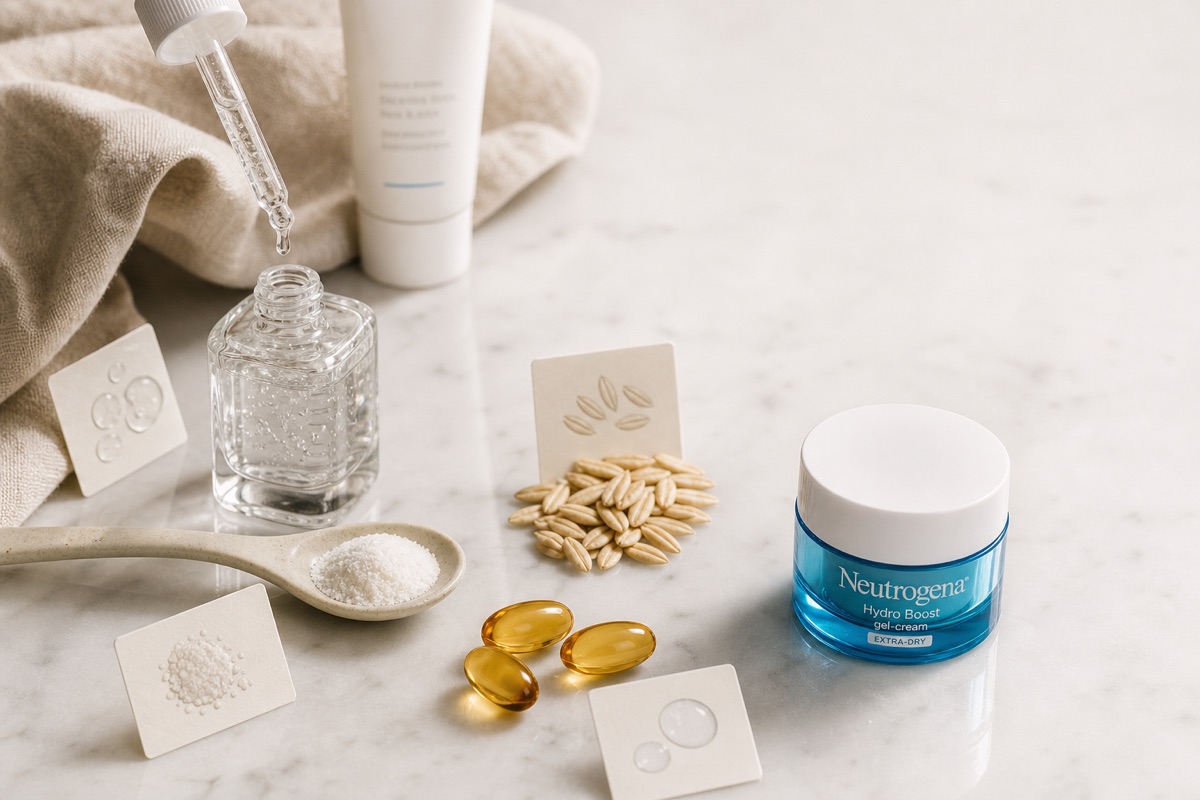
Neutrogena Hydro Boost Gel-Cream Extra-Dry
$9.97
"Fragrance-free hyaluronic acid gel-cream that fits the humectant step in an estrogen-free dryness routine."
What real Amazon buyers say
4.6★· 7,352 reviews"This cream/gel does not sting or irritate and always is SO soothing to my skin. The gel formula effortlessly is absorbed by the skin and is lightweight yet incredibly moisturizing."

Eucerin
Eucerin Q10 Anti-Wrinkle Face Cream
$12.89
"Unscented mature-skin moisturizer with coenzyme Q10 positioning for shoppers who want a simple non-hormonal cream."
What real Amazon buyers say
4.6★· 8,358 reviews"It glides easily and absorbs quickly. After 4 weeks of consistent use I see a difference."

RoC
RoC Retinol Correxion Deep Wrinkle Night Cream
$21.97
"Estrogen-free retinol night cream option for the slow fine-line step after a barrier baseline is comfortable."
What real Amazon buyers say
4.4★· 444 reviews"I have used this product for years and I can tell a difference when I stop using it."
What you'll learn
- Estrogen-free skincare should mean no estriol, estradiol, estrogen, compounded hormone actives, or hormone-treatment claims on the label.
- For dryness and fine lines after 40, the strongest non-hormonal routine starts with barrier support before retinoids or exfoliating acids.
- Look for glycerin, hyaluronic acid, ceramides, dimethicone, petrolatum, niacinamide, peptides, retinol, and broad-spectrum sunscreen.
- Avoid vague hormone-adjacent marketing, undisclosed botanical complexes, fragrance-heavy creams, harsh scrubs, and too many new actives at once.
- Use the product examples as routine roles, not proof that one brand line is medically better than another.
Steps
-
1 Step 1: Screen the line for hormone language first
Before comparing textures or prices, read the front label, product page, and ingredient list for estriol, estradiol, estrogen, compounded hormone language, or claims that imply a cosmetic product treats menopause symptoms. Estrogen-free does not mean ingredient-free or anti-science; it means the line is using non-hormonal cosmetic routes for dryness, fine lines, tone, and comfort.
-
2 Step 2: Confirm the barrier base
A credible estrogen-free line for dry, mature skin should include a boring moisturizer role: glycerin, hyaluronic acid, ceramides, cholesterol, fatty alcohols, squalane, dimethicone, petrolatum, or panthenol. The 2021 PubMed menopause-skin review describes estrogen-deficient skin as more prone to dryness and barrier change, so barrier architecture is the foundation, not an optional add-on.
-
3 Step 3: Add one evidence-backed bridge active
Niacinamide is often the easiest bridge active because it can support tone, texture, and barrier comfort without being a hormone. Bissett 2005 studied 5% niacinamide in 50 women for 12 weeks and reported improvements in wrinkles, spots, blotchiness, sallowness, and elasticity. If a cream already contains niacinamide, do not automatically add a second niacinamide serum.
-
4 Step 4: Treat retinol as a slow fine-line tool
Retinol is estrogen-free, but it is not automatically gentle. Kafi 2007 followed 0.4% retinol in 36 adults for 24 weeks, which supports a months-long view of fine-line care. Choose a line with a clear retinol step, use it 1 to 2 nights weekly at first, and buffer with moisturizer if dryness, flaking, or stinging appears.
-
5 Step 5: Require daily broad-spectrum sunscreen
No ingredient checklist is complete without SPF. FDA guidance says broad-spectrum sunscreen should be applied before sun exposure and reapplied at least every 2 hours outdoors. If a line sells actives but no practical daytime SPF plan, the routine is incomplete for fine lines, discoloration, and collagen-supportive prevention.
-
6 Step 6: Reject the common irritation traps
Be cautious with fragrance-heavy creams, physical scrubs, frequent acid pads, essential oils, and multiple new serums in the same week. Dry perimenopausal skin often reads irritation as tightness, redness, or makeup separation. Change one variable every 2 to 4 weeks so you can identify the product that helped or hurt.
-
7 Step 7: Match the line to your climate and tolerance
A gel-cream may be enough in Florida summer humidity but feel too light during Midwest winter cold or Southwest dryness. If skin is tight by noon, add a richer cream or petrolatum patch layer instead of immediately escalating actives. If sunscreen stings, simplify the morning routine and try a different SPF base.
Bottom line
An estrogen-free skincare line for dryness and fine lines should be judged by its ingredient architecture, not by how loudly it markets to women over 40. The best checklist is simple: no estriol, estradiol, estrogen, or compounded hormone actives; a barrier-repair base; a humectant layer; a tolerable daytime SPF plan; and only one or two evidence-backed actives added slowly.
BeautySift did not test these products on a panel. We analyzed PubMed-indexed dermatology literature, FDA sunscreen guidance, official US product pages, INCI logic, and Amazon review snapshots for representative products. The three featured products are examples of routine roles that fit an estrogen-free protocol. We may earn a commission from Amazon links, but affiliate status does not affect the evidence weighting.
What estrogen-free means on an ingredient list
Use the term narrowly. Estrogen-free should mean the product does not list estriol, estradiol, estrogen, prescription hormone actives, or compounded hormone language. It should not mean avoiding every mature-skin product, peptide, humectant, botanical, or antioxidant. Many cosmetics for women after 40 are non-hormonal; they address visible dryness, fine lines, dullness, and texture through barrier repair and surface hydration.
The first pass is a label screen. Read the ingredient list, product description, and claims. If a product says it contains estriol or frames itself as hormone replacement for skin, it is not the same category as an over-the-counter moisturizer. If it says fragrance-free moisturizer with hyaluronic acid, ceramides, niacinamide, retinol, or sunscreen, it can still fit an estrogen-free routine.
This distinction matters because the 2021 PubMed review on menopause and skin describes real skin changes around estrogen deficiency, including dryness and visible aging concerns. That does not mean every shopper needs topical estrogen. It means a non-hormonal skincare line has to work harder on the basics: water binding, barrier lipids, reduced irritation, and photoprotection.
The barrier checklist: what should be in the base line
For dry skin after 40, the moisturizer step should not be an afterthought. Look for at least two of these categories in the line: humectants such as glycerin or hyaluronic acid; emollients such as squalane, caprylic/capric triglyceride, or fatty alcohols; barrier lipids such as ceramides, cholesterol, or fatty acids; and occlusive support such as dimethicone or petrolatum.
A line can be elegant and still fail the barrier test if it is mostly fragrance, acids, and glow claims. Tight cheeks, crepey texture, and makeup that separates by afternoon often point to dehydration and barrier stress before they point to a need for stronger exfoliation. The 2024 PubMed xerosis study on topical hyaluronic acid in older adults supports HA as a hydration tool, but HA works best inside a complete routine. If a humectant serum leaves your face tighter after 20 minutes, it probably needs cream over it.
Neutrogena Hydro Boost Gel-Cream Extra-Dry is included as a humectant example because the brand’s US product page identifies the formula as fragrance-free and hyaluronic-acid based, and the Amazon US snapshot cited here shows 4.6/5 across 7,352 ratings. That does not make it the only good option. It shows the role: a water-binding layer that can sit under a richer cream or sunscreen.
The fine-line checklist: niacinamide, peptides, and retinol
Once the barrier base is comfortable, evaluate the line’s fine-line ingredients. Niacinamide is a useful bridge because it is non-hormonal and has peer-reviewed cosmetic support. Bissett 2005 studied 5% niacinamide in 50 women for 12 weeks and reported improvements in wrinkles, spots, blotchiness, sallowness, and elasticity. That makes niacinamide a stronger choice than vague “menopause glow complex” language with no disclosed active level or research trail.
Peptides can also fit an estrogen-free line, but claims should stay cosmetic. Look for straightforward peptide language paired with moisturizer architecture, not promises that sound medical or hormonal. Peptides are often best treated as supporting ingredients: nice to have when the base formula is already fragrance-free, non-stinging, and compatible with sunscreen.
Retinol deserves the most caution. It is estrogen-free and relevant for fine lines, but dryness-prone skin may not tolerate nightly use. Kafi 2007 studied 0.4% retinol in 36 adults over 24 weeks, which is a reminder that retinoid results are slow. A reasonable line gives you a retinol step and a buffer step, not just a high-intensity night cream with instructions to use it every evening from day one.
RoC Retinol Correxion Deep Wrinkle Night Cream is included as a slow-retinol example, not as a mandate. The Amazon snapshot cited here shows 4.4/5 across 444 ratings. The role is specific: introduce after the moisturizer baseline feels calm, use 1 to 2 nights weekly, and stop increasing if flaking, burning, or new sensitivity appears.
The sunscreen checklist: non-hormonal prevention still matters
A line that talks about fine lines but ignores sunscreen is incomplete. FDA guidance says broad-spectrum sunscreen should be applied before sun exposure and reapplied at least every 2 hours outdoors. That is a practical benchmark for any routine that includes retinol, niacinamide, exfoliating acids, or brightening products.
For women 35-55, texture matters because the sunscreen you dislike will not be used consistently. If chemical sunscreens sting, try a mineral or hybrid formula. If mineral formulas look chalky, look for tinted options in your skin tone range. If Florida summer humidity makes creams slide, use a lighter morning moisturizer and save richer cream for night. If Southwest dryness or Midwest winter cold makes skin tight, layer humectant, cream, and SPF rather than skipping moisturizer.
Do not treat SPF as optional because the routine is estrogen-free. Sunscreen is not a hormone, and it is one of the few daily steps with strong public-health guidance from the FDA. It also protects the investment you make in retinol and tone-evening ingredients.
Red flags when shopping estrogen-free lines
The biggest red flag is vague hormone-adjacent language without a transparent ingredient list. Phrases like “hormone-balancing skin technology” or “menopause reset” deserve scrutiny, especially if the product does not clearly disclose actives. A cosmetic can be designed for menopausal skin without claiming to treat hormones.
The second red flag is irritation disguised as activity. Strong tingling, burning, peeling, or a red shine are not proof that a product is working. They are signs to slow down. Fragrance, essential oils, frequent acid pads, scrubs, and stacked retinoids can make perimenopausal dryness look worse because inflamed skin reflects light unevenly and loses comfort faster.
The third red flag is buying a full line at once. A cleanser, toner, essence, serum, cream, oil, mask, and retinol may be too many variables. If something goes wrong, you will not know which product caused it. Start with cleanser if needed, moisturizer, and sunscreen. Then add one active category every 2 to 4 weeks.
A practical ingredient checklist to save before buying
Start with the no list: no estriol, no estradiol, no estrogen, no compounded hormone actives, no hormone-treatment claims, and no hidden proprietary complex standing in for a real ingredient panel. If your medical history makes hormone-adjacent botanicals a concern, discuss that category with a clinician instead of guessing from marketing copy.
Then look for the yes list. For dryness: glycerin, hyaluronic acid, panthenol, ceramides, cholesterol, fatty acids, squalane, dimethicone, petrolatum, or colloidal oatmeal. For fine lines: daily broad-spectrum SPF, niacinamide, retinol used slowly, peptides, and antioxidants where tolerated. For sensitive skin: fragrance-free, dye-free where possible, and fewer essential oils.
Finally, score the line by routine fit. Does it offer a moisturizer you can use twice daily? Does the daytime plan include SPF? Does the active step have a lower-frequency path? Does the brand explain ingredients in plain English? Does the price allow consistent use? A $15 cream you can use every night may beat a $95 serum you ration.
Eucerin Q10 Anti-Wrinkle Face Cream is included as a simple budget cream example because the Amazon snapshot cited here shows 4.6/5 across 8,358 ratings and the product role is easy to understand: an unscented mature-skin moisturizer, not a hormone treatment. For some shoppers, that kind of clarity is more useful than a crowded line with five overlapping serums.
How to build the first 30 days
For days 1 through 14, keep the routine boring. Morning: gentle cleanse or water rinse, moisturizer if needed, and broad-spectrum sunscreen. Evening: gentle cleanse and moisturizer. If skin cracks around the nose or lips, use a thin petrolatum-style patch only on the dry spot. Do not add retinol or acid exfoliants while the barrier is actively stinging.
For days 15 through 30, add only one active if the baseline is comfortable. Choose niacinamide if the main issues are uneven tone, blotchiness, or barrier support. Choose retinol if fine lines are the priority and your skin is not already peeling. Use retinol 1 to 2 nights weekly, not nightly, and keep sunscreen consistent the next morning.
If irritation appears, simplify rather than shopping again. Stop the newest active, return to moisturizer and sunscreen, and wait until comfort returns. If dryness is severe, sudden, painful, bleeding, or rash-like, treat it as a medical question rather than a content-shopping problem.