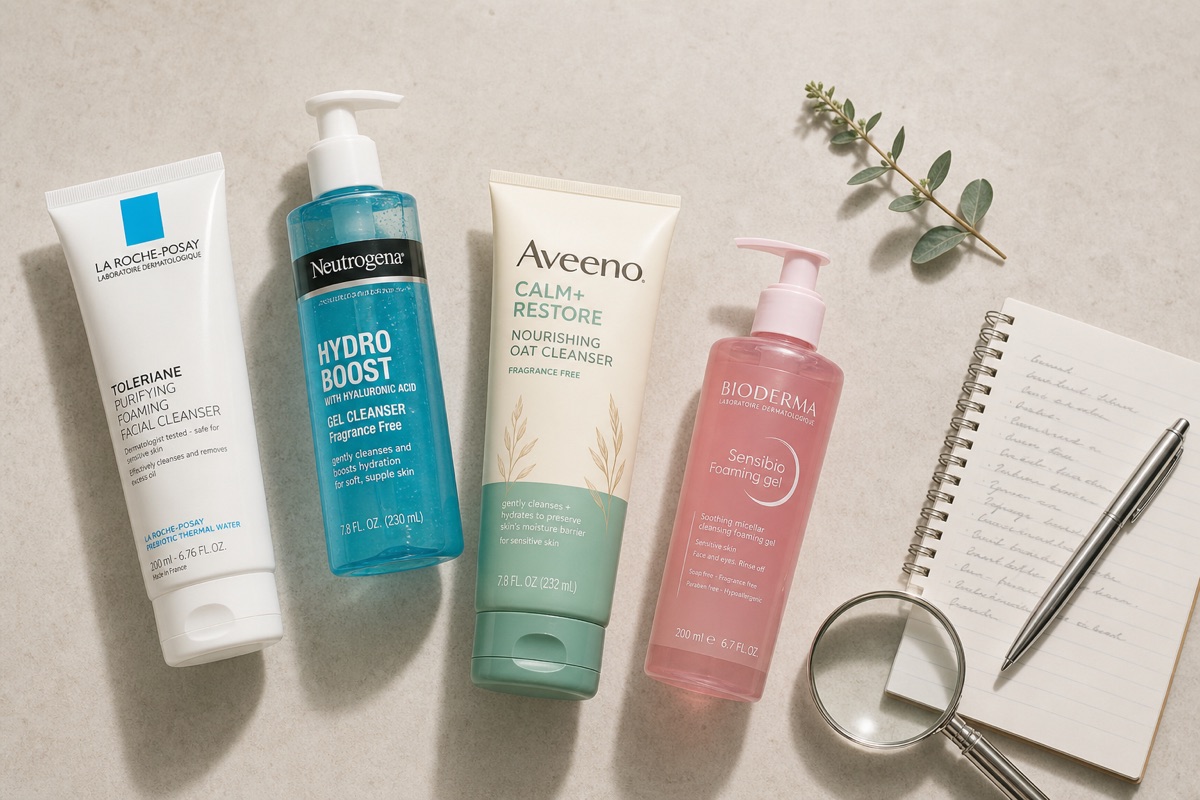
Face Cleansers Gel for Beginners: A Starter Guide
An evidence-led beginner guide to choosing and using gel face cleansers for hormonal-acne-prone, mature, or combination skin.
We analyzed 86,166 Amazon US rating snapshots across 4 gel or gel-adjacent facial cleansers, FDA OTC acne guidance, and 3 PubMed-indexed cleanser papers. For beginners, start with one fragrance-free, non-scrubby gel cleanser once nightly, then adjust by dryness, sunscreen wear, and hormonal breakout patterns.
Editor's top Amazon picks for this guide
Real Amazon products that match this protocol. Affiliate links — your purchases support BeautySift.

La Roche-Posay
La Roche-Posay Toleriane Purifying Foaming Facial Cleanser
$19.99
"Best beginner option for normal-to-oily or hormonal-acne-prone skin: 4.7/5 across 48,847 Amazon ratings and a niacinamide plus ceramide positioning on the US brand page."
What real Amazon buyers say
4.7★· 48,847 reviews"I usually use it at night, and I start by removing my makeup with micellar water, then use this cleanser in the shower, followed by moisturizer."
Neutrogena
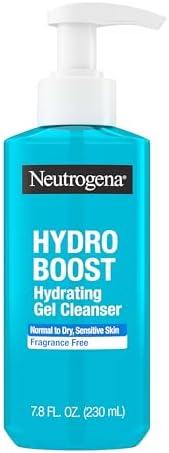
Neutrogena Hydro Boost Fragrance Free Gel Cleanser
$9.99
"Best budget gel texture for beginners who want fragrance-free cleansing and a soft hydrated finish; 4.7/5 across 5,065 Amazon ratings."
What real Amazon buyers say
4.7★· 5,065 reviews"What I love the most is that it gently removes dirt, oil, and even makeup without leaving my skin feeling tight or dry."

Aveeno
Aveeno Calm + Restore Nourishing Oat Cleanser
$9.97
"Best non-foaming starter cleanser for sensitive or dry-leaning mature skin; 4.5/5 across 9,840 Amazon ratings."
What real Amazon buyers say
4.5★· 9,840 reviews"It does keep my skin soft so that is a plus. It's a pretty thin consistency, super easy to apply. It has no smell as well."

Bioderma
Bioderma Sensibio Foaming Gel
$22.99
"Best larger-size foaming gel for sensitive-skin households; 4.7/5 across 22,414 Amazon ratings."
What you'll learn
- A beginner gel cleanser should clean sunscreen, oil, and light makeup without leaving skin tight, shiny, squeaky, or flushed afterward.
- For hormonal-acne-prone skin, cleansing supports the routine but does not replace regulated acne actives such as benzoyl peroxide or salicylic acid.
- Start once nightly for 7 to 14 days before adding a morning cleanse, exfoliating cleanser, retinoid, or separate acne treatment.
- Women 35-55 often need a cleanser that respects barrier comfort because perimenopause, retinoids, and winter indoor heat can all increase dryness.
- Choose fragrance-free formulas first if your skin stings easily, then adjust by texture: gel for oily zones, non-foaming gel-cream for dryness.
Steps
-
1 Pick one low-risk gel cleanser first
Choose a fragrance-free or low-fragrance cleanser with a gel, gel-cream, or soft-foaming texture. Avoid scrubs, daily exfoliating acids, strong fragrance, and cleanser claims that sound like treatment promises. A cleanser is a short-contact product; its first job is removing sunscreen, oil, and debris without disrupting comfort.
-
2 Use it once nightly for the first 7 to 14 days
Begin at night because that is when sunscreen, sweat, and makeup need removal. Massage for about 20 to 30 seconds with lukewarm water, then rinse fully and apply moisturizer. If skin feels tight within 10 minutes, scale back to a gentler cleanser or use less product.
-
3 Add a morning cleanse only if oil or residue requires it
Morning cleansing is optional. If your skin is dry, rinsing with water may be enough. If hormonal breakouts cluster around the chin or jaw and you wake up oily, a small amount of the same cleanser can help remove overnight oil before sunscreen.
-
4 Separate cleansing from acne treatment
If you need benzoyl peroxide, adapalene, or salicylic acid, introduce it as a separate step after your cleanser habit is stable. FDA acne-drug guidance treats acne actives as drug ingredients, while a basic gel cleanser should be judged mainly on cleansing and tolerability.
-
5 Reassess after two weeks
After 14 days, keep the cleanser if skin is clean but comfortable. Switch if you see repeat stinging, new flaking, tightness after every wash, or makeup that still does not come off. Beginners do better with one controlled change at a time than with a full routine reset.
Quick answer
Based on 86,166 Amazon US ratings across 4 gel or gel-adjacent cleansers, 3 PubMed-indexed cleanser papers, and FDA OTC acne guidance, a beginner gel cleanser should be gentle first and acne-adjacent second. Use it once nightly for 7 to 14 days before adding more actives. If your skin feels clean but not tight, you picked well.
For US women 35-55, this matters because the old “oilier skin needs a stronger wash” rule often backfires. Hormonal chin breakouts, perimenopausal dryness, retinoid use, sunscreen layers, and Midwest winter indoor heat can all exist on the same face. A cleanser that strips the cheeks may still leave the jawline breakout-prone, which is why this guide starts with barrier respect rather than squeaky-clean intensity.
What a gel cleanser can and cannot do
A gel cleanser is a rinse-off product built around surfactants, the ingredients that help water lift away oil, sunscreen, makeup residue, and daily grime. In cleanser literature, including Draelos 2018 in the Journal of Cosmetic Dermatology, the key tradeoff is cleansing efficiency versus barrier disruption. More foam is not automatically better. More tightness is not proof that pores are cleaner.
For hormonal acne, a gel cleanser can support the routine by lowering residue and making leave-on treatments easier to tolerate. It cannot correct the hormonal drivers behind cyclic jawline breakouts. The FDA OTC acne-drug products page is a useful boundary: acne actives such as benzoyl peroxide and salicylic acid are regulated separately from cosmetic cleansers. If a basic cleanser makes treatment-like promises but does not name a regulated acne active, treat that as marketing, not evidence.
This is also why we weighted tolerability heavily in the product examples. La Roche-Posay Toleriane Purifying Foaming Facial Cleanser has the largest Amazon rating base in this guide, with 48,847 ratings and a 4.7/5 snapshot. Neutrogena Hydro Boost Fragrance Free Gel Cleanser offers a budget gel route with 5,065 Amazon ratings at 4.7/5. Aveeno Calm + Restore is not a classic foaming gel, but its non-foaming gel-cream feel earns a place for beginners whose cheeks run dry or reactive.
Step 1: Choose your starting texture
Start by matching texture to your most common post-cleanse problem.
If your T-zone is oily by lunch, sunscreen feels heavy, or hormonal breakouts cluster around the chin, a soft-foaming gel can make sense. La Roche-Posay Toleriane Purifying Foaming Facial Cleanser and Bioderma Sensibio Foaming Gel fit this role because both sit in the gentle foaming category and have large Amazon review bases: 48,847 ratings for La Roche-Posay and 22,414 for Bioderma in our May 2026 snapshot.
If your cheeks feel tight after almost every wash, start gentler. A non-foaming cleanser such as Aveeno Calm + Restore Nourishing Oat Cleanser may be a better first step than a classic gel. The Amazon listing showed 9,840 ratings at 4.5/5, and the product’s fragrance-free, sensitive-skin positioning aligns with the “reduce irritation first” approach in cleanser literature.
If cost is the main barrier, Neutrogena Hydro Boost Fragrance Free Gel Cleanser is the straightforward budget pick in this protocol. The Amazon snapshot showed 4.7/5 across 5,065 ratings at $9.99. It gives beginners a fragrance-free gel cleanser to test before moving into more expensive derm-brand formulas.
Step 2: Use the cleanser once nightly
For the first 7 to 14 days, cleanse at night only unless you clearly wake up oily. This gives you a clean read on how the formula behaves without over-cleansing. Use lukewarm water, apply a small amount, massage for 20 to 30 seconds, rinse well, and apply moisturizer while skin is still slightly damp.
Do not judge the cleanser by how aggressively it foams. The PubMed-indexed review on soaps and syndets emphasizes that cleansing systems differ in how they interact with the barrier; a milder surfactant system can still clean effectively. Your practical signal is the 10-minute check: after cleansing and before moisturizer, does your face feel comfortable, slightly fresh, and calm? Or does it feel tight, shiny, itchy, or flushed?
If tightness appears every time, use less cleanser, shorten massage time, or switch to a non-foaming option. If sunscreen remains, do not scrub longer. Use a separate first cleanse on sunscreen-heavy days, then follow with your gentle gel cleanser. That keeps removal efficient without turning a basic face wash into a friction problem.
Step 3: Keep acne treatment separate
Beginners often buy an acne cleanser, exfoliating toner, retinoid, and spot treatment in the same week. That makes it hard to know what is helping and what is irritating. For hormonal-acne-prone skin, start with the cleanser alone, then add one leave-on active only after your skin feels stable.
This is especially important for women in their 40s and 50s who use retinol, prescription retinoids, vitamin C, or exfoliating acids. A cleanser with a simple job gives those leave-on products room to work. If you wash with a harsh or exfoliating cleanser and then apply retinoid, the combined irritation can look like “purging” even when your barrier is simply overwhelmed.
A practical protocol: cleanse nightly for 7 to 14 days, moisturize, and use sunscreen every morning. If breakouts persist and your skin is not tight or burning, consider adding a regulated acne active. If breakouts are deep, painful, cyclic, or concentrated around the jawline, a dermatologist can discuss hormonal options that a cleanser cannot provide.
Step 4: Read your skin’s response, not the label
Labels such as “for oily skin,” “for sensitive skin,” and “for acne-prone skin” are useful starting points, but your skin’s response is the final filter. A cleanser is a good fit when it removes the day without changing your skin from flexible to squeaky.
Good signs include less residue after sunscreen, fewer clogged-feeling patches around the nose or chin, makeup removing more evenly, and no new tightness. Caution signs include burning around the mouth, flaking on the cheeks, shiny tight skin, new stinging when moisturizer is applied, or needing more product every few days because skin feels progressively oilier.
That last pattern is common: over-cleansed skin can feel dry and oily at the same time. In that case, do not move to a stronger gel. Move gentler, reduce morning cleansing, and make sure moisturizer is doing enough. For Southwest dryness or Midwest winter cold, even oily-leaning skin may need a less foamy cleanser for part of the year.
Evidence-weighted product notes
La Roche-Posay Toleriane Purifying Foaming Facial Cleanser is the best overall starter in this guide for normal-to-oily, sunscreen-wearing, hormonal-acne-prone routines. Its Amazon rating base is the strongest of the group at 48,847 ratings, and the US brand page positions it for normal to oily sensitive skin. Skip it if every foaming cleanser leaves your cheeks tight.
Neutrogena Hydro Boost Fragrance Free Gel Cleanser is the budget gel option. The $9.99 Amazon snapshot and 4.7/5 rating across 5,065 ratings make it a low-risk trial for beginners. It is the one to try when you want a gel feel but do not want fragrance or a prestige price.
Aveeno Calm + Restore Nourishing Oat Cleanser is the comfort pick. It is less of a classic foaming gel and more of a gentle, non-foaming cleanser, but that is exactly why it belongs in a beginner guide for mature skin. If retinoids, weather, or perimenopausal dryness make your skin unpredictable, this is the safer direction.
Bioderma Sensibio Foaming Gel is the larger-size sensitive-skin option. Its 22,414 Amazon ratings and 4.7/5 snapshot give it a broad user base, and the foaming gel format suits people who want a fresher rinse than a cream cleanser provides. As with any foaming product, watch the cheeks and mouth area first.
Beginner mistakes to avoid
Do not use a gel cleanser as makeup remover, acne treatment, and exfoliant all at once. Those are different jobs. If you wear long-wear foundation or water-resistant sunscreen, a first cleanse may be useful. If you need acne treatment, add a leave-on active after the cleanser habit is stable. If you want smoother texture, use exfoliation sparingly and not as a daily scrub.
Do not chase the highest foam. The cleanser literature we reviewed is consistent on the basic principle: mild cleansing is about removing unwanted material while minimizing barrier compromise. A cleanser that feels dramatic in the sink may be too much for daily mature skin.
Do not change cleansers every few days. Give a simple cleanser 7 to 14 days unless it burns, causes obvious rash, or leaves skin painfully tight. Skin routines become easier to troubleshoot when each change has enough time to show a pattern.
When to switch or ask for help
Switch cleansers if tightness, stinging, flaking, or redness repeats after most washes. Switch to a gentler non-foaming product if cheeks are dry but the T-zone is manageable. Switch to a soft-foaming gel if a creamy cleanser leaves sunscreen residue or makes the T-zone feel coated.
Ask a dermatologist about breakouts that are painful, cystic, scarring, rapidly worsening, or strongly cyclic around the jawline. A cleanser can support hormonal-acne care, but it cannot replace medical options when hormones, inflammation, or prescription-level acne are involved.