Hair Thinning Protocol for Perimenopause: Supplements, Topicals, and Scalp Care
An evidence-weighted perimenopause hair thinning protocol covering minoxidil, supplements, scalp care, and when dermatologist input matters.
Based on 4 PubMed-indexed hair-growth trials, AAD scalp guidance, and verified Amazon product pages, the strongest perimenopause hair thinning protocol starts with 5% minoxidil, adds dermatologist screening for ferritin or thyroid triggers, and uses supplements only when diet or stress factors fit.
Editor's top Amazon picks for this guide
Real Amazon products that match this protocol. Affiliate links — your purchases support BeautySift.

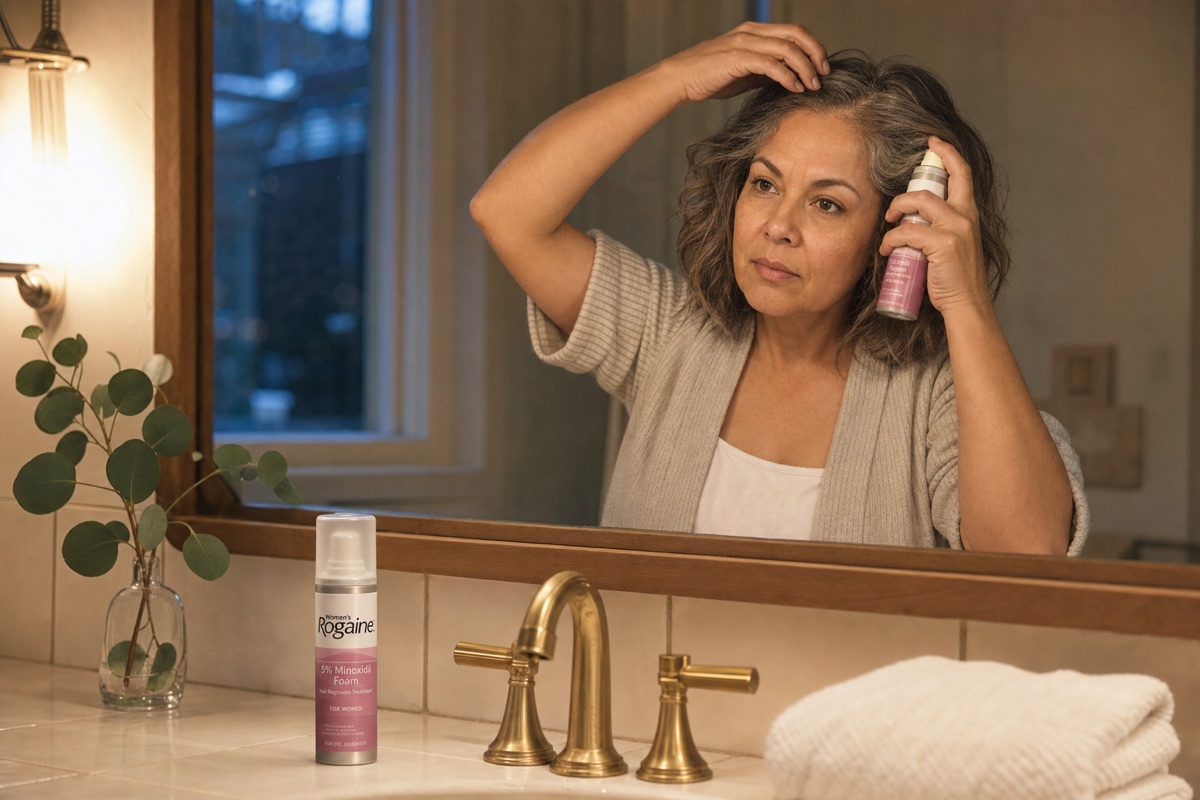
Rogaine
Women's Rogaine 5% Minoxidil Foam
"Best-supported OTC topical option because 5% minoxidil foam has randomized clinical evidence in women with pattern thinning."

hers
hers Hair Regrowth Treatment 5% Minoxidil Foam
"A 5% minoxidil foam alternative for shoppers who want a non-greasy topical format and can commit to long-term use."

Nutrafol
Nutrafol Women's Balance Hair Growth Supplements
"Most relevant supplement option for ages 45+ because the brand category has a perimenopause-focused randomized trial."

Nizoral
Nizoral Anti-Dandruff Shampoo with 1% Ketoconazole
"Useful supportive scalp-care step when flakes, itch, or seborrheic dermatitis signs overlap with shedding."

Viviscal
Viviscal Hair Growth Supplements for Women
"A marine-complex supplement option with adjacent randomized evidence, best framed as supportive rather than a minoxidil replacement."
What you'll learn
- Start with diagnosis: perimenopause can reveal female pattern thinning, but thyroid, iron, medication, stress, and inflammatory scalp triggers can look similar.
- Topical 5% minoxidil has stronger clinical support than shampoos, oils, or most supplements, but results usually require a 24-week mindset.
- Supplements are most defensible when they target a plausible nutrition, stress, or menopause-related pathway; they should not replace medical workup.
- Scalp care matters most when itch, flakes, oiliness, tenderness, or styling buildup is present; it supports the environment but does not regrow hair alone.
- Book a dermatologist promptly for sudden shedding, patchy loss, pain, scarring signs, or hair loss with heavy periods, fatigue, or weight changes.
Steps
-
1 Step 1: Sort the pattern before buying products
Look at the pattern first. A widening part, reduced ponytail circumference, and slow crown thinning fit female pattern hair loss; sudden handfuls of shedding after illness, stress, medication changes, or rapid weight loss may fit telogen effluvium; round patches, scalp pain, pustules, or scale need clinician review. The American Academy of Dermatology recommends evaluation because women can have overlapping triggers. In perimenopause, hormonal shifts can unmask androgen-sensitive follicles, but low ferritin, thyroid changes, vitamin D deficiency, and inflammatory scalp disease can travel with the same story.
-
2 Step 2: Make 5% minoxidil the topical anchor if pattern thinning fits
For non-pregnant adults with gradual female pattern thinning, 5% minoxidil foam is the best-supported OTC topical anchor. PubMed-indexed trials in 2011 and 2016 found once-daily 5% minoxidil foam effective for women, with the 2016 Phase III vehicle-controlled trial reporting improved scalp coverage and hair density over 24 weeks. Expect early shedding in some users, apply only to the scalp, wash hands after use, and keep it away from pets. If you stop after results appear, the maintained benefit usually fades.
-
3 Step 3: Add supplement support only when the rationale is clear
Supplements can be reasonable in perimenopause, but the evidence tier is lower than minoxidil. Nutrafol Women's Balance is the most directly relevant category example because a 2021 J Drugs Dermatol randomized placebo-controlled study specifically evaluated a nutraceutical in perimenopausal, menopausal, and postmenopausal women with thinning hair. Viviscal has randomized marine-complex evidence, though one PubMed-indexed six-month study we identified focused on men, so we treat it as adjacent support. Avoid stacking multiple hair supplements with overlapping biotin, selenium, iodine, or vitamin A without clinician input.
-
4 Step 4: Treat scalp inflammation as a separate lane
If your scalp is itchy, flaky, oily, tender, or coated with styling buildup, fix that lane while minoxidil does the growth work. A ketoconazole 1% shampoo such as Nizoral can help dandruff-prone scalps, while gentle fragrance-light cleansing and avoiding tight styles reduce irritation. Leave medicated shampoo on the scalp for the label-directed contact time, then condition the lengths. If scale is thick, painful, bleeding, or one-sided, stop self-treating and see a dermatologist.
-
5 Step 5: Build the 24-week tracking plan
Take the same three photos every month: center part, right temple, and crown under consistent lighting. Track shedding only once weekly because daily counts create noise. Minoxidil trials commonly use multi-month endpoints, so judge the protocol at 12 and 24 weeks rather than at week 3. If shedding accelerates after month 2, the part keeps widening by month 6, or scalp symptoms worsen, book a dermatologist instead of adding more products.
-
6 Step 6: Decide when dermatologist input is not optional
Dermatologist input matters early if hair loss is patchy, painful, scar-like, accompanied by eyebrow loss, or paired with fatigue, heavy bleeding, new acne, irregular periods, or rapid weight changes. Ask about ferritin, thyroid studies, vitamin D, medication review, androgen signs, and whether prescription options such as oral minoxidil or anti-androgen therapy are appropriate. These are medical decisions, not beauty-product upgrades.
The evidence-weighted protocol
Perimenopause hair thinning is frustrating because several triggers can stack at once: estrogen shifts, androgen sensitivity, low iron stores, thyroid changes, stress shedding, and scalp inflammation. The protocol below separates those lanes instead of treating every shed hair with another oil or supplement.
We may earn a commission from Amazon links, but affiliate availability does not affect the evidence ranking. Drug-level evidence, dermatologist guidance, and safety signals carry more weight than retailer popularity.
What to buy first, and what to delay
Start with a diagnosis-minded photo log and a 5% minoxidil foam if the pattern is gradual crown or part widening. Add a supplement only if the ingredient profile makes sense for your health context. Add a medicated shampoo only if flakes, itch, oiliness, or diagnosed dandruff is part of the picture.
Delay cosmetic thickening serums, scalp oils, and high-heat styling upgrades until the basics are stable. They may make hair look fuller, but they do not replace the evidence-backed growth lane.
Dermatologist input: the highest-ROI step
A dermatologist can check whether the shedding is female pattern hair loss, telogen effluvium, alopecia areata, traction alopecia, seborrheic dermatitis, or a scarring process. That distinction matters because the right plan can be completely different. For example, patchy autoimmune loss, scarring alopecia, and inflammatory scalp disease should not be managed as a supplement problem.
Ask specifically whether labs such as ferritin, thyroid-stimulating hormone, vitamin D, and androgen markers are appropriate for your history. Also ask whether your medications, recent illness, rapid weight change, or menstrual changes could explain the timeline.
Safety notes before starting
Do not use topical minoxidil if you are pregnant, trying to become pregnant, or breastfeeding unless your clinician specifically clears it. Keep minoxidil away from cats and dogs, apply it to the scalp rather than the hair, and stop if you develop chest pain, dizziness, swelling, or severe irritation.
For supplements, avoid the assumption that more is better. Biotin can interfere with some lab tests, iodine can matter for thyroid conditions, and botanicals can interact with medications. Bring the full label to a clinician if you have a medical condition or take prescriptions.
Related reading
More perimenopause coverage: /perimenopause
More guides: /guides/
Scalp-health concern page: /concerns/scalp-health