How to Use Biotin Supplements Without Fine-Line Makeup Creasing
A mature-skin guide to choosing and taking biotin supplements while keeping morning skincare and makeup from settling into fine lines.
We analyzed 4 Amazon US biotin and hair-supplement listings totaling 153,349 ratings, the NIH biotin fact sheet, an FDA biotin lab-test warning, and a 2017 PubMed review. Biotin is swallowed, not applied to lines; fine-line settling is managed by skincare prep, timing, and lighter base layers.
Editor's top Amazon picks for this guide
Real Amazon products that match this protocol. Affiliate links — your purchases support BeautySift.

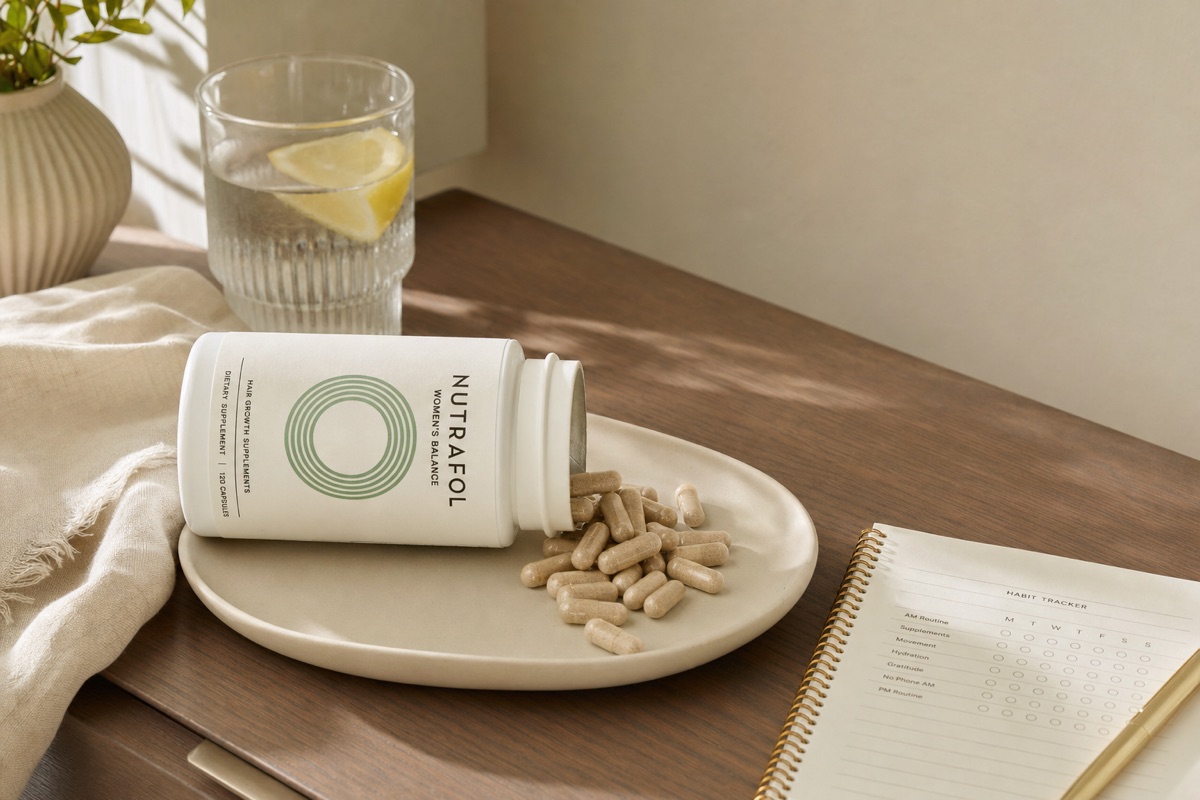
Nutrafol
Nutrafol Women's Balance Hair Growth Supplements
$88
"Best fit for shoppers 45+ comparing a hair-supplement formula positioned for menopausal life stage; Amazon US snapshot showed 4.2/5 across 15,715 ratings."
What real Amazon buyers say
4.2★· 15,715 reviews"I am a 64 year old female who is a biker. I had super thick hair up until menopause."
"After 5 surgeries in 18 months, I was warned I might suffer some hair loss from my anesthesiologist."

Viviscal
Viviscal Hair Growth Supplements for Women
$45.99
"Mid-price hair-supplement option with a large Amazon US review base; snapshot showed 4.3/5 across 30,010 ratings."
What real Amazon buyers say
4.3★· 30,010 reviews"I want to be as thorough as possible so you can make an informed decision."
"Within the first 6 months I noticed less hair loss in the shower and my hair brush."

Nature Made
Nature Made Maximum Strength Biotin 5000 mcg Softgels
$18.67
"Budget single-ingredient biotin option for shoppers who want a simpler supplement; Amazon US snapshot showed 4.7/5 across 7,846 ratings."
What real Amazon buyers say
4.7★· 7,846 reviews"Great health benefits and no side effects. Cant really taste it when taking the pill which is healthful."
"The softgels are small and easy to swallow, which makes them simple to add in"

Sports Research
Sports Research Biotin 10000 mcg with Organic Coconut Oil
$19.95
"High-review-count biotin softgel option; Amazon US snapshot showed 4.6/5 across 99,778 ratings, but disclose high-dose use before labwork."
What you'll learn
- Biotin supplements are swallowed with food or water; they should not be smoothed over fine lines like a serum, primer, or concealer.
- The 2017 PubMed review found the strongest biotin rationale in deficiency-linked cases, so hair-thinning shoppers should avoid assuming more milligrams means better results.
- The FDA warns that high-dose biotin can interfere with some lab tests, making clinician disclosure part of safe supplement use.
- Fine-line settling is managed with hydration, wait time, thin base layers, and flexible complexion products rather than by changing where biotin is placed.
- For mature skin, build the morning routine around moisture and restraint: one supplement dose, one moisturizer layer, one SPF layer, and sheer makeup where lines move.
Steps
-
1 Step 1: Choose a biotin format that fits your actual hair goal
Start by separating two questions: whether biotin is relevant to your hair-thinning concern, and whether your morning makeup is settling into lines. The 2017 PubMed review by Patel and colleagues found published benefit mainly when a person had documented deficiency or a specific hair or nail disorder, not as a universal thick-hair shortcut. For mature skin, that means a supplement can sit in your wellness routine, but your fine-line strategy still belongs in skincare and makeup prep.
-
2 Step 2: Take the supplement by mouth, preferably away from your makeup station
Biotin is a dietary supplement, not a topical filler. Take the capsule, tablet, gummy, or softgel according to the label with water or food, then put it away before skincare starts. This reduces the common error behind the query: treating a supplement as if it should be rubbed over smile lines, lip lines, or under-eye creases. Mature-skin tip: keep supplements separate from primer and SPF so oily softgel residue or gummy sugar does not transfer to the face.
-
3 Step 3: Disclose high-dose biotin before bloodwork
The FDA warns that biotin can interfere with some lab tests, including certain troponin assays. Many hair, skin, and nail supplements use far more than the daily amount listed in basic nutrition references, so tell your clinician and lab staff exactly what you take. Mature-skin tip: if you are in perimenopause or menopause and tracking thyroid, cardiac, or hormone-related labs, write the supplement name and dose in your phone instead of relying on memory.
-
4 Step 4: Prep fine-line zones with hydration, not extra slip
After the supplement is swallowed, cleanse or rinse as usual and apply a light hydrating layer. Look for glycerin, hyaluronic acid, panthenol, squalane, or ceramides in your usual skincare; these ingredients help skin look smoother under makeup without forcing a heavy occlusive film into expression lines. Mature-skin tip: press moisturizer around crow's feet, upper-lip lines, and smile lines, then wait 3 to 5 minutes before SPF so the base is cushioned but not wet.
-
5 Step 5: Apply sunscreen in a thin, even layer before complexion makeup
For daytime, SPF still comes before foundation or concealer. The line-settling mistake is using too much rich skincare, then immediately dragging foundation over it before the film has set. Apply sunscreen evenly, let it settle, and blot only obvious shine around the nose or mouth. Mature-skin tip: if mineral sunscreen catches in lines, warm it between fingers first and press rather than swipe over the most textured areas.
-
6 Step 6: Use less base where the face moves most
Fine-line settling usually happens because flexible areas receive too much pigment or powder. Use a sheer layer of skin tint or foundation on the center of the face, then tap leftover product over smile lines and the outer eye instead of adding a fresh pump. Byrdie's mature-skin makeup coverage emphasizes hydrating prep and flexible textures; that aligns with the technique we see repeated across editor guidance. Mature-skin tip: skip heavy baking under the eyes unless you are being photographed under strong lights.
-
7 Step 7: Audit the routine after 14 days, not after one rushed morning
Use the supplement consistently as directed, but judge makeup settling separately. For two weeks, keep the same moisturizer, SPF, and complexion product so you can tell whether creasing improves. Photograph the same fine-line area at midday in similar light. Mature-skin tip: if lines look smoother on days when you use less product, the fix is application restraint, not a stronger supplement.
The short answer: biotin does not go on fine lines
If you bought a biotin supplement for hair thinning, the most important application tip is also the simplest: do not apply it to your face. Biotin capsules, gummies, tablets, and softgels are dietary supplements. They are meant to be swallowed according to the product label, not pressed into crow’s feet, lip lines, or under-eye creases.
The confusion makes sense because beauty language blurs categories. Hair supplements sit next to skin gummies. Serum ads talk about lines. Makeup tutorials talk about products settling. But the mechanism is different. Biotin is vitamin B7; the NIH Office of Dietary Supplements describes it as a nutrient involved in metabolism, while the FDA warns that supplemental biotin can interfere with certain lab tests. Neither source frames it as a topical line-smoothing ingredient.
So this guide handles both sides of the question: how to use a biotin supplement safely, and how to keep your morning skincare and makeup from settling into fine lines after you take it.
Step 1: Confirm the reason you are taking biotin
Before buying a new supplement, ask what problem you are trying to solve. Hair thinning in the 35-55 age range can overlap with perimenopause, menopause, thyroid shifts, iron status, stress shedding, medications, postpartum history, genetics, scalp inflammation, or styling damage. Biotin is only one possible variable.
The evidence is narrower than the supplement aisle suggests. A 2017 PubMed-indexed review by Patel and colleagues looked at biotin for hair loss and found supportive reports mainly in people with documented deficiency or specific hair and nail disorders. That does not mean every biotin product is useless; it means the claim should stay modest. If you have sudden shedding, patchy loss, scalp pain, or a major change in density, a dermatologist or primary-care clinician can look for causes a supplement cannot diagnose.
Mature-skin tip: keep the hair concern and the fine-line concern in separate lanes. Biotin use belongs in your wellness or hair routine. Fine-line creasing belongs in your skincare and makeup routine.
Step 2: Pick a format that will not interfere with your morning face routine
The cleanest routine is a supplement you can take without leaving residue on your fingers. Tablets and capsules are usually less messy than gummies or oil-based softgels, though softgels can be perfectly fine if you wash your hands afterward. If you take a gummy after moisturizer, you may accidentally transfer sugar, flavoring, or stickiness around the mouth and chin. If you handle an oily softgel and immediately apply sunscreen, that slip can break up product around smile lines.
We cross-checked four Amazon US products for this guide: Nutrafol Women’s Balance at 4.2/5 across 15,715 ratings, Viviscal Women’s Hair Growth Supplements at 4.3/5 across 30,010 ratings, Nature Made Biotin 5000 mcg at 4.7/5 across 7,846 ratings, and Sports Research Biotin 10000 mcg at 4.6/5 across 99,778 ratings. Those ratings show shopper volume and sentiment, not proof that biotin fixes every hair-thinning cause.
Mature-skin tip: take the supplement before skincare, then wash or wipe your hands. This one habit prevents supplement residue from becoming a makeup problem.
Step 3: Take biotin by mouth and document the dose
Follow the label on your specific bottle. Do not open a capsule and mix it into primer. Do not squeeze a softgel onto expression lines. Do not crush a tablet into moisturizer. That turns a dietary product into an untested topical mixture and makes irritation or pilling more likely.
Also document your dose. The FDA’s biotin lab-test warning is especially relevant for women in this age group because many are monitoring thyroid, cardiovascular, hormone-related, or metabolic labs. The FDA page specifically discusses biotin interference with troponin lab tests, and the broader safety message is practical: tell your clinician and lab staff what you take. A supplement that seems cosmetic can still matter in a medical setting.
Mature-skin tip: take a photo of the Supplement Facts panel and keep it in a phone album labeled “meds and supplements.” If a clinician asks, you will have the exact microgram or milligram amount.
Step 4: Hydrate fine-line zones before SPF
Once the supplement is swallowed, the skin work begins. Fine lines look more obvious when the surface is dehydrated, over-powdered, or coated with too many incompatible layers. Start with a light moisturizer or serum that your skin already tolerates. Good supporting ingredients include glycerin, hyaluronic acid, panthenol, squalane, and ceramides. They help the surface look more flexible without requiring a greasy film.
Apply a thin layer over the whole face, then press a little extra around fine-line zones: outer eyes, upper lip, nasolabial folds, and the area where foundation tends to gather. Wait 3 to 5 minutes before sunscreen. That wait matters. If moisturizer, SPF, and foundation are all still wet at the same time, the base can slide into creases by midday.
Mature-skin tip: use less product directly under the lower lash line than you use on the cheek. Under-eye skin often needs moisture, but too much cream can make concealer migrate.
Step 5: Let sunscreen set before complexion makeup
For US daytime routines, sunscreen stays in the morning lineup. The trick is not skipping SPF; it is giving it a fair chance to form an even layer. Apply the labeled amount as evenly as you can, then pause. If the face is very shiny after several minutes, blot the crease-prone areas lightly with a tissue. Do not rub everything off.
If you use mineral sunscreen, warm it between your fingers and press it over textured areas rather than dragging. If you use a dewy chemical sunscreen, keep foundation sheer around smile lines and the upper lip. Fine-line settling often starts when emollient SPF, heavy foundation, and powder all meet in a moving fold.
Mature-skin tip: if you love tinted sunscreen, it may replace foundation on casual days. That can reduce the total pigment load sitting in lines.
Step 6: Apply base makeup in thin layers where the face moves
Byrdie’s mature-skin makeup guidance points toward flexible textures and careful prep. The same principle applies here. Use the least foundation where movement is highest. Start at the center of the face, blend outward, and use the leftover product on the outer eyes, smile lines, and upper lip. If you can still see skin, that is often better than adding a second layer that will collect later.
For concealer, place it only where discoloration is visible rather than painting a large triangle under the eye. Let it sit for a few seconds, tap the edges, and avoid stacking cream directly into fine lines. Powder should be targeted: a small brush at the sides of the nose, chin, or T-zone usually looks softer than baking the entire under-eye area.
Mature-skin tip: carry a clean fingertip or mini sponge for midday pressing. Pressing creases back into place usually looks fresher than adding more powder.
Step 7: Troubleshoot the common mistakes
If your makeup still settles, look for the routine error before blaming the supplement. Common triggers include touching the face after handling a softgel, using too much moisturizer under SPF, applying foundation before sunscreen sets, choosing a matte long-wear base over dry skin, or powdering expression lines too heavily.
Another mistake is escalating the supplement dose because hair results feel slow. The Amazon products we reviewed range from a single-ingredient 5000 mcg biotin softgel to multi-ingredient hair formulas positioned for women. More biotin is not automatically better, and high-dose use is exactly why lab-test disclosure matters. Hair growth cycles move slowly, while makeup settling can change the same day you adjust prep.
Mature-skin tip: change one variable at a time. If you switch supplement, moisturizer, sunscreen, and foundation in the same week, you will not know which change helped.
A simple morning routine that keeps the categories separate
Use this order on a typical weekday morning:
- Take your biotin supplement by mouth with water or food if the label allows it.
- Wash or wipe your hands, especially after gummies or softgels.
- Apply a light hydrating layer and press extra moisture only where needed.
- Apply sunscreen and wait several minutes.
- Use sheer foundation or tint, keeping product minimal around moving lines.
- Spot-conceal rather than blanketing the under-eye area.
- Set only the areas that truly need powder.
This routine does not promise that biotin will reverse hair thinning. It keeps supplement use realistic while reducing the product overload that makes mature skin look more creased.
Product-selection notes from the evidence
Nutrafol Women’s Balance is the most life-stage-specific option in the featured set because the brand positions it for women 45 and up. That may appeal to shoppers who want a menopause-aware supplement, but it is also the highest-priced product in our Amazon snapshot at $88.00.
Viviscal has the second-largest review base in this set, with 30,010 Amazon ratings at our snapshot. Its appeal is familiarity and mid-tier pricing, not a guarantee that every form of shedding will respond.
Nature Made Biotin 5000 mcg is the simpler budget option. It is easier to understand if you specifically want biotin without a long botanical blend, but the same evidence caveat applies: the 2017 PubMed review does not support biotin as a universal answer for hair loss in people without deficiency.
Sports Research Biotin 10000 mcg has the largest Amazon review count in our set at 99,778 ratings. Its high-dose positioning makes the FDA lab-test reminder especially important. If you use it, document the dose and disclose it before bloodwork.
When to ask a clinician instead of changing makeup
Seek medical advice if hair thinning is sudden, patchy, painful, associated with scalp scaling, or accompanied by fatigue, cycle changes, unintended weight change, or new medication use. A supplement guide cannot diagnose those patterns.
Also ask before using high-dose biotin if you have upcoming bloodwork, a cardiac history, thyroid monitoring, or multiple supplements in your routine. The safest beauty routine is one that does not hide wellness products from the people interpreting your labs.
For fine-line settling, the most effective first move is usually simpler: reduce layers, add wait time, and use less pigment over moving skin.