How to Apply Eyeshadow on Fine-Lined Skin Without Settling
A mature-skin eyeshadow application guide for fine lines, hooded lids, and sensitive eyes, with product selection, prep, placement, and removal steps.
We analyzed 16,555 Amazon ratings across 3 eye-makeup products, FDA eye-cosmetic safety guidance, and PubMed aging-skin evidence. For fine-lined lids, use a thin primer layer, satin or cream shadow, small brushes, and press-blend motions rather than heavy matte powder in the crease.
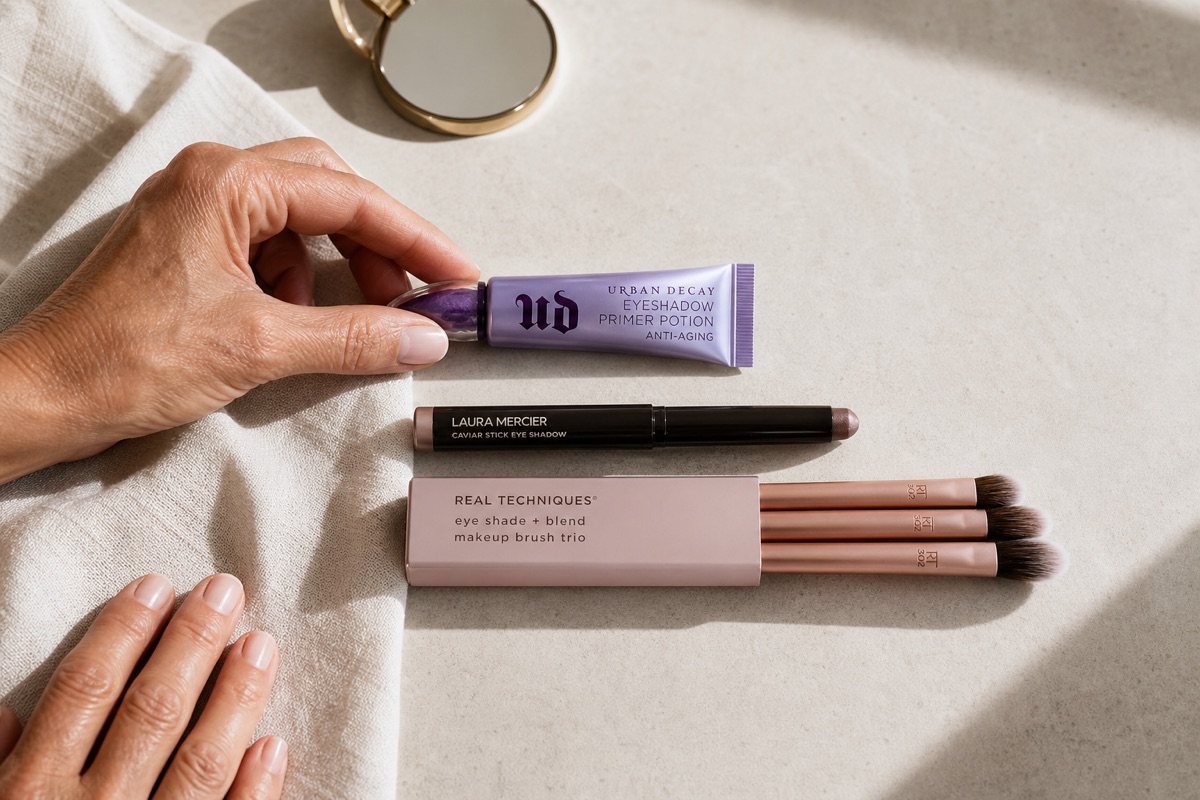
Editor's top Amazon picks for this guide
Real Amazon products that match this protocol. Affiliate links — your purchases support BeautySift.

Urban Decay
Urban Decay Anti-Aging Eyeshadow Primer Potion
$16.80
"Best primer step for fine-lined lids: Amazon lists 4.3/5 across 4,430 ratings, and the brand positions it for smoother-looking texture and crease-resistant shadow."
What real Amazon buyers say
4.3★· 4,430 reviews"I have aging skin I have hooded eyes this goes on really creamy it dries fast and your eyeshadow stays on and looks spectacular"
"This OG eye shadow primer is long acting and the best in show. Zero adverse reactions and great longevity."

Laura Mercier
Laura Mercier Caviar Stick Cream Eyeshadow
$33
"Best cream-shadow example for press-and-blend application: Amazon lists 4.1/5 across 1,008 ratings, with matte and shimmer shades for different undertones."
What real Amazon buyers say
4.1★· 1,008 reviews"Product is great, does exactly what it says. Glides on smoothly and color is great for mature eyes. No fuss, Quick and easy."
"I have really sensitive eyes and they were not bothered by the formulation. The color is a great neutral color and I wear it almost daily."

Real Techniques
Real Techniques Eye Shade & Blend Makeup Brush Trio
$9.19
"Best budget brush set for gentle placement: Amazon lists 4.7/5 across 11,117 ratings, and the trio covers base shade, crease blending, brow, and liner work."
What real Amazon buyers say
4.7★· 11,117 reviews"The synthetic bristles are soft yet firm enough to apply eyeshadow smoothly and precisely."
"The perfect eye brush kit! Every brush you'll need & great quality! I will be buying these on repeat - highly recommend!"
What you'll learn
- Fine-lined lids usually need less product, not more: a sheer primer film and thin shadow layers reduce creasing better than a heavy base.
- Satin, soft-matte, and cream-to-powder textures are usually more forgiving than chalky matte powders or high-glitter shadows on textured lids.
- For hooded or crepey lids, place the transition shade slightly above the natural crease with the eye open so color does not disappear or collect.
- Small, soft brushes and fingertip pressing work better than windshield-wiper blending when the mobile lid has fine lines or loose texture.
- Sensitive eyes need clean tools, fresh products, and gentle removal because FDA eye-cosmetic guidance flags irritation and contamination as real risks.
Steps
-
1 Start with clean, comfortable lids
Remove sunscreen, old mascara, and leftover liner before applying shadow. Pat the lid dry, then wait a minute if you used eye cream. A damp or oily lid makes powder catch unevenly and gives cream shadow a path into fine lines.
-
2 Use a rice-grain amount of eye primer
Apply primer from lash line to just above the crease in a very thin film. Too much primer can become a second layer of texture. For fine-lined or hooded lids, tap it in with a fingertip and let it set for 30 to 60 seconds before adding color.
-
3 Choose satin, soft-matte, or cream-to-powder shadow
Use one mid-tone shade close to your skin depth for the crease area and one slightly brighter satin shade on the mobile lid. Avoid chunky glitter near crow's feet or the inner lid fold because reflective particles can sit on top of texture.
-
4 Map the crease with your eyes open
Look straight ahead in a mirror and place the transition shade slightly above the natural fold. This keeps the color visible on hooded lids and prevents the darkest pigment from collecting in the deepest line.
-
5 Press color on, then blend only the edge
Tap shadow onto the mobile lid instead of sweeping back and forth. Then use a clean blending brush to soften only the border. This press-then-blend order keeps pigment smooth while reducing fallout and drag on thin lid skin.
-
6 Keep shimmer strategic
Use shimmer only on the center of the lid or inner corner if texture is visible. A satin sheen can brighten the eye without making fine lines look raised. Skip glitter under the lower lash line if your under-eye area creases easily.
-
7 Set only where makeup moves
If your lids are oily, press a trace of translucent powder only where the crease folds. Do not powder the whole lid heavily; a dry, powdered surface can make mature skin look papery and can dull satin shadow.
-
8 Remove gently at night
Hold remover on the closed lid for several seconds, then wipe downward and outward without rubbing. If your eye waters, burns, or stays red, stop using the product and follow FDA eye-cosmetic safety guidance to discard anything that may be contaminated.
Why eyeshadow settles more after 40
Fine-lined lids change how shadow behaves. PubMed’s 2013 review “Characteristics of the Aging Skin” describes age-related shifts in dryness, elasticity, and barrier function; on the eyelids, that often shows up as less bounce, more visible folds, and makeup that grabs in patches. That does not mean you need a complicated eye look. It means the formula and pressure have to be gentler.
Our analysis looked at 16,555 Amazon ratings across three practical eye-makeup aids: an eye primer, a cream shadow stick, and a small brush trio. That product evidence was weighted against FDA eye-cosmetic safety guidance, brand formula claims, and makeup-artist editorial advice from Allure and Byrdie. The consistent pattern: settling usually comes from excess layers, dry powder texture, or dragging the brush through the crease.
For women 35-55, the goal is not to erase texture. It is to place color where it stays visible, use finishes that soften rather than spotlight lines, and remove makeup without making sensitive eyes angrier.
The mature-lid product formula: thin, flexible, and not too matte
Start with primer only if it solves a problem: oily lids, disappearing shadow, creasing, or patchy pigment. Urban Decay Anti-Aging Eyeshadow Primer Potion has 4.3/5 across 4,430 Amazon ratings in our snapshot, and the listing specifically positions it for mature, crepey lids and crease-resistant color. The useful part is not the “anti-aging” label; makeup does not reverse skin aging. The useful part is the thin grip layer.
Use less than you think. A rice-grain amount per eye is enough for most lids. If primer is visible after blending, you used too much. Heavy primer can mix with powder and become a paste in the fold.
For color, satin and cream-to-powder finishes are usually more forgiving than dry matte formulas. Laura Mercier Caviar Stick Cream Eyeshadow has 4.1/5 across 1,008 Amazon ratings in our snapshot, and the brand describes both matte and shimmer finishes. For mature lids, choose matte for the soft socket shade and satin for the mobile lid. Avoid chunky sparkle in the crease, especially if your crow’s feet or under-eye texture catches light.
Undertone matters even in eyeshadow. If your skin is cool or neutral, taupe, mushroom, soft plum, and rose-brown usually look smoother than orange-brown. If your skin is warm or golden, bronze, camel, peach-brown, and olive can look more cohesive. Deep skin tones usually need richer mid-tones so the crease shade does not turn ashy; fair skin often needs softer saturation so shadow does not read harsh.
Step 1: prep the eye area without making it slippery
Wash hands first. FDA eye-cosmetic safety guidance focuses heavily on keeping eye products clean and stopping use when irritation occurs. That matters more for mature eyes because dryness, contact lenses, allergy season, and hot-flash flushing can all make the eye area less tolerant.
If you use eye cream in the morning, keep it on the orbital bone and give it time to absorb. Do not smear a rich cream across the mobile lid right before shadow. It creates slip, and slip is the shortest path to settling. If the lid still feels tacky, press a clean tissue over it before primer.
Skip concealer as an eyelid base unless you already know it works for you. Many concealers are emollient enough for the under-eye but too creamy for the lid fold. On fine-lined skin, that extra opacity can also make texture look thicker.
Step 2: prime only the zones that crease
Tap primer from the lash line to slightly above the crease. Use a fingertip or a small synthetic brush, then look down for a few seconds while it sets. Do not immediately sweep powder over wet primer; powder will cling in spots.
If your lids are dry, use primer only in the crease and outer corner. If your lids are oily, use the thin film across the lid. If you have sensitive eyes, patch test new primer on the outer lid area before wearing it for a full day. A product that makes the eye water will break down shadow faster than no primer at all.
The best primer finish for fine-lined lids is invisible or softly blurred, not chalky. A very matte, pale base can make the lid look flat and emphasize folds once you blink.
Step 3: place the crease shade with your eye open
Hooded lids and fine lines often hide the natural crease. Instead of following the fold with your eye closed, look straight ahead and place your transition shade just above the fold you can see. This is the difference between shadow that opens the eye and shadow that disappears.
Use a soft neutral that is only one or two levels deeper than your skin. Press the brush where you want the color, then make small circles only at the edge. The goal is a shadow, not a stripe. If the brush is large and fluffy, it may scatter powder too high toward the brow. Smaller brushes give more control and require less cleanup.
The Real Techniques Eye Shade & Blend Makeup Brush Trio has 4.7/5 across 11,117 Amazon ratings in our snapshot. We like it as an example of the tool category because a small base brush and crease brush help you place color without tugging across thin lid skin.
Step 4: press lid color instead of sweeping it
For the mobile lid, press shadow on with a fingertip, sponge tip, or flat synthetic brush. Pressing deposits color on top of the skin. Sweeping drags pigment across folds and can leave dark product inside the lines.
Cream sticks need speed. Apply a small stripe near the lash line, then tap upward before the formula sets. Laura Mercier’s brand page describes Caviar Stick as a long-wear cream shadow; the Amazon review snapshot includes users who mention mature eyes and sensitive eyes, but one negative review also reported creasing with a reformulated shade. That split is useful: cream shadow is easier, not foolproof. Use thin layers.
For powder shadow, tap excess off the brush before the lid. Fallout under the eye can make darkness and texture look stronger, especially if you already have under-eye hollows or fine lines.
Step 5: use shimmer where light helps, not where texture folds
A small satin highlight on the center lid can make eyes look awake. A pale shimmer on the inner corner can help if your eye shape has enough space there. But shimmer all over the crease usually draws attention to uneven texture.
If you love sparkle, keep it above the iris and away from the deepest fold. For sensitive eyes, avoid loose glitter near the lash line. The FDA warns that eye cosmetics can cause irritation, and particles that migrate into the eye are not worth the payoff for a weekday look.
Lower lash-line shadow should be soft and minimal. Use what is left on the brush rather than loading more pigment. A heavy lower line can pull attention to under-eye creasing, especially on days when concealer is already working hard.
Step 6: fix mistakes with less product, not more
If shadow settles by midday, resist adding more powder on top. First, tap the crease with a clean fingertip or cotton swab. If there is a visible line, smooth it out and leave it alone. Adding layers usually creates a thicker ridge.
If the outer corner looks muddy, use a clean brush to blur the edge. Do not add shimmer to cover patchiness; shimmer will make uneven texture more obvious. If fallout collected under the eye, lift it with a clean cotton swab and a dot of moisturizer rather than rubbing.
For humid Florida summer weather or hot-flash days, simplify: primer, one cream shadow, soft liner if tolerated, and mascara. Fewer layers have fewer chances to move.
Common pitfalls that make fine lines look deeper
The first pitfall is using foundation or concealer over the whole lid. It can work on smooth, oily lids, but on mature lids it often adds too much creamy weight. The second is packing dark matte shadow directly into the fold. Dark pigment in a line reads as a deeper line.
The third is over-blending. Makeup-artist tutorials often show long windshield-wiper motions, but fine-lined lids respond better to press, tap, and micro-blend. The fourth is using old eye makeup. If a cream shadow smells different, dries out, or changes texture, discard it. FDA eye-cosmetic guidance is clear that irritated eyes are a reason to stop using a product.
The fifth is ignoring undertone. A warm orange-brown on cool skin can look inflamed; a gray taupe on golden skin can look ashy. When in doubt, choose neutral brown, soft bronze, mushroom, or rose-brown rather than extreme contrast.
A simple 5-minute eye look for fine-lined lids
Use primer only where you crease. Press a satin beige, taupe, bronze, or rose-brown cream shadow onto the mobile lid. With your eye open, blend a slightly deeper soft-matte shade just above the fold. Add the tiniest satin highlight to the center lid, not the crease. Curl lashes and apply mascara if your eyes tolerate it.
This look works because it keeps the darkest pigment away from the deepest lines, uses light reflection strategically, and avoids the dry, layered effect that can make mature lids look tired. It is also easier to remove at night, which matters for lash retention and sensitive skin.