How to Apply Menopause Vitamins Without Settling in Fine Lines
A step-by-step guide for US women 35-55 on applying topical vitamin C, niacinamide, retinol, and vitamin E without pooling in fine lines.
We analyzed 195,611 Amazon ratings across 3 topical vitamin products, a 2021 PubMed menopause-skin review, AAD dry-skin guidance, and FDA cosmetic rules. Apply menopause vitamins in thin layers on slightly damp, moisturized skin, then pause before sunscreen or makeup so product does not collect in fine lines.
Editor's top Amazon picks for this guide
Real Amazon products that match this protocol. Affiliate links — your purchases support BeautySift.

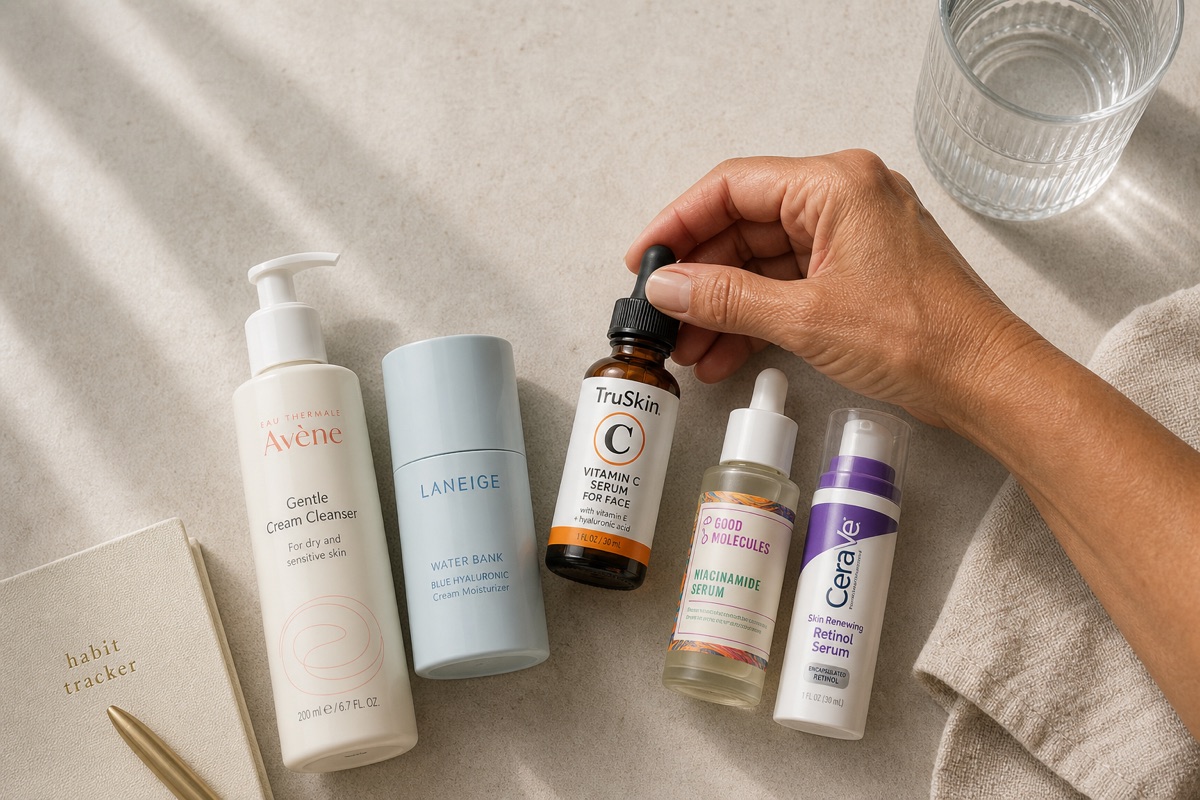
TruSkin
Vitamin C Serum for Face
$34.99
"Vitamin C plus vitamin E and hyaluronic acid in a serum texture; Amazon US shows 4.4/5 across 155,178 ratings."
What real Amazon buyers say
4.4★· 155,178 reviews"I have purchased this on repeat. It is gentle on the skin and a little goes a long way. I have been using it on my face regularly and have noticed the dark spots around my mouth have disappeared and my skin looks brighter."
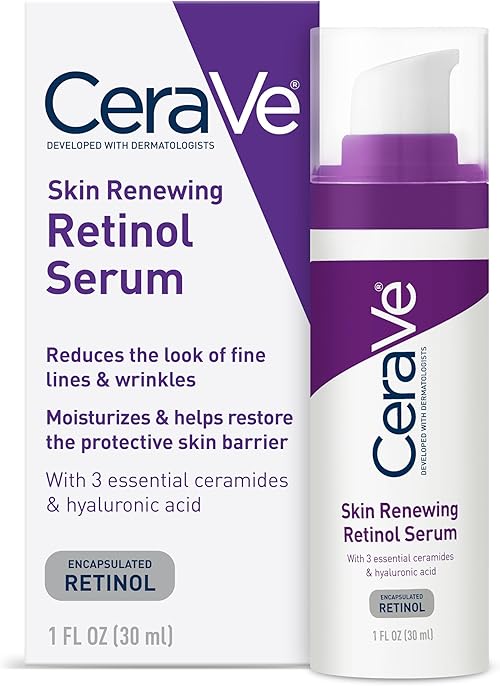
CeraVe
Anti Aging Retinol Serum For Face
$20.44
"Encapsulated retinol with niacinamide, hyaluronic acid, and ceramides in a fragrance-free format; Amazon US shows 4.6/5 across 27,830 ratings."
What real Amazon buyers say
4.6★· 27,830 reviews"My skin feels smoother and looks more even, especially with fine lines and texture. I didn't have much irritation as long as I introduced it slowly."
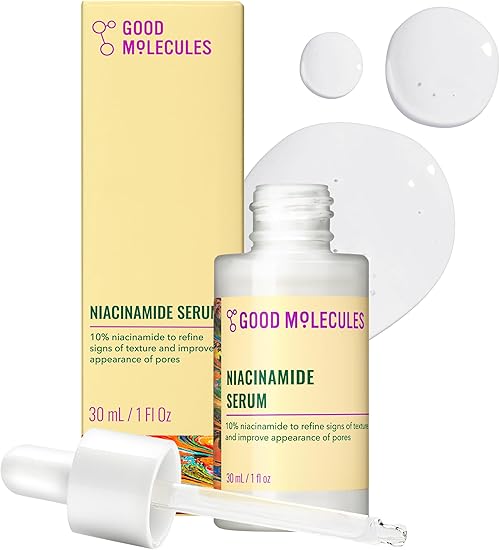
Good Molecules
Niacinamide Serum
$5.97
"Budget 10% niacinamide serum for tone and texture support; Amazon US shows 4.7/5 across 12,603 ratings."
What real Amazon buyers say
4.7★· 12,603 reviews"My skin feels hydrated, soft, smooth and despite my high sensitivity, not even a bit irritated. Good ingredients."
What you'll learn
- Treat menopause vitamins as topical skin-care actives, not as thick makeup primers; thin layers settle less visibly into fine lines.
- Apply water-based vitamin C or niacinamide before moisturizer, but use retinol at night and buffer it if dryness makes lines look sharper.
- Let each layer lose its slip before adding sunscreen, tinted moisturizer, or foundation so the active does not pill or pool around the mouth and eyes.
- Mature skin usually looks smoother when vitamin steps are paired with bland moisturizer, not when every active is applied at full strength every day.
- If burning, swelling, rash, or persistent flushing appears, stop the cosmetic trial and get medical advice rather than adding another vitamin product.
Steps
-
1 Step 1: Choose one vitamin job before layering
Pick one primary job for the next 14 days: vitamin C for daytime brightness, niacinamide for tone and barrier comfort, or retinol as a vitamin A night step for texture. Mature-skin tip: avoid starting all three at once because dryness can make fine lines look more obvious before any benefit appears.
-
2 Step 2: Prep skin with a low-foam cleanse and light moisture
Cleanse gently, leave skin slightly damp, and apply a small amount of bland moisturizer if cheeks feel tight. Mature-skin tip: a hydrated base lets thin vitamin layers spread evenly, so they are less likely to catch in lines around the mouth, under-eyes, and forehead.
-
3 Step 3: Use less product than the dropper suggests
For serum vitamins, start with 2 to 3 drops for the full face or a pea-size amount for retinol serum. Press, then smooth; do not keep rubbing until the product gets tacky. Mature-skin tip: excess serum has to go somewhere, and it often migrates into smile lines and neck creases.
-
4 Step 4: Put vitamins in the right order
In the morning, use vitamin C or niacinamide after cleansing and before moisturizer and sunscreen. At night, use retinol after cleansing, either over moisturizer as a buffer or before moisturizer if skin is already tolerant. Mature-skin tip: keep retinol away from the immediate under-eye crease unless the product label says otherwise.
-
5 Step 5: Wait before sunscreen, primer, or makeup
Give each active layer about 60 to 90 seconds to settle before the next step, then apply moisturizer and sunscreen in thin coats. Mature-skin tip: sunscreen and foundation settle less when the vitamin layer underneath is no longer wet or slippery.
-
6 Step 6: Adjust frequency before switching products
If fine lines look more etched, reduce vitamin C to every other morning or retinol to 1 to 2 nights weekly, then add recovery nights with moisturizer only. Mature-skin tip: the smoothest-looking routine is often the most repeatable one, not the strongest one.
Quick answer
Apply topical menopause vitamins as thin skin-care layers, not as thick treatment masks. Based on 195,611 Amazon ratings across TruSkin vitamin C, CeraVe retinol, and Good Molecules niacinamide; a 2021 PubMed review on estrogen-deficient skin; AAD dry-skin guidance; and FDA cosmetic rules, the lowest-risk technique is: prep with gentle moisture, use less product, wait 60 to 90 seconds between layers, and keep retinol to nights.
BeautySift did not test these products in a lab or on a panel. We analyzed public review snapshots, ingredient roles, US availability, and dermatology literature. We may earn a commission from Amazon links, but affiliate status does not influence product selection, application order, or evidence weighting.
First, define what “menopause vitamins” means
US shoppers use the phrase “menopause vitamins” in two different ways. Some mean oral supplements for hot flashes, sleep, or hair thinning. This guide is not about swallowing vitamins, dosing supplements, or treating a medical condition. Here, “vitamins” means topical vitamin skin care: vitamin C serums, vitamin B3 niacinamide, vitamin A retinol, and vitamin E support ingredients in serums or creams.
That distinction matters because topical vitamins can be useful but fussy. They can pill under sunscreen, sting on dry cheeks, and pool in smile lines if you use too much. Around 35-55, many women also notice a routine that used to behave well suddenly looks heavier. The 2021 PubMed review “Menopause and the Skin” discusses appearance changes associated with estrogen-deficient skin, including dryness and altered skin quality. BeautySift treats that as context, not a diagnosis.
The goal is not to stop using actives. The goal is to make them wearable on mature skin: less slipping, less crusting around the nose, less settling around the mouth, and fewer mornings when retinol makes lines look sharper than they did the night before.
Step 1: Choose one vitamin job before layering
Start by choosing one job for the next 14 days. Vitamin C is the daytime brightening step. Niacinamide, or vitamin B3, is the flexible tone-and-barrier support step. Retinol, a vitamin A derivative, belongs mostly at night because it can increase dryness and sun-sensitivity concerns if handled casually.
The evidence base is ingredient-specific. PubMed-indexed dermatology literature includes topical vitamin C work for photodamage-related appearance concerns, Kafi et al. 2007 on retinol and naturally aged skin, and Bissett et al. 2005 on topical niacinamide. Those studies do not mean every Amazon serum performs identically, but they support why these actives show up repeatedly in mature-skin routines.
Mature-skin tip: do not start vitamin C, niacinamide, retinol, and exfoliating acids in the same week. If the skin barrier becomes dry, fine lines often look deeper because the surface is less flexible. A slower routine gives you cleaner feedback.
Step 2: Prep skin so vitamins do not grab dry patches
Settling often starts before the vitamin ever touches your face. If you cleanse until skin feels squeaky, a serum can catch on dry edges and then collect in lines as you move your face. AAD dry-skin guidance recommends gentle cleansing and moisturizing promptly. For a topical vitamin routine, that translates into a simple prep step: cleanse gently, leave skin slightly damp, and use a light moisturizer first if your cheeks already feel tight.
For morning vitamin C or niacinamide, a damp but not wet face helps spread a small amount evenly. For retinol, dry skin is usually safer because damp skin can increase penetration and irritation. If you are retinol-sensitive, apply a light moisturizer first, wait a few minutes, then use retinol. This is the classic buffer method, and it is especially useful when lines around the mouth or under the eyes look more etched after active nights.
Mature-skin tip: treat the under-eye crease, marionette lines, and neck folds as low-product zones. Bring leftover serum there only after the main face is covered.
Step 3: Use less product than the dropper suggests
Most settling problems are dose problems. A full dropper of vitamin C, a thick stripe of niacinamide, or a generous pump of retinol can feel productive, but excess product has to move as it dries. It often migrates into expression lines, especially around the mouth, forehead, and neck.
For a serum, start with 2 to 3 drops for the full face. For retinol serum, use a pea-size amount. Press the product across cheeks, forehead, and chin, then smooth once. Do not keep rubbing until the layer turns sticky; that tackiness is a pilling warning. If the product still looks shiny after 2 minutes, you likely used too much.
Amazon review patterns support the importance of texture and tolerability. TruSkin Vitamin C Serum shows 4.4/5 across 155,178 Amazon ratings, and a captured verified review said, “It is gentle on the skin and a little goes a long way.” CeraVe Anti Aging Retinol Serum shows 4.6/5 across 27,830 ratings, with reviewer language noting slow introduction and lightweight texture. Those are not clinical outcomes, but they are useful wearability signals.
Step 4: Put each vitamin in the right order
A simple order prevents most fine-line pooling. Morning: cleanse or rinse, vitamin C or niacinamide, moisturizer, broad-spectrum sunscreen. If you wear makeup, sunscreen still comes before makeup. Night: cleanse, moisturizer if buffering, retinol, then a comfort layer of moisturizer if needed.
Niacinamide is usually the easiest vitamin to place because it plays well with many routines. Good Molecules Niacinamide Serum shows 4.7/5 across 12,603 Amazon ratings, and one captured verified review mentioned hydrated, soft, smooth skin without irritation despite high sensitivity. For a mature routine, that makes niacinamide a sensible bridge step when vitamin C stings or retinol needs recovery nights.
Vitamin C is more dependent on formula texture. If it stings or pills under sunscreen, use it every other morning, reduce the amount, or put a light moisturizer under it for a week. Retinol should not be layered directly with exfoliating acid on a dry, reactive night. That combination may be tolerable for some people, but it is a common reason lines look more creased the next morning.
Mature-skin tip: keep active vitamins away from the immediate lash line and the deepest neck folds unless the product is specifically labeled for those areas.
Step 5: Wait before sunscreen, primer, or foundation
The pause matters. Give each active layer about 60 to 90 seconds to lose its slip before the next step. You do not need the face to feel dry and tight; you just want the surface to stop sliding. Then apply moisturizer in a thin layer, wait again if needed, and finish with sunscreen in the morning.
This is where many routines fail. A wet vitamin C layer plus moisturizer plus sunscreen plus foundation can create a film that rolls or gathers. When that film moves, it settles in fine lines. If you use primer or tinted moisturizer, apply it after sunscreen has set. Use a fingertip to tap product over smile lines rather than dragging a loaded brush back and forth.
Mature-skin tip: do a mid-face check before makeup. Smile once, relax, and tap away any visible product in the nasolabial folds or chin crease with a clean finger. Removing excess product there looks smoother than adding powder over it.
Step 6: Adjust frequency before replacing everything
If a vitamin routine makes fine lines look worse, do not assume you bought the wrong product first. Check the sequence: too much product, no wait time, retinol too often, or sunscreen layered before serum set. Then adjust frequency before switching formulas.
A practical reset is 7 to 14 days. Morning: gentle cleanse, moisturizer, sunscreen. Add vitamin C or niacinamide every other morning only if skin feels calm. Night: cleanse, moisturizer, and retinol 1 to 2 nights weekly. Keep moisturizer-only nights between retinol nights. PubMed evidence supports retinol and niacinamide as appearance-focused actives, but the skin still has to tolerate the routine for those actives to be useful.
If burning, swelling, rash, crusting, severe itch, or persistent flushing appears, stop the cosmetic experiment. FDA guidance makes clear that “cosmeceutical” is not a separate US regulatory category, so do not treat a serum as medical care. Get clinician guidance for symptoms that look inflammatory, spreading, or painful.
Common pitfalls that make vitamins settle
The most common mistake is applying vitamins on skin that is either too dry or too wet. Too dry, and serum grabs flakes. Too wet, and everything slides into creases. Aim for flexible skin: freshly cleansed, slightly damp for non-retinol serums, and comfortably moisturized if you are buffering.
The second mistake is using multiple strong actives because mature skin feels behind. More is not automatically better. Vitamin C in the morning, retinol at night, and niacinamide on recovery days is usually more wearable than stacking every active daily.
The third mistake is treating fine-line settling as a powder problem only. Powder can emphasize it, but the base layer often caused it. If serum has already pooled in a smile line, powder locks the ridge in place. Tap away excess skin care before sunscreen and makeup instead.
Product selection notes
For vitamin C, choose a formula you can use in a thin, even layer. TruSkin is not the most prestige vitamin C product, but its 155,178-rating Amazon footprint and vitamin C plus vitamin E plus hyaluronic acid positioning make it a useful representative option for this technique guide.
For vitamin A, prioritize tolerability over strength. CeraVe’s retinol serum combines encapsulated retinol with niacinamide, hyaluronic acid, and ceramides in a fragrance-free format, which fits the buffer-first approach for dry or reactive mature skin. Stronger retinoids may be appropriate for some people, but they are less forgiving if your main problem is settling and visible dryness.
For vitamin B3, a straightforward niacinamide serum can be the easiest active to keep when the rest of the routine needs a reset. Good Molecules Niacinamide Serum is the budget pick in this guide because its Amazon snapshot shows 4.7/5 across 12,603 ratings, and its texture role is simple: a thin water-based layer before moisturizer.