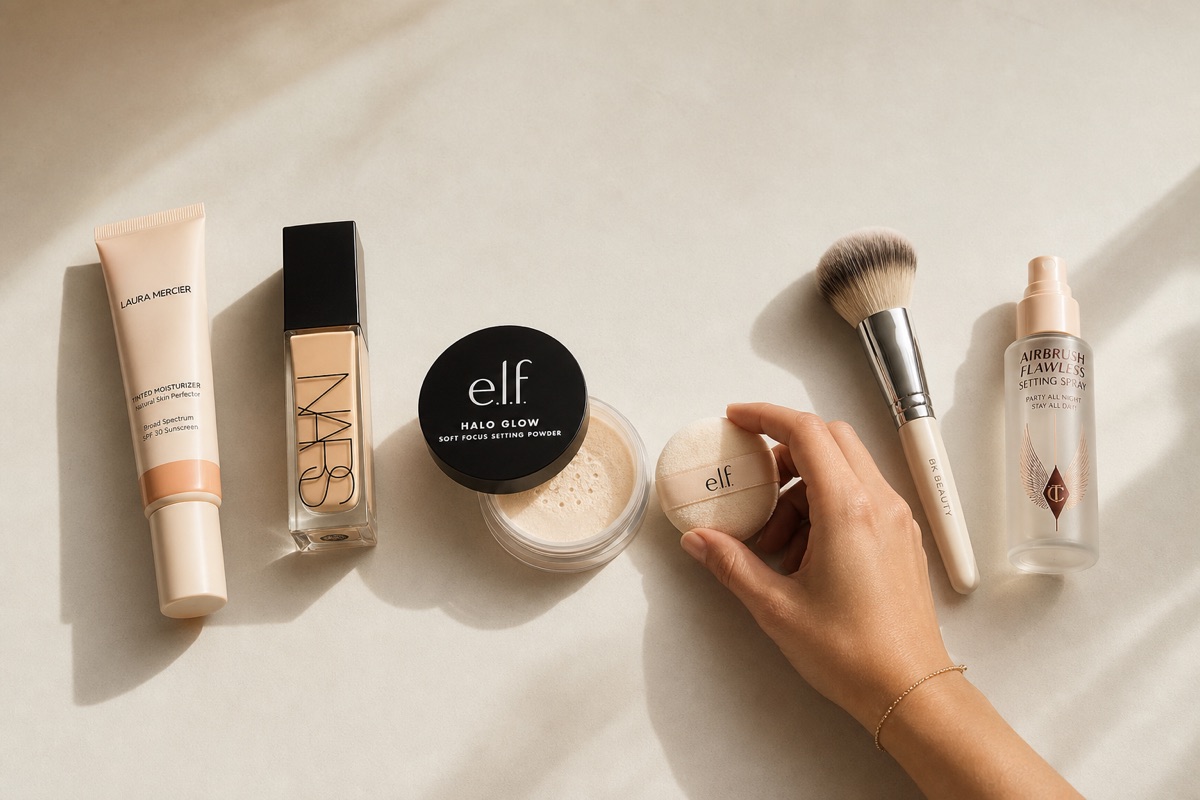
How to Apply Setting Powder Without Settling in Fine Lines
A fine-line aware setting powder guide for mature skin: how to choose powder, prep skin, apply lightly, and avoid cakey texture.
We analyzed 71,700 Amazon ratings across 8 US setting-powder listings, FDA cosmetic-claim guidance, AAD dry-skin advice, and a PubMed skin-aging review. The least line-settling method is hydrated prep, 2-3 minutes of foundation dry-down, and a thin press-and-roll powder layer only where makeup moves.
Editor's top Amazon picks for this guide
Real Amazon products that match this protocol. Affiliate links — your purchases support BeautySift.

e.l.f.
e.l.f. Halo Glow Soft Focus Setting Powder
$9
"Best budget soft-glow example for dull mature skin: Amazon lists 4.5/5 across 19,526 ratings and the listing emphasizes soft glow without shine."
What real Amazon buyers say
4.5★· 19,526 reviews"I was quite surprised about how great this powder was! Very natural finish that did indeed create a very positive and slight glow to the skin - very pretty. And it is not drying at all."

No7
No7 Lift & Luminate Triple Action Powder
$14.99
"Best pressed compact example for fine-line touch-ups: Amazon lists 4.4/5 across 2,462 ratings and the listing names fine-line appearance and glow."
What real Amazon buyers say
4.4★· 2,462 reviews"Great finishing powder to sheer out powder blusher."
"The color is a bit light but I can make it work. Great setting powder and it arrived on time."

Kosas
Kosas Cloud Set Baked Setting Powder
$38
"Best satin-leaning pressed example for shine control without a flat finish: Amazon lists 4.6/5 across 239 ratings and the listing describes a soft natural finish."
What real Amazon buyers say
4.6★· 239 reviews"The best powder! So light and blurs so well on the skin!!! My holy grail! Looks beautiful on foundation or even tinted sunscreen."

Laura Mercier
Laura Mercier Translucent Loose Setting Powder
$25
"Best classic loose-powder reference point: Amazon lists 4.7/5 across 2,040 ratings and a 24-hour shine-control claim. Use sparingly on fine lines."

Maybelline
Maybelline Fit Me Loose Finishing Powder
$8.98
"Best high-review budget loose option: Amazon lists 4.6/5 across 39,771 ratings. The shade-specific format needs undertone care on deeper skin."
What you'll learn
- Use setting powder as a targeted movement-control product, not an all-over mattifying blanket, if fine lines are your main concern.
- Hydrated skin, a thin foundation layer, and a short dry-down window reduce the paste-like texture that makes powder collect in creases.
- A small puff or tapered brush gives more control than a large fluffy brush when powdering the under-eye, smile lines, and nose folds.
- Satin or soft-focus powders are usually more mature-skin friendly than flat matte powders when dullness and fine lines show together.
- If powder still gathers after midday, remove the excess with a clean sponge before adding more; layering powder over oil creates texture.
Steps
-
1 Choose a soft-focus powder before you think about technique
Pick a powder with a satin, soft-focus, or demi-matte claim before reaching for a full-matte baking powder. Mature skin usually benefits from a finer layer that blurs movement zones without muting all luminosity.
-
2 Prep dry areas so powder has less texture to catch on
Apply moisturizer, sunscreen, and primer in thin layers, then wait until tackiness settles. AAD dry-skin guidance supports moisturizer for dryness-related roughness, which matters because powder exaggerates flakes and dehydration lines.
-
3 Use less foundation where expression lines fold
Before powder, tap away pooled foundation from smile lines, under-eyes, and the chin crease. Powder locks down what is underneath, so excess base in a fold becomes a powdery ridge later.
-
4 Wait 2-3 minutes, then press powder only where makeup moves
Let cream and liquid base dry down, then load a small puff or tapered brush with a minimal amount. Press and roll through the T-zone, under-eye edge, and smile-line perimeter instead of sweeping heavily across the whole face.
-
5 Refresh by lifting oil first, not by adding more powder
At midday, blot shine or tap with a clean sponge before adding a rice-grain amount of powder. Adding dry powder directly over oil, sunscreen, and foundation buildup is the fastest route to visible settling.
Quick answer
Based on 71,700 Amazon US ratings across eight setting-powder listings, plus FDA cosmetic-claim guidance, AAD dry-skin advice, and Farage et al.’s 2008 PubMed skin-aging review, setting powder is least likely to settle in fine lines when it is treated as a targeted setting tool: hydrate first, use less base in folds, wait 2-3 minutes, then press a thin layer only where makeup moves.
The common mistake is using powder to fix a base problem. If concealer has already pooled under the eyes, foundation has gathered in smile lines, or moisturizer has not fully absorbed, powder locks that texture in place. For US shoppers 35-55, the better approach is product selection plus restraint: satin or soft-focus powder, a small puff, and a touch-up routine that removes oil before adding more powder.
Why powder settles more on mature skin
Powder is not the enemy; excess powder is. Farage et al.’s 2008 PubMed review describes intrinsic and extrinsic skin-aging changes, including visible texture shifts that make makeup sit differently on older skin. That does not mean makeup should claim to reverse aging. The FDA source in our review set is clear that cosmetic claims need to stay appearance-focused. A powder can blur, reduce shine, or make makeup look more even; it cannot treat wrinkles.
Fine lines collect product for three practical reasons. First, expression zones move. The under-eye, nasolabial folds, upper lip, chin crease, and forehead lines flex every time you smile, talk, squint, or drink coffee. Second, dryness changes the surface. AAD dry-skin guidance emphasizes moisturizer because dry skin can feel rough and look flaky; powder catches on that roughness. Third, base products migrate. Liquid foundation and concealer often slide into folds before powder ever touches the face.
That is why the goal is not to powder every inch. The goal is to set strategic zones while leaving dull or dry areas with a little life. If your cheeks look flat after powder, your powder map is too large.
Step 1: Choose the right powder texture
Start before application. Choose a powder that matches your skin behavior and finish preference. For fine-line-prone skin with dullness, soft-focus, satin, demi-matte, or glow-control language is usually safer than a fully matte baking powder. In the Amazon data we analyzed, e.l.f. Halo Glow Soft Focus Setting Powder had a 4.5/5 rating across 19,526 ratings, and its listing specifically frames the finish as soft glow without shine. No7 Lift & Luminate Triple Action Powder had 4.4/5 across 2,462 Amazon ratings and is positioned around fine-line appearance and glow.
Loose powder gives the thinnest veil when you tap off excess. Pressed powder gives better control for touch-ups. Baked powders, such as Kosas Cloud Set, often sit between the two: more portable than loose powder and less chalky than some hard-pressed mattes. Amazon listed Kosas Cloud Set at 4.6/5 across 239 ratings in our snapshot.
Mature-skin tip: avoid using shade as an afterthought. A powder that is too pale can make under-eyes look gray, especially on medium, tan, and deep skin. A powder that is too yellow or peach can make cool-neutral skin look sallow. If a powder comes in multiple shades, choose by depth and undertone, not just by the word translucent.
Step 2: Prep so powder has less texture to grip
Hydration is not optional when fine lines are the concern. Apply moisturizer in a thin layer, let sunscreen settle, then use primer only where it helps. Too much primer can pill under foundation; too little moisture can make powder grab. AAD dry-skin guidance supports moisturizer as a basic step for dry, rough skin, and that matters because powder magnifies surface unevenness.
Give each layer a short pause. You do not need a long routine, but you do need the surface to stop feeling wet. If sunscreen is still slick, powder can clump. If moisturizer is still tacky, powder can darken in patches. If primer balls up, remove it rather than powdering over it.
Mature-skin tip: place glow strategically before powder. If dullness is part of the problem, keep radiance on the high cheekbones and outer face, then powder the center. Powdering the entire cheek to a flat matte finish can make skin look more tired, even if the T-zone is perfectly set.
Step 3: Use less foundation and concealer in fold zones
Powder cannot make thick foundation behave like thin foundation. Before setting, look straight ahead and smile once. If product has collected under the eyes, beside the nose, around the mouth, or in the chin crease, tap it out with a clean fingertip, sponge, or small brush. Then set the area while it is smooth.
For under-eyes, use less concealer than you think. Concentrate coverage where darkness is visible, usually the inner corner and hollow, not the entire lower lash line. Let the concealer sit for a moment, then tap away the line that forms when you look up and down. Only then powder.
Mature-skin tip: never bake under fine lines unless you already know your under-eye tolerates it. Baking was built for high-coverage, high-heat makeup contexts. For everyday mature skin, it often deposits more powder than the area can wear comfortably.
Step 4: Apply powder with the press-and-roll method
The most fine-line aware method is press and roll, not windshield-wiper sweeping. Put a tiny amount of powder into the cap or onto the compact surface. Load a small puff, velour triangle, or tapered brush, then tap off visible excess. Press the tool onto the target area and roll slightly so the powder fuses with the base instead of sitting as a dry layer on top.
Use a smaller map than you expect. Under the eyes, powder the lower edge where concealer moves, not the whole orbital area. Around smile lines, powder beside the fold, not directly into the deepest crease. Around the nose, press powder where foundation separates. On the forehead, use the center only if shine breaks through there.
Mature-skin tip: after pressing, take a clean side of the puff or sponge and tap once more with no added product. This removes loose residue before it has a chance to collect. If the finish looks dusty immediately, you used too much.
Step 5: Touch up by removing buildup first
Midday settling is usually a layering issue. Oil, sweat, sunscreen, foundation, and powder mix into a thicker film as the day goes on. Adding more powder directly on top can make fine lines look deeper. Blot first with tissue, blotting paper, or a clean sponge. Then add the smallest possible amount of powder only where shine remains.
For hot flashes or humid weather, keep powder focused around the nose, upper lip, forehead, and chin. The cheeks can stay satin. If you feel sweat forming, press with tissue before it dries; do not grind powder into damp skin. If you use setting spray, mist after powder and tap once with a clean sponge while the face is barely damp. The spray can soften a powdery look, but it cannot erase too much concealer in a crease.
Mature-skin tip: carry pressed powder for touch-ups, not a giant fluffy brush. A compact puff or small brush lets you avoid the under-eye and smile-line zones unless they truly need setting again.
Product examples and how to use them
These product examples are not a lab ranking; they are application-use cases drawn from Amazon US listing data and the product-comparison rubric. e.l.f. Halo Glow Soft Focus Setting Powder is the budget glow-control example: 4.5/5 across 19,526 Amazon ratings. Use it where you want shine control without erasing all radiance. No7 Lift & Luminate Triple Action Powder is the pressed compact example: 4.4/5 across 2,462 Amazon ratings, best for controlled touch-ups and fine-line-aware powder placement.
Kosas Cloud Set is the satin pressed example at 4.6/5 across 239 Amazon ratings; it suits shoppers who want portability and a softer finish. Laura Mercier Translucent Loose Setting Powder, 4.7/5 across 2,040 Amazon ratings, is a classic loose powder, but its matte, shine-control personality means mature skin should use it sparingly. Maybelline Fit Me Loose Finishing Powder, 4.6/5 across 39,771 Amazon ratings, is the high-review budget loose option, but shade choice matters because the line is not one universal translucent shade.
Our evidence-weighted takeaway: the best powder for fine lines is often not the most mattifying powder. It is the powder you can apply in the thinnest controlled layer without dulling the face.
Common mistakes that make powder look cakey
The first mistake is powdering too soon. Wet foundation plus powder can create a paste. Wait until the base looks settled, then set. The second mistake is powdering over creased concealer. Smooth first, powder second. The third mistake is using the same fluffy brush everywhere. A large brush diffuses powder beautifully on the forehead, but it can overload the under-eye because it is harder to control.
The fourth mistake is chasing shine with more and more powder. If shine returns, blot first. The fifth mistake is choosing a powder that is too light. Flashback, gray cast, and dullness can all make fine lines look harsher. The sixth mistake is ignoring skin prep. If skin is flaky, no setting powder will look seamless for eight hours.
If your powder looks heavy at home, stand near a window before leaving. Bathroom lighting can hide a dusty finish. Natural light shows whether powder is sitting on top of the skin or melting into the base.
A fine-line aware powder map
Use this simple map as your starting point. Powder the sides of the nose, the center of the forehead if oily, the upper lip if foundation transfers, and the outer under-eye edge if concealer moves. Use almost no powder on the tops of cheeks, the deepest smile-line groove, and the lower half of the under-eye unless those areas are genuinely breaking down.
If you have dry cheeks and an oily T-zone, treat them as different faces. Use a satin powder or no powder on the cheeks, then a firmer setting powder around the nose and forehead. If you have hot-flash shine, powdering the entire face in advance can backfire by looking dry before the heat arrives. A lighter base plus targeted touch-up is more flexible.
FAQ
Should I powder before or after setting spray?
Most people should powder first, then use setting spray if they want to soften the finish. If you spray first and powder while the face is still damp, powder can grab unevenly. The exception is a very sheer mist used to rehydrate makeup before a tiny touch-up.
How much powder should I use under the eyes?
Use less than the amount sitting on the tip of a cotton swab. Load the tool, tap off excess, press once, then stop. If you can see loose powder on the skin, remove it with a clean sponge before it settles.
What finish is best for dullness and fine lines?
Satin, soft-focus, radiant-matte, and demi-matte finishes are usually more forgiving than flat matte finishes. Keep glow on the high points of the face and control shine only where makeup moves or transfers.
Can I skip setting powder entirely?
Yes, especially if your foundation is self-setting and your skin is dry. Use powder only where makeup transfers, creases, or gets shiny. Many mature-skin routines look fresher with powder in the T-zone and no powder on the outer cheeks.