How to Calm Hot-Flash Facial Redness in 5 Minutes: A 2026 Cooling Guide
A quick-action, evidence-weighted guide to calming hot-flash facial flushing with cooler air, cold water, gentle mist, barrier care, and trigger-aware technique.
Based on NAMS 2023 guidance noting vasomotor symptoms affect up to 80% of women, SWAN data on 1,449 women, and AAD redness-prone skin advice, the fastest 5-minute comfort plan is cooler air, cold water, no rubbing, a gentle mist, and fragrance-free barrier support.
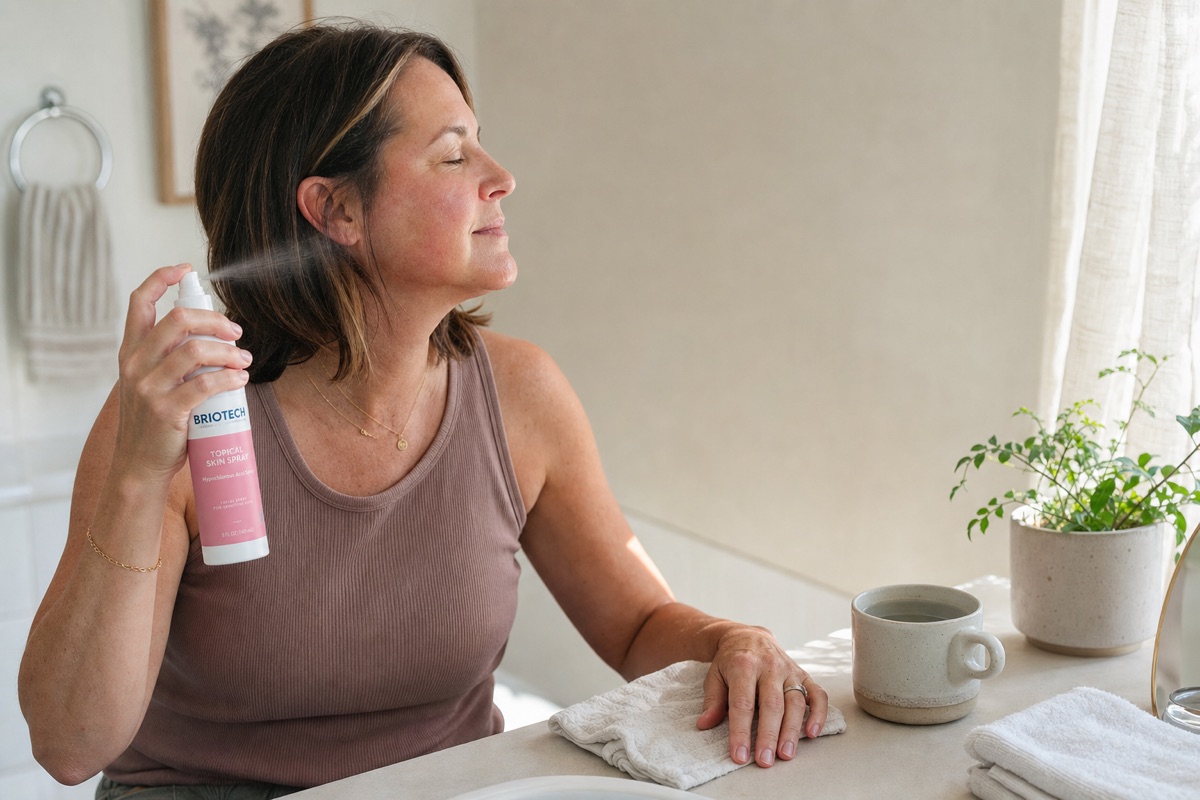
Editor's top Amazon picks for this guide
Real Amazon products that match this protocol. Affiliate links — your purchases support BeautySift.

BRIOTECH
Topical Skin Spray Hypochlorous Acid Spray
$11.19
"A simple hypochlorous acid mist fits the light, non-rubbing comfort step during active facial flushing."

Aveeno
Calm + Restore Facial Moisturizer Face Cream for Redness Relief
$19.97
"Fragrance-free face cream with ceramide and vitamin B5 for dry, redness-prone skin after a flush has settled."

Vanicream
Moisturizing Cream, For Sensitive Skin
$13.56
"Bland fragrance-free cream for post-flush tightness; Amazon lists 4.6/5 across 48,827 reviews and ships/sells it from Amazon.com."

EltaMD
UV Clear Face Sunscreen SPF 46
$36
"Zinc oxide facial sunscreen aligns with AAD guidance for redness-prone skin needing daily broad-spectrum protection."

CeraVe
Hydrating Mineral Sunscreen SPF 30 with Sheer Tint
$13.97
"Budget mineral sunscreen option for daytime redness-prone skin after the flush has cooled."
What you'll learn
- A 5-minute routine can make a flush feel less visible and less uncomfortable, but it should not be framed as treating vasomotor symptoms medically.
- Use cooling first: move to cooler air, loosen layers, sip cold water, and use a fan before applying any skincare product.
- During active redness, avoid rubbing, exfoliating acids, menthol, camphor, fragrance, and alcohol-heavy sprays because AAD guidance flags them as common irritants.
- A gentle mist or hypochlorous spray can be useful as a comfort step, while a bland moisturizer and mineral SPF support the skin after the flush settles.
- If hot flashes disrupt sleep, work, or daily activities, NIH and FDA sources support discussing medical options with a clinician.
Steps
-
1 Minute 0-1: move heat away from your face
Step out of direct heat, loosen a scarf or tight neckline, turn on a fan, open a window, or move near air conditioning. NIH, Mayo Clinic, and Cleveland Clinic all list cooler air, layers, fans, and cold water as practical hot-flash management steps. Keep the goal modest: this is immediate comfort and visible-redness reduction, not a proven treatment for hot-flash frequency.
-
2 Minute 1-2: sip cold water and stop friction
Sip cold water slowly and avoid rubbing your cheeks, wiping sweat aggressively, or massaging the face. Hot flashes often concentrate over the face, neck, and chest, according to NIH, and friction can make reactive redness look stronger. If you need to blot sweat, press with a soft tissue or clean cloth rather than dragging across the skin.
-
3 Minute 2-3: mist lightly, then let the skin settle
Hold a gentle facial mist or hypochlorous spray several inches from the face and apply one light pass. Do not chase the cooling feeling with menthol, peppermint, alcohol-heavy sprays, or exfoliating toner. AAD rosacea guidance specifically flags alcohol, camphor, fragrance, glycolic acid, lactic acid, menthol, sodium lauryl sulfate, and urea as ingredients that can irritate redness-prone skin.
-
4 Minute 3-4: use a cool compress only if needed
If the flush still feels intense, press a cool, damp cloth near the sides of the face or neck for 20 to 30 seconds at a time. Keep it cool, not icy, and do not put ice directly on the cheeks. The skin is already reactive during a flush; the point is to lower the heat sensation without creating a cold-burn or rebound irritation problem.
-
5 Minute 4-5: seal with a bland moisturizer if skin feels tight
If your face feels tight after the flush, apply a thin layer of fragrance-free moisturizer to the driest areas. AAD guidance for redness-prone skin emphasizes gentle cleansing, moisturizing, sun protection, and sensitive-skin product choices. If you are going back outdoors, use a mineral broad-spectrum sunscreen after the flush settles rather than relying on cooling products alone.
-
6 After the flush: note the pattern, not every single episode
Track practical patterns such as hot rooms, alcohol, spicy food, caffeine, stressful meetings, poor sleep, and heavy makeup removal. Cleveland Clinic and Mayo Clinic list several of these as common triggers, while The Menopause Society cautions that cooling techniques and trigger avoidance are not evidence-based treatments for vasomotor symptoms. Use tracking to reduce avoidable discomfort, and ask a clinician about treatment if symptoms disrupt sleep or daily life.
What a 5-minute hot-flash routine can and cannot do
A hot flash is internal temperature dysregulation, not a skincare problem. NIH describes hot flashes as sudden heat that is usually most intense over the face, neck, and chest and may include visible flushing and sweating. That is why a face can look red quickly even when the skin barrier was calm earlier in the day.
BeautySift did not test this routine on a panel. We analyzed The Menopause Society’s 2023 nonhormone therapy statement, SWAN/JAMA Internal Medicine data, NIH and FDA public guidance, AAD redness-prone skin advice, and US medical-center recommendations from Mayo Clinic and Cleveland Clinic.
The important caveat: The Menopause Society does not classify cooling techniques or trigger avoidance as evidence-based treatments for reducing vasomotor symptoms. In this guide, they are used as short-term comfort steps during an active flush. If hot flashes are frequent, severe, or sleep-disrupting, talk with a clinician about medical options.
Affiliate disclosure: we may earn a commission on links. Product placement here is based on evidence fit for the routine, Amazon US availability, and low-irritation use case, not on commission rate.
The 5-minute protocol
Minute 0: get out of the heat loop. Move away from direct sun, a hot kitchen, a crowded room, or a warm bathroom. Loosen tight clothing at the neck and chest. If possible, turn on a fan or move near air conditioning.
Minute 1: sip cold water. Do not chug if you feel unsettled; small sips are enough. Mayo Clinic, Cleveland Clinic, and NIH all include cold drinks and cooler environments in practical hot-flash management advice.
Minute 2: stop rubbing. Facial friction makes redness look more obvious. If sweat is visible, blot gently. Do not use a cleansing brush, facial roller, gua sha, exfoliating pad, or rough towel during active flushing.
Minute 3: use a light mist if it helps you avoid touching your face. A hypochlorous acid spray or simple soothing mist is a comfort step, not a hot-flash treatment. One light pass is enough; over-spraying can leave the skin wet, tight, or more irritated.
Minute 4: use a cool compress only if needed. Press a cool damp cloth near the sides of the face or neck briefly. Avoid direct ice and avoid keeping a cold pack on the cheeks until the skin goes numb.
Minute 5: moisturize only if the skin feels tight. A thin layer of bland moisturizer can reduce the tight, over-warmed feeling after the flush settles. If you are outdoors or near a window, follow with mineral broad-spectrum SPF once the skin is dry.
What not to put on flushed skin
Do not use menthol, peppermint, camphor, alcohol-heavy setting sprays, strong exfoliating acids, peel pads, scrubs, retinoids, or fragranced face mists during an active flush. AAD guidance for redness-prone skin specifically flags alcohol, camphor, fragrance, glycolic acid, lactic acid, menthol, sodium lauryl sulfate, and urea as potential irritants.
This matters more in perimenopause because many people report that products they once tolerated suddenly sting. The safest emergency routine is boring: cool the environment, reduce friction, use a light non-irritating mist only if needed, then support the barrier.
Product roles in the routine
A mist is for the moment. It can help you avoid rubbing and may make the face feel less hot. It should not contain fragrance or a dramatic cooling active.
A moisturizer is for after the moment. Use it if your face feels tight, dry, or reactive once the flush fades. Vanicream and CeraVe creams are included because bland barrier support fits AAD-style sensitive-skin logic.
A mineral sunscreen is for prevention and daily redness management. It does not stop a hot flash, but AAD guidance for rosacea-prone skin recommends broad-spectrum SPF 30 or higher and points to zinc oxide and titanium dioxide as useful mineral filters for sensitive skin.
When a hot-flash plan needs medical support
A 5-minute routine is reasonable for occasional visible flushing. It is not enough if hot flashes repeatedly wake you, interrupt work, or make daily activities difficult. NIH advises discussing treatment options when hot flashes disrupt daily life. FDA also notes that prescription nonhormonal options exist for moderate-to-severe vasomotor symptoms; one 2023 FDA approval was based on two phase 3 trials with 1,022 and 1,001 women.
Seek prompt medical advice if flushing is accompanied by chest pain, fainting, new shortness of breath, one-sided weakness, a new medication reaction, or symptoms that feel unlike your usual hot flashes.
Related BeautySift reading
Guide: Barrier repair routine for perimenopause dryness -> /guides/barrier-repair-routine-perimenopause-dryness-2026/
Guide: Daily scalp care routine in perimenopause -> /guides/daily-scalp-care-routine-perimenopause-2026/
Guide: How to read a skincare ingredient list -> /guides/how-to-read-skincare-ingredient-list-2026/