How to Choose an LED Face Mask in 2026: Wavelengths, FDA Clearance, and Dose
A practical LED face mask buyer's guide for 2026, with wavelength ranges, FDA-clearance checks, irradiance questions, treatment-time math, and Amazon product examples.
Based on Avci et al. 2013, Lee et al. 2007 (n=76), FDA 510(k) records, and official Omnilux, CurrentBody, and Dr. Dennis Gross directions, choose an LED face mask by checking exact wavelengths, FDA-cleared model status, disclosed irradiance or fluence, eye-safety guidance, and a realistic 3-10 minute protocol.
Editor's top Amazon picks for this guide
Real Amazon products that match this protocol. Affiliate links — your purchases support BeautySift.

CurrentBody
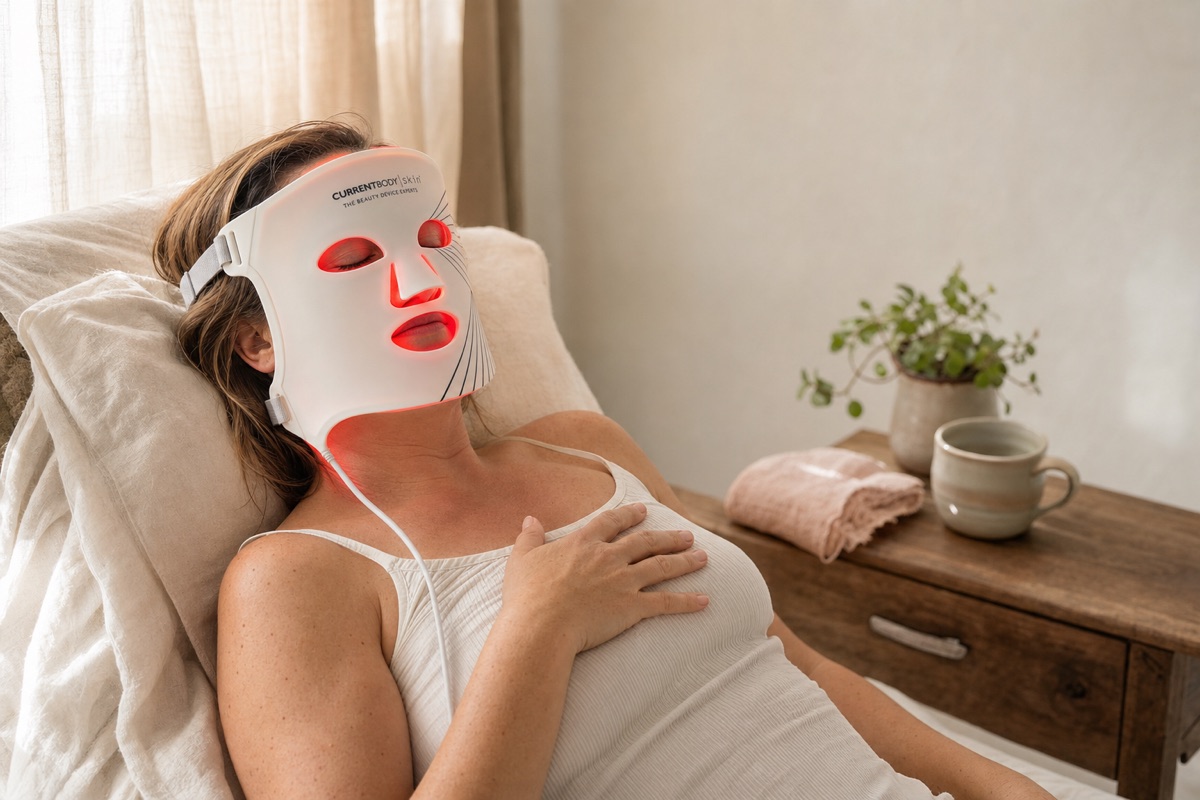
CurrentBody Skin LED Light Therapy Mask: Series 2
$469.99
"Amazon US listing located for a red and near-infrared mask; CurrentBody's US page lists 633 nm and 830 nm wavelengths."

Dr. Dennis Gross
Dr. Dennis Gross DRx SpectraLite FaceWare Pro
"FDA 510(k) K182556 verifies a cleared FaceWare Pro record, and the brand lists a short 3-minute session."

HigherDOSE
HigherDOSE Red Light Face Mask
$349
"Amazon US listing located for shoppers comparing flexible red-light mask options in the premium at-home category."
What you'll learn
- For fine lines and dullness, prioritize disclosed red and near-infrared wavelengths over vague color-mode marketing.
- FDA-cleared is device-specific; verify the exact model or 510(k) record rather than accepting a category-wide claim.
- Treatment time is only meaningful with irradiance or fluence, because delivered dose depends on power density multiplied by seconds.
- Most credible at-home routines are short and repeated over weeks, so comfort, eye guidance, and consistency matter.
Steps
-
1 Start with the exact wavelength numbers
Look for wavelength values in nanometers, not only words such as red, blue, or infrared. Lee et al. studied 633 nm red and 830 nm near-infrared LEDs for skin-rejuvenation outcomes, while Avci et al. reviewed why red-to-near-infrared light is commonly used in skin photobiomodulation. For cosmetic aging concerns, a credible mask should clearly state red light around the low-to-mid 600 nm range and, when included, near-infrared around the 800 nm range. Blue light around 415 nm is more acne-oriented, so do not pay extra for blue modes if your main concerns are fine lines, firmness, and dullness.
-
2 Verify FDA clearance without overstating it
Use precise wording: FDA-cleared is not the same as FDA-approved. The FDA explains 510(k) clearance as substantial equivalence to a legally marketed predicate device. That means you should verify the exact model name, not a similar-looking mask or a whole brand family. DRx SpectraLite FaceWare Pro, for example, has an FDA 510(k) record at K182556. Clearance can support confidence in regulatory review, but it does not prove one mask will outperform another for your face.
-
3 Ask for irradiance or fluence before trusting treatment-time claims
A 3-minute mask is not automatically stronger than a 10-minute mask, and a 10-minute mask is not automatically more effective. Photobiomodulation dose depends on irradiance and time: fluence in J/cm² equals irradiance in W/cm² multiplied by seconds. Many retail pages disclose wavelengths and session length but not irradiance. If a brand will not disclose irradiance, treat treatment-time claims conservatively and follow the manual rather than extending sessions.
-
4 Match the routine to your skin and schedule
A mask you use consistently is more useful than a feature-heavy device that stays in a drawer. Official directions commonly fall into short repeated sessions: Omnilux and CurrentBody list 10-minute routines, while Dr. Dennis Gross lists a 3-minute FaceWare Pro treatment. Start with the brand schedule, use clean dry skin, and avoid stacking strong acids, retinoids, or benzoyl peroxide immediately before LED until you know your tolerance.
-
5 Check fit, eye guidance, and contraindications
Before buying, read the manual or product safety page for eye-protection instructions, medication cautions, and skin-condition exclusions. A flexible mask may feel easier on facial contours, while a rigid mask may hold LEDs at a more consistent distance. Stop use and ask a clinician if you develop eye discomfort, persistent redness, burning, swelling, migraine-like symptoms, or sensitivity that feels linked to the device.
-
6 Judge results over weeks, not one session
Set a realistic checkpoint schedule before buying: take baseline photos, confirm comfort during the first 2-3 weeks, then judge visible tone, dullness, and fine-line changes around weeks 6-12. Use conservative language for sagging. At-home LED may support the look of firmness and healthier-looking skin, but it is not a lift, filler, laser resurfacing, or medical treatment for loose skin.
The buyer’s guide in plain English
Choosing an LED face mask is less about chasing the brightest-looking device and more about checking whether the specifications match the claim. BeautySift analyzed PubMed photobiomodulation literature, FDA device records, official US brand directions, Allure market coverage, and accessible Amazon US listings. We did not test these masks on a panel.
Affiliate disclosure: we may earn a commission from Amazon links. Commission does not affect the evidence weighting or the shopping criteria in this guide.
For fine lines, dullness, and the look of firmness, start with five questions: what wavelengths are disclosed, whether the exact model is FDA-cleared, whether irradiance or fluence is available, how long the manual says to treat, and whether the fit and safety guidance are realistic for your routine.
Wavelengths: what the numbers mean
Red and near-infrared are the main wavelengths to compare for cosmetic aging concerns. Lee et al. studied 633 nm red, 830 nm near-infrared, and a combined setting in 76 subjects. Avci et al. reviewed the broader photobiomodulation principle that wavelength, irradiance, fluence, and timing all influence response.
That is why a product page that says only multi-color therapy is less useful than one listing exact values such as 633 nm and 830 nm. If a mask includes blue light, treat it as an acne-oriented feature rather than a fine-line advantage.
FDA clearance: useful, but easy to misunderstand
FDA-cleared is a regulatory phrase, not a universal performance guarantee. The FDA describes 510(k) clearance as substantial equivalence to a legally marketed device. In practice, that means you should search for the exact device name or 510(k) number when a brand makes the claim.
Avoid broad wording such as FDA-approved anti-aging mask unless the manufacturer can show an approval pathway that supports that phrase. For most at-home LED masks, FDA-cleared is the safer wording.
Irradiance and treatment time: the dose question
Treatment time is not dose by itself. The useful buyer question is whether the brand discloses irradiance or fluence. The simple math is: fluence in J/cm² equals irradiance in W/cm² multiplied by treatment time in seconds.
If two masks both say 10 minutes, they may still deliver different doses. If one mask says 3 minutes, it may be designed differently. Without irradiance, do not assume shorter means stronger or longer means better.
How to shortlist a mask before buying
First, eliminate products that hide basic specifications. Second, check the exact FDA-clearance language. Third, compare the routine with your actual schedule. Fourth, look for safety instructions that are specific about eyes, photosensitivity, medications, and irritated skin.
Finally, set expectations. LED can be a consistency device for the appearance of fine lines, tone, and dullness. It should not be framed as a facelift alternative or a medical treatment for sagging skin.
Related BeautySift reading
Guide: LED mask treatment schedule -> /guides/led-mask-treatment-schedule-2026
Guide: How to use a microcurrent device correctly -> /guides/how-to-use-microcurrent-device-correctly-2026
Guide: How to firm sagging skin without injectables -> /guides/how-to-firm-sagging-skin-without-injectables-2026