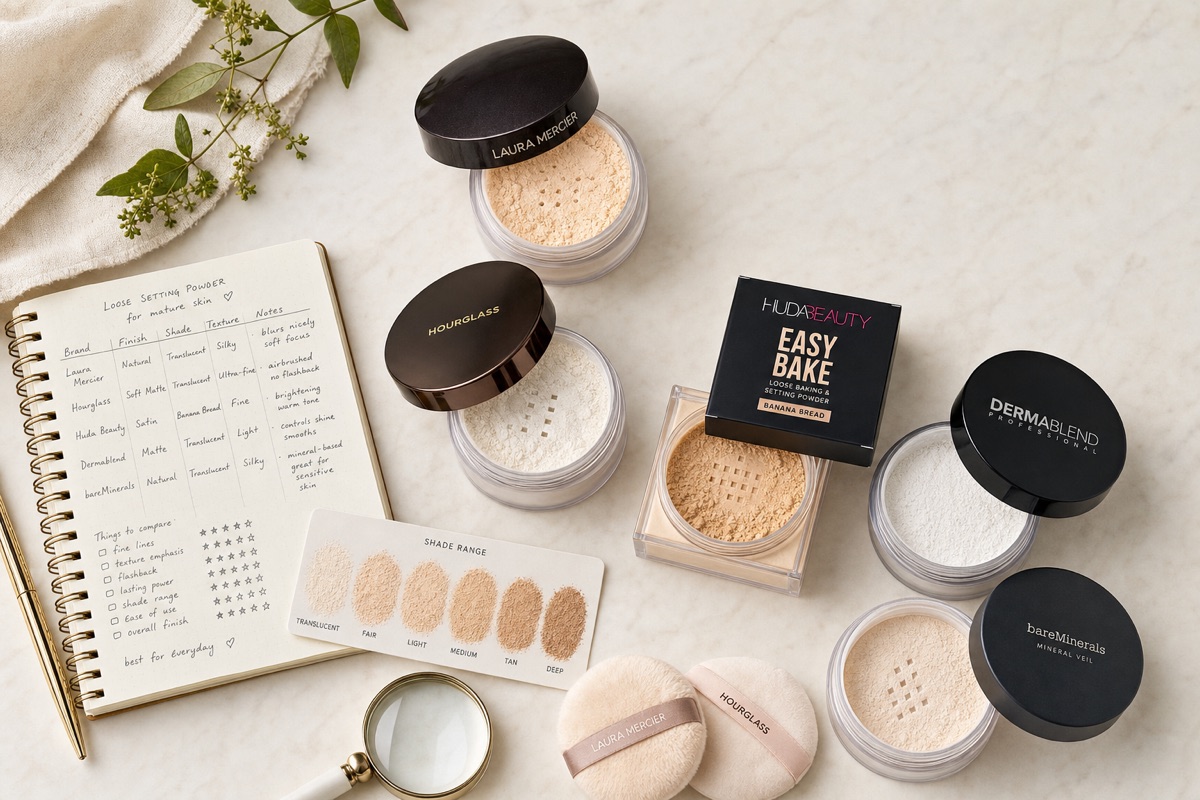
How to Choose the Right Loose Powder for Mature Skin in 2026
A mature-skin guide to choosing loose powder by finish, shade, ingredients, prep, and application order, with Amazon, FDA, PubMed, and brand evidence.
We analyzed 7 Amazon US loose-powder listings totaling 46,299 ratings, FDA talc safety guidance, 2 PubMed menopause-skin reviews, and brand shade claims. For mature skin, choose a finely milled satin or soft-matte powder, use less than you think, and avoid heavy baking around fine lines.
Editor's top Amazon picks for this guide
Real Amazon products that match this protocol. Affiliate links — your purchases support BeautySift.

Laura Mercier
Laura Mercier Translucent Loose Setting Powder
"Best reference point for soft-matte setting: Amazon lists 4.7/5 across 2,040 ratings, and the official brand page describes four shades for different skin tones."
Hourglass
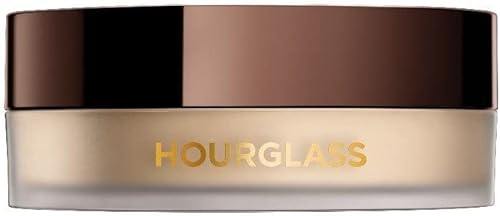
Hourglass Veil Translucent Setting Powder
"Best prestige soft-focus example for shoppers who want a lighter veil effect; Amazon lists 4.6/5 across 915 ratings."

Huda Beauty
Huda Easy Bake Loose Baking and Setting Powder Banana Bread
"Best example when you need a warmer banana tone for light, medium, or tan skin; Amazon lists 4.7/5 across 101 ratings for this shade."

Dermablend
Dermablend Loose Setting Powder
"Best high-review-count example for longer-wear setting over fuller coverage; Amazon lists 4.5/5 across 11,160 ratings."

bareMinerals
bareMinerals Mineral Veil Translucent Loose Setting Powder
"Best talc-free mineral-style example for a weightless blur; Amazon lists 4.7/5 across 4,351 ratings."
What you'll learn
- Choose finish before brand: satin or soft-matte powders usually flatter mature skin more than flat matte baking powders.
- Match the powder shade to depth and undertone; translucent is not always invisible on tan, deep, olive, or very fair skin.
- Prep determines whether powder blurs or cakes, because dry patches and silicone-heavy layers can make loose powder grab unevenly.
- Apply powder only where makeup moves or shines first, then leave mobile fine-line zones lightly set or unset.
- Treat baking as a special-event technique, not an everyday mature-skin default, especially under the eyes.
Steps
-
1 Choose the finish and particle style first
Start with finish, not the most viral powder. Mature skin usually looks smoother with satin, radiant, soft-focus, or soft-matte powders that blur shine without flattening the face. Look for words such as finely milled, soft focus, veil, mineral veil, or glow without shimmer. Mature-skin tip: if your cheeks look dull by noon, set only the T-zone and leave cheekbones lightly luminous.
-
2 Match shade, depth, and undertone before you buy
Translucent powders can still leave a white, peach, yellow, or gray cast. Fair and cool skin may need true translucent or pink-neutral. Light-to-medium warm skin may prefer honey or banana. Tan and deep skin usually need tinted translucent, caramel, or deep options. Mature-skin tip: test powder over SPF and foundation in daylight because flashback and ashiness show faster on textured areas.
-
3 Screen ingredients for dryness, texture, and eye sensitivity
Talc, silica, mica, cornstarch, nylon-12, boron nitride, and dimethicone all behave differently. Silica can blur but may look dry if packed on. Mica can add radiance but may emphasize texture in high amounts. Talc is common; FDA guidance focuses on asbestos contamination control, not a blanket ban. Mature-skin tip: avoid fragranced loose powder near hot-flash flushing or watery eyes.
-
4 Prep skin so powder has less work to do
Let moisturizer, SPF, primer, and base makeup settle before powder. Blot excess shine instead of adding more layers. If foundation is still wet, powder can cling and create small dry islands around smile lines. Mature-skin tip: press a tissue over the nasolabial folds and under-eye area before powdering so the first powder layer is not absorbing extra emollient.
-
5 Use placement, not baking, as your main technique
Load a small brush or puff, tap off visible excess, then press powder only where makeup slips: sides of the nose, center of forehead, chin, and the outer under-eye if needed. Skip heavy baking unless you need camera-ready hold for a short event. Mature-skin tip: keep the inner under-eye and crow's-foot area nearly powder-free to reduce creasing.
-
6 Audit the powder after four hours
Check the mirror in natural light after lunch. If powder looks patchy, you used too much or applied over damp base. If it looks shiny only in the T-zone, use a smaller brush there. If it looks gray, the shade is wrong. Mature-skin tip: refresh with blotting paper first; add a rice-grain amount of powder only if shine remains.
Bottom line
Loose powder is not automatically aging, but the wrong powder can make mature skin look drier, flatter, or more textured by midafternoon. The better approach is a small, strategic layer: set the places where makeup moves, leave the naturally luminous areas alone, and choose a shade that disappears on your undertone in daylight.
BeautySift did not test these powders. We analyzed 7 Amazon US listings totaling 46,299 ratings, FDA cosmetic safety guidance, PubMed reviews on menopause-related skin quality, and brand-published product claims. The pattern is clear enough for a practical shopping rule: mature skin usually does best with fine, soft-focus powders applied sparingly, not with a thick all-over bake.
We may earn a commission from Amazon links. Affiliate status does not change the checklist, and the featured products are examples to help you compare finish, shade, and wear claims.
Start with finish, not brand loyalty
For mature skin, finish matters more than the logo on the lid. A flat matte powder can be useful on the nose and center forehead, but it can make cheeks and the under-eye area look papery. A radiant or satin powder can soften dullness, but too much mica can catch on pores or fine lines. A soft-matte or soft-focus powder sits in the middle: it controls shine without erasing all dimension.
Amazon’s listing for Laura Mercier Translucent Loose Setting Powder names a soft matte, 24-hour shine-control positioning and shows 4.7/5 across 2,040 ratings. That makes it a useful reference point for shoppers who want a classic setting-powder effect. Hourglass Veil, at 4.6/5 across 915 Amazon ratings, is the prestige example to compare when you want a lighter, more diffused veil. e.l.f. Halo Glow Soft Focus Setting Powder has the largest Amazon sample in this research set, 19,526 ratings at 4.5/5, and its product name signals a glow-without-shine goal.
The mature-skin filter: if your complexion looks dull rather than oily, do not powder the whole face. Powder the T-zone, the sides of the nose, and any area where glasses or masks disturb makeup. Leave the upper cheeks and the outer face with a little skin-like reflect.
Pick the shade like you would pick foundation
Translucent powder is not a universal shade. It is simply low-pigment powder. On very fair skin, some translucent powders look yellow or peach. On olive skin, they can read gray. On tan and deep skin, white or pale translucent powder can look ashy, especially in flash photos or under mineral sunscreen.
Use depth first: fair, light, medium, tan, deep. Then use undertone: cool, neutral, warm, olive, or golden. Laura Mercier’s official page describes four shades, which is more flexible than one universal jar. Huda Easy Bake Banana Bread, listed on Amazon at 4.7/5 across 101 ratings, is explicitly positioned for light, medium, and tan skin tones. That does not make it right for every warm complexion, but it shows why shade-specific powder matters.
If you already wear a yellow or golden concealer to cancel blue under-eyes, a banana powder may help the color story stay consistent. If your concealer is pink or neutral, a strong yellow powder can look mismatched. If you wear deep foundation, look for powder shades described as honey, caramel, deep, or rich translucent rather than white translucent.
Read the ingredient style, not just the claims
Loose powders typically rely on talc, silica, mica, starches, nylon-12, boron nitride, dimethicone-treated particles, or mineral pigments. Each has a different trade-off. Silica can blur pores and shine, but too much can look dry in smile lines. Mica can add light, but heavy shimmer can emphasize texture. Starch-based powders can feel soft but may cake if layered over damp base. Talc can give slip and oil control; the FDA talc page focuses on monitoring cosmetic talc for possible asbestos contamination, which is why some shoppers prefer talc-free formulas.
There is no single ingredient that makes a powder mature-skin friendly. The important question is whether the formula lets you apply a thin, even layer. bareMinerals Mineral Veil, listed at 4.7/5 across 4,351 Amazon ratings, is a useful talc-free mineral-style comparison point. IT Cosmetics Bye Bye Pores Loose Setting Powder, 4.4/5 across 5,745 Amazon ratings, leans into a pore-blurring claim and includes skincare-coded ingredients in its product positioning. Dermablend Loose Setting Powder has the largest long-wear complexion sample after e.l.f. in this set, with 11,160 Amazon ratings at 4.5/5.
Sensitivity matters more around the eyes after 35 because watery eyes, contact lenses, hot-flash flushing, and drier skin can make dustier formulas less comfortable. The FDA eye cosmetic safety page advises keeping eye-area cosmetics clean and avoiding products that irritate. For loose powder, that means do not tap a puff into your eye area, do not share puffs, and do not use old powder that smells off or has been exposed to bathroom humidity.
Prep makes powder look thinner
Powder is often blamed for texture when the real issue is prep. If moisturizer, sunscreen, primer, or foundation is still wet, powder grabs in patches. If the skin is dehydrated, powder clings to the flakes. If a silicone-heavy primer and a water-heavy foundation are already pilling, loose powder locks that uneven layer in place.
A better sequence is simple. Apply skincare and SPF, wait until the surface no longer feels slippery, then apply foundation or skin tint. Before powder, press a clean tissue over the center face and under-eye area to lift excess emollient. This reduces the amount of powder needed. PubMed’s 2025 review on menopausal skin changes and the 2026 review on aesthetically relevant menopause-transition symptoms both make skin quality part of the conversation; for shoppers 35-55, dryness and texture are not side notes.
If you use concealer, let it settle for one minute, then smooth creases with a fingertip or small brush before setting. Powdering over creased concealer preserves the crease. Powdering after smoothing uses less product and looks cleaner.
Apply by zone, not by habit
Use different tools for different zones. A velour puff gives the most control for the sides of the nose, chin, and center forehead. A small tapered brush is safer under the eyes. A large fluffy brush is fine for a whisper-thin veil, but it can spread powder into places that did not need it.
The amount should look almost too small. Press the puff into powder, fold or rub the puff to distribute product, then tap the back of your hand. Press, do not sweep, on areas where foundation moves. For the under-eye, use whatever remains on the brush after tapping off. If you can see a visible powder layer before it has been pressed in, it is probably too much for mature skin.
Avoid routine baking under the eyes. Baking can be useful for stage, studio, or special-event makeup, but it is less forgiving on everyday skin with fine lines. If you want the longevity of a powder such as Dermablend or Huda Easy Bake, reserve heavier placement for the outer under-eye or smile-line-adjacent areas where makeup breaks down, not the thinnest inner under-eye.
Troubleshoot after four hours
The four-hour mirror check tells you which lever to adjust. If the powder looks dry and chalky, reduce the amount or switch from flat matte to satin. If the T-zone is shiny but the cheeks look good, keep the powder but use it only through the center face. If the under-eye looks creased, smooth concealer before setting and use less powder. If the powder looks gray, switch shade families.
If makeup separates around the nose, more powder is rarely the fix. Blot first, then add a pinhead amount only where shine remains. If powder gathers in smile lines, skip powder there and set the area just beside the line instead. For dullness, add light back strategically with a hydrating mist on the outer face or a satin finishing powder on the high points, not a glittery highlighter over texture.
Evidence-weighted product examples
Among the Amazon examples we analyzed, the best mature-skin fit depends on your finish goal. Laura Mercier is the classic soft-matte reference with 2,040 Amazon ratings at 4.7/5 and four official brand shades. Hourglass is the prestige veil comparison at 4.6/5 across 915 Amazon ratings. bareMinerals Mineral Veil is the talc-free mineral-style option at 4.7/5 across 4,351 ratings. Dermablend is the longer-wear setting example with 11,160 ratings at 4.5/5, but fuller-coverage routines need extra care around fine lines. e.l.f. Halo Glow has the biggest rating pool here, 19,526 Amazon ratings at 4.5/5, and is the budget-friendly soft-glow reference.
The fair comparison is not “which powder is best for everyone.” It is which powder solves your specific failure mode. For shine breakthrough, choose soft matte and use a puff. For dullness, choose satin or glow and powder fewer zones. For undertone mismatch, choose tinted translucent rather than universal white. For under-eye creasing, use less powder and a smaller brush before switching products.