
How to Choose the Right Menopause Vitamins
Evidence-led guide for US women choosing menopause vitamins for hot flashes, hair thinning, dryness, sleep, and midlife supplement safety.
We analyzed 4 Amazon US menopause-vitamin listings totaling 12,443 displayed ratings, FDA supplement guidance, NCCIH menopause evidence cautions, and 4 PubMed sources. Choose one menopause vitamin by symptom target, evidence level, safety fit, and label clarity.
Editor's top Amazon picks for this guide
Real Amazon products that match this protocol. Affiliate links — your purchases support BeautySift.

Life Extension
Menopause 731
$18
"Best evidence-specific featured option: ERr 731 has PubMed-indexed menopause-symptom literature, including a 2024 systematic review, while Amazon showed 4.0/5 across 705 ratings."
What real Amazon buyers say
4.0★· 705 reviews"Hot flashes & night sweats are greatly reduced"

O Positiv
MENO Vitamins for Menopause
$36.97
"Best modern hormone-free capsule example in this guide; Amazon showed 4.4/5 across 2,395 ratings, and the formula is positioned for multi-symptom menopause support."
What real Amazon buyers say
4.4★· 2,395 reviews"My hot flashes are not as intense, and my mood feels alot more balanced throughout the day."
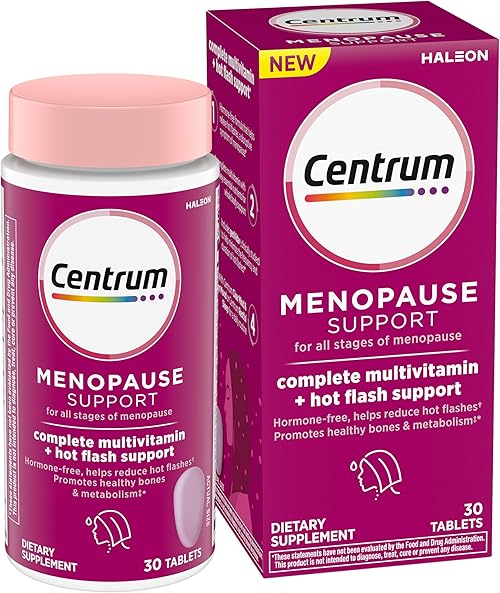
Centrum
Complete Multivitamin + Hot Flash Support
$16.79
"Best budget multivitamin lane for shoppers who want nutrient coverage plus hot-flash positioning; Amazon showed 4.6/5 across 1,155 ratings."
What real Amazon buyers say
4.6★· 1,155 reviews"Value for the money, works good on no hot flashes"

One A Day
Women's Menopause Multivitamin
$19.99
"Best broad-review-base basic multivitamin example; Amazon showed 4.5/5 across 7,688 ratings, but the evidence is less ingredient-specific than ERr 731."
What you'll learn
- Choose by the symptom you can track, not by the longest ingredient list or the most dramatic menopause claim.
- FDA guidance says supplements are not premarket-approved drugs, so labels should be treated as support claims, not treatment proof.
- For hair thinning, biotin evidence is strongest when deficiency is present; sudden or patchy shedding deserves clinician input.
- For dryness, vitamins may support nutrition, but topical barrier care and gynecology or dermatology evaluation may matter more.
- Start one menopause vitamin at a time and track weekly changes before adding another supplement.
Steps
-
1 Step 1: Choose the symptom lane
Write down one primary target before shopping: hot flashes, night sweats, sleep disruption, hair thinning, dryness, or general nutrient coverage. A single lane makes the label easier to judge and gives you a measurable baseline.
-
2 Step 2: Match the active to the evidence
Look for human evidence on the featured active, not just broad menopause language. ERr 731 has PubMed-indexed menopause-symptom literature, while Patel et al. 2017 found biotin support is strongest in deficiency contexts rather than every type of hair shedding.
-
3 Step 3: Screen the label for safety fit
Check serving size, allergens, soy, black cohosh, ashwagandha, high-dose biotin, duplicate vitamins, medication cautions, pregnancy cautions, and liver-history warnings. FDA guidance says dietary supplements are regulated as foods, not drugs.
-
4 Step 4: Pick one product and track it
Use one menopause vitamin as directed for the brand's suggested window while tracking hot-flash frequency, night waking, shedding, dryness, digestion, headaches, mood, and any new symptoms. Avoid starting a second new supplement during the same window.
-
5 Step 5: Escalate symptoms that should not wait
Contact a clinician for sudden hair loss, patchy shedding, bleeding changes, severe vaginal dryness, pain, severe mood symptoms, chest symptoms, or hot flashes that destroy sleep. A supplement can support a routine, but it should not postpone medical evaluation.
Quick answer
The right menopause vitamin is the one that matches one measurable job, has a clear evidence rationale, and does not create safety noise with your medications, lab work, or existing supplements. We analyzed 4 Amazon US menopause-vitamin listings totaling 12,443 displayed ratings, FDA supplement guidance, NCCIH menopause evidence cautions, and 4 PubMed sources. For many US women 35-55, the best first move is not a bigger stack; it is choosing one targeted product, tracking it, and knowing when symptoms need clinician care.
BeautySift did not test these supplements, run a clinical panel, or diagnose menopause symptoms. We aggregate public evidence, ingredient logic, user-review snapshots, US availability, and safety cautions. We may earn a commission from Amazon links, but affiliate status does not influence which products are featured or how caveats are weighted.
Why menopause vitamins are hard to choose
Menopause vitamins sit in a confusing aisle. Some bottles look like multivitamins with a menopause label. Some are botanical blends for hot flashes. Some are hair-skin-nails formulas repackaged for midlife. Some combine magnesium, ashwagandha, black cohosh, soy isoflavones, rhubarb extract, biotin, collagen, vitamin D, and B vitamins in one serving.
That variety is not automatically bad, but it creates a practical problem: if a product promises hot-flash relief, hair growth, smoother skin, better sleep, calmer mood, and energy support, you may not know what you are actually buying. The FDA’s dietary-supplement guidance says supplements are regulated as foods, not premarket-approved drugs. That means a menopause vitamin can support a routine, but it should not be treated like a prescription treatment or a substitute for evaluation.
NCCIH’s menopause overview also cautions that complementary approaches vary in evidence strength. In plain English, some ingredients have human menopause-symptom studies, some have plausible nutrition logic, and some are mostly marketing. Your job is to sort those lanes before money and expectations get attached.
Step 1: Pick one symptom lane before reading labels
Start with the symptom you can count or describe. Hot flashes can be tracked by frequency and severity. Night sweats can be tracked by how often you wake or change sleepwear. Hair thinning can be tracked by shedding pattern, ponytail diameter, part width, or photos taken in the same lighting. Dryness can be tracked by location, trigger, and severity.
This matters because menopause vitamins are not interchangeable. A broad multivitamin may be reasonable if you want nutrient coverage and do not already take one. A formula built around a menopause-studied ingredient may make more sense if hot flashes are the main target. A hair supplement may be relevant only if your clinician has ruled out common shedding drivers or identified a deficiency.
For this guide, Life Extension Menopause 731 is the clearest example of a targeted symptom lane. ERr 731, a rhapontic rhubarb extract, has PubMed-indexed literature including a 2024 systematic review and meta-analysis. Its Amazon US listing showed 4.0/5 across 705 ratings in our May 2026 snapshot. That rating base is not huge compared with mass-market multis, but the ingredient rationale is more specific.
Step 2: Treat evidence as a hierarchy, not a slogan
The strongest shopping signal is not the longest ingredient list. It is the best match between your goal and the evidence behind the product’s main active.
Human clinical literature carries more weight than brand copy. PubMed-indexed studies carry more weight than influencer anecdotes. A brand page can help confirm the intended active and serving format, but it should not be the only evidence. Amazon reviews can reveal user patterns, tolerability complaints, and adherence barriers, but they are not clinical trials.
Using our product-comparison weighting, we score evidence specificity first, then safety clarity, label transparency, user-sentiment volume, price, and US accessibility. That is why a product with fewer ratings can still be a stronger evidence example than a louder, broader blend. Life Extension Menopause 731 earns the evidence-specific lane because of ERr 731 literature. O Positiv MENO earns a modern hormone-free capsule lane because Amazon showed 4.4/5 across 2,395 ratings and the product is positioned for multi-symptom support. Centrum Complete Multivitamin + Hot Flash Support earns the budget multivitamin lane because Amazon showed 4.6/5 across 1,155 ratings and the formula is easier to understand as broad nutrient coverage plus hot-flash positioning.
None of those signals proves a supplement will work for every woman. They help you choose the cleanest experiment.
Step 3: Separate hot flashes, hair thinning, and dryness
A common midlife mistake is buying one bottle for three different problems. Hot flashes, hair thinning, and dryness can overlap during perimenopause, but they do not always share the same cause.
Hot flashes and night sweats are the area where menopause-specific botanicals and extracts are most commonly marketed. The PubMed-indexed ERr 731 review from 2024 is relevant here, as are studies of specific menopause-support ingredients such as EstroG-100 and S-equol. The evidence is still not a blank check: formulation, dose, population, study quality, and your health history matter.
Hair thinning deserves a different lens. Patel et al. 2017 reviewed biotin use for hair loss and found the strongest support in deficiency contexts. If shedding is sudden, patchy, painful, or follows illness, medication change, rapid weight change, heavy bleeding, or thyroid symptoms, a hair vitamin should not be your only plan. Ask about ferritin or iron status, thyroid markers, vitamin D, medication effects, and androgen-pattern thinning when appropriate.
Dryness is another lane. Dry facial skin, body dryness, and vaginal dryness may be influenced by hormones, skin-barrier changes, medications, climate, cleansing habits, and medical conditions. A menopause vitamin may support normal nutrition, but it is rarely the fastest standalone fix for stinging skin, cracking hands, painful sex, or recurrent irritation. For dryness, supplements should sit beside barrier repair and clinician guidance, not replace them.
Step 4: Read the label like a safety document
Before comparing star ratings, scan the supplement facts panel. Look for serving size, daily dose, duplicate nutrients, allergens, soy, black cohosh, ashwagandha, caffeine-like stimulants, high-dose biotin, and warnings for pregnancy, liver history, thyroid conditions, surgery, or medications.
Biotin deserves special attention because it appears in many hair and menopause formulas. The FDA safety communication warns that biotin may interfere with certain lab tests, including tests used in emergency cardiac care. If your menopause vitamin, hair gummy, collagen powder, or multivitamin contains biotin, tell your clinician and lab before blood work. Do not assume a beauty supplement is medically irrelevant.
Also look for duplication. If you already take a multivitamin, adding another menopause multivitamin can stack vitamin A, vitamin D, iodine, selenium, B6, or biotin without you noticing. If you take a hair supplement and a menopause capsule, you may be combining overlapping botanicals or nutrients. One product at a time is not just simpler; it makes side effects easier to identify.
Step 5: Use Amazon reviews as user evidence, not medical proof
Amazon data can be useful when handled honestly. It can show whether thousands of shoppers keep buying a product, whether capsules are hard to swallow, whether gummies melt, whether nausea is common, and whether reviewers mention a specific symptom pattern. It cannot prove a product caused the result.
Our May 2026 Amazon snapshots found 7,688 displayed ratings for One A Day Women’s Menopause Multivitamin at 4.5/5, 2,395 ratings for O Positiv MENO at 4.4/5, 1,155 ratings for Centrum Complete Multivitamin + Hot Flash Support at 4.6/5, and 705 ratings for Life Extension Menopause 731 at 4.0/5. Those numbers tell you about visibility and user sentiment. They do not replace ingredient evidence or safety screening.
Use review language to spot fit. If many reviewers mention hot flashes, that is relevant if hot flashes are your target. If reviewers mainly mention value and convenience, that is relevant for adherence but weaker for symptom confidence. If low-star reviews cluster around stomach upset, headaches, or no change after a full bottle, that is a tolerability signal worth weighing.
Step 6: Choose a clean first experiment
Once you have a symptom lane, evidence level, and safety screen, choose one product. Start it according to the label. Track the same metric once a week. Do not add a new magnesium powder, sleep gummy, collagen, hair vitamin, or herbal tea at the same time.
A practical protocol looks like this: record your baseline for 7 days, start one supplement, take it consistently, track symptoms weekly, and reassess after the label-directed window. If you feel worse, stop and ask for guidance. If symptoms are severe or changing quickly, do not wait for a bottle to run out.
The featured products here represent shopping lanes rather than a universal prescription. Life Extension Menopause 731 is the evidence-specific ERr 731 lane. O Positiv MENO is the modern hormone-free multi-symptom capsule lane. Centrum is the budget multivitamin lane. One A Day is the broad-review-base multivitamin lane. Your best choice depends on which lane matches your actual problem.
When to talk to a clinician first
Talk to a clinician before starting a menopause vitamin if you take prescription medications, have a liver condition, have a history of hormone-sensitive cancer, are pregnant or could be pregnant, have upcoming surgery, or have scheduled lab work. Also get medical input for new heavy bleeding, bleeding after menopause, chest symptoms, severe mood changes, sudden hair loss, patchy hair loss, scalp pain, unexplained weight change, or vaginal dryness with pain or bleeding.
This is not fear-based advice. It is a way to keep supplements in their proper role. Menopause vitamins can support a midlife routine. They should not blur urgent symptoms, delay evaluation, or make lab results harder to interpret.
The BeautySift decision checklist
Use this checklist before buying:
- Name one target symptom or nutrition gap.
- Check whether the main active has human evidence or only marketing language.
- Compare the dose and serving size with the brand’s own claims.
- Check duplicate nutrients across your current supplements.
- Flag high-dose biotin before lab work, using FDA guidance as your guardrail.
- Read low-star reviews for stomach upset, headaches, allergy concerns, or no-result patterns.
- Start one product at a time and track one weekly metric.
- Escalate symptoms that are sudden, severe, painful, or medically unclear.
That protocol is slower than buying the bottle with the boldest promise. It is also more likely to help you identify what is useful, what is noise, and what belongs in a clinician conversation.
FAQs
What is the best menopause vitamin for hot flashes?
There is no single best option for every woman. For a targeted evidence lane, ERr 731 is worth understanding because PubMed includes a 2024 systematic review and meta-analysis on rhapontic rhubarb extract for menopause symptoms. Life Extension Menopause 731 is the featured ERr 731 example here, while O Positiv MENO and Centrum represent different shopping lanes.
Can menopause vitamins help with hair thinning after 40?
They may help when thinning is connected to a correctable nutrient gap, but they are not a full plan for sudden shedding, patchy loss, thyroid issues, iron deficiency, medication effects, or androgen-pattern thinning. Patel et al. 2017 found biotin evidence is strongest in deficiency contexts, so high-dose biotin should not be treated as a universal hair-growth answer.
Are menopause multivitamins better than regular multivitamins?
Not always. A menopause multivitamin may add hot-flash-positioned ingredients or midlife marketing language, but the core value still depends on the nutrient panel, dose, safety fit, and whether it duplicates what you already take. If you already use a multivitamin, compare labels before adding another.
Can a menopause vitamin fix dry skin or vaginal dryness?
Usually not by itself. Vitamins may support normal nutrient status, but dryness often needs topical barrier repair, gentler cleansing, medication review, humidity changes, or gynecology guidance. Pain, bleeding, recurrent irritation, or severe vaginal dryness should be discussed with a clinician.
How long should I try a menopause vitamin before judging it?
Follow the product label as your first timing guide and track symptoms weekly. Do not judge by one good or bad day. If you develop side effects, feel worse, or have red-flag symptoms, stop waiting and contact a clinician instead of pushing through.