
How to Firm Sagging Skin Without Injectables: Evidence-Led Guide for 2026
An evidence-weighted guide to firmer-looking skin after 40 without Botox or fillers, ranking retinoids, LED red light, peptides, and microcurrent.
Based on 8 sources including a 2022 tretinoin systematic review, a 2007 split-face LED clinical study, and Amazon US snapshots totaling 20,745 device and topical ratings, the strongest non-injectable firming plan after 40 is retinoid consistency first, LED red light second, peptides for support, and microcurrent for temporary contouring.
Editor's top Amazon picks for this guide
Real Amazon products that match this protocol. Affiliate links — your purchases support BeautySift.

The Ordinary
The Ordinary Granactive Retinoid 2% Emulsion
$12.10
"A low-cost retinoid-family option for the highest-evidence topical lane; best for users who want gradual texture and firmness support without starting with prescription tretinoin."

CurrentBody Skin
CurrentBody Skin LED Light Therapy Mask: Series 2
$469.99
"A full-face red-light option aligned with the LED evidence tier; best for users who will follow a repeated-session schedule."

Dr. Dennis Gross
Dr. Dennis Gross DRx SpectraLite FaceWare Pro
$455
"A red and blue LED mask option; most relevant when fine lines and breakout-prone skin are both part of the decision."

NUFACE
NUFACE MINI+ Microcurrent Face Massager Device
$250
"A microcurrent option for temporary lifted-looking contour; the evidence tier is weaker than retinoids and LED, so expectations should stay conservative."

Solawave
Solawave 4-in-1 Red Light Therapy Wand
$169
"A smaller-area device for users who prefer targeted sessions; less practical than a full mask for whole-face consistency."
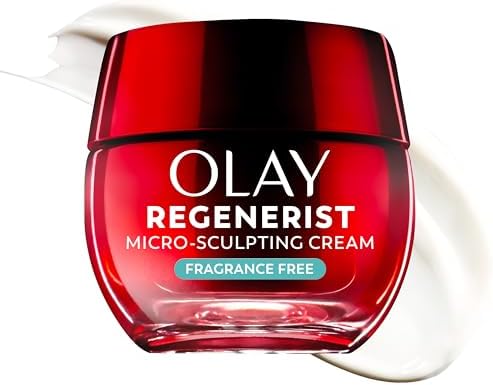
Olay
Olay Regenerist Micro-Sculpting Cream Fragrance-Free
$23.94
"A peptide-and-niacinamide moisturizer lane for barrier support and smoother-looking skin; do not expect injectable-level lifting."
What you'll learn
- Retinoids have the strongest topical evidence for photoaging-related texture, fine lines, and collagen-support claims, but they require months of consistent use and careful irritation control.
- Red and near-infrared LED has meaningful clinical literature for skin rejuvenation, but results depend on dose, wavelength, eye safety, and repeated sessions.
- Peptides are useful as a supportive moisturizer lane, especially when retinoids are drying, but peptide claims are generally less robust than retinoid evidence.
- Microcurrent can make the face look temporarily more lifted or de-puffed for some users, but the independent evidence base is weaker than retinoids or LED.
- No topical or at-home device should be framed as a substitute for Botox, filler, ultrasound lifting, surgery, or dermatology care when laxity is advanced.
Steps
-
1 Step 1: Identify what you mean by sagging
Before buying a device, separate four patterns: crepey texture, fine lines, volume loss, jowling or deeper laxity, and morning puffiness. Retinoids and LED are better matched to photoaging texture than to true structural descent. Microcurrent may temporarily improve a lifted-looking outline for some people, while peptides mostly support hydration and barrier comfort. If the change is sudden, one-sided, painful, or associated with swelling, seek medical evaluation instead of starting a cosmetic protocol.
-
2 Step 2: Rank the options by evidence before ranking them by price
BeautySift's evidence-weighted order is retinoids first, LED red or near-infrared second, peptide moisturizers third, and microcurrent fourth. The 2022 tretinoin systematic review and 2007 retinol study give retinoids the strongest topical evidence. LED has randomized and controlled clinical literature, including the 2007 split-face study and 2014 red and near-infrared trial. Peptide and microcurrent routines can still be useful, but they should be framed as support or temporary cosmetic contour, not collagen rebuilding on the level of a prescription or procedure.
-
3 Step 3: Build a 12-week starter routine around tolerance
For weeks 1 to 2, use sunscreen every morning, moisturizer twice daily, and no new device until the barrier feels calm. In weeks 3 to 4, add a retinoid two nights weekly. In weeks 5 to 8, increase the retinoid only if there is no persistent burning or peeling. In weeks 9 to 12, add LED on non-irritated skin if you can commit to the device schedule. Add peptides whenever extra moisture is needed. Add microcurrent only after you understand that the goal is short-term contouring before an event or as a maintenance ritual.
-
4 Step 4: Use retinoids as the foundation, not the fast fix
Retinoids are the highest-ranked non-injectable lane because their photoaging evidence is stronger than most cosmetic actives. They can support smoother texture and firmer-looking skin over time, but irritation can erase the benefit by making skin look inflamed and rough. Start with a low-frequency over-the-counter retinoid, or ask a dermatologist whether prescription tretinoin is appropriate. Do not use retinoids if pregnant, trying to conceive, or instructed to avoid them by a clinician.
-
5 Step 5: Add LED only if you will use it consistently and safely
Red and near-infrared LED is ranked second because controlled studies support skin-rejuvenation signals, but at-home results depend on the device's wavelength, irradiance, fit, and consistency. Follow the device timing exactly, keep eyes protected as directed, and avoid using LED over irritated or photosensitizing reactions. A full-face mask is usually easier for whole-face consistency than a small wand, while a wand can make sense for users who only want to target smile lines, jawline edges, or neck texture.
-
6 Step 6: Use peptides as the comfort layer
Peptide moisturizers are ranked below retinoids and LED because the evidence is more ingredient- and formula-specific, but they are still practical in a firming routine after 40. Their best role is supporting a smoother, more hydrated-looking surface, especially on nights when retinoids are paused. Choose fragrance-free or low-fragrance formulas if your skin is reactive, and judge success by comfort, less tightness, and better makeup wear rather than dramatic lifting.
-
7 Step 7: Treat microcurrent as temporary contouring
Microcurrent is the lowest-ranked of the four headline options for long-term firming evidence. It may make some faces look more awake, lifted, or less puffy after a session, but results usually require frequent use and conductive gel. Skip it if you have an implanted electrical device, seizure history, pregnancy-related device restrictions, active skin infection, or any contraindication listed by the manufacturer. If you buy one, track whether you still use it after 30 days; abandonment is the biggest value problem.
What non-injectable firming can and cannot do
Sagging skin after 40 is not one problem. A dry, crepey cheek, etched smile lines, under-chin softness, and lower-face jowling all look like “loss of firmness” in the mirror, but they respond differently to topicals and at-home devices.
BeautySift did not test this protocol on a panel. We analyzed peer-reviewed retinoid and LED literature, FDA device framing, and US Amazon product snapshots for available products. The result is a conservative ranking: retinoids have the strongest topical evidence, LED has the strongest device evidence, peptides support tolerance and surface smoothness, and microcurrent is best treated as temporary contouring.
Affiliate disclosure: we may earn a commission on links. Affiliate availability does not influence the ranking order or evidence weighting.
Evidence ranking: retinoids vs LED vs peptides vs microcurrent
-
Retinoids: highest evidence tier for photoaging-related texture, fine lines, and firmer-looking skin over months. The 2022 systematic review on topical tretinoin and the 2007 retinol study support this lane more strongly than most cosmetic actives.
-
Red and near-infrared LED: strongest device tier for skin-quality support. The 2007 randomized split-face LED study and 2014 controlled red and near-infrared light trial support the idea that repeated light exposure can improve skin-rejuvenation markers, but at-home devices still depend on correct use.
-
Peptide moisturizers: useful support tier. Peptides can make a routine more tolerable and help skin look smoother when paired with moisturizers and sunscreen, but the evidence is more formula-specific than the retinoid literature.
-
Microcurrent: temporary contour tier. Microcurrent devices may help some users see a short-term lifted or de-puffed look, but the evidence for durable firming is weaker than retinoids or LED.
A practical 12-week routine
Weeks 1-2: reset the barrier.
Use a gentle cleanser, moisturizer, and broad-spectrum sunscreen every morning. If skin is already peeling, stinging, or tight, do not add a retinoid or device yet. Firming routines fail quickly when irritation makes texture look worse.
Weeks 3-4: add the retinoid lane.
Use a low-frequency retinoid two nights weekly. Keep other nights bland: cleanse, moisturize, and stop. If you already use prescription tretinoin, do not add extra retinol on top. If you are pregnant, trying to conceive, or avoiding retinoids for medical reasons, skip this lane and ask a clinician about alternatives.
Weeks 5-8: increase only if calm.
If there is no persistent burning or peeling, move the retinoid to three nights weekly. Add a peptide or niacinamide moisturizer on non-retinoid nights if skin feels tight. Do not chase firmness by exfoliating aggressively; inflammation can make mature skin look thinner and rougher.
Weeks 9-12: add LED if the schedule is realistic.
Choose a full-face mask if you want even coverage and can sit through repeated sessions. Choose a wand only if you are comfortable treating smaller areas consistently. Follow the device instructions exactly, including eye protection and timing.
Optional: add microcurrent for short-term contouring.
Use microcurrent when you want a temporary lifted-looking outline and are willing to use conductive gel and repeat sessions. Do not buy it expecting a filler-like cheek lift or surgical jawline change.
How to choose between a device and a topical
Choose a retinoid first if your main concern is crepey texture, fine lines, enlarged-looking pores, or roughness.
Choose LED first only if retinoids are not an option for you, or if you already have a stable topical routine and want a device with better evidence than microcurrent.
Choose peptides if your skin barrier is the limiting factor. A firming routine that you can tolerate for 12 months is more useful than an aggressive routine you abandon after 12 days.
Choose microcurrent if you enjoy device rituals and want a short-term lifted look before photos, events, or makeup. It is the least convincing choice if you want durable collagen-focused change.
Safety and expectation checks
Do not use cosmetic firming routines over active dermatitis, infection, sunburn, broken skin, or recent procedure sites unless your clinician clears it. For devices, follow manufacturer contraindications. For retinoids, pause during pregnancy or when advised by a clinician.
Take photos at baseline, week 6, and week 12 in the same room and lighting. Look for softer texture, smoother makeup wear, and a slightly firmer-looking surface. Do not use filtered selfies or morning-after device photos as proof of collagen change.