How to Layer Ceramide Moisturizers With Retinol, Vitamin C, Acids, and SPF
A practical, evidence-led guide to placing ceramide moisturizers around retinol, vitamin C, exfoliating acids, niacinamide, and sunscreen.
We analyzed 12 evidence sources: 4 Amazon US rating snapshots totaling 12,356 reviews, AAD retinoid guidance, FDA AHA guidance, and 6 PubMed papers. Layer ceramide moisturizer after most serums, before sunscreen in the morning, and before or after retinol at night when sensitive skin needs buffering.
Editor's top Amazon picks for this guide
Real Amazon products that match this protocol. Affiliate links — your purchases support BeautySift.

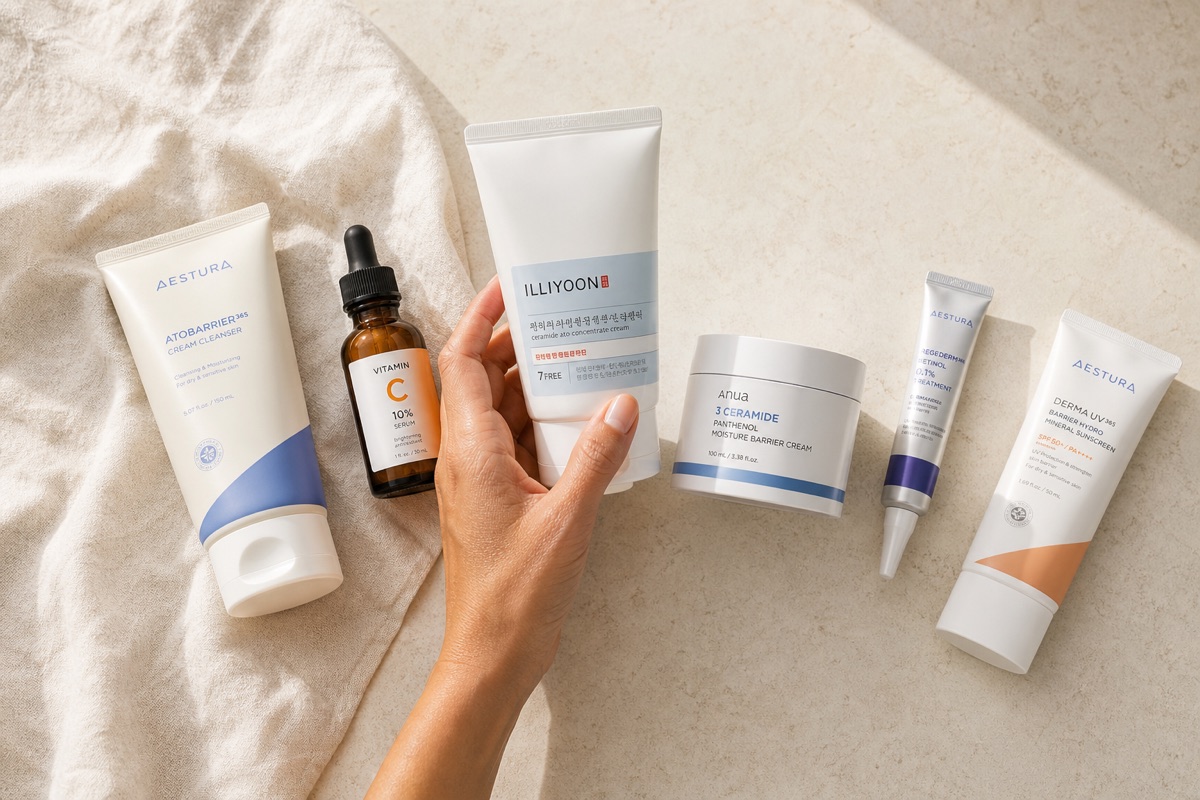
Illiyoon
Illiyoon Ceramide Ato Concentrate Cream
$17.99
"Best richer barrier cream for dry, sensitive routines: 4.7/5 across 6,351 Amazon ratings and a face-and-body cream texture."
What real Amazon buyers say
4.7★· 6,351 reviews"I absolutely love this moisturizer. It's thick, deeply hydrating, and works so well for my sensitive skin."
"I'm able to use this over other serums and as a nightly face mask and I wake up with bouncy smooth skin. No breakouts, no burning sensation on my skin or around my eyes, and no fragrance at all."

AESTURA
AESTURA ATOBARRIER365 Cream with Ceramides
$32
"Best recovery-night cream for dry or retinoid-stressed skin: 4.6/5 across 4,514 Amazon ratings and a non-comedogenic cream positioning."
What real Amazon buyers say
4.6★· 4,514 reviews"I use it day and night as a final moisturizer after my skincare routine."
"I specifically bought it because I was a bit too aggressive with retinol and wanted to heal my skin barrier."

ANUA
ANUA 3 Ceramide Panthenol Moisture Barrier Cream
$20
"Best balanced daily layer for moisturizer-plus-active routines: 4.6/5 across 1,125 Amazon ratings and a panthenol, centella, and ceramide positioning."
What real Amazon buyers say
4.6★· 1,125 reviews"Natural hydrate finish which I love so much. Absorbing so quick and hydrate my skin instantly, that is what I absolutely love about this moisturizer."
"This stuff is excellent. Its light weight, yet very moisturising and persistent without leaving an oily or sticky feeling."

Good Molecules
Good Molecules Rich Cream with Ceramides
$13.99
"Best budget cream in this protocol set: 4.4/5 across 366 Amazon ratings and a lower $13.99 snapshot price."
What you'll learn
- Place ceramide moisturizer after most water-based serums and before sunscreen in the morning; sunscreen remains the final daytime skincare step.
- With retinol or prescription retinoids, ceramide moisturizer can go before, after, or both, depending on how easily your skin gets dry or stingy.
- Do not stack retinoids, exfoliating acids, and low-pH vitamin C in one routine just because you own a barrier cream; reduce active frequency first.
- Niacinamide is usually the easiest active to pair with ceramides because PubMed-reviewed literature links it with barrier support and lower water loss.
- For sensitive or perimenopausal dryness, schedule ceramide-only recovery nights at least twice weekly before increasing retinol or acid strength.
Steps
-
1 Start with the active that has the highest irritation risk
Sort your routine by irritation potential before choosing the moisturizer position. Retinoids and exfoliating acids usually need the most caution; vitamin C depends on formula pH and skin tolerance; niacinamide and hydrating serums are usually easier to combine.
-
2 Use the morning order: cleanse, vitamin C or niacinamide, ceramide moisturizer, sunscreen
Apply watery antioxidant or niacinamide serum first, then ceramide moisturizer if skin feels dry, then broad-spectrum sunscreen. The Lin 2008 JAAD antioxidant study supports vitamin C plus E plus ferulic as supplemental photoprotection, but it does not replace FDA-regulated sunscreen.
-
3 Use the evening order: cleanser, treatment, ceramide moisturizer
If skin tolerates actives well, apply retinol or an acid after cleansing and follow with ceramide moisturizer. If your face stings, flakes, or feels tight, move moisturizer before retinol as a buffer or use the moisturizer alone on recovery nights.
-
4 Separate retinoid nights and acid nights
Keep retinol or retinal nights separate from glycolic, lactic, mandelic, or salicylic acid nights until your skin has several calm weeks. FDA AHA guidance warns that AHAs can increase sun sensitivity, so daytime sunscreen is not optional.
-
5 Reintroduce actives one at a time after irritation
After a 7 to 14 day simple routine, add back one active and keep the ceramide moisturizer constant. If burning returns, reduce frequency before blaming one ingredient. Persistent rash, swelling, bleeding, or severe itch belongs with a clinician, not a shopping cart.
Bottom line
Ceramide moisturizer is the support layer, not the active. Use it to make retinol, exfoliating acids, vitamin C, niacinamide, and sunscreen easier to live with, especially if you are 35-55 and your skin has become drier, more reactive, or less forgiving than it was a decade ago.
BeautySift did not test these products on a panel. We analyzed 12 evidence sources: Amazon US rating snapshots for Illiyoon, AESTURA, ANUA, and Good Molecules totaling 12,356 ratings; American Academy of Dermatology retinoid advice; FDA alpha hydroxy acid guidance; and PubMed-indexed literature on ceramides, barrier lipids, retinization, niacinamide, and antioxidant vitamin C. We may earn a commission from Amazon links, but affiliate status does not change the evidence weighting.
The practical answer is simple: in the morning, put ceramide moisturizer after water-based serums and before sunscreen. At night, put it after retinol or acids if your skin tolerates those actives, or put it before retinol if you need a buffer. If skin is burning, flaking, or stinging, stop competing with your barrier and schedule recovery nights.
Why ceramides belong in an active routine
Ceramides are part of the lipid structure of the stratum corneum, the outer skin layer that helps regulate water loss and barrier comfort. Choi and Maibach’s 2005 American Journal of Clinical Dermatology review describes ceramides as central to barrier function and water-holding capacity. That does not mean a cosmetic moisturizer rebuilds skin overnight; it means ceramides are a rational ingredient family when the routine problem is dryness, tightness, or sensitivity around stronger actives.
The newer evidence is more specific. Cork and colleagues’ 2025 British Journal of Dermatology study followed 58 adults predisposed to atopic dermatitis and found that a moisturizer with physiological lipids plus glycerine improved barrier integrity after tape stripping and reduced sodium lauryl sulfate sensitivity, while a glycerine-only comparator helped dryness but did not improve barrier function in the same way. BeautySift treats that as barrier evidence, not as a disease-treatment promise.
For a 35-55 routine, the most useful takeaway is timing. Retinol, exfoliating acids, and low-pH vitamin C can all be valuable, but they can also expose a weak routine. Ceramide moisturizer gives you a way to keep the routine consistent without making every night an active-treatment night.
Step 1: identify the active you are layering around
Start by naming the active that needs support. Retinol and prescription retinoids are the classic irritation triggers. The AAD’s retinoid guidance recommends starting slowly, using retinoids at night, moisturizing, and wearing sun protection. If retinol causes peeling around the mouth, dry patches on the cheeks, or moisturizer that suddenly stings, your next move should be fewer retinol nights or more buffering, not a stronger exfoliant.
Exfoliating acids are the second high-caution group. Glycolic, lactic, mandelic, and salicylic acids can smooth texture, but the FDA’s alpha hydroxy acid page states that AHAs can increase sun sensitivity and recommends sunscreen, protective clothing, and limiting sun exposure while using them and for a week afterward. A ceramide moisturizer can reduce the dry feel after acids, but it cannot cancel out over-exfoliation.
Vitamin C depends on formula type. The Lin 2008 JAAD study on 15% L-ascorbic acid, 1% vitamin E, and 0.5% ferulic acid supports antioxidant photoprotection as a supplement to sunscreen, not a replacement. Niacinamide is usually easier: Bissett’s 2005 Dermatologic Surgery split-face study of 5% niacinamide in 50 female subjects reported improvements over 12 weeks, and Gehring’s 2004 review connects niacinamide with barrier function and lower transepidermal water loss.
Step 2: use the morning order for vitamin C, niacinamide, and SPF
A strong morning order is: gentle cleanse or rinse, vitamin C or niacinamide serum, ceramide moisturizer if needed, then broad-spectrum sunscreen. Keep sunscreen last because it is the regulated protective layer. If a moisturizer makes sunscreen pill, use less moisturizer, wait a few minutes, or choose a lighter texture rather than skipping SPF.
Vitamin C fits best in the morning for many routines because antioxidant literature, including Lin 2008, is about UV-related oxidative stress. That does not mean vitamin C is a sunscreen. It means vitamin C can be a supporting step under sunscreen when your skin tolerates it. If your vitamin C stings, use it every other morning or two mornings weekly until the barrier feels calm.
Niacinamide can go morning or night. Because Bissett 2005 studied 5% niacinamide in women over 12 weeks and Gehring 2004 describes barrier-related effects, niacinamide is a logical companion for ceramide moisturizer when redness, dryness, or uneven tone are part of the same routine problem. If you already use a moisturizer that includes niacinamide, you do not need a separate niacinamide serum unless you have a clear reason.
Illiyoon Ceramide Ato Concentrate Cream is the richest of the four products we included. Amazon’s US snapshot lists it at 4.7/5 across 6,351 ratings, and recent verified review excerpts describe a thick, deeply hydrating texture and use over serums. That makes it a better fit for dry cheeks, nighttime buffering, or Midwest winter cold than for oily skin under makeup.
Step 3: choose your retinol buffering method
There are three reasonable ways to use ceramide moisturizer with retinol. The standard method is retinol first, moisturizer second. This keeps the active close to clean, dry skin and uses moisturizer to reduce tightness afterward. It is a good fit if you already tolerate retinol and simply want less dryness by morning.
The buffer method is moisturizer first, retinol second. This is useful if retinol makes your face sting or peel, especially around the mouth, nose folds, or cheeks. The AAD’s retinoid advice supports slow introduction and moisturizer use; buffering is one practical way to apply that advice. You may get a gentler experience, but you still need to respect frequency.
The sandwich method is moisturizer, retinol, moisturizer. This is the most conservative approach for dry or sensitive skin. It is also the easiest method for women who have stopped and restarted retinol several times because the first two weeks became uncomfortable. If you need the sandwich method every night, use retinol fewer nights rather than assuming more cream is the answer.
AESTURA ATOBARRIER365 Cream fits the recovery-night role in this article’s product set. Amazon’s US snapshot lists it at 4.6/5 across 4,514 ratings, and the listing positions it as a non-comedogenic cream for dry and sensitive skin. One visible verified Amazon review specifically mentions buying it after being too aggressive with retinol, which is exactly the kind of routine problem this guide addresses.
Step 4: separate acid nights from retinoid nights
Do not stack glycolic acid, lactic acid, mandelic acid, salicylic acid, and retinol in one night just because you own a ceramide cream. That approach can make your skin feel smoother for a week and irritated for a month. A better starter schedule is two retinol nights, one acid night, and the rest recovery nights for 2 to 4 weeks.
On an acid night, follow the product’s directions, then apply ceramide moisturizer. If the acid is a leave-on toner or serum, do not add a scrub, peel pad, or retinoid afterward. If skin feels hot, shiny, tight, or unusually sensitive the next morning, pause acids and use a bland moisturizer-sunscreen routine.
FDA AHA guidance is especially important here because sun sensitivity is not a texture issue. Moisturizer can help comfort; sunscreen handles UV exposure. If you use acids and retinoids, daytime sunscreen should be part of the protocol every day, including cloudy days and winter days when UVA exposure still matters.
ANUA 3 Ceramide Panthenol Moisture Barrier Cream is the balanced daily layer of the featured set. Amazon’s US snapshot lists it at 4.6/5 across 1,125 ratings, and the product positioning includes ceramides, panthenol, and centella. It makes sense when you want a moisturizer that can sit between serums and sunscreen without feeling like a heavy night mask.
Step 5: build recovery nights into the week
Recovery nights are not failed skincare. They are how an active routine stays sustainable. A recovery night can be cleanser, ceramide moisturizer, and nothing else. For very dry patches, a tiny amount of petrolatum-type ointment can be used on corners or cracked areas, but full-face slugging is optional and can be too heavy for some breakout-prone skin.
Use recovery nights more often when you increase retinol strength, start a new acid, travel, spend time in dry indoor heat, or notice sunscreen stinging. Perimenopausal dryness can make a once-easy routine feel unpredictable, so keep the schedule flexible. If skin is calm for several weeks, you can add one more active night. If skin complains, reduce frequency again.
Good Molecules Rich Cream with Ceramides is the budget option in this set. Amazon’s US snapshot lists it at 4.4/5 across 366 ratings and $13.99. Its lower review count means less user-evidence weight than Illiyoon, AESTURA, or ANUA, but it fills a useful role for shoppers who want a lower-cost ceramide cream before deciding whether richer textures suit their routine.
A practical 2-week starter schedule
For week 1, keep mornings consistent: cleanse or rinse, vitamin C or niacinamide only if already tolerated, ceramide moisturizer if needed, then sunscreen. At night, use retinol once, acids zero or once, and make the other nights recovery nights. This is conservative, but conservative is useful when your skin is dry or sensitive.
For week 2, add one variable only. If retinol night was calm, add a second retinol night. If acid night was calm and retinol is not your priority, keep one acid night and add niacinamide on non-acid mornings. Do not increase vitamin C frequency, retinol frequency, and acid frequency in the same week; you will not know which step caused a reaction.
After 14 days, evaluate what changed. Less tightness after cleansing, less sunscreen sting, and fewer flakes are signs that the routine is more tolerable. New burning, swelling, rash, severe itch, or persistent scaling is not a cue to buy another moisturizer. That pattern deserves medical guidance.
Product roles in this protocol
Pick one moisturizer by texture and routine role. Illiyoon is the richer buffer for dry or sensitive skin and has the largest Amazon evidence snapshot in this article at 6,351 ratings. AESTURA is the recovery-night cream when retinol or acids have made skin feel stressed. ANUA is the balanced daily layer when you want ceramides without a very heavy finish. Good Molecules is the budget option for shoppers who want to try a ceramide cream before spending more.
The scores behind those roles are qualitative, not lab-test scores. Using the BeautySift product-comparison rubric, Illiyoon ranks highest for user-evidence volume and value; AESTURA ranks highest for recovery-night positioning; ANUA ranks highest for daily layering texture; Good Molecules ranks highest on price but lower on evidence volume because its Amazon snapshot has 366 ratings versus the 4,514 to 6,351 ratings behind the top two.
You do not need a shelf of ceramide products. One formula that fits your climate, sunscreen, makeup, and active schedule is better than three formulas you rotate randomly. If your skin is calm, your moisturizer is doing enough.
Common layering mistakes
The first mistake is using moisturizer to justify too many actives. Ceramides can support comfort, but they do not make daily retinol plus daily acid exfoliation a good idea for sensitive skin. Frequency is part of the formula.
The second mistake is placing sunscreen too early. In the morning, sunscreen should be the final skincare step. Put ceramide moisturizer underneath if you need it, then give the layers a short settling window before makeup.
The third mistake is changing everything when irritation appears. If a routine burns, simplify for 7 to 14 days: gentle cleanser, ceramide moisturizer, sunscreen in the morning, and moisturizer at night. Then reintroduce one active at a time.
FAQs
Can ceramide moisturizer make retinol less effective?
It may slightly buffer the feel of retinol when applied before it, but that tradeoff is often worthwhile if buffering helps you use retinol consistently. The AAD emphasizes slow retinoid introduction and moisturizer use; consistent low-irritation use is usually more realistic than frequent stop-start cycles.
Can I use vitamin C, ceramide moisturizer, and sunscreen in the same morning?
Yes. Apply vitamin C first if it is a serum, then ceramide moisturizer if needed, then sunscreen. The Lin 2008 JAAD antioxidant study supports vitamin C plus E plus ferulic as supplemental photoprotection, while sunscreen remains the required UV-protection step.
Should I use ceramide moisturizer after exfoliating acids?
Yes, especially if acids make skin feel tight. Apply the acid as directed, then moisturize. Keep acid nights separate from retinoid nights until your skin has shown several calm weeks, and follow FDA AHA guidance by using sunscreen daily.
Is niacinamide redundant if my moisturizer has ceramides?
Not always. Niacinamide and ceramides support the barrier in different ways. Bissett 2005 studied 5% niacinamide in 50 female subjects over 12 weeks, while ceramide moisturizers provide topical lipid support. If your moisturizer already contains niacinamide and your skin is calm, you may not need another serum.
When should I stop actives and use only moisturizer?
Stop optional actives temporarily if moisturizer stings, sunscreen burns, flakes persist, or your face feels hot and shiny. Use a simple routine for 7 to 14 days. Seek medical advice for swelling, bleeding, severe itch, spreading rash, crusting, or pain.