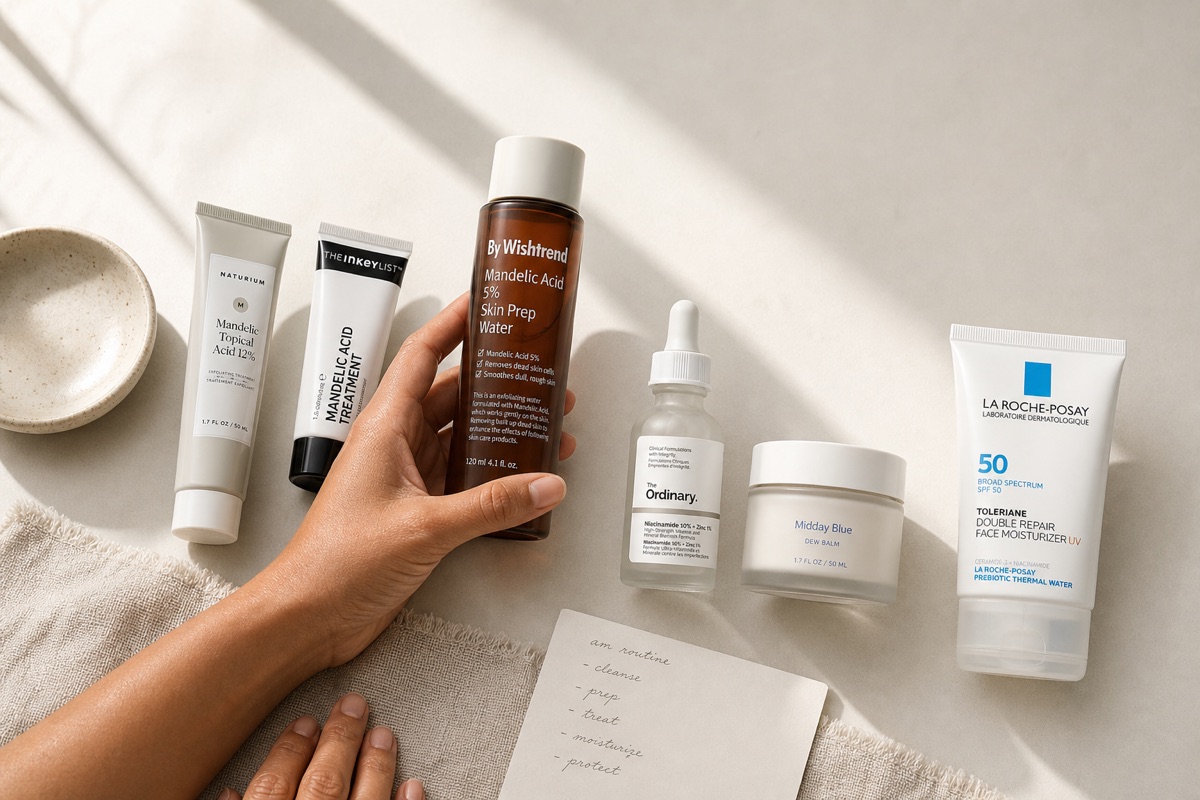
How to Layer Mandelic Acid Products With Other Actives
An evidence-led guide to layering mandelic acid with retinoids, vitamin C, niacinamide, azelaic acid, benzoyl peroxide, and barrier care.
We analyzed 2 mandelic-acid peel studies, including a 44-patient Dermatologic Surgery trial, FDA AHA sun-sensitivity guidance, and Amazon US rating snapshots for 4 mandelic products. Layer mandelic acid conservatively: sunscreen every morning, niacinamide or moisturizer same routine, and retinoids or benzoyl peroxide on alternate nights.
Editor's top Amazon picks for this guide
Real Amazon products that match this protocol. Affiliate links — your purchases support BeautySift.
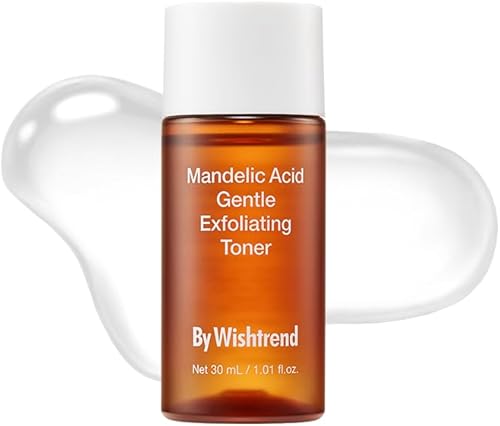
BY WISHTREND
Mandelic Acid 5% Skin Prep Water
$9
"A lower-strength 5% mandelic toner fits the beginner or sensitive-skin step when the goal is gradual exfoliation rather than a strong peel-like routine."

Naturium
Mandelic Topical Acid 12%
$20
"A 12% mandelic formula with niacinamide fits experienced acid users who want an exfoliant night separate from retinoid or benzoyl peroxide nights."

The INKEY List
Mandelic Acid Treatment
$14
"A fragrance-free mandelic treatment fits a targeted dark-mark or acne-mark step, especially when used on non-retinoid nights."

Stratia
Soft Touch 10% Mandelic Acid Serum
$18
"A 10% mandelic serum offers a mid-strength option for texture and blemish-prone routines when the rest of the week stays barrier-focused."
What you'll learn
- Mandelic acid is still an alpha hydroxy acid, so the FDA sun-sensitivity warning applies even when the product feels gentler than glycolic acid.
- For sensitive or perimenopausal skin, the safest layering default is mandelic acid on exfoliation nights and retinoids, benzoyl peroxide, or other acids on different nights.
- Niacinamide, bland moisturizer, and sunscreen are the easiest same-routine partners because they support tolerability rather than adding another exfoliation signal.
- Professional peel studies support mandelic acid activity for acne and discoloration, but they do not prove that stacking multiple at-home actives is safer or faster.
Steps
-
1 Step 1: Decide whether mandelic acid earns the exfoliation slot
Use mandelic acid when your main goals are smoother texture, clogged-looking pores, dullness, or post-breakout discoloration. Do not add it just because every routine needs an acid; if your skin is already stinging, peeling, or reacting to retinoids, repair the barrier first and postpone exfoliation.
-
2 Step 2: Put sunscreen in the routine before the acid
The FDA states that alpha hydroxy acids can increase sun sensitivity and advises sunscreen, protective clothing, and limiting sun exposure during AHA use and for one week afterward. If you will not use sunscreen consistently, mandelic acid is the wrong next active.
-
3 Step 3: Start mandelic acid at night, one to three times weekly
Begin with a clean, dry face at night. Apply the mandelic product, wait until it settles, then use moisturizer. Sensitive skin should start once weekly; more resilient skin can start two nights weekly. Increase only after two calm weeks without burning, rawness, or new flaking.
-
4 Step 4: Pair same-night layers with low-conflict support ingredients
Niacinamide, glycerin, ceramides, petrolatum around vulnerable creases, and a plain moisturizer are reasonable same-night partners. They do not turn mandelic acid into a stronger peel, but they can make the routine easier to keep consistent.
-
5 Step 5: Alternate mandelic acid with retinoids and benzoyl peroxide
For most non-prescription routines, use mandelic acid on one night and retinoid or benzoyl peroxide on another. This is especially important for women 35 to 55 managing both breakouts and drier, more reactive skin. Same-night stacking may be possible for some experienced users, but it should not be the default beginner protocol.
-
6 Step 6: Keep other exfoliants out of the same routine unless directed
Avoid layering mandelic acid with glycolic acid, lactic acid, salicylic acid pads, strong peel masks, gritty scrubs, or low-pH vitamin C in the same session. If acne or pigmentation needs more help, increase the weekly plan slowly instead of building a one-night acid stack.
-
7 Step 7: Use a 4-week irritation audit before judging results
Track three things weekly: stinging that lasts more than a few minutes, visible peeling, and whether breakouts or dark marks are improving. If irritation rises before results appear, reduce frequency. If acne is painful, cystic, scarring, or worsening, stop troubleshooting with acids and involve a dermatologist.
Bottom line
Mandelic acid belongs in the exfoliation slot, not in every slot. It can be a useful alpha hydroxy acid for texture, clogged-looking pores, post-breakout discoloration, and routines that cannot tolerate aggressive glycolic acid. But the evidence does not support the idea that more actives layered at once gives faster, safer results.
BeautySift did not test this routine on a panel. We analyzed mandelic-acid and AHA literature, including the 44-patient Garg et al. Dermatologic Surgery study and the 50-patient Dayal et al. Journal of Cosmetic Dermatology study, plus FDA alpha hydroxy acid guidance and Amazon US rating snapshots for four representative mandelic products. We may earn a commission from Amazon links; affiliate status does not affect scoring or placement.
For most women 35 to 55, especially if perimenopause has made skin drier while breakouts still happen, the best layering plan is simple: sunscreen every morning, mandelic acid one to three nights weekly, niacinamide or moisturizer in the same routine if desired, and retinoids, benzoyl peroxide, salicylic acid, or stronger vitamin C on separate routines until tolerance is clear.
What mandelic acid can and cannot do
Mandelic acid is an AHA, the same broad family as glycolic and lactic acid. Its reputation is gentler, but it is still an exfoliating acid. The FDA AHA guidance matters here: AHAs can increase skin sensitivity to the sun, and the agency advises sunscreen, protective clothing, and limiting sun exposure while using AHAs and for one week afterward.
The strongest mandelic-specific evidence is not from casual at-home layering routines. Garg et al. studied 44 patients in Dermatologic Surgery and compared serial glycolic acid peels with salicylic-mandelic acid peels for active acne, post-acne scarring, and hyperpigmentation. Dayal et al. studied 50 patients and compared 45% mandelic acid peels with 30% salicylic acid peels for mild-to-moderate acne. Those are useful signals that mandelic acid is biologically active, but they are peel studies, not permission to stack mandelic acid, retinoids, salicylic acid, and benzoyl peroxide in one night.
That distinction is the whole guide. Mandelic acid can fit acne-prone, sensitive, or midlife routines when it is treated as one active among several, not as a harmless toner step.
The easiest same-routine partners
The lowest-conflict partners for mandelic acid are barrier-supporting ingredients: glycerin, hyaluronic acid, panthenol, ceramides, petrolatum around corners of the nose or mouth, and a plain moisturizer. These ingredients do not make mandelic acid stronger. They make the routine less likely to become a cycle of exfoliation, burning, peeling, and then more breakouts.
Niacinamide is also a practical same-routine partner for many users. It is not an exfoliating acid, and it often appears in routines aimed at redness, oiliness, barrier support, and uneven tone. Naturium Mandelic Topical Acid 12%, for example, is officially positioned as a mandelic acid formula with niacinamide and fruit acids; the Amazon US listing snapshot we captured showed 4.5/5 across 860 ratings. That does not prove it will suit every sensitive face, but it shows why the product fits the stronger mandelic-night category.
If you already use a niacinamide serum, do not assume more layers are better. Cleanser, mandelic acid, moisturizer, and sunscreen the next morning is enough. If you want niacinamide too, apply it before moisturizer or choose a mandelic formula that already includes it.
Retinoids: alternate nights first
Retinoids and mandelic acid can both be useful in acne- and aging-focused routines, but they compete for tolerance. Retinoids support acne prevention and visible aging concerns through a different pathway than AHAs; mandelic acid exfoliates. Together, they can be too drying for skin that is already fluctuating with perimenopause, winter air, or hormonal acne treatments.
A conservative weekly plan is easier to sustain. Use mandelic acid Monday and Thursday. Use retinol or adapalene Tuesday and Saturday. Keep Wednesday, Friday, and Sunday as moisturizer-only recovery nights until your skin proves it can handle more. If you use prescription tretinoin, be even more careful: FDA-approved tretinoin labeling commonly warns that abrasive, drying, or irritating topical products can compound irritation.
Do not judge the plan by how active it feels on night one. Judge it by whether your skin is still calm after four weeks. A routine that produces no burning and steady use usually beats a more aggressive routine that you abandon after ten days.
Vitamin C: separate by time of day if unsure
Vitamin C is where many routines become crowded. Low-pH L-ascorbic acid serums are acidic and can sting even without an AHA underneath. If your morning vitamin C already tingles, do not add mandelic acid in the same morning routine. Put vitamin C in the morning, sunscreen over it, and mandelic acid at night on selected days.
Gentler vitamin C derivatives may be easier to pair, but the practical rule is the same: avoid making one session do everything. Discoloration routines often move faster when the skin barrier stays intact. If you are treating post-acne marks, mandelic acid two nights weekly plus sunscreen daily may be a better base than mandelic acid, vitamin C, salicylic acid, and a brightening mask on the same day.
The FDA sunscreen source is relevant for both pigment and irritation. Broad-spectrum sunscreen with SPF 15 or higher is part of FDA sun-protection guidance, and AHA users have an extra reason to be consistent because of the FDA AHA sun-sensitivity warning.
Azelaic acid and niacinamide: useful, but do not crowd the week
Azelaic acid can be a helpful partner for redness-prone, acne-prone, or discoloration-prone skin, but it does not need to be layered directly over mandelic acid to be useful. If your skin is sensitive, use azelaic acid in the morning or on non-mandelic nights. If your skin is resilient, a low-strength azelaic product and a low-strength mandelic product may coexist, but the safer starting point is separation.
Niacinamide is simpler. It can go in the same routine because it is generally not an exfoliating step. If your mandelic formula already contains niacinamide, adding a second niacinamide serum may not add much. Keep the routine short enough that you can identify what caused irritation if irritation appears.
For women managing both hormonal acne and sensitive skin, that traceability matters. If you add mandelic acid, azelaic acid, a retinoid, a brightening serum, and a new moisturizer in the same week, you will not know which one helped or which one caused stinging.
Benzoyl peroxide and salicylic acid: do not stack by default
Benzoyl peroxide and salicylic acid can be useful for acne, but they are not gentle background layers. Benzoyl peroxide can be drying and can bleach fabric. Salicylic acid is a beta hydroxy acid that can add exfoliation pressure when paired with mandelic acid. The 44-patient Garg et al. study involved salicylic-mandelic acid peels under study conditions; it does not mean every at-home user should layer separate BHA and mandelic leave-ons.
If inflammatory acne is the issue, consider benzoyl peroxide as a short-contact wash on mornings or on non-mandelic days. If clogged pores are the issue, decide whether salicylic acid or mandelic acid is your main exfoliant for the month. Alternating both can be reasonable for experienced users, but beginners should not start both in the same week.
A simple acne-prone schedule: mandelic acid Monday, benzoyl peroxide wash Wednesday morning, retinoid Friday night, and barrier-only nights between. If cysts are painful, deep, or scarring, the answer is not more exfoliation; it is dermatology care.
Product roles in a layering protocol
The featured products are not ranked as universal winners. They represent different protocol roles. BY WISHTREND Mandelic Acid 5% Skin Prep Water is the gentlest starter in this set; Amazon US showed 4.4/5 across 1,280 ratings in our May 2026 snapshot. It fits users who want to test mandelic acid once or twice weekly without jumping straight to a stronger serum.
Naturium Mandelic Topical Acid 12% is the stronger acid-night option. Its Amazon US snapshot showed 4.5/5 across 860 ratings, and the official brand page identifies the 12% mandelic positioning. That higher strength makes it more relevant for experienced exfoliant users, not for a compromised barrier.
The INKEY List Mandelic Acid Treatment is the targeted mark-care option. The Amazon US listing snapshot showed 4.3/5 across 318 ratings, and the brand positions it for hyperpigmentation and acne marks. Stratia Soft Touch 10% Mandelic Acid Serum is a mid-strength serum option; Amazon US showed 4.2/5 across 58 ratings. Lower rating counts should be interpreted cautiously because small samples can swing more than mature listings.
A practical 4-week mandelic acid schedule
Week 1: use mandelic acid once at night. Keep the rest of the week boring: cleanser, moisturizer, sunscreen. If you already use a retinoid, skip it the night before and the night after your first mandelic application.
Week 2: use mandelic acid once or twice if week 1 was calm. Add niacinamide or a barrier serum only if you already know it agrees with your skin. Do not add vitamin C, azelaic acid, or benzoyl peroxide for the first time in this same week.
Week 3: assign roles. If texture is the goal, keep mandelic acid two nights weekly. If acne prevention is the goal, keep retinoid nights separate and let mandelic acid support marks and congestion. If redness or sensitivity rises, reduce frequency before switching products.
Week 4: audit results. Texture may look smoother before dark marks change. Discoloration usually needs patience and sunscreen. If your skin is burning, shiny, flaky, or newly reactive to moisturizer, the routine is too strong even if the product is well reviewed.
When to pause or get medical help
Pause mandelic acid if you develop burning that lasts, swelling, cracking, crusting, rash-like redness, or peeling that does not settle with moisturizer. Also pause if breakouts become more inflamed after each acid night; irritation can mimic or worsen acne-prone routines.
Get medical help if acne is painful, cystic, scarring, or suddenly worsening in midlife. Mandelic acid may help clogged pores and post-breakout marks, but it is not a substitute for prescription acne care, hormonal evaluation, or treatment of dermatitis, rosacea, melasma, or infection.
If you are pregnant, trying to conceive, breastfeeding, using prescription topicals, or under dermatology care for pigmentation, ask your clinician before building a multi-active routine. The safest routine is not always the quietest-looking one on social media; it is the one your skin can repeat without injury.
Related reading
The Ordinary Niacinamide Review 2026: Reddit Sentiment and Formula Analysis