How to Layer Sheet Masks With Other Actives
An evidence-led guide to using hydrating sheet masks with vitamin C, acids, retinoids, niacinamide, and sunscreen without overloading dry mature skin.
We analyzed 51,437 Amazon US ratings across 3 sheet masks, Mediheal and BIODANCE product directions, FDA sunscreen guidance, and 2 PubMed skin-hydration reviews. Use a sheet mask after cleansing and before moisturizer; keep it away from the same night as strong acids or retinoids if dryness or stinging is already present.
Editor's top Amazon picks for this guide
Real Amazon products that match this protocol. Affiliate links — your purchases support BeautySift.

Mediheal
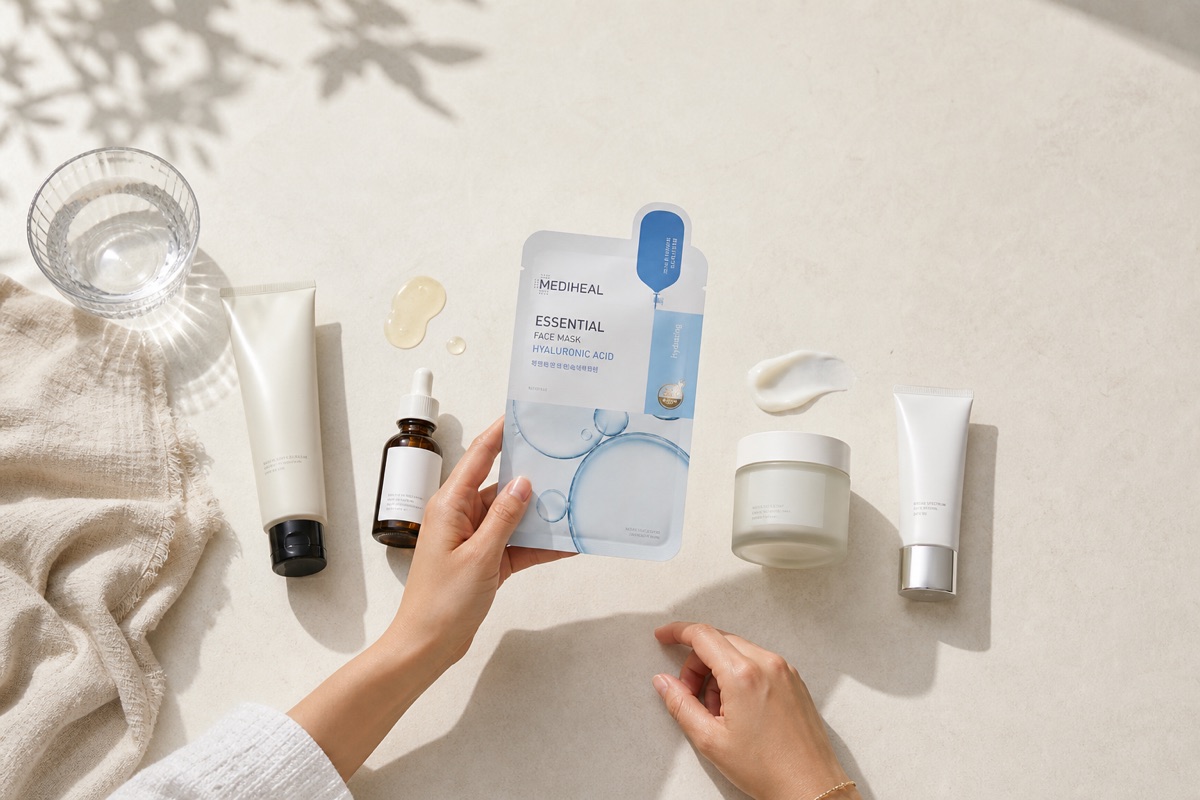
Mediheal Essential Face Mask Hyaluronic Acid
$19.90
"Best straightforward hydrating sheet mask for a recovery-night protocol: 4.7/5 across 1,023 Amazon US ratings."
What real Amazon buyers say
4.7★· 1,023 reviews"I’ve used sheet masks from Mediheal on and off for years, and they’ve always been a solid, reliable option."
"I absolutely love this buy. It leaves my skin dewy and radiant. It smells great and gives me 0 breakouts."

BIODANCE
BIODANCE Hydro Cera-nol Real Deep Mask
$19
"Best overnight-style hydrogel option for users who want a longer moisture session: 4.5/5 across 44,074 Amazon US ratings."
What real Amazon buyers say
4.5★· 44,074 reviews"The BIODANCE Bio-Collagen Real Deep Mask is super hydrating and comfortable to wear overnight."
"It feels incredibly cooling and soothing on the skin, especially after a long day."

Ebanel
Ebanel 10 Pack Collagen Face Mask
$13.99
"Best budget multi-pack for occasional hydration support: 4.4/5 across 6,340 Amazon US ratings."
What real Amazon buyers say
4.4★· 6,340 reviews"I keep these sheet masks on hand for days when my skin feels tired and I don’t want to overthink my routine."
"These are super hydrating! I have severe dry skin and this helps so much. I use about once per week."
What you'll learn
- Treat most sheet masks as a hydrating essence step: cleanse first, mask second, then seal with moisturizer.
- Do not stack a strong exfoliating acid, a retinoid, and a fragranced or active-heavy sheet mask in the same evening.
- Vitamin C usually fits better before a hydrating mask in the morning, followed by moisturizer and FDA-aligned broad-spectrum sunscreen.
- For dry or dull mature skin, sheet masks are best used as comfort support, not as a substitute for consistent moisturizer or sunscreen.
- If a mask stings, remove it, rinse if needed, and make the next 48 hours a bland barrier-support routine.
Steps
-
1 Start with the active, not with the mask
Decide whether the routine goal is vitamin C brightness, acid exfoliation, retinoid consistency, or simple hydration. A sheet mask is usually the support step, not the main active. If skin is already tight, choose hydration and skip the stronger active that day.
-
2 Use the mask after cleansing and before moisturizer
Apply a hydrating sheet mask to clean skin, leave it on according to package directions, then pat in remaining essence and seal with moisturizer. Do not let the sheet dry on your face because that can leave skin feeling tighter.
-
3 Separate masks from high-irritation active nights
If you use retinoids, glycolic acid, lactic acid, or salicylic acid, avoid turning the same night into a multi-active session. Use a bland hydrating mask on a recovery night, or use the active and finish with moisturizer only.
-
4 Keep morning routines sunscreen-centered
A morning sheet mask can sit after cleansing and before vitamin C or after vitamin C if the formula is bland and hydrating. The non-negotiable final step is broad-spectrum sunscreen; the FDA guidance cited in this article supports sunscreen as the protective step, not masks.
-
5 Patch test when skin is reactive
For stinging, flushing, fragrance sensitivity, or a history of reacting to masks, test the essence along the jaw or behind the ear before a full-face session. Stop if burning, swelling, hives, or persistent redness appears.
Bottom line
Layer a sheet mask like a temporary essence step, not like a treatment that can override everything else in your routine. Cleanse first, use the mask while it is still wet, pat in the leftover essence, then seal with moisturizer. If it is morning, finish with broad-spectrum sunscreen. If it is night, decide whether that evening is an active night or a recovery night before you open the packet.
BeautySift did not test these masks on a panel. We analyzed 51,437 Amazon US ratings across Mediheal, BIODANCE, and Ebanel mask listings; visible verified-review excerpts from those listings; FDA sunscreen guidance; brand product positioning; and PubMed-indexed literature on hyaluronic acid and niacinamide. We may earn a commission from Amazon links, but affiliate status does not affect which products appear here.
The main lesson for women 35-55 is restraint. Dryness and dullness often tempt people to add more steps: exfoliating toner, vitamin C, retinoid, mask, face oil, and occlusive balm in the same night. That stack can look sophisticated on paper and still feel terrible on skin that is already drier, more reactive, or more prone to flushing than it was a decade ago.
What a sheet mask actually adds
Most sheet masks are delivery vehicles for water, humectants, soothing agents, and texture modifiers. They hold a wet essence against the face for a set period so the surface feels more hydrated and temporarily smoother. That can be useful before makeup, after travel, during Midwest winter heat, or on a recovery night between retinoid and acid use.
The evidence base supports the ingredients more than the sheet format itself. A 2018 PubMed review described hyaluronic acid as a prominent skin-hydration and cosmetic-rejuvenation ingredient, which fits why hyaluronic-acid masks are common. A 2005 Dermatologic Surgery paper on niacinamide reported improvements in aging facial-skin appearance, which supports niacinamide as a reasonable brightening and barrier-support ingredient when it appears in leave-on products. Those citations do not prove that any one mask erases lines overnight. They support a more modest claim: humectant and barrier-support ingredients can make a routine feel more comfortable and hydrated.
What a sheet mask does not do is replace sunscreen, moisturizer, retinoids, or exfoliation. The FDA sunscreen guidance cited in the frontmatter is clear that sun protection is its own category. A hydrating mask can make morning skin look less flat, but it is not a UV-protection step.
The safest order with vitamin C
For a morning brightening routine, keep the order simple: cleanse or rinse, apply vitamin C if you use it, wait until it settles, apply a bland hydrating sheet mask if your skin tolerates that combination, pat in excess essence, moisturize if needed, and finish with broad-spectrum sunscreen. If your vitamin C is a low-pH L-ascorbic acid formula and it stings, do not add a mask on top to “push through.” Stinging is information.
A more conservative order is better for reactive skin: cleanse, use the sheet mask, moisturize, and skip vitamin C that morning. You can use vitamin C the next day. This matters because dullness is not always a pigment problem. Sometimes it is dehydration, flaking, or sunscreen pilling on a dry surface. In that case, a hydrating mask can make the morning routine look smoother without forcing another active into the same window.
Mediheal Essential Face Mask Hyaluronic Acid fits this simple hydrating role. The Amazon US listing snapshot we analyzed showed 4.7/5 across 1,023 ratings at $19.90, and the visible review excerpts emphasized hydration, dewiness, and recovery language. In product-comparison terms, it scored strongest for accessibility, focused hydration, and low routine complexity rather than for aggressive active treatment.
The safest order with exfoliating acids
Acids need the most caution. Glycolic, lactic, mandelic, and salicylic acid can be useful, but they also raise the odds of tightness if you stack them with too many wet or fragranced steps. If you use an acid toner or serum, apply it after cleansing, then moisturize. Skip the sheet mask that night unless you already know the mask is bland and your skin is calm.
For dry mature skin, the better pattern is alternating nights. Use an acid one night, then use a hydrating sheet mask the next night as a recovery step. That keeps exfoliation from becoming a daily irritation loop. It also gives you a clearer read on what is helping. If your cheeks sting after acid plus mask, you will not know whether the problem was the acid strength, the mask fragrance, the total wet-contact time, or all of the above.
If you want a mask before an event, do not choose the same day to experiment with a new peel pad. Use a familiar hydrating mask, moisturize lightly, and give sunscreen or makeup enough time to settle. Event-day skin usually benefits more from predictability than from intensity.
The safest order with retinoids
Retinoids are consistency products. A sheet mask should help you stay consistent, not turn retinoid night into a spa-night pileup. If your skin is already tolerating retinol or retinal well, you can use a bland hydrating mask earlier in the evening, let skin dry fully, then apply retinoid and moisturizer. But the safer default for dryness is separation: retinoid one night, mask the next.
This is especially useful during perimenopause and menopause, when many women notice that the same retinoid frequency feels drier than it used to. Instead of increasing exfoliation because skin looks dull, add recovery nights. A recovery night can be cleanser, hydrating mask, moisturizer, and nothing else. That simple rhythm often makes the active nights more tolerable.
BIODANCE Hydro Cera-nol Real Deep Mask fits the longer moisture-session role. The Amazon US listing snapshot showed 4.5/5 across 44,074 ratings at $19.00, the largest review footprint of the three featured products. Visible verified-review excerpts emphasized overnight comfort, cooling feel, and plumper-looking skin by morning. Because it is an overnight-style hydrogel, we would place it on recovery nights rather than directly over a first-time retinoid or acid.
Where niacinamide fits
Niacinamide is usually easier to pair than acids or retinoids. It can appear in serums, moisturizers, and mask essences, and the 2005 PubMed paper cited in our sources supports its role in improving aging facial-skin appearance. Still, more is not automatically better. If your serum, moisturizer, and mask all contain niacinamide, that does not mean the routine is more effective; it may just be redundant.
Use niacinamide before a sheet mask if it is part of a simple water-based serum. Or let the mask supply the soothing step and skip the separate serum that day. This is a good approach when skin looks dull because it is dehydrated, not because it needs stronger resurfacing.
Ebanel 10 Pack Collagen Face Mask is the budget multi-pack in this guide. The Amazon US listing snapshot showed 4.4/5 across 6,340 ratings at $13.99. The visible verified-review excerpts highlighted hydration, comfort, and once-weekly use. We do not treat the word “collagen” on a mask as proof of collagen rebuilding; in topical cosmetics, the more realistic role is temporary surface hydration and a smoother feel.
A practical weekly protocol
For a beginner routine, start with two active nights and one mask night per week. Example: vitamin C in the morning on Monday, Wednesday, and Friday if tolerated; retinoid on Tuesday and Saturday nights; hydrating sheet mask on Thursday night; plain moisturizer on the remaining nights. If you also use exfoliating acids, swap one retinoid night for one acid night instead of adding a third active category.
For dry or reactive skin, make the first two weeks more conservative. Use vitamin C only two mornings weekly, retinoid only one night weekly, and a hydrating mask one night weekly. If nothing stings, add frequency slowly. If something burns, remove the mask or rinse the active, then make the next 48 hours boring: gentle cleanser, bland moisturizer, and sunscreen during the day.
For dull but not sensitive skin, you may use a hydrating sheet mask before makeup once weekly and on a recovery night once weekly. The goal is not daily masking. Daily masking can be expensive, wasteful, and irritating if the formula includes fragrance or multiple botanical extracts.
Common mistakes that cause stinging
The first mistake is letting the sheet dry on your face. Once the mask starts to dry down, it is no longer acting like a comfortable wet compress. Remove it within the product’s directed window, pat in leftover essence, and moisturize.
The second mistake is using a mask to dilute a routine that is already too aggressive. If glycolic acid burns, a hydrating mask on top does not make the acid gentler; it may increase contact time with a compromised barrier. Reduce frequency before you add another layer.
The third mistake is ignoring fragrance sensitivity. Many people tolerate fragranced masks occasionally, but dry mature skin can become less forgiving. If your eyes water, cheeks flush, or skin feels hot, choose fragrance-free or simpler formulas and patch test before full-face use.
The fourth mistake is skipping moisturizer after the mask. A mask gives water and slip. Moisturizer helps keep that comfort from disappearing quickly, especially in Southwest dryness, forced-air heat, or winter cold.
Product roles for this protocol
Choose Mediheal Essential Face Mask Hyaluronic Acid if your main goal is a straightforward hydration step after cleansing and before moisturizer. It is the cleanest fit for a recovery night between actives, especially when the rest of your routine already contains vitamin C, retinoid, or acids.
Choose BIODANCE Hydro Cera-nol Real Deep Mask if you want a longer, more occlusive-feeling moisture session and you are not trying to combine it with a new strong active. Its 44,074-rating Amazon footprint gives it the broadest user-evidence base in this set, but the overnight-style format is still best treated as a recovery step.
Choose Ebanel 10 Pack Collagen Face Mask if you want a lower-cost multi-pack for occasional use. Its best role is once-weekly hydration support, not a claim that topical collagen rebuilds facial collagen. For mature skin, that distinction matters: temporary plumpness can be useful before makeup, but it should not replace sunscreen and retinoid consistency if those are already part of your routine.
When not to mask
Skip sheet masks when your skin is sunburned, swollen, blistered, hot to the touch, or reacting with hives. Skip them immediately after an in-office peel, laser, microneedling, or injectable treatment unless your clinician gave specific permission. Skip them when you are testing a new retinoid strength or a new acid; introduce one variable at a time.
Also skip them if you are tempted to use the mask because your routine hurts. Pain is not a sign that actives are working. It is a sign to simplify. For ordinary dryness and dullness, a hydrating mask can be a useful comfort step. For persistent rash, severe itching, bleeding cracks, or swelling, shopping is the wrong next move.