How to Read a Skincare Ingredient List: INCI Basics for 2026
A beginner guide to reading skincare ingredient lists, including INCI order, 1 percent disclosures, fragrance labels, preservatives, and sensitive-skin red flags.
Based on FDA labeling rules, 21 CFR 701.3 ingredient-order requirements, and a 50,799-patient JAAD preservative-allergy analysis, read skincare ingredients by order first: over-1 percent ingredients appear in descending predominance, while 1 percent-or-less ingredients may appear in any order.
Editor's top Amazon picks for this guide
Real Amazon products that match this protocol. Affiliate links — your purchases support BeautySift.

Cetaphil
Cetaphil Face & Body Moisturizer Hydrating Moisturizing Cream
$15.97
"A fragrance-free cream example for readers comparing glycerin, sweet almond oil, vitamin E, and other sensitive-skin moisturizer ingredients on an INCI list."
What real Amazon buyers say
4.8★· 38,486 reviews"Great moisturizer for old dry & flaky skin, it is not greasy and absorbs in almost minutes. I have used for years and plan to continue just wish I could find a tool so i could do my back."
Eucerin
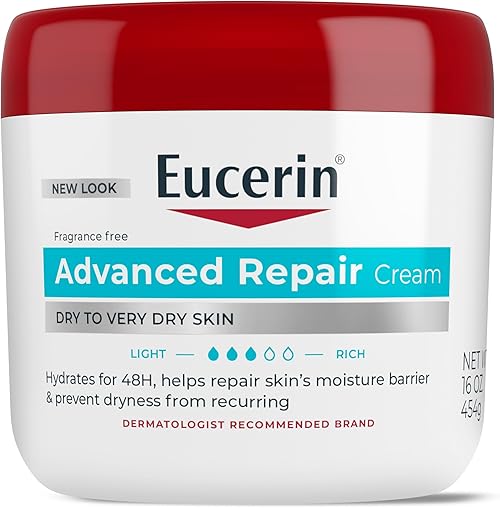
Eucerin Advanced Repair Body Cream
$13.99
"Useful for learning how urea, glycerin, ceramide NP, lactic acid, and emollient texture builders appear in an unscented dry-skin cream INCI list."
What real Amazon buyers say
4.7★· 51,128 reviews"It leaves skin feeling soft and hydrated for hours."

La Roche-Posay
La Roche-Posay Toleriane Double Repair Face Moisturizer
$24.99
"A facial moisturizer example for comparing humectants, niacinamide, and barrier-support ingredients against potential sensitivity triggers."
What real Amazon buyers say
4.6★· 49,224 reviews"It feels light on the skin but still provides solid hydration without any greasy or heavy feeling. It absorbs quickly and works great under makeup and sunscreen."
What you'll learn
- Read the first five to eight ingredients as the formula base, but do not assume everything near the end is unimportant for sensitive skin.
- US cosmetic ingredients above 1 percent generally appear in descending order; below that threshold, order becomes less useful for estimating dose.
- Fragrance, essential oils, exfoliating acids, retinoids, and some preservatives are common places to look when a product stings or triggers redness.
- A bland product is not automatically better, but a shorter fragrance-free INCI list is easier to troubleshoot when your skin is reactive.
Steps
-
1 Step 1: Find the INCI list, not the front-label claims
Start with the ingredient declaration on the box, tube, brand page, or retailer page. Marketing terms such as clean, dermatologist-tested, hypoallergenic, or gentle are not the same as the INCI list. The INCI list is where you can see water, silicones, oils, humectants, emulsifiers, preservatives, fragrance, colorants, and active ingredients that may matter for sensitive skin. If the product page hides the full list or uses only a hero-ingredient summary, treat that as incomplete evidence.
-
2 Step 2: Read the order rule correctly
Under 21 CFR 701.3, cosmetic ingredients present above 1 percent are listed in descending order of predominance. Ingredients at 1 percent or less may be listed after those in any order, and color additives have additional flexibility. Practically, the first several ingredients tell you the base: water, glycerin, dimethicone, fatty alcohols, oils, or solvents. The last third of the list is still relevant, especially for fragrance, preservatives, exfoliating acids, retinoids, and dyes.
-
3 Step 3: Separate formula base from treatment actives
A moisturizer often starts with water, glycerin, fatty alcohols, silicones, petrolatum, oils, or emulsifiers because those build the texture and barrier feel. Treatment ingredients may appear higher or lower depending on allowed use level and formula type. Niacinamide, panthenol, allantoin, ceramides, hyaluronic acid, salicylic acid, lactic acid, retinol, retinal, and peptides can be meaningful even when they are not in the first three positions. Do not estimate exact percentages unless the brand discloses them.
-
4 Step 4: Look for sensitive-skin trigger categories
For reactive skin, scan for fragrance or parfum, essential oils, citrus oils, menthol, peppermint, eucalyptus, lavender, alcohol denat in leave-on products, high-strength acids, retinoids, and known preservative triggers such as methylisothiazolinone or methylchloroisothiazolinone. The JAAD North American preservative analysis found that 22.3 percent of 50,799 patch-tested patients reacted to at least one preservative, so preservatives are not automatically bad, but they are a real troubleshooting category when dermatitis is suspected.
-
5 Step 5: Understand fragrance disclosure limits
FDA guidance explains that fragrance ingredients may be declared collectively as fragrance or flavor rather than listing every aromatic component. That means a product can look short while still containing an undisclosed fragrance blend. If your skin stings, flushes, or develops eyelid irritation, a fragrance-free product is easier to evaluate than one labeled only with natural scent, essential oils, botanical aroma, or a vague fragrance line item. Unscented does not always mean fragrance-free, because masking fragrance may be used to cover base odor.
-
6 Step 6: Compare products by role, not by ingredient count alone
Using BeautySift's evidence-weighted product-comparison logic, the most useful sensitive-skin products score well on formulation clarity, tolerability signals, accessibility, and value. A 35-ingredient moisturizer can be reasonable if the list is mostly emollients, humectants, ceramides, and preservatives with low irritation history. A 10-ingredient formula can still be a poor fit if it relies on fragrance, essential oils, or a strong active your barrier cannot tolerate.
-
7 Step 7: Patch test and change one variable at a time
Ingredient reading narrows risk; it does not predict every individual reaction. Apply a small amount of a new leave-on product to a discreet area for several days before using it broadly, especially if you have eczema, rosacea, allergic contact dermatitis, or a history of product stinging. Change one product at a time and keep notes on burning, itching, redness, scaling, acne flares, and eye-area irritation. See a dermatologist or qualified clinician for persistent rash, swelling, oozing, or symptoms around the eyes.
Why ingredient-list literacy matters
A skincare ingredient list is not a full formula blueprint, but it is the best public map a US shopper usually gets. It tells you the base of the product, the disclosed actives, the preservation system, fragrance disclosure, and many potential irritant categories.
BeautySift did not test these products on a panel. We analyzed FDA labeling rules, PubMed-indexed contact-dermatitis data, AAD-style sensitive-skin principles, US brand ingredient pages, and verified Amazon product records to build a practical reading method for shoppers with sensitive or reactive skin.
Affiliate disclosure: we may earn a commission from Amazon links. Affiliate status does not influence the education steps or featured product selection.
The 60-second ingredient-list scan
Use this quick scan before buying a leave-on product:
- Check whether the full INCI list is available.
- Read the first five to eight ingredients for the base.
- Look for disclosed percentages only when the brand states them.
- Scan for fragrance, essential oils, alcohol denat, strong acids, retinoids, and preservative triggers.
- Decide whether the product role matches your goal: cleanse, hydrate, seal, exfoliate, brighten, or treat acne.
- Introduce only one new product at a time.
This approach is conservative. It will not tell you whether a peptide blend is elegant or whether a texture will pill under sunscreen, but it can help you avoid obvious mismatch products.
What the first ingredients usually tell you
The first ingredients often define texture and product type. Water or aqua is common in lotions, creams, gels, and serums. Glycerin signals humectant support. Dimethicone, petrolatum, mineral oil, caprylic/capric triglyceride, shea butter, squalane, and fatty alcohols signal emollient or occlusive structure. Surfactants identify cleansers.
For sensitive skin, the first section tells you whether the product is likely to feel watery, creamy, oily, silicone-smooth, or cleanser-like. It does not guarantee comfort because a low-level fragrance or preservative can still be the problem.
The 1 percent rule: useful but often misunderstood
The 1 percent threshold is one of the most useful label-reading clues. Ingredients used above 1 percent must generally be declared in descending order of predominance. Ingredients at 1 percent or below can be listed in any order after those higher-level ingredients.
That means you should avoid two common mistakes:
- Do not assume a low-listed ingredient is useless. Some ingredients are designed for low use levels.
- Do not assume a high-listed ingredient is a treatment active. It may simply build the base, preserve the formula, or improve texture.
When a brand advertises a percentage, such as a 10 percent acid or 5 percent niacinamide, you can use that number. If the brand does not disclose the percentage, do not infer it from position alone.
Common irritant categories to recognize
For sensitive skin, the most useful red-flag scan is category-based:
- Fragrance or parfum: can hide a blend of aromatic materials under one label term.
- Essential oils: lavender, peppermint, eucalyptus, citrus peel oils, tea tree, and similar aromatic oils can be sensitizing for some users.
- Strong exfoliating acids: glycolic, lactic, mandelic, and salicylic acids can help the right user but may sting an impaired barrier.
- Retinoids: retinol, retinal, retinyl esters, adapalene, and tretinoin-like routines can cause dryness or peeling during adjustment.
- Alcohol denat: may be acceptable in some quick-dry formulas but can be drying in leave-on products for reactive skin.
- Preservatives: necessary in many formulas, but methylisothiazolinone, methylchloroisothiazolinone, formaldehyde releasers, and some other systems matter when allergic contact dermatitis is suspected.
The point is not to fear every long chemical name. Water-based skincare needs preservation, emulsifiers, stabilizers, and pH adjusters. The better question is whether the product uses categories your skin has already rejected.
Ingredient names that sound scary but are often routine
Ingredient lists can look more alarming than they are. Tocopherol is vitamin E. Sodium chloride is salt. Citric acid may adjust pH. Cetearyl alcohol is a fatty alcohol, not the same as drying alcohol denat. Dimethicone is a silicone that can reduce friction and support a smoother barrier feel.
If you have sensitive skin, avoid judging by whether a name sounds synthetic. Judge by role, concentration when disclosed, product type, and your personal reaction history.
How to use featured products as label-reading examples
The featured products are included as practical INCI-reading examples, not because BeautySift tested them head-to-head.
- Vanicream Moisturizing Cream: useful for learning what a simple fragrance-free cream looks like.
- CeraVe Moisturizing Cream: useful for spotting ceramides, hyaluronic acid, petrolatum, and dimethicone in a barrier-support formula.
- La Roche-Posay Toleriane Double Repair Face Moisturizer: useful for comparing a lighter facial moisturizer with niacinamide and humectant support.
If you are allergic to a known ingredient, the best product is the one that avoids your specific trigger. If you do not know the trigger, a dermatologist can use patch testing to identify patterns more reliably than guesswork.
When to stop self-troubleshooting
Stop experimenting and seek medical input if you develop swelling, blistering, oozing, eye-area dermatitis, severe burning, widespread rash, or symptoms that persist after stopping the suspected product. Cosmetic ingredient reading can reduce avoidable risk, but it should not delay diagnosis of allergic contact dermatitis, eczema, rosacea, infection, or medication-related skin reactions.
Related BeautySift reading
Guide: Barrier repair routine for perimenopause dryness -> /guides/barrier-repair-routine-perimenopause-dryness-2026/
Guide: Bakuchiol vs retinol for sensitive skin after 40 -> /guides/bakuchiol-vs-retinol-sensitive-40plus-2026/
Guide: How to fade dark spots after 40 -> /guides/how-to-fade-dark-spots-after-40-protocol-2026/