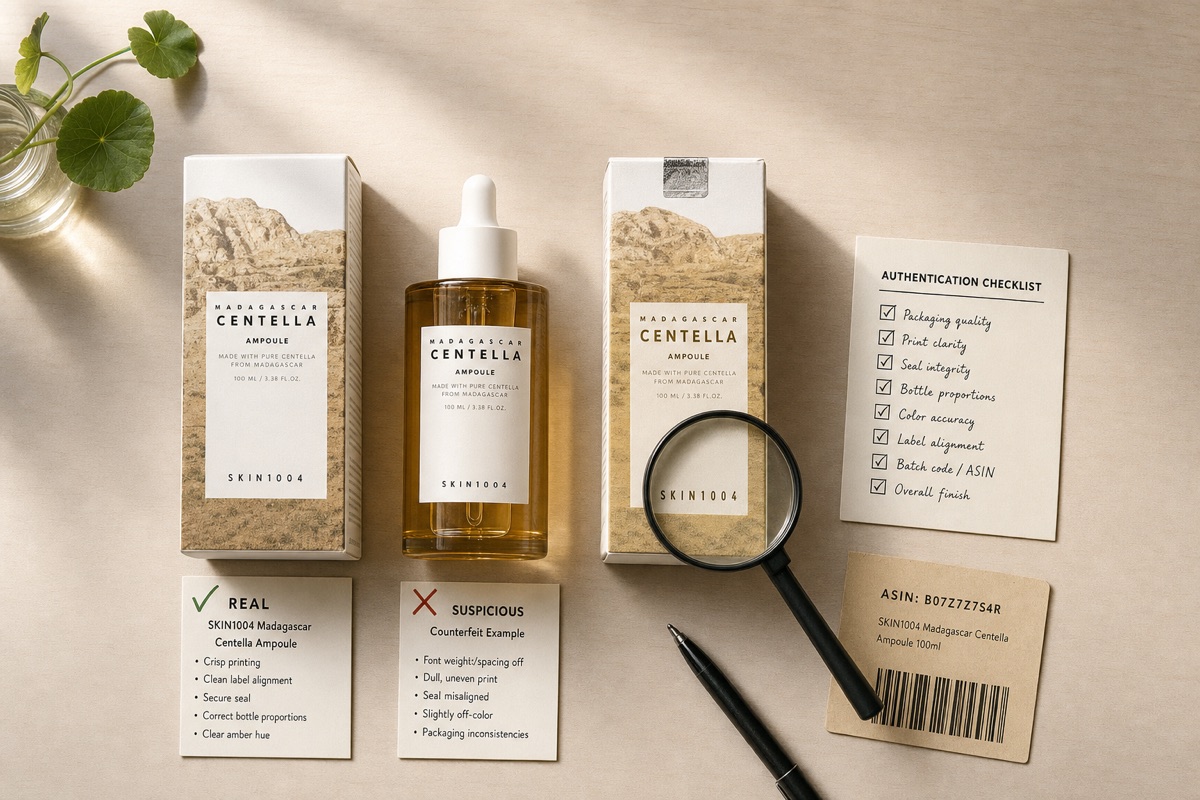
How to Spot Fake Centella Asiatica Products on Amazon
A sensitive-skin guide to checking Centella Asiatica skincare on Amazon, including seller verification, ASIN checks, label red flags, and safer product examples.
Based on 3 Amazon US centella-product snapshots totaling 15,760 ratings, Amazon's Counterfeit Crimes Unit statement that it blocks more than 99% of suspected infringing listings before brand reports, and PubMed centella research, the safest Amazon check is seller first, ASIN second, label third.
Editor's top Amazon picks for this guide
Real Amazon products that match this protocol. Affiliate links — your purchases support BeautySift.
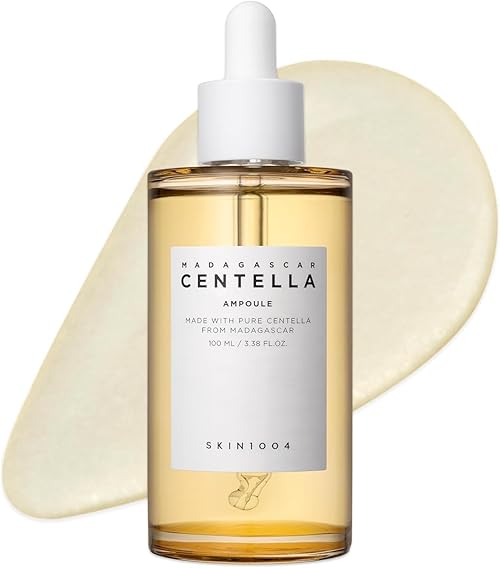
SKIN1004
SKIN1004 Madagascar Centella Ampoule
$15.69
"High-volume centella-only serum example; the Amazon snapshot showed 4.7/5 across 12,578 ratings, useful for checking seller, ASIN, and label consistency."

PURITO
PURITO Centella Unscented Serum
$18.40
"Sensitive-skin centella serum example with a disclosed 34,860 ppm centella claim on the listing and a 4.5/5 Amazon snapshot across 2,820 ratings."

COSRX
COSRX Pure Fit Cica Serum
$21.94
"Cica serum example from a widely stocked Korean skincare brand; the Amazon snapshot showed 4.5/5 across 362 ratings, giving a smaller but usable review base."
What you'll learn
- Start with the seller line, not the product photo; the safest listing is sold by Amazon or an authorized brand-controlled storefront.
- Match the ASIN, product name, size, ingredient list, and brand imagery against the brand's US page before using a centella product on sensitive skin.
- A low price is not proof of a fake, but a price far below the brand's normal US range should trigger extra checks before purchase.
- For reactive skin, do not use a questionable centella product while hoping it is close enough; return it unopened and buy from a cleaner listing.
Steps
-
1 Step 1: Check the seller before you check the discount
On Amazon, open the product page and find the seller line near the Buy Box. For centella skincare, prioritize listings sold by Amazon or a brand-controlled storefront. A marketplace seller is not automatically unsafe, but it gives you less authentication signal than a clearly authorized seller. Amazon says its systems block more than 99% of suspected infringing listings before brands report them, but that is not the same as saying every third-party cosmetic listing is equally low risk.
-
2 Step 2: Match the ASIN to the exact size and formula
Copy the 10-character ASIN from the Amazon URL and treat it like the product's listing fingerprint. The SKIN1004 example in our snapshot was ASIN B06Y15D1LH for the 3.38 fl oz Madagascar Centella Ampoule, while the COSRX example was ASIN B086V28LXL for Pure Fit Cica Serum. If a search result, image carousel, or review section seems to mix different sizes, old packaging, or unrelated products under one listing, slow down and compare against the brand's US product page before buying.
-
3 Step 3: Compare the ingredient list, not just the word centella
Counterfeit-risk screening is partly label literacy. FDA cosmetic-labeling guidance supports checking the full ingredient declaration and responsible-party information, not only the front label. For sensitive skin, confirm whether the product is fragrance-free or merely unscented, whether the formula includes essential oils, and whether the brand discloses a centella percentage or ppm claim. Do not assume a product is gentle just because the title says cica, tiger grass, madecassoside, or Centella asiatica.
-
4 Step 4: Read the review pattern for mismatch signals
Review volume helps, but it is not authentication. In our Amazon snapshots, SKIN1004 had 12,578 ratings, PURITO had 2,820 ratings, and COSRX had 362 ratings. Look for mismatch signals: reviews describing a different product, photos showing different packaging from the current listing, sudden one-star complaints about smell or texture changes, or repeated comments that the box arrived without a seal. One mismatch does not prove a fake, but several patterns together should push you to a safer seller.
-
5 Step 5: Treat price as a risk signal, not a verdict
A promotion can be legitimate, especially for K-beauty brands that run frequent Amazon coupons. Still, compare the Amazon price with the brand's US site or another authorized US retailer. If a centella serum is dramatically cheaper than the brand's normal US price, the seller is unfamiliar, the delivery window is unusually long, and the product photos look compressed or inconsistent, the value score drops even if the formula would otherwise be appealing. BeautySift's product-comparison logic weights accessibility and value, but counterfeit uncertainty can override both.
-
6 Step 6: Inspect the package before opening
When the order arrives, check the outer box, lot code, seal, spelling, barcode, fill level, and texture description before applying it to your face. If the bottle is leaking, the pump is loose, the label is blurry, the scent is unusually strong, or the product color differs from the brand's official imagery, do not patch test it just to see. Photograph the issue, keep the packaging, and use Amazon's return or report flow. For sensitive or perimenopausal skin that already flushes easily, the safest questionable product is an unopened return.
-
7 Step 7: Patch test only after the authenticity checks pass
Centella asiatica has peer-reviewed skin-repair interest, including a 2026 Molecules review discussing natural extracts in skin repair, but that does not make every centella product safe for every face. Once the seller, ASIN, label, and packaging checks look consistent, patch test a small amount for several days before full-face use. Stop if you notice burning, swelling, rash, eye-area irritation, or a flare that feels different from your usual sensitivity pattern.
Why fake-risk screening matters for centella skincare
Centella asiatica products are often marketed to people with redness-prone, sensitive, barrier-stressed, or post-active skin. That audience has less room for uncertainty. If the bottle is questionable, the issue is not just wasted money; it is the chance of applying an unknown fragrance load, degraded formula, mislabeled ingredient list, or contaminated product to already reactive skin.
BeautySift did not authenticate these products in a lab. We analyzed Amazon US listing data, Amazon’s own anti-counterfeit statements, FDA cosmetic-labeling guidance, PubMed centella literature, and ingredient-list risk signals to build a practical shopping protocol for US consumers.
Affiliate disclosure: we may earn a commission from Amazon links. Affiliate status does not influence the safety checks or product examples.
The 90-second Amazon check
Before buying a centella product, run this short scan:
- Confirm the seller line and storefront.
- Copy the ASIN from the URL and confirm it matches the exact product size.
- Compare the title, product photos, and ingredient list with the brand’s US page.
- Read recent one-star and three-star reviews for packaging, smell, seal, or texture complaints.
- Compare the price with at least one other US source.
- Inspect the package before opening.
- Patch test only if the listing and package both look consistent.
This method cannot guarantee authenticity, but it is a practical filter that catches many obvious mismatch signals.
What makes centella products tricky on Amazon
Centella products often share similar language: cica, tiger grass, madecassoside, calming, barrier repair, redness, and soothing. Multiple sizes may use similar packaging, and K-beauty brands sometimes update labels before all product photos are refreshed. That creates legitimate confusion and makes counterfeit-risk screening harder.
The safest response is not panic. It is consistency checking. A legitimate listing should have a coherent ASIN, seller, brand name, size, image set, ingredient list, price range, and review pattern. When several of those signals conflict, choose a different listing.
How the featured products fit the protocol
The featured products above are not presented as lab-authenticated samples. They are real Amazon listings with visible ASINs, product images, prices, and rating counts captured for this guide. They are useful examples because each gives you something specific to verify:
- SKIN1004 Madagascar Centella Ampoule shows how a high-volume centella-only listing should still be checked by size and ASIN.
- PURITO Centella Unscented Serum shows why a disclosed ppm claim should be matched against the brand’s current formula language.
- COSRX Pure Fit Cica Serum shows how a lower-review-volume listing can still be evaluated through seller, label, image, and review-pattern checks.
Red flags that should make you pause
Pause before buying if you see several of these at once:
- The seller name is unfamiliar and the storefront has little beauty-category history.
- The product title says one size while the image or review photos show another.
- The ingredient list is missing, truncated, or inconsistent with the brand page.
- Reviews mention a different smell, watery texture, broken seal, or no safety seal.
- The price is far below the brand’s normal US price without an obvious coupon or sale reason.
- Packaging photos look blurry, stretched, translated strangely, or inconsistent across the carousel.
- The listing bundles unrelated products under one review pool.
A single red flag can be a catalog error. Multiple red flags are enough reason to skip.
Safer internal reading
Guide: How to Read a Skincare Ingredient List -> /guides/how-to-read-skincare-ingredient-list-2026/ Guide: Skincare Budget vs Luxury: Where to Splurge -> /guides/skincare-budget-vs-luxury-where-to-splurge-2026/ More sensitive-skin content -> /concerns/sensitive-skin/