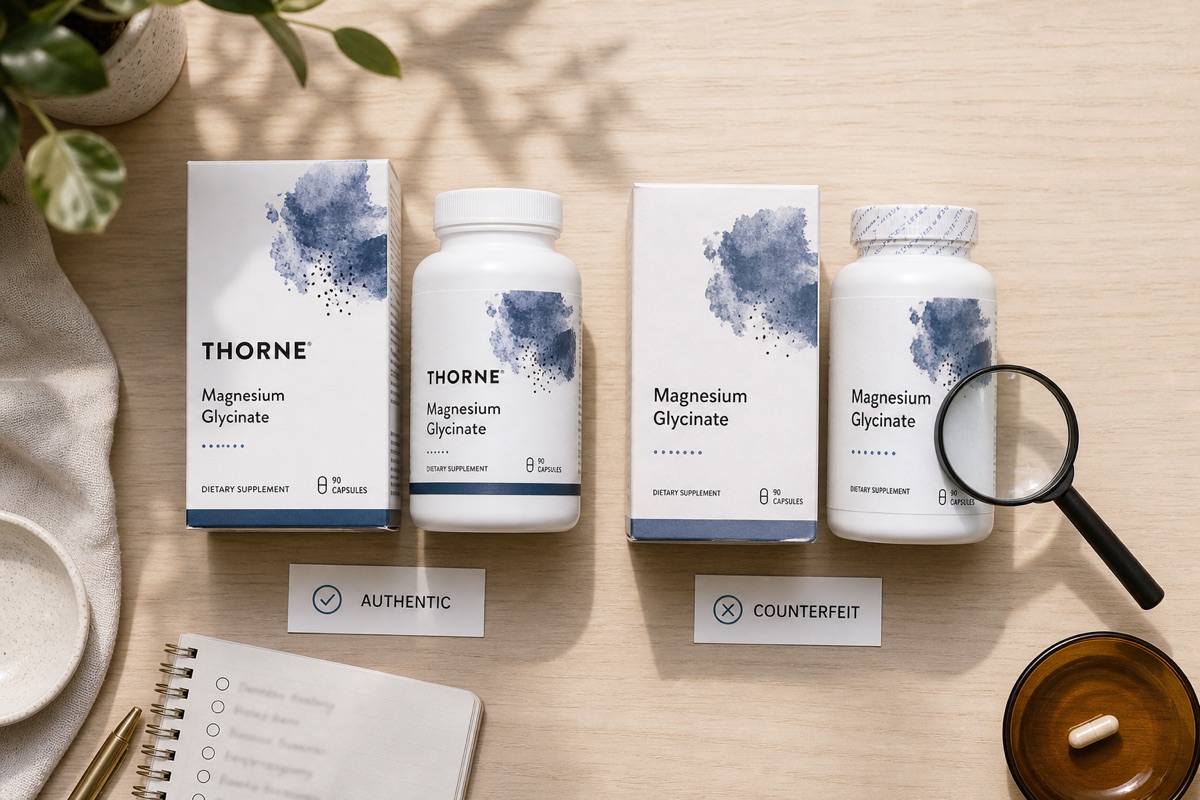
How to Spot a Fake Magnesium Glycinate for Sleep on Amazon
A step-by-step Amazon buying guide for US women 35-55 who want magnesium glycinate for sleep without counterfeit, mislabeled, or risky listings.
We analyzed 3 Amazon US magnesium glycinate listings totaling 26,992 ratings, NIH ODS magnesium guidance, FDA supplement rules, and a PubMed insomnia trial. To spot a fake, verify the ASIN, seller, Supplement Facts panel, elemental magnesium dose, third-party testing language, and review pattern before buying.
Editor's top Amazon picks for this guide
Real Amazon products that match this protocol. Affiliate links — your purchases support BeautySift.

Thorne
Magnesium Glycinate Capsules
$26
"Clear chelated-magnesium positioning, official brand quality language, and Amazon US shows 4.7/5 across 2,172 ratings in the May 2026 snapshot."
What real Amazon buyers say
4.7★· 2,172 reviews"This magnesium glycinate is easy to take and very gentle on the stomach compared to other forms."
"The only downside is the price is higher than some other magnesium brands, but Thorne has a strong reputation for quality and third-party testing, which is why I chose it."

Double Wood Supplements
Magnesium Glycinate 400mg
$16.95
"Strong value and volume signal: Amazon US shows 4.7/5 across 22,137 ratings, with listing bullets citing third-party testing and US manufacturing/testing."
What real Amazon buyers say
4.7★· 22,137 reviews"This magnesium has been the best I have tried! I take it at bed time and it helps me relax and sleep really well throughout the night!"
"This is easy on my super sensitive stomach, I love that it's one capsule, and the price is really reasonable."

Nutricost
Magnesium Glycinate Capsules
$9.99
"Budget-friendly option with clear serving-size language; Amazon US shows 4.7/5 across 2,683 ratings and listing bullets cite NSF GMP facility and third-party testing."
What real Amazon buyers say
4.7★· 2,683 reviews"The biggest thing I noticed is how gentle it is on the stomach."
"Affordable and does the job it needs to. I am able to have better sleep and wake up having more energy."

Pure Encapsulations
Magnesium Glycinate
$27
"High-rating-count reference product; Amazon US shows 4.7/5 across 47,967 ratings and listing bullets emphasize allergen-conscious formulation and potency/purity testing."
What you'll learn
- Start with seller verification: the safest Amazon listing is the exact brand ASIN sold by Amazon or the brand-authorized storefront, not a copied bottle image from a random seller.
- Read the Supplement Facts panel for elemental magnesium, not the largest front-label number; NIH ODS lists a 350 mg upper intake level for supplemental magnesium.
- Treat miracle sleep claims, AI-looking labels, missing lot information, and review spikes as red flags because FDA does not preapprove supplements before sale.
- For perimenopause sleep disruption, magnesium glycinate can be a support tool, but hot flashes, night sweats, anxiety, and medication interactions may need clinician guidance.
- Buy smaller first, keep the bottle and order record, and stop using any supplement that smells off, has broken seals, causes severe GI symptoms, or looks different from the brand site.
Steps
-
1 Step 1: Confirm the exact ASIN before you judge the label
Open the product page and find the 10-character ASIN in the Amazon URL or product details. A real listing should keep one stable ASIN for the product size and formula you intend to buy. If an ad sends you through a strange redirect, a different product title, or a bottle image that does not match the ASIN, close it and search the brand name again from Amazon's search bar.
-
2 Step 2: Check who sells and ships the bottle
Use the buy box and buying-options area to see whether the listing is sold by Amazon, the brand, or an authorized storefront. Third-party sellers are not automatically fake, but a sleep supplement is not the place to gamble on an unknown storefront with copied images, no recent seller history, or a name unrelated to supplements.
-
3 Step 3: Read the Supplement Facts panel for elemental magnesium
Ignore the biggest front-label number until you know what it means. Magnesium glycinate labels may list compound weight, elemental magnesium, serving size, or a blend. Compare the Supplement Facts panel with NIH ODS guidance: adult women need magnesium from food and supplements, but NIH ODS lists 350 mg as the tolerable upper intake level for magnesium from supplements, not from food.
-
4 Step 4: Look for third-party testing language that is specific
Specific quality language is stronger than vague phrases. Better listings mention third-party testing, GMP or NSF facility language, heavy-metal or contaminant screening, or a brand quality page. Be cautious with labels that only say premium, maximum strength, doctor trusted, or lab tested without naming what was tested or where the bottle is made.
-
5 Step 5: Audit the reviews like a pattern, not a star score
Use Amazon reviews as a signal, not proof. A 4.7/5 rating across thousands of ratings, as seen on the Thorne, Double Wood, Nutricost, and Pure Encapsulations listings we captured in May 2026, is useful only when review text sounds product-specific. Red flags include repeated one-line sleep miracles, reviews for a different supplement, identical phrasing, sudden date clusters, or photos showing a different label.
-
6 Step 6: Compare the Amazon page with the brand's US site
Open the official brand page in a second tab and compare bottle count, serving size, Supplement Facts, allergen claims, capsule format, and packaging design. A real Amazon listing can still have an older label photo, but the formula should not quietly change from magnesium glycinate to magnesium oxide, proprietary blend, gummies, or a high-melatonin sleep blend.
-
7 Step 7: Know when not to buy magnesium for sleep
Skip self-experimenting and ask a clinician if you have kidney disease, are pregnant, take antibiotics, osteoporosis medications, thyroid medication, blood-pressure medication, or have persistent insomnia. FDA guidance says supplements are not preapproved for safety or effectiveness before marketing, so your medication list and health history matter more than a star rating.
The short answer: fake-spotting starts before you add to cart
Magnesium glycinate is popular because many shoppers want a gentler magnesium form for evening relaxation. That popularity also creates a messy Amazon shelf: legitimate brand listings, sponsored lookalikes, private-label formulas, blend products, and occasional listings whose front label does not make the actual magnesium dose easy to understand.
For women 35-55, the stakes are practical. Perimenopause can bring lighter sleep, 3 a.m. wake-ups, night sweats, hot flashes, and higher supplement experimentation. Magnesium may belong in a sleep-support conversation, but it is not a cure for hot flashes or insomnia. The PubMed-indexed Abbasi trial followed 46 older adults for 8 weeks, which is useful context, not a blanket promise for perimenopause sleep.
The safest approach is a buying protocol. Verify the listing. Verify the seller. Verify the dose. Verify the quality language. Then decide whether the product fits your health situation.
Step 1: Verify the ASIN and product identity
Amazon’s ASIN is the listing’s product ID. It is the 10-character code in a product URL, such as B0F5XYHRPV for the Thorne listing we captured. If you are buying a supplement, treat that code like a fingerprint.
A fake-looking or risky listing often starts with identity drift. The search result says magnesium glycinate, the product page says magnesium complex, the bottle photo says 500 mg, and the Supplement Facts panel says a proprietary blend. Those mismatches do not prove counterfeiting, but they are enough reason to skip.
Use this quick identity check:
- The ASIN in the URL matches the product you meant to open.
- The title, bottle count, capsule or powder format, and brand name match the bottle image.
- The Supplement Facts panel is visible in the image carousel or A+ content.
- The product is not quietly mixing magnesium glycinate with magnesium oxide, melatonin, valerian, or a sleep blend unless that is exactly what you want.
- The label does not imply treatment of insomnia, anxiety, hot flashes, or disease.
FDA supplement guidance is the reason to be strict here: dietary supplements are not preapproved by FDA for safety or effectiveness before marketing. A polished Amazon page is not the same as premarket review.
Step 2: Check the seller, not just Prime delivery
Prime delivery can make a listing feel safer than it is. It tells you about fulfillment speed, not necessarily brand authorization. Look for the buy box line that says who the product is sold by and shipped from.
The lowest-risk pattern is sold by Amazon or sold by the brand’s official storefront and shipped by Amazon. A third-party seller is not automatically fake, but an unknown seller matters more for ingestible products than it does for a phone case. If the seller name looks unrelated, has little history, or changes between visits, choose a different listing.
This is also where price can be a warning. In our May 2026 Amazon snapshot, Nutricost was $9.99 for its 90-capsule listing, Double Wood was $16.95 for 180 capsules, Thorne was $26 for 90 servings, and Pure Encapsulations was $27 for 90 capsules. A price far below the normal Amazon range for the same brand should make you re-check the seller and bottle size before buying.
Step 3: Read elemental magnesium, not the biggest front-label number
Magnesium labels can be confusing because the front label may show compound weight while the Supplement Facts panel shows elemental magnesium. For sleep shoppers, this is where many bad purchases happen.
NIH Office of Dietary Supplements guidance lists recommended dietary allowances by age and sex and separately lists a tolerable upper intake level of 350 mg per day for magnesium from supplements for adults. That upper limit does not include magnesium naturally present in food. It does mean a giant front-label number should not automatically impress you.
Ask these questions before you buy:
- How many capsules make one serving?
- How much elemental magnesium is in that serving?
- Is the form clearly magnesium glycinate or magnesium bisglycinate?
- Does the product add melatonin, herbs, or other sedatives?
- Would the serving push you above NIH ODS supplemental guidance without clinician input?
If a listing hides the Supplement Facts panel or makes you zoom through blurry images to find the real dose, skip it. Good supplement brands know shoppers need that information.
Step 4: Separate real quality signals from marketing filler
The best quality clues are specific. Thorne’s Amazon listing states third-party certification language. Double Wood’s Amazon bullets cite manufacturing and testing in the USA from globally sourced ingredients. Nutricost’s Amazon bullets cite an NSF certified GMP compliant facility and third-party testing. Pure Encapsulations’ Amazon bullets cite potency and purity testing and avoidance of common allergens.
Those claims still come from listings and brand materials, not from BeautySift lab testing. But they are stronger than generic phrases like premium grade, maximum strength, doctor formulated, or trusted by thousands.
For a sleep supplement, better quality language includes:
- Third-party testing or certification.
- GMP facility language.
- Heavy-metal, microbial, or contaminant screening.
- Clear allergen statements.
- Lot number and expiration date on the bottle.
- A brand site that shows the same formula sold in the US.
Be cautious with imported-looking labels that do not name a US distributor, listings with AI-looking bottle art, or brands that have no website beyond an Amazon storefront.
Step 5: Use reviews as a fraud screen, not medical evidence
Amazon reviews can help you detect listing weirdness, but they cannot diagnose your sleep issue. We analyzed three active Amazon listings with a combined 26,992 ratings: Thorne at 4.7/5 across 2,172 ratings, Double Wood at 4.7/5 across 22,137 ratings, and Nutricost at 4.7/5 across 2,683 ratings in the May 2026 snapshot. Pure Encapsulations added another large reference point at 4.7/5 across 47,967 ratings.
Look for review details that match the product: capsule size, stomach tolerance, bedtime routine, bottle count, and whether the reviewer mentions glycinate specifically. Then look for mismatch signals: reviews about gummies on a capsule listing, photos of a different brand, repeated review wording, or a flood of reviews on the same date.
The review excerpts we captured for the top products were useful because they were concrete. A Double Wood reviewer wrote, “This is easy on my super sensitive stomach,” while a Thorne reviewer wrote, “The only downside is the price is higher than some other magnesium brands.” Specific pros and cons sound more useful than miracle sleep claims.
Step 6: Compare Amazon against the official brand site
Open the brand’s US site before you buy a supplement you plan to take nightly. You are checking whether Amazon is selling the same product, not whether the brand has prettier photography.
Compare these fields:
- Capsule count and serving size.
- Magnesium form.
- Elemental magnesium per serving.
- Allergen and dietary claims.
- Testing or certification language.
- Bottle design and label version.
- Whether the brand lists Amazon as a retailer or has an Amazon storefront.
A packaging refresh is normal. A formula mismatch is not. If Amazon shows a higher dose, different ingredients, or a label that the brand site does not recognize, choose the brand site or a different authorized retailer instead.
Step 7: Decide whether magnesium is the right sleep move
A fake-spotting guide should still say the quiet part: not every sleep problem needs magnesium. If your main issue is waking drenched from hot flashes, magnesium glycinate may not address the trigger. If your main issue is anxiety, restless legs, thyroid medication timing, alcohol, sleep apnea symptoms, or new medication side effects, a supplement can distract from the real fix.
The PubMed-indexed Abbasi trial is often cited because it studied magnesium supplementation for primary insomnia over 8 weeks in 46 older adults. That study supports interest in magnesium and sleep, but it does not prove every Amazon magnesium glycinate product will improve perimenopause sleep.
Use extra caution if you have kidney disease, take antibiotics, bisphosphonates, thyroid medication, blood-pressure medication, diuretics, or sedatives. Magnesium can interact with medication absorption and can cause diarrhea, nausea, or cramping at higher supplemental intakes.
Products that fit the safer-buying protocol
These are not lab-tested BeautySift picks. They are Amazon US products that matched the safer-buying protocol at the May 2026 snapshot: clear ASIN, visible product identity, substantial rating history, and quality language that is more specific than generic sleep marketing. We may earn a commission on links.
Thorne Magnesium Glycinate: best quality-signals pick
Thorne’s B0F5XYHRPV listing showed 4.7/5 across 2,172 Amazon ratings and a $26 price in our snapshot. The product is positioned as chelated magnesium capsules, and the Amazon bullets mention third-party certification. That makes it a strong fit for shoppers who prioritize brand quality signals over the lowest cost.
Skip it if you want the cheapest capsule count. The Amazon review pattern also reflects that trade-off: one verified reviewer praised tolerance but noted the price was higher than some other magnesium brands.
Double Wood Magnesium Glycinate 400mg: best value pick
Double Wood’s B0B6CTYD6S listing showed 4.7/5 across 22,137 Amazon ratings and a $16.95 price in our snapshot. The listing bullets mention third-party testing and US manufacturing/testing from globally sourced ingredients. It also had the largest rating base among the three main featured products we analyzed.
Read the Supplement Facts panel carefully because the front label says 400 mg and the capsule count is generous. As with any magnesium product, you want elemental magnesium clarity, serving size clarity, and a seller you trust.
Nutricost Magnesium Glycinate Capsules: best budget trial
Nutricost’s B0CV25P146 listing showed 4.7/5 across 2,683 Amazon ratings and a $9.99 price in our snapshot. The Amazon bullets cite an NSF certified GMP compliant facility and third-party testing. For shoppers who want a lower-cost first bottle, that combination is more reassuring than a no-name listing with only a huge front-label dose.
The trade-off is dose math. Its serving language should be read before buying so you know how many capsules make the stated magnesium amount.
Red flags that should stop the purchase
Do not buy the listing if you see any of these patterns:
- The seller is unrelated to the brand and the price is unusually low.
- The listing says FDA approved, guaranteed cure, or treats insomnia.
- The Supplement Facts panel is missing, blurry, or inconsistent with the title.
- The form is magnesium oxide or magnesium complex when you searched for glycinate.
- The bottle images show different capsule counts on the same page.
- Reviews mention a different product type, such as gummies, drops, or melatonin.
- The brand has no US website, address, or customer support trail.
- The safety seal, lot number, or expiration date looks damaged when the bottle arrives.
If the bottle arrives and looks wrong, do not take a trial dose just to see. Photograph the package, keep the order record, contact Amazon or the brand, and dispose of it according to local guidance if authenticity is in doubt.