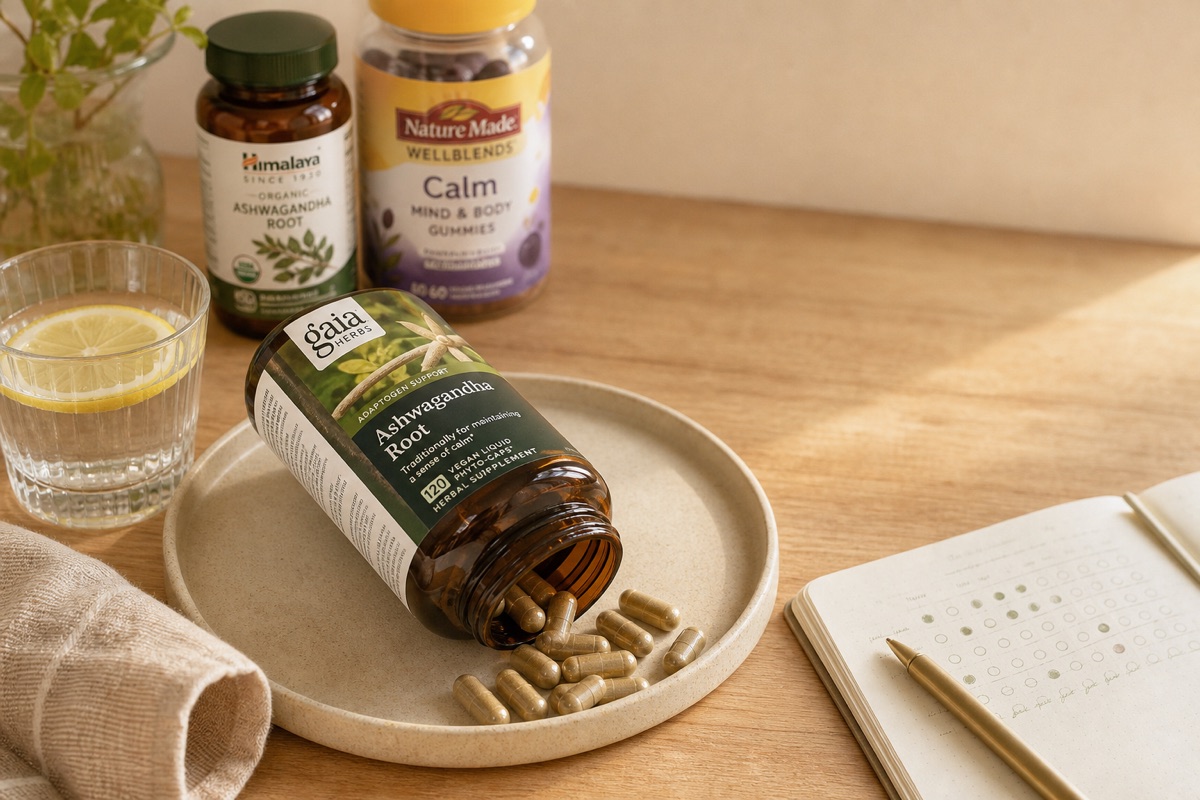
How to Use Ashwagandha for Perimenopause Correctly
An evidence-led, step-by-step guide to using ashwagandha during perimenopause, including dosing, timing, safety checks, and Amazon supplement picks.
We analyzed 3 peer-reviewed ashwagandha trials, NCCIH safety guidance, and Amazon rating snapshots from 3 US supplements. Ashwagandha may support stress and sleep during perimenopause, but evidence is stronger for stress than for hot flashes.
Editor's top Amazon picks for this guide
Real Amazon products that match this protocol. Affiliate links — your purchases support BeautySift.
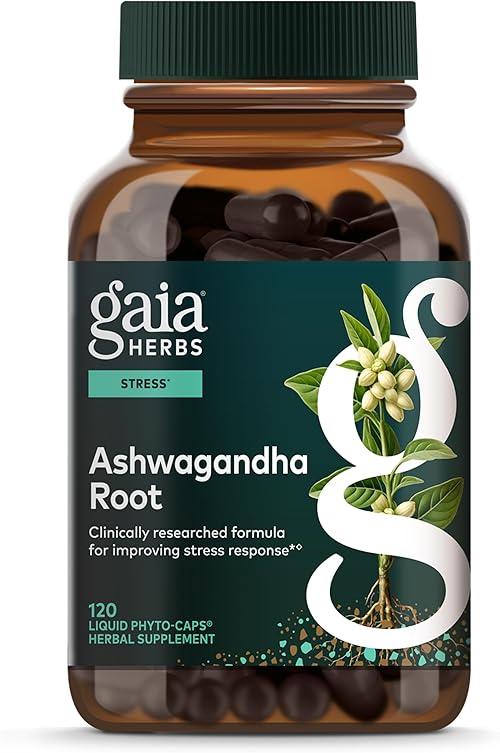
Gaia Herbs
Ashwagandha Root, 120 Vegan Liquid Phyto-Caps
$42.29
"Best match for a capsule-based perimenopause protocol because the Amazon US listing shows a clear ashwagandha root product with 4.6/5 across 6,921 global ratings."

Himalaya
Organic Ashwagandha Root, 60 Caplets, 2 Pack
$41.49
"Budget-minded 120-day caplet option; the Amazon US listing shows 4.6/5 across 12,564 global ratings, the largest rating base among the featured picks."

Nature Made
Wellblends Calm Mind and Body Gummies
$27.29
"Best for users who prefer gummies; the Amazon US listing shows ashwagandha with magnesium citrate and GABA, rated 4.5/5 across 806 global ratings."
What you'll learn
- Ashwagandha is better supported for stress and sleep than for directly stopping hot flashes, based on the 2012, 2019, and Cureus 2019 trials cited here.
- Start with one clearly labeled US supplement, use it at night or with dinner, and reassess after 8 weeks rather than stacking multiple calming products.
- Avoid ashwagandha during pregnancy, while trying to conceive, or with thyroid, liver, sedative, or immune-modulating medication unless a clinician clears it.
- For hot flashes, treat ashwagandha as a stress-and-sleep support tool, not a substitute for menopause care, hormone therapy discussions, or cooling strategies.
Steps
-
1 Confirm that ashwagandha fits your perimenopause goal
Use ashwagandha only if your main goal is stress resilience, evening wind-down, or sleep support. Chandrasekhar et al. 2012 reported a randomized placebo-controlled stress trial with 64 adults, and Lopresti et al. 2019 reported a randomized double-blind trial with 60 adults measuring stress and cortisol. Neither trial was a hot flash trial in perimenopausal women, so the evidence does not support calling ashwagandha a direct hot flash treatment.
-
2 Pick one clear formula and avoid stacking adaptogens
Choose one US-market supplement with a clear ashwagandha format, an Amazon ASIN you can verify, and a dose you can repeat consistently. We weighted Gaia Herbs, Himalaya, and Nature Made by Amazon rating base, dose clarity, brand accessibility, and fit for a conservative beginner protocol. Avoid taking two ashwagandha products at once; stacking makes it harder to identify sleepiness, stomach upset, or thyroid-related changes.
-
3 Start low, take it with food, and track 8 weeks
Begin with the lowest labeled serving, preferably with dinner or 1-2 hours before bed if sleep is the goal. The cited PubMed trials ran for about 8 weeks or 60 days, so a weekend trial is too short to judge. Track sleep onset, night waking, hot flash frequency, mood, digestive tolerance, and next-day grogginess in a simple notes app. Stop earlier if you develop rash, severe stomach upset, unusual fatigue, dark urine, or yellowing of the eyes or skin.
-
4 Check medication and health-condition conflicts before you buy
NCCIH cautions that ashwagandha may interact with sedatives, thyroid hormone, diabetes medication, blood pressure medication, and immunosuppressants. It is not appropriate during pregnancy, and anyone with liver disease, autoimmune disease, thyroid disease, or upcoming surgery should ask a clinician first. The FDA source cited here also matters: dietary supplements are regulated differently from drugs in the US, so label claims are not the same as FDA-approved treatment claims.
-
5 Pair it with hot flash basics instead of relying on it alone
If hot flashes are the concern, pair any ashwagandha trial with trigger tracking, lighter sleep layers, alcohol and spicy-food pattern checks, and a clinician discussion if symptoms disrupt work or sleep. A supplement may help you feel less stress-reactive at night, but it should not delay care for heavy bleeding, new palpitations, severe insomnia, depression, or vasomotor symptoms that are changing your daily life.
Quick answer
We analyzed 3 peer-reviewed ashwagandha trials, NCCIH safety guidance, FDA supplement regulation guidance, and Amazon US rating snapshots for 3 supplement formats. Ashwagandha may be worth a cautious 8-week trial for stress-linked sleep disruption in perimenopause, but the evidence is not strong enough to call it a hot flash treatment.
What ashwagandha can and cannot do in perimenopause
Ashwagandha is an adaptogenic herb sold in the US as a dietary supplement, not as an FDA-approved menopause medication. For women 35-55, the realistic question is not “Will this balance my hormones?” It is “Could this help the stress, sleep, and nighttime rumination that make perimenopause feel harder?”
The evidence is narrower than many supplement labels imply. Chandrasekhar et al. reported a randomized placebo-controlled stress study with 64 adults in the Indian Journal of Psychological Medicine in 2012. Lopresti et al. reported a randomized double-blind placebo-controlled study with 60 adults in Medicine in 2019. Langade et al. reported a randomized placebo-controlled sleep study with 60 adults in Cureus in 2019. Those are useful signals for stress and sleep, but they are not direct trials in perimenopausal hot flashes.
That distinction matters. Hot flashes are vasomotor symptoms influenced by changing estrogen signaling, thermoregulation, sleep, alcohol, stress, medications, and room temperature. Ashwagandha might make nighttime stress feel less intense for some users, but we would not rank it as a first-line hot flash solution based on the sources we analyzed.
Step 1: Define the symptom you are trying to change
Start with a specific target: faster sleep onset, fewer 3 a.m. wake-ups, less evening tension, or less stress reactivity after a hot flash. Do not start with the vague goal of “hormone balance.” That phrase is too broad to measure and is not the endpoint used in the PubMed trials cited in this guide.
For one week before taking anything, record three numbers each morning: total sleep time, number of nighttime wake-ups, and hot flash count. If your main concern is daytime hot flashes, add triggers such as wine, spicy food, warm rooms, anxiety spikes, and late caffeine. This baseline keeps you from crediting the supplement for normal week-to-week variation.
If you have severe hot flashes, heavy or irregular bleeding, new palpitations, panic symptoms, depression, or insomnia that affects driving or work, use the baseline notes for a clinician visit. A supplement trial should not delay care when symptoms are escalating.
Step 2: Screen for safety before choosing a bottle
NCCIH specifically cautions that ashwagandha may interact with sedatives, thyroid hormone, diabetes medication, blood pressure medication, and immunosuppressants. NCCIH also advises avoiding ashwagandha during pregnancy. For the BeautySift audience, that means extra caution if you are still having cycles, trying to conceive, taking thyroid medication, using sleep medication, or managing autoimmune disease.
Liver safety deserves a plain-language warning. Rare liver injury reports have been associated with ashwagandha products, and yellowing skin or eyes, dark urine, pale stools, severe fatigue, or upper-right abdominal pain should be treated as stop-and-call-a-clinician symptoms. That is not meant to scare every shopper away; it is meant to keep a wellness product in the right risk category.
The FDA source cited in the frontmatter is also relevant: dietary supplements are regulated differently from prescription or over-the-counter drugs in the US. A supplement can be sold without proving it treats perimenopause. That is why this guide emphasizes conservative dosing, one-product-at-a-time tracking, and avoiding dramatic claims.
Step 3: Choose the format that matches your routine
Capsules are the cleanest starting point for most users because the serving is easy to repeat. Gaia Herbs Ashwagandha Root ranked first in our featured picks because its Amazon US listing shows a clear root supplement format, a 4.6/5 rating, and 6,921 global ratings in our snapshot. It is a better fit for someone who already takes evening supplements and wants fewer added ingredients.
Himalaya Organic Ashwagandha Root ranked second for value because the Amazon US snapshot showed 4.6/5 across 12,564 global ratings, the largest rating base among the three featured products. It may suit users who want a caplet and a longer supply, but the same safety rules apply: one ashwagandha product at a time, lowest labeled serving first.
Nature Made Wellblends Calm Mind and Body Gummies ranked third because gummies can help users who dislike capsules. The trade-off is that the formula is a blend: the Amazon US listing shows ashwagandha with magnesium citrate and GABA. That may be convenient, but it makes side-effect tracking less clean because sleepiness or digestive changes could come from more than one ingredient.
Step 4: Start low and time it around sleep
For a beginner protocol, start with the lowest labeled serving and take it with food. If sleep is the goal, dinner or 1-2 hours before bed is the most logical starting window. If you wake groggy, feel sedated, or notice daytime sluggishness, stop and reassess instead of adding coffee to compensate.
The trial duration matters. Chandrasekhar et al. used a 60-day design, and the 2019 PubMed trials also used multi-week observation windows. That does not mean you should tolerate side effects for 8 weeks. It means that if you feel fine but are unsure whether it helps, judge the pattern after several weeks rather than after two nights.
Keep the protocol boring: same product, same time, same dose, no new sleep supplement, no new magnesium, no new CBD, and no new menopause blend during the same window. A clean protocol is less exciting than a stack, but it produces better personal evidence.
Step 5: Track response with a simple scorecard
Use a 0-10 scale for evening stress, time to fall asleep, night waking, and next-day grogginess. For hot flashes, count episodes rather than using a vague “better” or “worse.” If your baseline was 5 hot flashes a night and week 6 is still 5 hot flashes a night, the supplement is not doing the job you hoped it would do, even if your evening stress score improved.
Also track negatives: stomach upset, loose stools, headache, vivid dreams, anxiety, palpitations, or feeling emotionally flat. These details are especially important for women already navigating perimenopause mood shifts, thyroid changes, or prescription medication adjustments.
At the end of 8 weeks, make one of three decisions. Continue only if there is a clear benefit and no safety concern. Stop if there is no measurable change. Call a clinician promptly if symptoms worsen or if you notice liver-warning symptoms, severe sedation, or unusual thyroid-like symptoms such as racing heart, heat intolerance, tremor, or unexplained weight change.
Step 6: Use it as support, not as a menopause plan
Ashwagandha should sit beside the basics: a cooler bedroom, breathable sleep layers, hydration, alcohol pattern checks, consistent bedtime, strength training, and a clinician-level discussion if symptoms are disrupting life. For some women, hormone therapy, nonhormonal prescription options, or targeted evaluation may be more appropriate than supplements.
The right role for ashwagandha is modest: it may support perceived stress and sleep quality for some adults, based on the PubMed trials cited here. The wrong role is treating it like a replacement for medical guidance, especially when hot flashes are severe, new, or paired with other concerning symptoms.
Product protocol notes
Use Gaia Herbs if you want the simplest capsule-based approach among the featured picks. Use Himalaya if the value pack and large Amazon rating base matter more. Use Nature Made gummies only if you prefer a gummy and understand that the blend includes magnesium citrate and GABA, which makes the protocol less isolated.
We did not weight affiliate commission in these picks. The scoring logic was evidence-weighted: dose clarity, Amazon rating base, practical fit, safety transparency, and whether the format makes it easier or harder to identify side effects. The strongest scientific evidence still comes from the active ingredient trials, not from any single retail listing.
When to stop
Stop immediately and seek medical advice if you develop yellowing skin or eyes, dark urine, severe fatigue, severe abdominal pain, allergic symptoms, faintness, or a sudden change in heart rhythm. Stop and reassess if you feel sedated during the day, more anxious, or mentally foggy.
Also stop if the supplement encourages you to ignore worsening perimenopause symptoms. A product that helps you wind down is useful. A product that delays diagnosis, medication review, or evidence-based menopause care is not.
FAQs
Can ashwagandha stop perimenopause hot flashes?
Not based on the evidence we analyzed. The strongest cited studies focus on stress, cortisol, and sleep outcomes, including Chandrasekhar et al. 2012 with 64 adults and Lopresti et al. 2019 with 60 adults. They do not prove direct hot flash reduction in perimenopausal women.
How long should I try it?
Use an 8-week decision window if it is safe for you. Chandrasekhar et al. 2012 used a 60-day stress protocol, while the 2019 PubMed trials used multi-week designs. Stop sooner if you have side effects or a clinician tells you not to continue.
Can I take ashwagandha with magnesium?
Possibly, but do not add both at the same time if you are trying to understand what helps. Nature Made Wellblends already combines ashwagandha with magnesium citrate and GABA, so it is less clean for troubleshooting than a single-herb capsule.
Is ashwagandha safe with thyroid medication or hormone therapy?
Ask your clinician or pharmacist. NCCIH flags interaction concerns with thyroid medication and several other drug categories. Hormone therapy adds another reason to get personalized advice instead of relying on a supplement label.
What is the biggest shopping mistake?
Buying a dramatic “hormone balance” blend with many calming ingredients and no clear way to track side effects. Choose one clearly labeled product, start low, and measure sleep and hot flash patterns before deciding whether it earned a place in your routine.