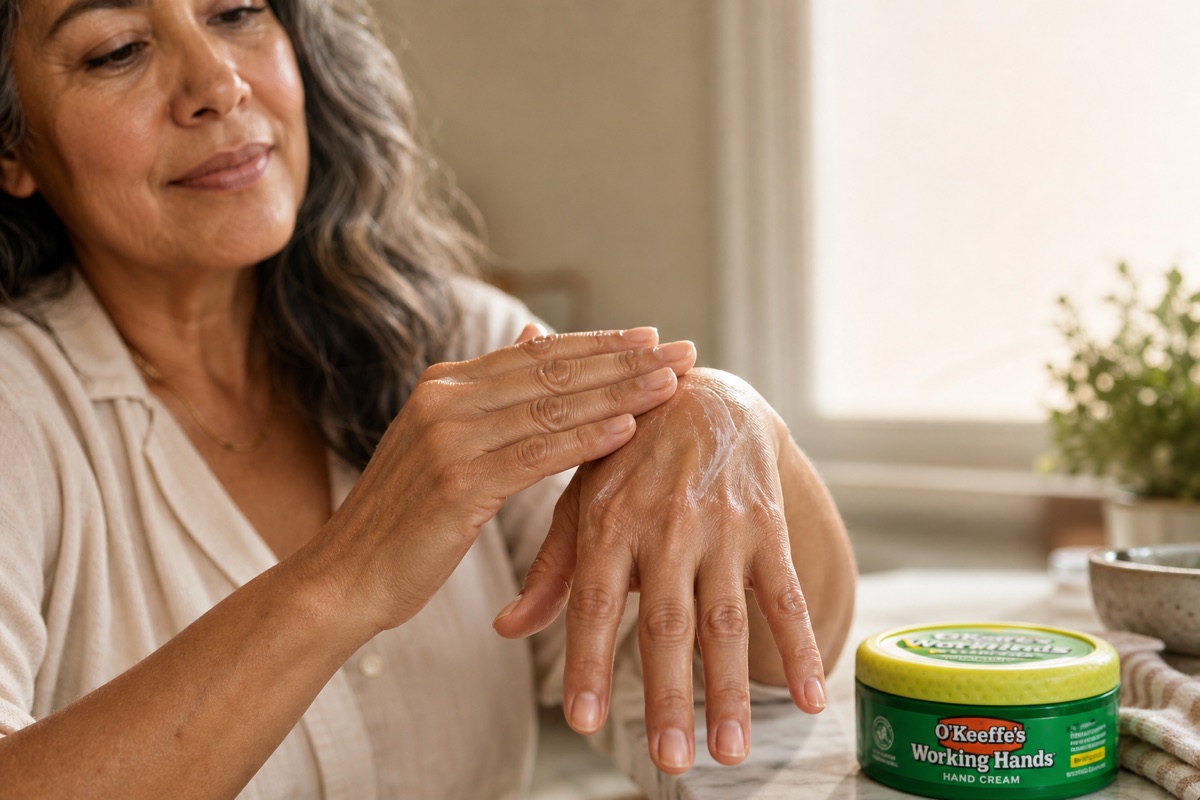
How to Use Hand Creams Correctly for Dry, Aging Hands
An evidence-led guide to applying hand cream correctly, choosing textures, and protecting dry, crepey hands without overcomplicating your routine.
We analyzed 95,482 Amazon ratings across 3 hand creams, AAD dry-skin guidance, and 2 PubMed hand-dermatitis studies. Use hand cream after washing, before bed, and after sanitizer; choose humectants for water, occlusives for sealing, and richer textures for cracked or crepey hands.
Editor's top Amazon picks for this guide
Real Amazon products that match this protocol. Affiliate links — your purchases support BeautySift.

O'Keeffe's
O'Keeffe's Working Hands Hand Cream
$6.92
"Best concentrated option for cracked, rough hands: Amazon lists 4.7/5 across 82,393 ratings, the largest review base in this set."
What real Amazon buyers say
4.7★· 82,393 reviews"A little goes a long way. The cream is thick but absorbs quickly, so you do not feel slippery or greasy afterward, which I love."

Neutrogena
Neutrogena Norwegian Formula Hand Cream Fragrance-Free
$5.97
"Best fragrance-free glycerin cream for frequent reapplication: Amazon lists 4.7/5 across 9,677 ratings."
What real Amazon buyers say
4.7★· 9,677 reviews"The formula is thick, but you only need a small amount. It spreads easily and absorbs better than I expected."

Gold Bond
Gold Bond Age Renew Crepe Corrector Hand Cream
$5.94
"Best protocol match for crepey-looking hand texture: Amazon lists 4.6/5 across 3,412 ratings."
What real Amazon buyers say
4.6★· 3,412 reviews"My hands look softer, smoother, and less dry after just a few uses. It absorbs well and leaves my skin feeling hydrated for hours."
What you'll learn
- Apply hand cream after washing while skin is slightly damp, then reapply after sanitizer, dishwashing, or outdoor cold exposure.
- Use a pea-size amount for daytime comfort and a thicker bedtime layer when knuckles, cuticles, or the backs of hands feel rough.
- For women 35-55, consistency matters more than a complicated routine because hands lose comfort quickly with water, detergent, sanitizer, and cold air.
- Match texture to the job: fast-absorbing cream for the day, concentrated glycerin cream for cracked hands, and smoothing cream for crepey-looking texture.
- Do not treat persistent rash, swelling, bleeding, severe itch, or painful cracks as a cosmetic dryness problem; those patterns deserve medical advice.
Steps
-
1 Apply after every real water exposure
After handwashing, pat hands until they are damp rather than dripping, then massage in a small amount of cream over the backs of hands, knuckles, between fingers, and around nails. The AAD dry-skin guidance emphasizes prompt moisturizing because water exposure and cleansing can leave skin feeling tight.
-
2 Use less in the day and more at night
For daytime, use a pea-size amount so the cream absorbs before typing, driving, or touching your phone. At bedtime, use a thicker layer and spend 20 to 30 seconds pressing cream into knuckles, cuticles, and the backs of hands where fine-looking lines and dryness show first.
-
3 Choose humectant, occlusive, or smoothing formulas by problem
If hands feel tight but not cracked, look for humectants such as glycerin. If skin is cracked or rough, choose a more occlusive cream. If the concern is crepey-looking texture on the backs of hands, use a smoothing body-care style cream consistently rather than expecting one application to change texture.
-
4 Protect the cream from being washed away
Hand cream works better when you reduce the triggers that remove it. Wear gloves for dishes or cleaning, reapply after sanitizer, and keep a tube by the sink, desk, and bedside if dryness is recurring. This is practical adherence, not vanity.
-
5 Escalate only when symptoms stay cosmetic
Ordinary dryness can be managed with routine changes and moisturizer. If hands are swollen, bleeding, intensely itchy, hot, scaly, infected-looking, or painful despite bland care, stop troubleshooting with more products and seek medical guidance.
Bottom line
Use hand cream like a barrier habit, not like an occasional rescue product. The highest-yield moments are after washing, after sanitizer, before cleaning gloves, after outdoor cold exposure, and before bed. If you only apply it once a day, make it the bedtime layer. If your hands crack, sting, or look crepey by afternoon, place a second tube by the sink or desk so reapplication is not a willpower test.
BeautySift did not test hand creams on a panel. We analyzed Amazon US rating snapshots for O’Keeffe’s Working Hands, Neutrogena Norwegian Formula Hand Cream Fragrance-Free, and Gold Bond Age Renew Crepe Corrector Hand Cream; AAD dry-skin guidance; PubMed-indexed hand-dermatitis moisturizer studies; official brand positioning; and ingredient-role patterns. We may earn a commission from Amazon links, but affiliate status does not influence product selection or scoring.
Skill level: beginner. You do not need a 10-step hand routine. You need the right amount, the right timing, and a formula that matches the way your hands actually get dry.
Why hands dry out faster after 35
Hands are exposed to the exact things that remove moisturizer: water, soap, detergent, sanitizer, friction, paper towels, dishwashing, gardening, cold air, and UV. The backs of the hands also show texture changes early because they are frequently uncovered and often get less sunscreen than the face. For US women 35-55, this can collide with hormonal dryness, more visible fine-looking lines, and a lower tolerance for fragranced or heavily active body-care products.
The AAD’s dry-skin guidance is practical rather than trendy: use fragrance-free products, moisturize promptly, and choose cream or ointment textures when skin is dry. PubMed-indexed hand-dermatitis research also supports the broad logic of after-work moisturizers and barrier-focused ointments, although those studies are not the same as cosmetic hand-cream testing on healthy skin. We treat them as ingredient and protocol support, not proof that one retail product cures a skin condition.
That distinction matters. A hand cream can soften roughness, reduce the look of dehydration lines, and make cuticles feel less ragged. It cannot replace gloves for dishwashing, sunscreen for UV exposure, or medical care for persistent rash, bleeding, swelling, or severe itch.
Step 1: Apply after washing while hands are slightly damp
The most common mistake is waiting until hands feel tight. After washing, pat with a towel until the skin is damp, not wet. Then apply a pea-size amount of hand cream to the backs of both hands first, because that is where dryness and fine-looking lines tend to show. Rub the backs of the hands together, then work cream over knuckles, between fingers, around nails, and across the palms only as needed.
This order keeps the richest layer where it is most useful. Palms often need less product because too much cream there makes phones, steering wheels, and keyboards slippery. If you hate greasy hands, do not skip cream entirely; change the placement. Put most of it on the backs of the hands and cuticles, then use the residue on the palms.
After sanitizer, use the same logic. You do not have to apply cream after every single pump if that makes daily life impossible. But if sanitizer leaves your hands tight or chalky, reapply as soon as the sanitizer has fully dried. The protocol works because it follows water and alcohol exposure, not because the clock says a certain hour.
Step 2: Use a small daytime amount and a deliberate bedtime layer
Daytime hand cream should disappear quickly enough that you will actually use it. Start with less than you think: roughly a pea-size amount for both hands. If your knuckles still look dry after 5 minutes, add a second tiny amount only to those areas. This reduces the greasy-hand problem that makes many people abandon hand cream after two days.
Night is different. Bedtime is when a thicker layer makes sense because you are not immediately washing dishes, typing, or driving. Use a generous pea-size to almond-size amount, depending on how dry your hands are. Spend 20 to 30 seconds massaging around cuticles and over the backs of the hands. If your hands crack at the knuckles, add another pinpoint amount directly to those cracks and let it sit.
O’Keeffe’s Working Hands is the strongest match in this guide for rough, cracked-feeling hands. Amazon lists it at 4.7/5 across 82,393 ratings, which is the largest review base among the three products we analyzed. Its role is not luxury texture; it is concentrated, practical barrier support when repeated washing has made skin feel rough.
Step 3: Match ingredients to the problem you feel
Hand creams usually work through three ingredient jobs. Humectants, such as glycerin, help bind water in the upper skin surface. Emollients soften rough texture and reduce the sandpapery feel. Occlusive agents help slow water loss by leaving a protective film. A formula can use more than one of these strategies, and the best choice depends on your actual complaint.
If your hands feel tight but not cracked, a glycerin-forward cream can be enough. Neutrogena Norwegian Formula Hand Cream Fragrance-Free fits that role. Amazon lists it at 4.7/5 across 9,677 ratings, and the fragrance-free positioning is useful when dryness comes with sensitivity or stinging. This is the kind of tube to keep near a sink because a small amount can be spread over the backs of the hands without turning the palms slick.
If your hands are cracked, rough, or wind-chapped, you may need more occlusive support, especially at night. If your main issue is crepey-looking texture on the backs of the hands, choose consistency over drama. Gold Bond Age Renew Crepe Corrector Hand Cream is the most targeted of the three for that concern; Amazon lists it at 4.6/5 across 3,412 ratings. It is still a moisturizer, not a procedure, but it fits a smoothing hand-care protocol better than a plain body lotion.
Step 4: Use gloves for wet work and cleaning
Hand cream cannot outwork repeated detergent exposure. If you wash dishes, clean bathrooms, garden, or handle household cleaners, use gloves. Apply a small amount of cream first if your hands are dry, let it absorb for a minute, then put on gloves. This protects the cream from being stripped away and reduces the need to reapply constantly.
For many women, the practical trigger is not one dramatic irritant. It is 12 small exposures: hand soap, sanitizer, dish soap, disinfecting wipes, cooking prep, laundry, cold steering wheels, and low indoor humidity. A sink-side hand cream helps, but gloves do the job that cream cannot. They reduce repeated wet-dry cycles.
If gloves make your hands sweaty, take breaks and dry hands fully before reapplying cream. Moist skin trapped too long can also become uncomfortable. The goal is balanced protection, not wearing occlusion for hours while skin feels clammy.
Step 5: Do a 7-night hand reset when skin is rough or stinging
When hands are rough, stinging, or cracked from ordinary dryness, make the routine boring for 7 nights. Wash with a gentle cleanser when needed, pat dry, apply a thicker layer of hand cream, and stop there. Skip fragranced lotions, exfoliating hand scrubs, peel pads on the backs of the hands, and essential-oil-heavy cuticle products during the reset.
If cuticles are ragged, massage cream into the nail folds rather than trimming aggressively. If the backs of hands look dull or crepey, resist the urge to use face acids nightly. The skin may look smoother after moisture improves, and you can reassess later. A smoothing hand cream plus daytime sunscreen is usually a better first move than exfoliating already-dry hands.
After 7 nights, keep the two habits that helped most. For many people, that means cream after the final evening handwash and cream before bed. For others, it means gloves for dishes and a small desk tube. The right protocol is the one you can repeat.
Where sunscreen fits
Hand cream can make the backs of your hands look softer, but it does not protect against UV unless it is explicitly an SPF product. If fine lines, brown spots, or crepey texture are concerns, apply broad-spectrum sunscreen to the backs of your hands in the morning and after significant washing or driving exposure. Use your face sunscreen residue if that is the easiest way to remember.
This matters more than most hand-care marketing suggests. Moisturizer addresses water loss and surface comfort. Sunscreen addresses UV exposure, which is a major reason hands can look older than the face. For a simple morning order, use hand cream first if your hands feel dry, let it absorb, then apply sunscreen to the backs of hands before leaving the house.
If sunscreen pills over hand cream, use less cream in the morning or reserve the richest texture for night. A lighter daytime layer is not a failure; it is how you make the routine wearable.
Product roles we would match to the protocol
For cracked, rough hands: O’Keeffe’s Working Hands Hand Cream. It has the largest Amazon rating base in this set at 82,393 ratings and a 4.7/5 snapshot. It makes the most sense as a nightstand or winter-coat product when knuckles feel rough, tight, or overwashed.
For fragrance-free frequent use: Neutrogena Norwegian Formula Hand Cream Fragrance-Free. The Amazon snapshot shows 4.7/5 across 9,677 ratings. Its best use is sink-side or desk-side reapplication, especially if fragrance makes dry skin feel more reactive.
For crepey-looking hand texture: Gold Bond Age Renew Crepe Corrector Hand Cream. The Amazon snapshot shows 4.6/5 across 3,412 ratings. Its role is smoothing and hydration on the backs of hands, especially when the concern is texture rather than cracking.
You do not need all three. Pick one daytime formula you will use and one richer night option only if your hands need it. If your budget allows only one, choose by the worst symptom: cracking, sensitivity, or crepey-looking texture.
Common mistakes to avoid
Do not apply hand cream only when your skin is already painful. That turns moisturizer into rescue care instead of maintenance. The best timing is before dryness becomes a problem: after washing, before bed, and before cold or wet work.
Do not use a heavily scented cream on cracked or stinging hands just because it smells comforting. Fragrance can make consistent use harder if your skin is already reactive. The AAD guidance favors fragrance-free products for dry skin, and that is especially relevant for hands that are washed often.
Do not scrub the backs of your hands to fix crepey texture. Exfoliation may make rough skin feel temporarily smoother, but too much can worsen dryness. Start with moisture, sunscreen, and gloves. Add exfoliation only when skin is calm and only occasionally.
Do not forget cuticles. You do not need a separate cuticle oil if you will not use it. A small amount of hand cream massaged around the nails at bedtime is often enough for routine dryness.
When hand cream is not enough
Cosmetic dryness should improve with consistent bland care. If your hands are bleeding, swollen, crusted, very itchy, hot, painful, or repeatedly cracking despite a simple routine, treat that as a medical question rather than a shopping problem. Hand eczema, allergic contact dermatitis, psoriasis, infection, and occupational irritation can overlap with ordinary dryness in how they look at first.
The PubMed hand-dermatitis studies we cite support why moisturizers and barrier ointments matter in hand-care protocols, but they also show that clinical hand problems are studied as clinical problems. A retail hand cream can support comfort; it should not delay medical care when symptoms are persistent or severe.
FAQ
How often should I apply hand cream if I wash my hands a lot?
Apply after the washes that leave your hands tight, after sanitizer when it feels drying, and before bed. If you wash constantly for work or caregiving, keep a fragrance-free tube by the sink and use a small amount on the backs of hands so your palms do not feel greasy.
Is it better to use hand cream or cuticle oil?
Start with hand cream. It covers the backs of hands, knuckles, and cuticles in one step. Add cuticle oil only if the nail folds stay dry after a week of nightly cream. If you already skip hand cream, adding a separate oil is usually less realistic.
Can I use retinol or glycolic acid on my hands?
You can use some face actives on the backs of hands if your skin tolerates them, but do not start during a dry, cracked, or stinging phase. Moisturizer and sunscreen come first. If you add a retinoid or acid later, use it only a few nights weekly and follow with hand cream.
Should I wear cotton gloves over hand cream at night?
Cotton gloves can help if they make you leave the cream on instead of rubbing it onto sheets. They are optional. If gloves feel hot or annoying, use a thicker bedtime layer and let it absorb for 5 minutes before sleep.
What is the best hand cream texture for mature hands?
For daytime, choose a fast-absorbing cream you will reapply. For bedtime, choose a richer or more occlusive texture. For crepey-looking backs of hands, a smoothing cream used consistently plus daytime sunscreen is more realistic than expecting one thick layer to change texture overnight.