How to Use Hypochlorous Acid Sprays Correctly
A practical, evidence-led hypochlorous acid spray protocol for US women 35-55, with timing, layering, safety cautions, and Amazon product picks.
Based on Del Rosso and Bhatia's 2018 JCAD review, a 20-subject Clinical Ophthalmology study of 0.01% hypochlorous acid, FDA cosmetic-claim guidance, and US brand directions, use hypochlorous acid spray on clean skin, let it fully dry, then layer moisturizer, sunscreen, or makeup.
Editor's top Amazon picks for this guide
Real Amazon products that match this protocol. Affiliate links — your purchases support BeautySift.

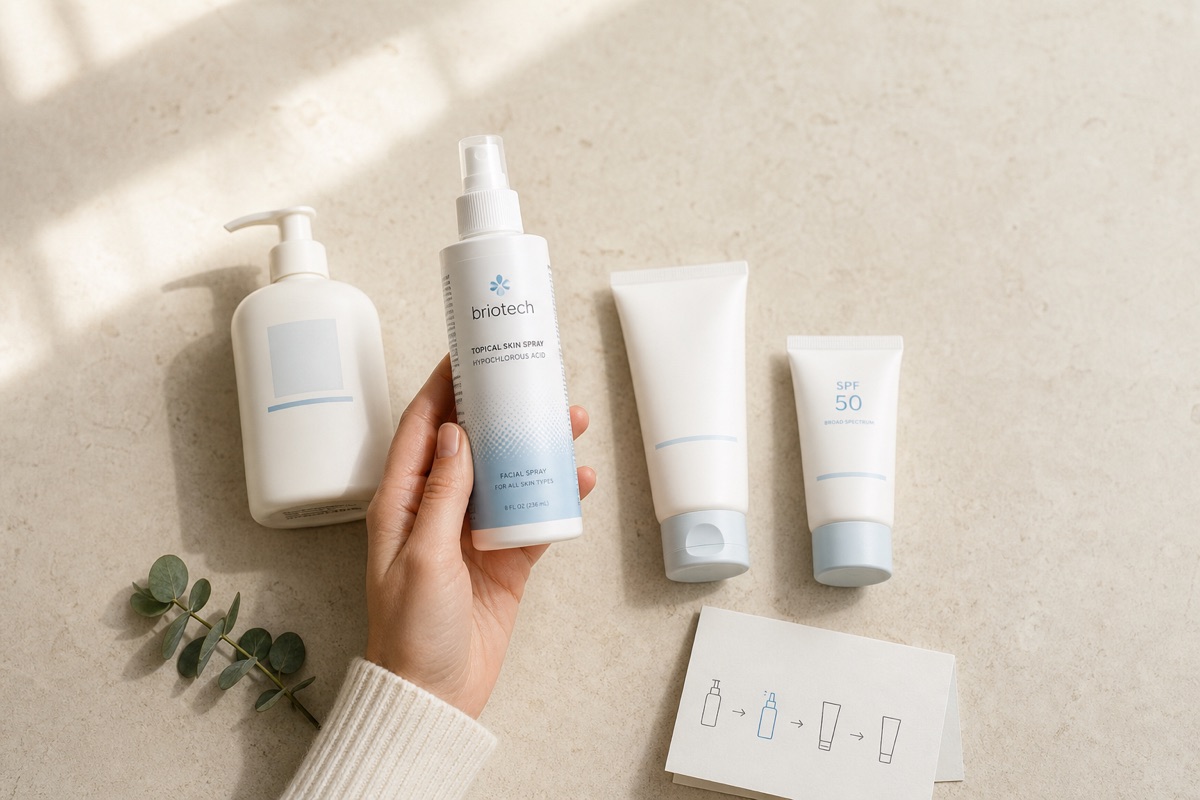
Briotech
Briotech Topical Skin Spray
"Simple hypochlorous acid topical spray format that fits the clean-skin, air-dry, then-moisturize protocol in this guide."

e11ement
e11ement Hypochlorous Acid Face and Skin Spray
"Face-and-skin hypochlorous acid spray positioned for sensitive-skin routines and easy use after cleansing or sweating."

Active Skin Repair
Active Skin Repair First Aid Healing Skin Spray
"Hypochlorous-acid-based spray suited to shoppers who want one bottle for skin stress, friction zones, and post-activity use."
What you'll learn
- Use hypochlorous acid spray as a supportive skin-hygiene step, not as a substitute for acne, eczema, wound, or infection treatment.
- Apply it to clean skin, let the mist fully air-dry, and only then layer moisturizer, sunscreen, makeup, retinoids, vitamin C, or acids.
- Start once daily or after sweat, then increase only if the product label allows it and your skin stays comfortable.
- Choose a skin-labeled hypochlorous acid product; never substitute household disinfectant, bleach, pool chemicals, or surface sanitizer.
Steps
-
1 Start with a skin-labeled hypochlorous acid spray
Pick a product that is explicitly labeled for skin use, ideally fragrance-free and alcohol-free if your skin is reactive. Hypochlorous acid is discussed in dermatology literature as an antimicrobial molecule, but FDA claim rules still matter: cosmetic sprays should not be treated as acne drugs, eczema drugs, wound cleansers, or infection treatments unless the exact product has that regulated indication.
-
2 Apply after cleansing, sweating, shaving, or friction
Use the spray when skin is clean or when sweat and friction make skin feel stressed: after a workout, after removing a face covering, after shaving, or before rebuilding your evening routine. Hold the bottle several inches away and mist enough to lightly dampen the area. Do not soak cotton pads or scrub the skin with it.
-
3 Let the spray air-dry before layering anything active
Give hypochlorous acid time to dry on its own before applying moisturizer, sunscreen, makeup, vitamin C, retinoids, benzoyl peroxide, exfoliating acids, or prescription topicals. Do not mix it in your palm with a serum. This is the most common routine mistake because HOCl is an oxidizing molecule and layering too quickly can make the rest of the routine harder to interpret.
-
4 Use moisturizer and sunscreen to keep the routine balanced
After the mist dries, follow with moisturizer at night or sunscreen in the morning. For women 35-55, this step matters because perimenopause-related dryness, hot-flash flushing, and adult breakouts can make skin feel reactive even when a product is mild. The spray should simplify the routine, not replace barrier support.
-
5 Pause or escalate when symptoms look medical
Stop or reduce use if skin burns, cracks, develops a rash, or becomes persistently tender. See a clinician for infected-looking lesions, painful cystic breakouts, open wounds, burns, eye symptoms, or eczema flares. Peer-reviewed wound and eyelid studies support medical relevance for specific HOCl contexts, but a cosmetic facial spray is not a self-treatment plan for those conditions.
Quick answer
Hypochlorous acid spray is best used as a clean-skin, air-dry, then-layer step. We analyzed Del Rosso and Bhatia’s 2018 Journal of Clinical and Aesthetic Dermatology review, Stroman’s 20-subject 2017 Clinical Ophthalmology study of 0.01% hypochlorous acid for eyelid hygiene, FDA cosmetic-claim guidance, US brand directions, Reddit routine questions, and Amazon US product pages for three eligible sprays. The practical answer: mist after cleansing or sweating, let it dry completely, then apply moisturizer, sunscreen, makeup, or treatment products.
BeautySift did not test these sprays. This guide is a meta-analysis of public evidence and product directions for US shoppers, especially women 35-55 dealing with adult breakouts, hot-flash sweat, mask friction, shaving irritation, and skin that feels less forgiving than it did at 30.
What hypochlorous acid is, and what it is not
Hypochlorous acid, often shortened to HOCl, is a molecule the human immune system can produce as part of innate defense. Del Rosso and Bhatia’s 2018 JCAD review describes topical stabilized HOCl as relevant to antimicrobial activity, inflammation pathways, wound care, dermatology, and ocular hygiene. That makes it more evidence-grounded than a trendy face mist whose only support is influencer repetition.
The key boundary is equally important: a cosmetic HOCl spray is not automatically a drug, wound cleanser, acne treatment, eczema treatment, or infection treatment. FDA guidance on whether a product is a cosmetic, drug, or both explains that intended use and claims matter. If a product claims to treat disease, prevent infection, or change body function, the regulatory expectations change.
For a BeautySift reader, the safest framing is this: hypochlorous acid spray can be a supportive hygiene and comfort step in a routine. It may be useful after sweat, friction, shaving, or a hot flash. It should not be your plan for a spreading rash, painful cystic acne, an infected-looking lesion, a burn, or a post-procedure wound unless a clinician specifically tells you to use that exact product.
Why women 35-55 use it differently
At 42, 48, or 55, skin often has more variables than it did in your 20s. Hormonal breakouts can sit along the jaw. Hot flashes can leave sweat and salt on the face at awkward times. Skin may feel both blemish-prone and dry. Retinoids, vitamin C, acids, and prescription topicals may already be in the routine.
That is why the protocol matters more than the mist itself. If you spray HOCl over sunscreen, then immediately add vitamin C, then retinol at night, you will not know what is helping or irritating. If you use it after sweat, let it dry, and keep the rest of the routine stable, you have a cleaner read.
Reddit searches in r/SkincareAddiction show the same pattern of consumer questions: does it go before or after skincare, should it be rinsed, can it be used with actives, and is it for acne or just irritation? Those threads are anecdotal, not clinical evidence, but they identify the routine mistakes this guide is meant to prevent.
Step 1: Choose the right kind of spray
Start with a skin-labeled hypochlorous acid spray, not a household disinfectant, bleach solution, pool product, or surface sanitizer. This distinction is non-negotiable. A product meant for counters, laundry, or pools is not a skincare product, even if the chemistry words overlap.
Look for a simple formula and skin-specific directions. Many skin sprays keep the formula short, often built around water or saline plus hypochlorous acid. If your skin is reactive, fragrance-free and alcohol-free positioning is preferable. Avoid products that ask you to believe one bottle replaces acne care, eczema care, wound care, and every other treatment in your bathroom.
The three Amazon products featured above fit different shopping needs. Briotech Topical Skin Spray is the simple HOCl-spray option. e11ement Hypochlorous Acid Face and Skin Spray is more explicitly face-and-skin oriented. Active Skin Repair First Aid Healing Skin Spray is the more multi-use pick for shoppers who want one HOCl-based spray for friction zones and general skin stress. We included only Amazon network links because BeautySift currently uses Amazon Associates and avoids non-Amazon affiliate networks.
Step 2: Use it after cleansing or sweat, not as a random extra layer
The cleanest time to use hypochlorous acid spray is after cleansing. Pat your face dry, mist lightly, and let it air-dry. It can also make sense after a workout, after wearing a face covering, after gardening, after a hot flash, or after shaving areas where friction tends to trigger bumps.
Hold the bottle several inches from skin. Mist enough to dampen the area; do not drench your face. Do not spray into your eyes unless the exact product says it is designed for eyelid or ocular use. Stroman’s 2017 Clinical Ophthalmology study evaluated a 0.01% pure HOCl eyelid hygiene solution in 20 human subjects, but that does not make every facial spray an eye product.
If you use HOCl on the body, the same logic applies. Use it after sweat or friction, let it dry, then dress or moisturize. Do not use it to clean deep wounds, burns, or infected areas unless a medical professional gives that direction.
Step 3: Let it dry before moisturizer, SPF, makeup, or actives
This is the step most people rush. Hypochlorous acid is an oxidizing molecule. That does not mean it is harsh in every skincare context, but it does mean you should not mix it directly with vitamin C, retinoids, benzoyl peroxide, exfoliating acids, or prescription topicals in your palm.
A simple wait solves most of the layering problem. Spray, let the skin air-dry, then continue. Once dry, apply moisturizer at night or sunscreen in the morning. If your skin is already dry from retinoids or perimenopause-related barrier changes, moisturizer is not optional. HOCl may make skin feel cleaner or calmer, but it does not provide the lipid support a mature skin barrier often needs.
For makeup days, use the spray before primer, foundation, or powder. Letting it dry first reduces pilling and keeps the spray from disrupting sunscreen film. If you want a midday refresh, mist lightly and avoid rubbing your face afterward.
Step 4: Start with once daily or after sweat
If you are new to hypochlorous acid spray, start once daily for a week or use it only after sweat and friction. Some product labels allow multiple daily uses, but the best BeautySift protocol is conservative: follow the specific label, then adjust based on your skin.
More is not automatically better. If your face feels tight after repeated sprays, reduce frequency and rebuild with moisturizer. If the product stings sharply, stop and check whether your barrier is compromised, whether you sprayed too close to the eyes, or whether another active is the real irritant.
This is especially relevant for readers using retinoids. A common mature-skin routine already includes a retinoid at night, vitamin C in the morning, sunscreen, and maybe an acid toner. HOCl should be the quiet step, not the extra variable that pushes the routine into irritation.
Step 5: Know when it is not enough
Peer-reviewed studies give HOCl legitimate medical context. Hiebert and Robson’s 2016 Eplasty study compared HOCl and saline irrigation in chronic-wound bacterial counts. Del Rosso and Bhatia’s 2018 review discusses dermatology and wound-care relevance. Those sources support HOCl’s broader antimicrobial and skin-care relevance, but they do not prove that a cosmetic mist treats every face concern.
Get medical guidance for painful cysts, spreading redness, pus, fever, infected-looking cuts, burns, eye pain, or eczema that cracks and bleeds. If hot flashes are frequent or disruptive, skincare can help with cleanup and comfort, but it does not address the hormonal trigger.
For hormonal-looking acne, treat HOCl as a hygiene support step after sweat and friction. It may fit alongside dermatologist-directed acne care, but it should not replace treatments with stronger evidence for acne lesions.
A simple morning and night protocol
Morning can be very short: rinse or cleanse, mist hypochlorous acid if you want that step, let it dry, apply moisturizer if needed, then sunscreen. If you wear makeup, wait until sunscreen settles before applying primer or foundation.
After workouts or hot flashes: blot sweat if needed, mist lightly, let dry, then moisturize or reapply sunscreen if you are going back outside. This is where HOCl is most practical for women 35-55: it gives you a low-friction way to reset skin without doing a full cleanse in a gym bathroom or office restroom.
Night: cleanse, mist, dry, then use moisturizer. If it is a retinoid night, wait until the mist is fully dry before applying the retinoid, and consider sandwiching with moisturizer if your skin is reactive. If it is an acid or benzoyl peroxide night, the same dry-first rule applies.
Product fit: which spray makes sense?
Choose Briotech if you want the simplest hypochlorous acid spray format and do not need beauty-counter positioning. Choose e11ement if you want a face-and-skin product that fits easily beside toner, moisturizer, and sunscreen. Choose Active Skin Repair if your use case is broader: shaving friction, body chafing, post-workout skin, or family first-aid-adjacent skin stress.
We did not include Tower 28 in featured products because we could not verify a fresh Amazon ASIN for this article without risking an inaccurate affiliate entry. Tower 28 remains useful as a US brand-direction source because its SOS Daily Rescue Facial Spray page is a widely recognized beauty example of HOCl positioning, but BeautySift’s current affiliate rule is Amazon-only and every featured product needs a real Amazon URL.
Common mistakes to avoid
Do not spray and immediately apply a strong active while your skin is wet. Do not use it as a toner that you scrub on with cotton. Do not assume it replaces cleanser after heavy makeup or sunscreen. Do not use it in the eye area unless the product label specifically supports that use. Do not decant it into a decorative bottle; stabilized HOCl can degrade with light, heat, contamination, or pH changes.
Most of all, do not escalate a medical-looking problem because a spray feels gentle. HOCl can be a smart routine tool. It is not a diagnosis, prescription, or wound-care plan.