How to Use Microcurrent Devices Correctly: A 2026 Step-by-Step Guide
An evidence-led guide to using at-home microcurrent devices correctly, with conductive-gel rules, treatment maps, safety checks, and realistic expectations.
Based on 4 PubMed-indexed microcurrent or home-device records, openFDA 510(k) records for ZIIP and FOREO device families, and Amazon snapshots totaling 456 ratings across 3 devices, correct use means clean skin, wet conductive gel, slow upward passes, and a 60-day consistency window.
Editor's top Amazon picks for this guide
Real Amazon products that match this protocol. Affiliate links — your purchases support BeautySift.

FOREO
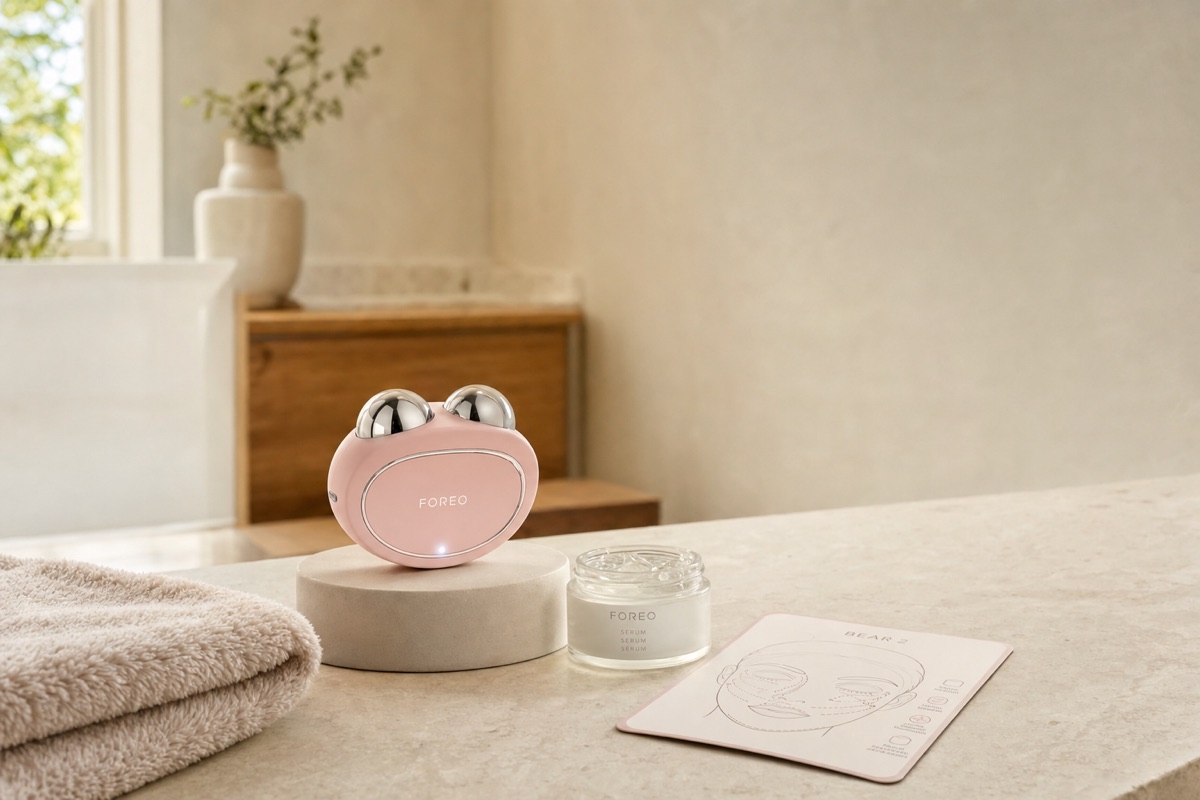
FOREO BEAR 2 Advanced Toning Microcurrent Facial Device
$419
"Compact microcurrent option for short guided routines; Amazon metadata showed 4.2/5 across 335 reviews and FOREO lists up to 680 uA output."

ZIIP
ZIIP Halo Facial Toning Device
$399.99
"Premium microcurrent and nanocurrent option; Amazon metadata showed 4.1/5 across 65 reviews and openFDA lists ZIIP-family 510(k) records."

NUFACE
NUFACE MINI+ Microcurrent Face Massager Device
$250
"Smaller starter device for a repeatable beginner routine; Amazon metadata showed 3.7/5 across 56 ratings in the May 2026 snapshot."
What you'll learn
- Microcurrent works only when the electrodes have a wet, water-based conductive layer; dry skin, facial oils, and heavy balms make the routine less consistent.
- The most defensible at-home goal is temporary-looking lift, de-puffing, and facial-contour support, not correction of moderate sagging or a replacement for procedures.
- A beginner routine should prioritize safety screening, clean skin, enough gel, slow upward passes, and stopping when the device or skin gives warning signs.
- Judge routine fit after 14 days, but judge visible microcurrent value closer to 60 days because brand use pages and user sentiment point to consistency-dependent results.
Steps
-
1 Step 1: Screen for contraindications before the first session
Read the current manual for your exact device before use. Do not use microcurrent over manufacturer-listed contraindications, and ask a clinician first if you have an implanted electrical device, seizure history, active skin infection, open skin, recent facial surgery or energy-based treatment, pregnancy-related restrictions, unexplained facial pain, or any condition your device manual flags. FDA-family records for ZIIP and FOREO support regulatory context, but clearance is not a personal safety clearance for every user.
-
2 Step 2: Cleanse to remove sunscreen, makeup, and oil residue
Start with clean, bare, non-irritated skin. Remove makeup, sunscreen, oil cleanser residue, and heavy moisturizer so the conductive layer can sit evenly. Skip the session if skin is sunburned, windburned, rashy, freshly waxed, freshly peeled, or stinging from retinoids or exfoliating acids. Microcurrent is easiest to tolerate when the barrier already feels calm.
-
3 Step 3: Apply enough water-based conductive gel
Use the activator or conductive gel recommended by the device maker, or another compatible water-based conductive gel if the manual allows it. NUFACE's routine page specifically says activators conduct microcurrent to skin and facial muscles, which is why oil, balm, and silicone-heavy primer are poor substitutes. The gel should stay wet and slippery until the zone is finished; reapply instead of dragging over tacky skin.
-
4 Step 4: Use a simple upward map instead of random dragging
Follow your device's printed or app-guided map first. For a conservative beginner pattern, glide from the corner of the mouth toward the ear, from the side of the nose toward the temple, and from the chin along the jaw toward the ear. If brow use is allowed, lift from beneath the brow toward the hairline without crossing directly over the eyeball. Use neck placement only when the manual permits it, and avoid the front-center thyroid area.
-
5 Step 5: Move slowly and keep even electrode contact
A practical pace is a slow three-to-five-second glide per pass, repeated as your device instructions allow. More pressure is not more effective; even contact and wet gel matter more. If the device beeps, tingles sharply, tugs, skips, or loses contact, pause and add gel rather than pushing harder. Stop the session if discomfort persists after correcting contact and gel level.
-
6 Step 6: Set a realistic schedule and tracking window
Use the brand schedule over any generic advice. Many microcurrent systems start with frequent short sessions and then shift to maintenance, but the exact pattern differs by device. Use 14 days to decide whether the routine fits your life and about 60 days to judge cosmetic value, because NUFACE publishes 60-day consumer-questionnaire claims and microcurrent outcomes are maintenance-dependent.
-
7 Step 7: Finish with barrier support and monitor irritation
After the session, rinse off or leave on gel according to the product directions, then apply a bland moisturizer. Use sunscreen in the morning. Take same-light photos every 2 weeks rather than checking pore-by-pore daily. Pause if you see persistent redness, burning, rash, headache, unusual twitching, or sensitivity that worsens after each session.
Quick Answer
Based on 4 PubMed-indexed microcurrent or home-device records, openFDA 510(k) records for ZIIP and FOREO device families, and Amazon snapshots totaling 456 ratings across FOREO BEAR 2, ZIIP HALO, and NUFACE MINI+, correct microcurrent use means clean skin, enough wet conductive gel, slow upward passes, and conservative expectations. Use 14 days to judge routine fit and about 60 days to judge cosmetic value.
Affiliate disclosure: we may earn a commission from Amazon links. Affiliate availability does not influence BeautySift’s evidence weighting.
What microcurrent can and cannot do
At-home microcurrent devices send low-level electrical current through the skin surface when the electrodes are paired with a conductive gel. The beauty-tech promise is usually described as facial toning, lifted-looking contour, and fine-line support. BeautySift uses a narrower evidence standard: microcurrent may help some consistent users see temporary-looking lift, de-puffing, or a more defined-looking contour, but it should not be framed as a fix for moderate sagging.
The strongest directly relevant peer-reviewed signal in our source set is a 2016 Journal of Cosmetic and Laser Therapy study indexed on PubMed, where a 50-participant double-blind randomized study of a home device using RF plus low-level microcurrent-type pulses reported eyebrow-lift effects. That is useful context, but it is not the same as a large independent trial proving every consumer microcurrent device will tighten the lower face.
The category also has meaningful user-friction data. Amazon’s May 2026 snapshots in our source set show FOREO BEAR 2 at 4.2/5 across 335 reviews, ZIIP HALO at 4.1/5 across 65 reviews, and NUFACE MINI+ at 3.7/5 across 56 ratings. Those numbers do not prove efficacy, but they do capture real-world annoyances: gel mess, learning curve, app routines, charging, and whether shoppers keep using the device.
The correct order: safety, cleanse, gel, glide, finish
The safest beginner order is simple: screen first, cleanse, apply conductive gel, glide slowly in zones, then moisturize. Do not start with a device on a night when your skin is already irritated from retinoids, peels, sunburn, windburn, or a recent in-office procedure.
Safety screening comes first because microcurrent is electrical stimulation, not a passive roller. Read the manual for your exact device before the first session. Ask a clinician before use if you have an implanted electrical device, seizure history, active infection, unexplained facial pain, pregnancy-related restrictions, recent facial surgery, or any condition listed in the manual. openFDA lists ZIIP-family and FOREO BEAR-family 510(k) records in our source set, but those records do not override personal contraindications.
Cleansing matters more than many users realize. Sunscreen film, foundation, cleansing balm residue, and facial oil can create patchy contact. Start with bare, dry skin, then apply your conductive layer generously. The NUFACE routine page specifically describes activators as the step that conducts microcurrent to skin and facial muscles, which is why regular moisturizer, oil, or balm should not be treated as interchangeable unless your device maker says so.
Conductive gel is not optional
A good microcurrent session should feel like a smooth glide over wet skin, not a tugging massage. The conductive gel should remain wet through the whole zone. If it dries, stop and reapply. Pushing through tacky gel increases pulling and can make the current feel sharper.
Use a water-based conductive gel or brand activator that is compatible with your device. Avoid exfoliating acids, retinoids, strong vitamin C serums, facial oils, and occlusive balms as the layer under the electrodes. Those products may be useful elsewhere in a routine, but they are not designed to provide even electrical conduction.
This is especially relevant for women 35-55, because perimenopausal dryness and barrier fragility can make the same device feel different from week to week. If your skin is unusually dry, add more gel rather than more pressure. If the device still feels prickly after adding gel and lowering intensity, stop for the day.
A beginner map for cheeks, jaw, brows, and neck
Use the map from your device manual or app before any generic face chart. If the manual allows standard facial zones, keep the pattern conservative and upward.
For cheeks, start near the corner of the mouth and glide toward the ear. Repeat from the side of the nose toward the mid-ear, then from the cheekbone toward the temple. For the jawline, start at the chin and move along the jaw toward the ear while keeping both electrodes flush against the skin. For brows, use only placements the manual permits, usually lifting from under the brow toward the hairline rather than passing over the eyeball.
Neck use deserves extra caution. Some brands include neck routines; others limit or warn against certain areas. Avoid the front-center thyroid area unless your exact manual gives explicit instructions. If you feel discomfort, throat pressure, dizziness, or unusual twitching, stop instead of trying to complete the map.
Move slowly enough that the device stays in contact. A three-to-five-second glide per pass is a practical beginner pace, but the device manual controls the final rule. Pressing harder is not the same as better conduction. If contact breaks, add gel and reset the angle.
How long to use it before judging results
Microcurrent is not a one-and-done category. Same-day changes can reflect temporary de-puffing, facial massage, hydration from the gel, or the device effect itself. The more defensible way to judge value is to separate routine fit from visible outcome.
Use the first 14 days to answer basic questions: Does the gel irritate you? Can you finish the routine without rushing? Does the device fit your morning or evening schedule? Do you avoid the contraindicated areas? If the answer is no, the device may be a poor value even if the technology is credible.
Use about 60 days to judge cosmetic value. NUFACE’s own Microcurrent 101 page uses 60-day consumer-questionnaire claims for forehead lines and neck sagging, and BeautySift weights those brand-published figures below independent trials. Still, the 60-day window is a practical reminder that maintenance-dependent devices should not be judged only by one weekend of use.
Track with same-light photos every 2 weeks. Do not magnify daily changes under different bathroom lighting, after salty meals, or during a hormonal dryness flare. For women 35-55, water retention, sleep, stress, and skin dryness can change facial contour enough to confuse a device assessment.
Product context: three protocol-friendly devices
The featured products here are not ranked as universal winners; they are examples of real Amazon-listed devices that match this protocol and avoid the ASINs BeautySift’s rotation system flagged as overused. We prioritized devices with US availability, identifiable Amazon ASINs, and evidence context from Amazon snapshots, openFDA, or brand education pages.
FOREO BEAR 2 is the compact guided option. Amazon metadata in our May 2026 source set showed 4.2/5 across 335 reviews for ASIN B0CFVY5P9M, while FOREO materials describe up to 680 uA output and device-family FDA-cleared positioning. It makes the most sense for someone who wants short app-guided routines and a silicone device shape, not for someone who needs the deepest independent clinical file.
ZIIP HALO is the premium microcurrent-plus-nanocurrent option. BeautySift’s prior capture found ZIIP’s own product schema at 4.8/5 across 1,461 first-party reviews and Amazon at 4.1/5 across 65 reviews for ASIN B0CJMKNT93. openFDA lists 2 ZIIP-family 510(k) records. That evidence mix is stronger than a no-name device listing, but the boldest wrinkle and firmness figures remain brand-published.
NUFACE MINI+ is the simpler starter device in this protocol. Amazon’s May 2026 snapshot showed 3.7/5 across 56 ratings for ASIN B09YCG7Q8V, which is a modest external signal rather than a slam-dunk. The reason to consider it is routine simplicity and brand education around conductive activators, not a claim that a smaller device will outperform every premium system.
When to pause or skip microcurrent
Pause microcurrent when your skin barrier is compromised. That includes active rash, burning, open blemishes, sunburn, post-peel sensitivity, recent waxing, or irritation from a new retinoid. A device that feels fine on calm skin can feel sharp when the barrier is inflamed.
Skip or seek clinician guidance if you have an implanted electronic device, seizure history, active cancer treatment, recent surgery, facial nerve disorder, pregnancy-related questions, or any manufacturer-listed contraindication. This is not alarmist; it is basic device hygiene. FDA clearance and Amazon review averages are population-level signals, not personal medical advice.
Also skip if you want a permanent jowl lift. Microcurrent belongs in the temporary-looking lift and maintenance category. For moderate laxity, volume loss, or structural sagging, consult a board-certified dermatologist or plastic surgeon before spending hundreds of dollars on devices.
How microcurrent fits with the rest of your routine
Keep the device step bland. Cleanse, use conductive gel, finish the device map, then moisturize. In the morning, add sunscreen after moisturizer. At night, use retinoids or exfoliating acids separately if your skin tolerates them, rather than placing those actives directly under the device.
If you also use LED, choose a sequence your device manuals allow. Many users prefer microcurrent first on clean skin with conductive gel, then LED on clean dry skin after rinsing, but device-specific rules matter. Do not stack several new technologies in the same week if your skin is reactive; it becomes impossible to identify what caused irritation.
For US shoppers in dry winter climates or air-conditioned homes, gel drying is often the practical failure point. Work one side of the face at a time, reapply gel frequently, and lower intensity if the device feels prickly. Consistency beats intensity.