How to Use Oil Cleansers Correctly: A Step-by-Step Guide for Dry or Mature Skin
An evidence-led guide to using oil cleansers correctly, including when to double cleanse, how long to massage, how to emulsify, and what to avoid.
We analyzed PubMed cleanser studies, FDA sunscreen guidance, and 49,290 Amazon rating snapshots across 4 oil or balm cleansers. Correct use is dry hands, dry face, 45-60 seconds of gentle massage, full emulsification with water, then a mild second cleanse only when sunscreen or makeup residue remains.
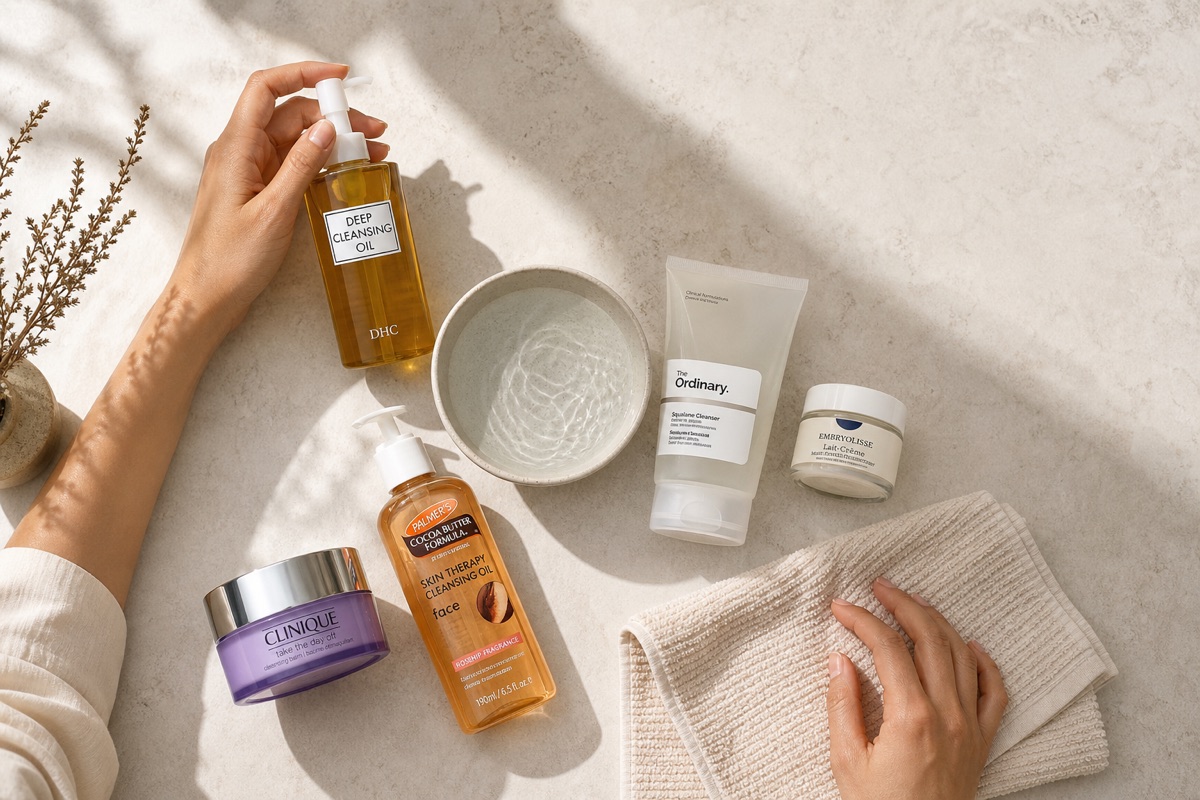
Editor's top Amazon picks for this guide
Real Amazon products that match this protocol. Affiliate links — your purchases support BeautySift.

DHC
Deep Cleansing Oil
$24.99
"High-volume cleansing oil with 4.6/5 across 24,126 Amazon global ratings; best match for the dry-face, emulsify, rinse protocol."
What real Amazon buyers say
4.6★· 24,126 reviews"I use this every single day to remove my sunscreen at the end of the day. If you wear SPF daily you know how hard it is to fully get it off with a regular cleanser."
"i’ve been repurchasing this for almost 8 years now. hands down this is a holy grail product for me and i have been recommending it to everyone."

Clinique
Take The Day Off Cleansing Balm
$15
"Balm format suits travelers or spill-averse users; 4.7/5 across 6,932 Amazon global ratings in the page snapshot."
What real Amazon buyers say
4.7★· 6,932 reviews"Works well for removing sunblock and makeup as your first cleanse. Has a petroleum jelly type feel on your face, so be sure to follow with a good foaming cleanser to completely remove it."
"I was pleasantly surprised. Left my skin super clean and soft. Doesn’t take much either. Will be my go to going forward."

Palmer's
Cocoa Butter Formula Skin Therapy Cleansing Oil
$9.23
"Budget oil-cleanser option with 4.6/5 across 12,451 Amazon global ratings; best for users who want low cost per routine step."
What real Amazon buyers say
4.6★· 12,451 reviews"This is my second purchase of a Palmers oil cleanser and I'm a customer for life. It dissolves makeup off, even mascara, without scrubbing and leaves my skin feeling clean, not tight and dry."
"This product works amazingly well at removing makeup while preventing that tight feeling skin can get from regular cleansing. I would have given it 5 stars, but they put fragrance in it."

The Ordinary
Squalane Cleanser
$42
"Cream-to-oil format may suit users who dislike runny oils; Amazon page snapshot showed 4.6/5 across 5,781 global ratings."
What you'll learn
- Oil cleanser works best as the first cleanse on dry skin, before water or a foaming cleanser touches the face.
- The evidence-backed advantage is sunscreen and long-wear makeup removal: a 2020 sunscreen study found cleansing oil left 5.8% waterproof-sunscreen residue versus 36.8% with foaming cleanser.
- For dry or mature skin, the goal is less rubbing, not more cleansing; stop after the oil fully emulsifies and rinses clean.
- A second cleanser is optional unless you still feel film, wear heavy sunscreen, or use long-wear makeup.
Steps
-
1 Step 1: Start with dry hands and a dry face
Dispense the oil or balm before splashing your face. Oil-based cleansers are designed to dissolve oil-soluble sunscreen filters, sebum, and long-wear makeup before water dilutes the formula. If your face is already wet, the product can emulsify too early and slide around instead of breaking down residue.
-
2 Step 2: Massage gently for 45-60 seconds
Use fingertips, not a washcloth or brush, and keep pressure light around the cheeks, jawline, nose folds, and hairline. The point is contact time, not scrubbing. For dry or perimenopause-prone skin, extra friction can make tightness and redness look worse even when the cleanser itself is mild.
-
3 Step 3: Emulsify until the oil turns milky
Add a small amount of lukewarm water and keep massaging until the oil changes from slick to milky. This emulsification step is what helps the dissolved sunscreen and makeup rinse away. Skipping it is one of the most common reasons people feel a greasy film afterward.
-
4 Step 4: Rinse with lukewarm water
Rinse until the face no longer feels slippery. Avoid hot water because heat can increase the tight, flushed feeling many dry-skin users are trying to avoid. Pat dry instead of rubbing with a towel.
-
5 Step 5: Decide whether you need a second cleanse
Use a mild water-based cleanser only if residue remains, if you wore water-resistant sunscreen, or if you used long-wear foundation. If your skin already feels clean and comfortable, especially in winter or after a low-makeup day, a second cleanse may be unnecessary.
-
6 Step 6: Rebuild comfort immediately
Apply a hydrating serum or moisturizer while the skin is still slightly damp. Cleansing is not the treatment step; the moisturizer step is what helps reduce the tight feel that can follow any wash routine.
Why oil cleansing is mostly about removal, not miracle skin care
Oil cleansers are useful because many stubborn products on the face are oil-soluble: water-resistant sunscreen, long-wear foundation, mascara, sebum, and pollution film. A good oil cleanser gives those residues something compatible to dissolve into, then uses emulsifiers so the mix can rinse away with water.
That is different from saying oil cleansing is a treatment for wrinkles, acne, or hyperpigmentation. BeautySift did not test a routine for 30 days and did not run a clinical panel. We analyzed cleanser research, FDA sunscreen guidance, and Amazon US rating snapshots to build a practical protocol for women 35-55 who wear daily SPF but do not want their skin to feel tighter after washing.
The most relevant clinical clue is a 2020 Journal of Cosmetic Dermatology study indexed on PubMed. In 20 participants, waterproof-sunscreen residue measured 59.3% after water, 36.8% after foaming cleanser, and 5.8% after cleansing oil. The same study reported post-wash dry skin in 8 users in the cleanser group versus 1 user in the cleansing-oil group. That does not prove every oil cleanser is gentle for every face, but it supports the basic idea: for sunscreen-heavy routines, an oil step can remove more with less rubbing.
Affiliate disclosure: we may earn a commission on shopping links. Product inclusion does not change the routine order or the evidence weighting.
The correct oil-cleanser order
Start at night, not in the morning. Morning oil cleansing is rarely necessary unless you used an overnight occlusive or heavy sleep mask. For most US shoppers, the high-value use case is evening removal after sunscreen, makeup, or both.
Use the oil cleanser before any water-based cleanser. Apply it to dry hands and a dry face, then spread it over the forehead, cheeks, nose, chin, jawline, and hairline. If you wear eye makeup, follow the product directions and use very light pressure; the eye area is not where more force gives better results.
Massage for 45-60 seconds. This is enough contact time for most sunscreen and makeup residue without turning cleansing into a face massage that drags the skin. If you wear long-wear foundation around the nose or jaw, spend a few extra seconds there rather than scrubbing the whole face.
Then emulsify. Add a small amount of lukewarm water and massage again until the oil turns milky. This is the step many people skip. Without emulsification, even a well-formulated cleansing oil can leave residue and make the face feel coated.
Rinse thoroughly and assess. If skin feels clean and comfortable, stop and moisturize. If you still feel film, see makeup on the towel, or wore water-resistant sunscreen, use a gentle second cleanser for 15-30 seconds.
How much product to use
For liquid oil, start with 1 to 2 pumps. For balm, start with an almond-size amount. More is not always better; too much product can take longer to emulsify and may leave film around the hairline. Too little product causes a different problem: you end up rubbing because there is not enough slip.
For dry or mature skin, the right amount should let your fingers glide without tugging. If you feel drag, add a little more cleanser rather than pressing harder. If the cleanser drips into your eyes or runs down your neck before you can massage it in, use less next time or switch from a liquid oil to a balm.
The Draelos 2003 cleanser review explains why this matters. Cleansing is a direct interaction between the cleanser, the moisture barrier, and skin pH. Soap-style cleansing produces larger barrier and pH shifts than gentler facial cleansers. Oil cleansing does not make the barrier invincible, but a well-emulsified oil step can reduce the mechanical rubbing that often makes dry skin look more irritated.
When to double cleanse and when to stop at one step
Double cleanse when you wore water-resistant sunscreen, mineral SPF that clings, long-wear foundation, stage makeup, or heavy eye makeup. The FDA recommends sunscreen before sun exposure and reapplication at least every 2 hours outdoors, which means serious SPF days can leave a meaningful film by evening.
Skip the second cleanse when your skin is already clean, you wore no makeup, or the day was mostly indoors with minimal sunscreen. Over-cleansing is a common dryness trigger. The 2020 sunscreen study supports cleansing oil for waterproof sunscreen removal, but it does not say every person needs two cleansers every night.
A useful test is the towel test. After rinsing, pat with a white towel. If you see foundation or sunscreen tint transfer, use a short second cleanse. If the towel stays clean and the face does not feel slippery, move to moisturizer.
If you are acne-prone, use a second cleanser strategically. Cleanse the hairline, jawline, nose folds, and chin where residue tends to hide. You do not need to foam the cheeks for a full minute if they are the area that gets dry first.
The mistakes that make oil cleansers feel greasy
The first mistake is wetting the face before application. Water starts emulsification before the cleanser has had enough time to dissolve sunscreen and makeup.
The second mistake is skipping the milky phase. Emulsification is not optional with most modern cleansing oils and balms. Add water slowly, massage until the texture changes, then rinse.
The third mistake is using hot water. Hot water can make the face feel cleaner in the moment, but it often leaves dry skin tighter afterward. Use lukewarm water and let the formula do the dissolving.
The fourth mistake is replacing an emulsifying cleanser with plain household oil. Olive oil, coconut oil, and body oils may dissolve makeup, but they usually do not contain the same rinse-off emulsifier system. That can leave residue, especially near pores and hairline.
The fifth mistake is assuming breakouts mean all oil cleansers are wrong for you. Sometimes the issue is a fragranced formula, an incomplete rinse, or using a rich balm on skin that prefers a lighter oil. If bumps start after a new cleanser, stop for 1-2 weeks, then retry with better emulsification or choose a simpler product.
Product matching: oil, balm, or cream-to-oil
Liquid cleansing oil is best when you wear daily sunscreen and want quick spread. DHC Deep Cleansing Oil had 4.6/5 across 24,126 Amazon global ratings in our May 2026 page snapshot, and representative Amazon reviews repeatedly mention sunscreen and makeup removal. It is the most direct fit for the classic dry-face protocol.
Balm cleanser is best when you travel, dislike drips, or want more control around the eyes. Clinique Take The Day Off Cleansing Balm had 4.7/5 across 6,932 Amazon global ratings. The trade-off is texture: some users like the cushion, while one quoted Amazon reviewer described a petroleum-jelly type feel and preferred following with a foaming cleanser.
Budget cleansing oil is best when daily SPF removal is the habit you are trying to make consistent. Palmer’s Skin Therapy Cleansing Oil had 4.6/5 across 12,451 Amazon global ratings, with praise for makeup removal and a clear caveat from a 4-star reviewer about fragrance. If fragrance is a known trigger for you, that caveat matters more than the price.
Cream-to-oil cleanser is best when you dislike runny oils. The Ordinary Squalane Cleanser had 4.6/5 across 5,781 Amazon global ratings in the page snapshot. It is less traditional than a pump oil, but the cream-to-oil texture can be easier to control.
A simple 7-night starter schedule
Night 1: use the oil cleanser alone after sunscreen. Emulsify thoroughly and moisturize.
Night 2: use oil cleanser plus a short second cleanse only if you wore makeup or water-resistant SPF.
Night 3: skip oil cleansing if you wore no sunscreen or makeup; use a gentle cleanser or rinse.
Night 4: repeat the oil-only method and check whether your skin feels tight 10 minutes later.
Night 5: use oil plus second cleanse after heavier sunscreen or foundation.
Night 6: use oil cleanser only and apply moisturizer while skin is slightly damp.
Night 7: decide your rule. Most dry-skin users do well with oil cleanser on SPF or makeup days and second cleanse only when residue remains.
When to pause or switch formulas
Pause if you develop persistent stinging, eyelid irritation, new clusters of bumps, or a film that does not rinse even after careful emulsification. Switch if the product contains fragrance and your skin usually reacts to fragrance, or if the texture makes you rub more than before.
If your face feels tight after every double cleanse, shorten the second cleanse or remove it. If your hairline breaks out, rinse that area longer and consider a lighter oil. If mascara remains, use a dedicated eye makeup remover rather than rubbing lashes with more cleanser.
Oil cleansing is a tool, not a rule. The best routine is the one that removes sunscreen thoroughly while leaving the barrier comfortable enough for moisturizer, retinoids, or pigment-care products used later in the week.
Related reading
Best Face Oils for Mature Dry Skin in 2026